


Author
Gergana Mancheva
News
Innovation – 3D recording of traditional Bulgarian horo dancers
Scientists from the Institute of Ethnology and Folklore Studies with Ethnographic Museum at BAS capture the Bulgarian folk dance tradition with the help of modern sensors
Friday 24 July 2026 08:39
Friday, 24 July 2026, 08:39
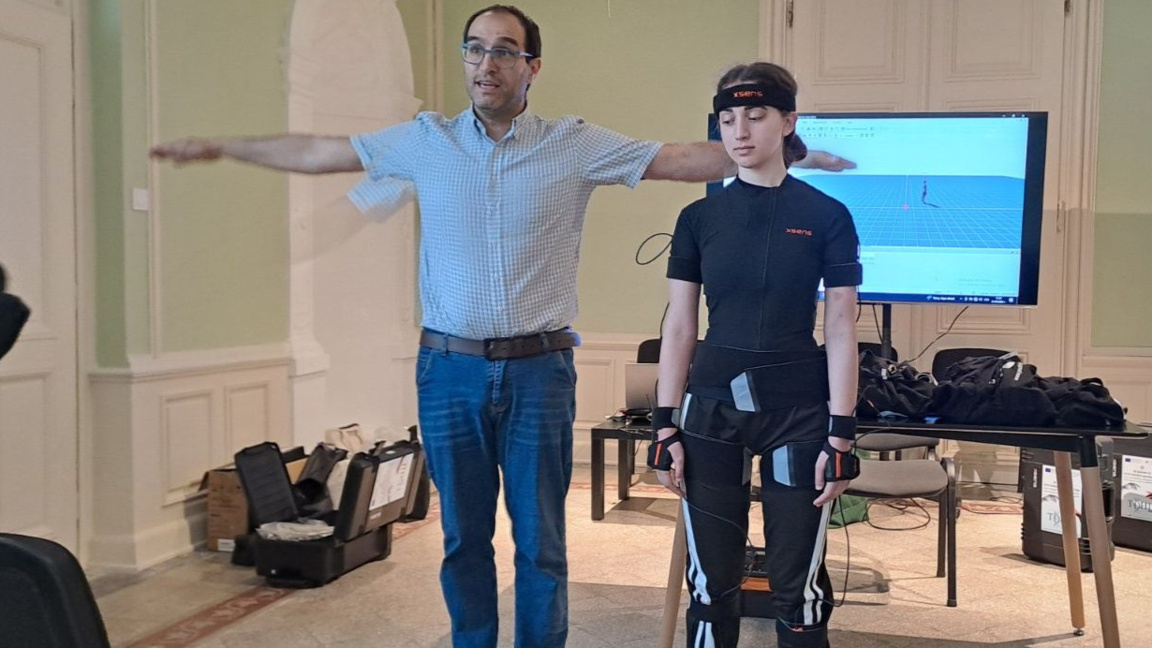
PHOTO Gergana Mancheva
Font size
Not
on film, but now as a detailed 3D visualization, the Bulgarian horo
dance is included in the catalogue of the latest objects filmed by a
team of Bulgarian specialists. The recording of the horo dancers using
precise sensors is an innovation on a global scale and is carried out
thanks to a project won by the Institute of Ethnology and Folklore
Studies with Ethnographic Museum – Bulgarian Academy of Sciences.
The
Bulgarian folk dance is a collective dance that preserves the
Bulgarian spirit throughout the centuries, carries power, sacred
symbolism and even healing energy - some call it "Bulgarian
yoga", because the movements and music drive away fatigue and
bring joy. It is most often performed in a closed circle or
semicircle, which symbolizes the sun, eternity, the lack of beginning
and end, as well as the protection of the community against evil
forces. The dancers hold hands or the belts - this brings people
together, who, carried away by the rhythm and common steps, become
one whole. Bulgaria is divided into different folklore regions, each
of which has unique dance steps and horo dances for different
holidays and rituals, which are the subject of research by
ethnographers. However, the depopulation of small settlements makes
it impossible for these dance moves to be naturally inherited, so
folklorists are forced to develop innovative methods for their
recording and preservation over time.
"3D
data for cultural heritage through automated, scientifically based
digitization." This is how the scientists generally call their
work. During the first public live demonstration of the data
recording system, it became clear that inertial sensors were used to
capture motion, which allowed for the digitization of a chain dance
/horo/ in 3D format and the creation of dance avatars of dancing
characters - up to seven in number. The experiment also included a
sensor glove, which allows the same type of digitization for the hand
movements of a musician who plays and accompanies the dance of those playing the horo.
Among the innovations used is a prototype of a system for 3D digitization of movement data, based on IoT ("Internet of Things") - the technology that allows home appliances to communicate with each other via the Internet in real time. The same methodology for capturing and recording movements through sensors can be applied to documenting any human activity that is of interest to science. For example, the movements of craftsmen, recording work in any agricultural practice, or the movement of fingers on musical instruments. Senior assistant Ivaylo Parvanov provides more details on the topic.
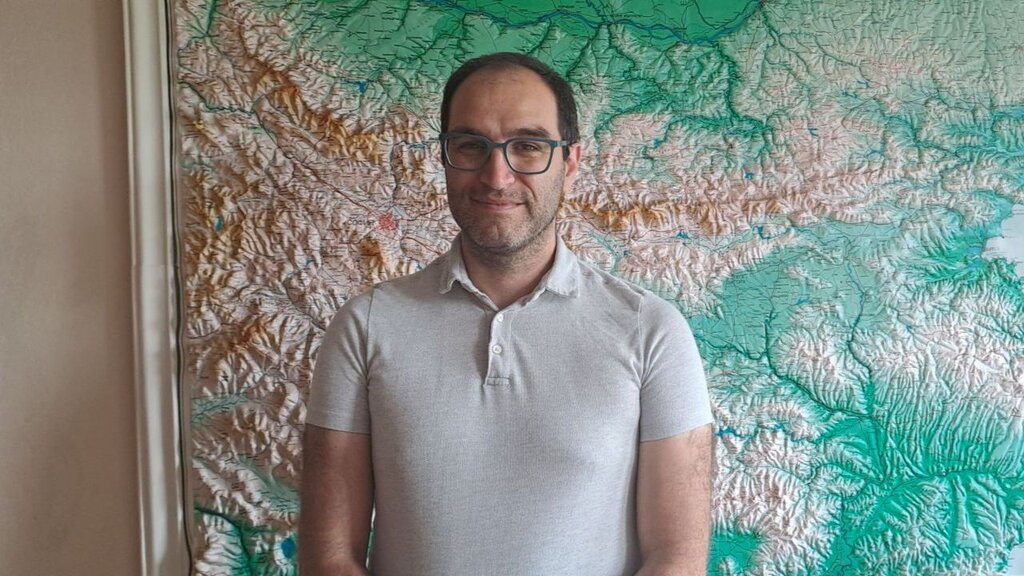
Ivaylo Parvanov
PHOTO Gergana Mancheva
"What we actually managed to do is a pilot stage in which we developed a methodology to create a prototype of a comprehensive information system for 3D digitization of motor cultural practices. We document the way these people move and this specific knowledge that they have preserved. Modern young people no longer move in this way. Although it has been said since the beginning of the last century that traditional culture is disappearing and that we have to work very hard to go around the villages and record and film the songs and people, nowadays this continues to have increasingly fading functions. In practice, civilization kills culture. And culture is the norm that the community imposes. We are actually losing this old normativity, while personally I do not see any normativity in our modern society. To my great happiness, however, there are still groups of people who are guardians of this knowledge and skills. The people I am talking about are very smart, have extremely high morals and the important things in life for them are different than modern ones. I strongly hope that in the future we will increasingly turn to what is preserved in documents and archives and seek support in the old norms. I very much hope that one day what we have preserved will be sought out, will be called to a new life, so that it will benefit many more people," explains Ivaylo Parvanov, PhD in Ethnochoreology at IEFSEM – BAS.
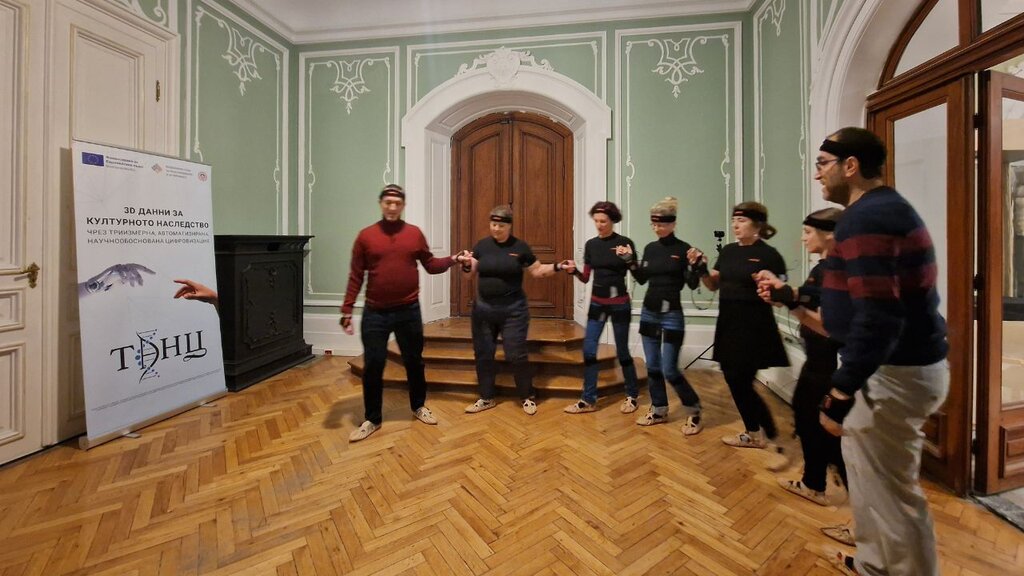
PHOTO BTA
It is clear to everyone that with this first step, the team from the Institute of Ethnology and Folklore Studies with Ethnographic Museum at BAS will support other scientific research in the fields of robotics, biomechanics, sports sciences, education and public health, Dr. Ivaylo Parvanov adds.
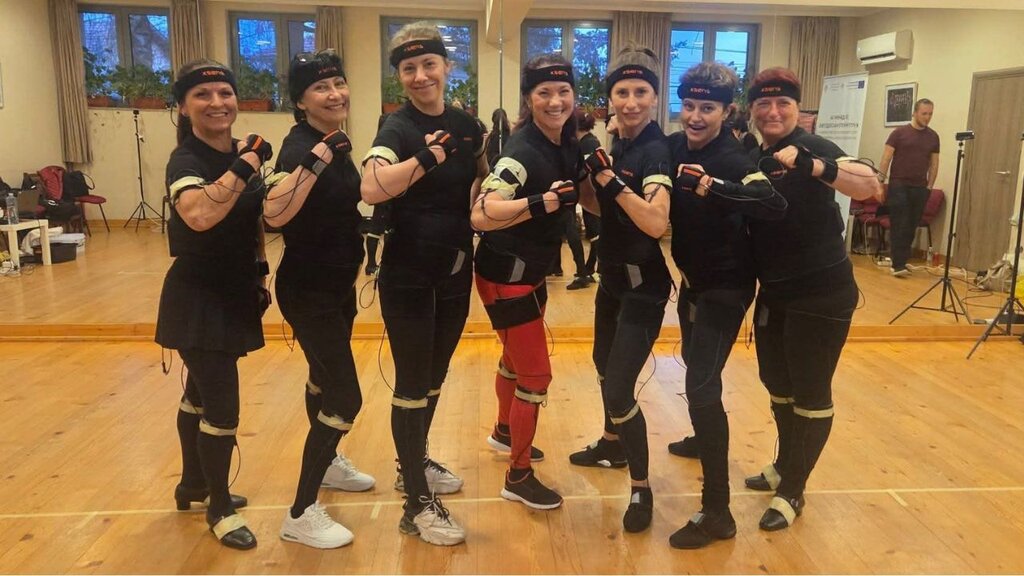
PHOTO Facebook /Bistritsa Ensemble
That is why he expresses his gratitude to everyone who helped make the innovative project a success. "This year, the National Ethnographic Museum celebrates its 120th anniversary, so a specific trust has already been built towards IEFSEM-BAS, as we have traditions and our researchers are recognizable," Dr. Ivaylo Parvanov says in an interview with Radio Bulgaria.
This publication was created by: Alexander Markov