


Monday 27 July 2026 17:17
Monday, 27 July 2026, 17:17
PHOTO Pixabay
Font size
Five months before the end of the year, the Bulgarian parliament adopted the state budget with only the votes of the ruling "Progressive Bulgaria" party. It should come into force on August 1. The budget plan foresees an unprecedented deficit of 7.2 billion euros.
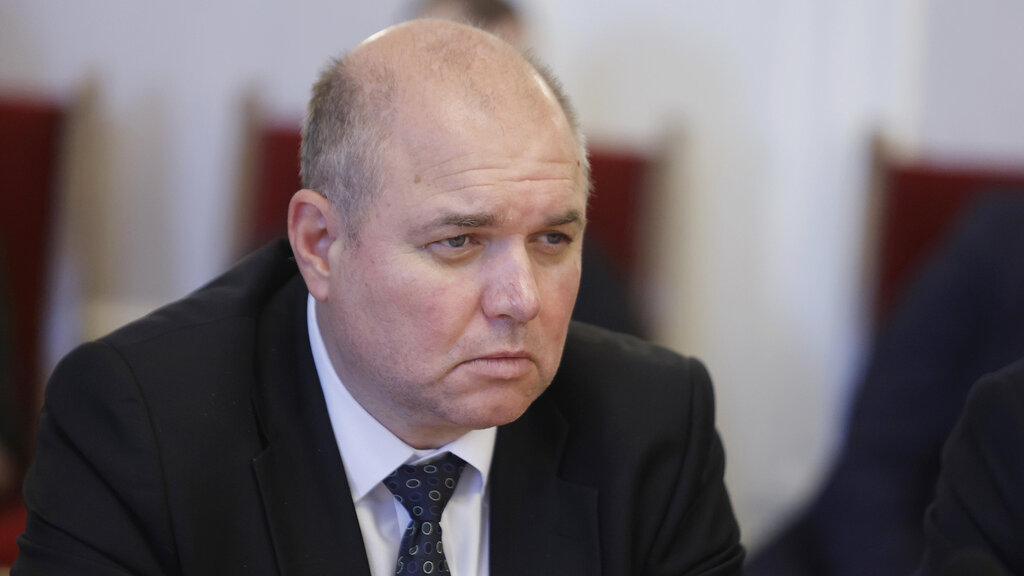
Vladislav Panev
PHOTO BGNES
"In
recent years, the deficit of 3% has begun to be considered normal.
Now the ruling party is proposing 5.7%, which is an extremely harmful
policy at a time when the economy is still growing. This means higher
inflation, depreciation of savings, higher interest rates and an
increase in state debt. According to economic logic, larger budget
deficits are justified in periods of economic crisis, not during
economic growth,” MP Vladislav Panev told BNR - Radio Plovdiv.
Despite
the opposition's numerous proposals on revenues
and expenditures,
not a single proposal was accepted by the ruling party.
This
is Bulgaria's first budget in euros and with it the country
immediately entered an excessive deficit procedure. Earlier this
month, the Council of
the EU
also adopted a recommendation to this
country, which outlines the net spending plan and the schedule that
must be followed in order to end the excessive deficit procedure by
2029. On
the "Horizont" program of
the BNR,
the Chairman of the Committee on Economic Policy, Investment and
Industry in the National Assembly, Stefan Belchev, said:
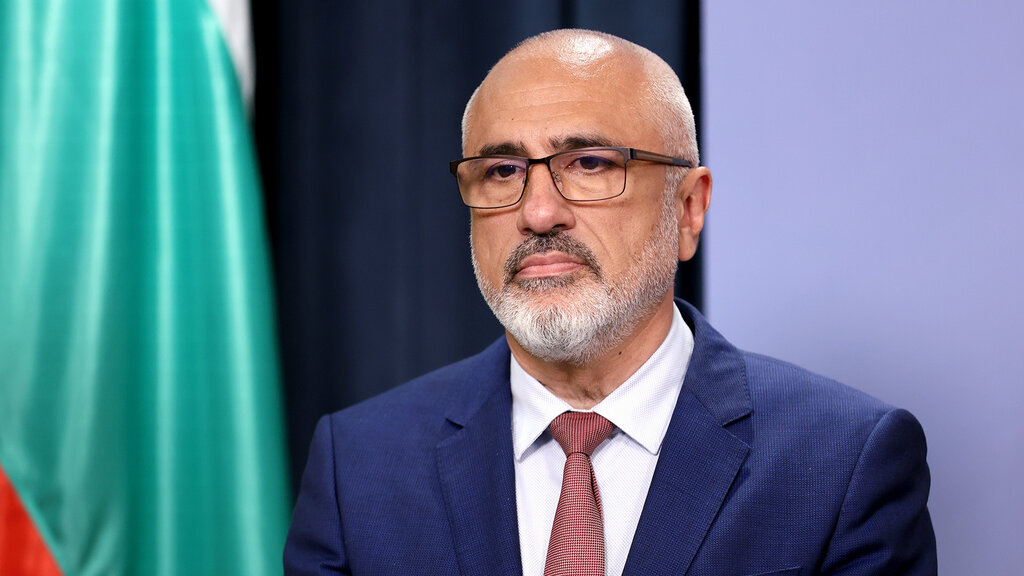
Stefan Belchev
PHOTO BTA
"We
have the ambitious goal for 2028 our deficit to fall to and below 3
percent in order to comply with the Maastricht criteria, but here I
have to draw attention to the fact that we are currently in an
excessive deficit procedure and we need
to comply with the instructions of the European Commission."
In
the medium-term framework, the government is targeting a deficit of
5.7% of GDP in 2026, 3.8% in 2027, and 3% in 2028. However, its
reduction does not explain why the same framework is targeting a
further increase in state debt in 2028 - up to 35% of the
gross
domestic product.
What
are the budget parameters that directly affect citizens?
Personnel costs remain almost at last year's level - 12.4 billion euros. This
year, the automatic mechanisms for increasing the salaries of
military personnel, police officers, teachers, and university
professors will not be applied, but they have not been completely
cancelled. However, the share of education spending is decreasing
from 4.8% to 4.5% of GDP, and by 2028 the plan is to reduce it to
3.8% of GDP. MP salaries are currently
frozen,
along with the remuneration of the heads of various committees and
agencies.
The
budget repeals the formula for calculating the minimum wage in 2026,
which is frozen at 620.20 euros until a new formula is adopted. Until
now, it was defined as 50% of the average gross wage, as
many social benefits depend on
it.
PHOTO BTA
With
changes to the Labour Code, the calculation of the length of service
of employees with employment contract is also changing: it
will be calculated based on the actual working
hours.
The
proposal of "We Continue the Change" to increase the tax
relief for children in the amount of 306.78 euros to 600 euros was
not accepted. The proposals of GERB and "We Continue the Change"
to increase student scholarship money,
the minimum amount of which was set at 10 euros at the end of the
20th century, were rejected.
Vignette
fees are increasing by 30% from August 1. The excise tax on
cigarettes is also being raised, but the government rejected a 50%
increase in the gambling tax proposed by Democratic Bulgaria.
PHOTO Pixabay
The
budget does not provide funds for the construction of National
Children's Hospital, which was among the government's stated
priorities.
The
formation of former Minister of Finance Asen Vassilev - "We
Continue the Change" called on the head of state to veto and
return for a new discussion in the National Assembly the State Budget
Act, the State Social Security Budget and the National Health
Insurance Fund Budget. So far, the petition has been supported by
nearly 30,000 people.
Text:
Yoan Kolev based on interviews by Yavor Stamatov and Antonia Popova
This publication was created by: Alexander Markov