


Author
Daniel Nenchev
News
Art that fits in your hand
Nadia Rozeva's intimate monuments
Exhibition of art medals at the Bulgarian Cultural Institute in Paris
Thursday 30 July 2026 08:37
Thursday, 30 July 2026, 08:37
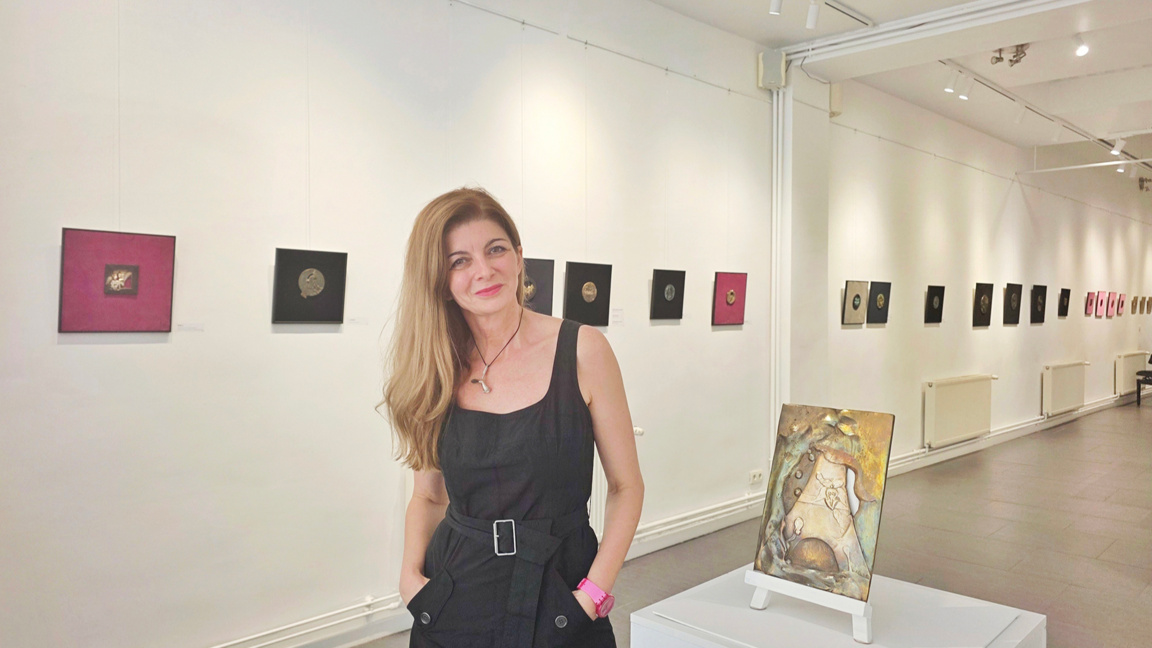
PHOTO Daniel Nenchev
Font size
Where do the monumental and the intimate intersect and how big can an artistic world be, gathered in an object that fits in the human hand? These are the questions posed by the exhibition "Intimate Monuments" (Monuments Intimes) by Bulgarian artist Nadia Rozeva at the gallery of the Bulgarian Cultural Institute in Paris.
It brings together works from the past 20 years and presents a relatively rarely shown genre – the contemporary art medal.
Unlike mass-produced commemorative, sports, or ideological medals, an art medal is an independent work of sculptural art. It does not simply commemorate an event or a person, but creates an image, a narrative and a space for personal experience.
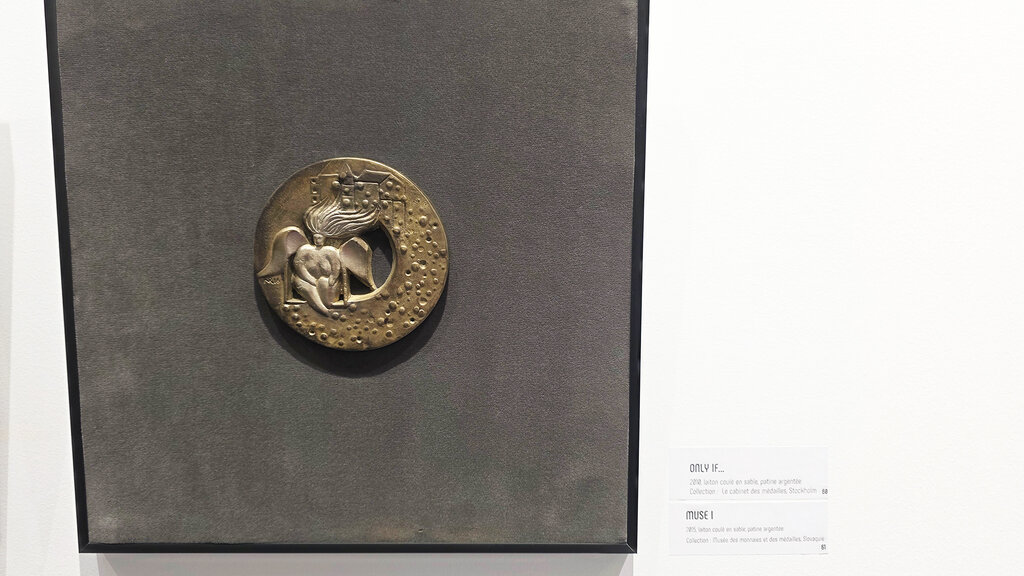
PHOTO Daniel Nenchev
"The intersection is in how much you can say and pack into a very small space, but to do it in a way that makes sense when the viewer looks at it or holds it in their hands. Even the weight of the medal affects the perception of the image," Nadia Rozeva says.
It is the physical contact that is one of the features of this type of art. The medal can be viewed from both sides, touched, turned and felt through its weight, relief, even temperature. According to accepted modern definitions, its size is usually up to 15 centimetres, so that the object can be held comfortably in the hand of an adult.
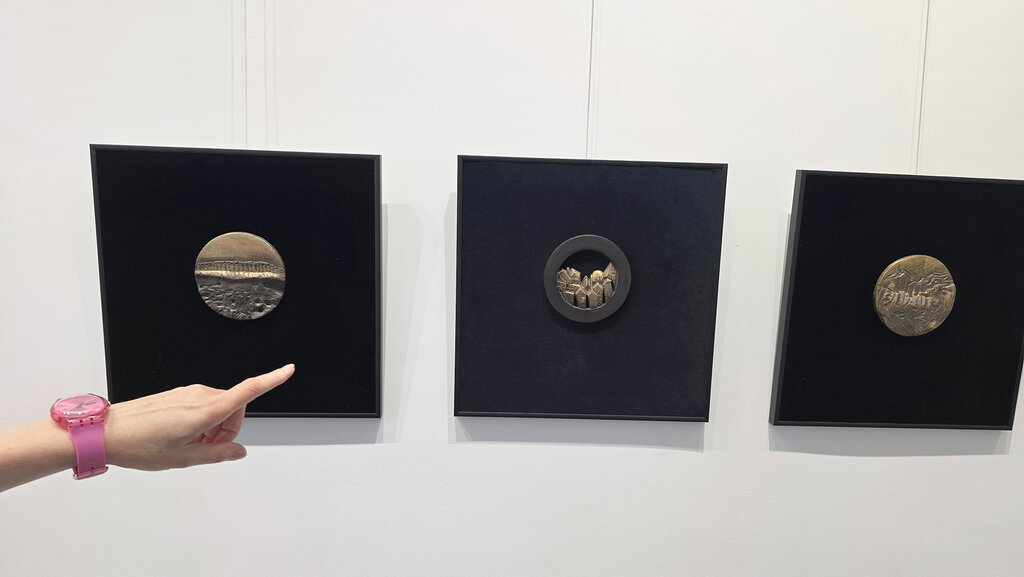
PHOTO Daniel Nenchev
"As long as the medal fits well in the hand and tells a story, there are no restrictions on the material," the artist says.
Rozeva uses a traditional method, with roots dating back to the Renaissance. She first creates a model, which is then cast in metal. A large part of the works presented are cast in sand. This process leaves on the metal subtle traces of contact with the casting material and turns the surface into part of the artistic narrative.
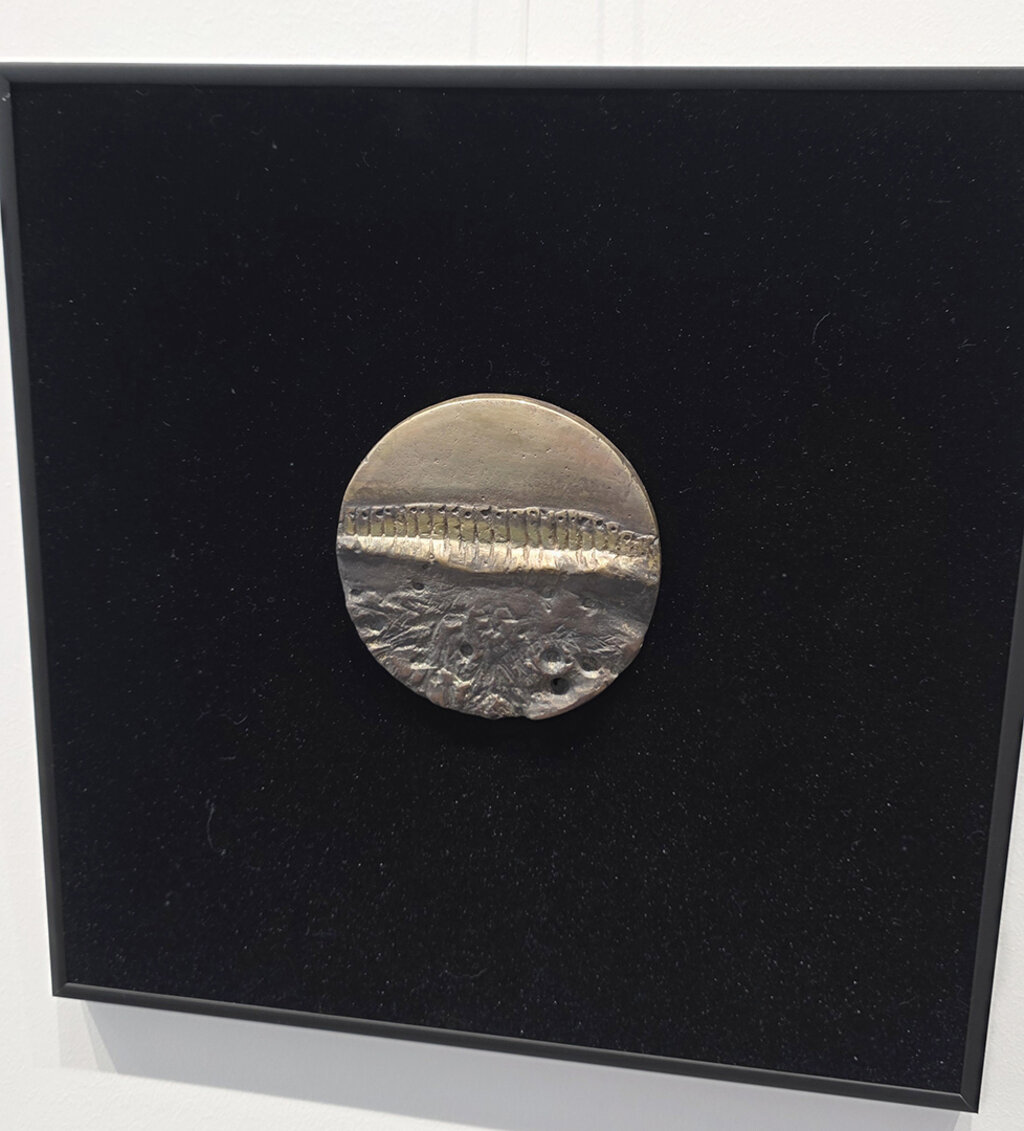
PHOTO Daniel Nenchev
Each individual medal is processed and patinated by hand by the author. Therefore, even works from the same series have their own individual characteristics. In the case of an artistic medal, a circulation of up to 15 copies is considered an original author's edition.
"I'm always experimenting with patinas and each patina is different from the previous one," Rozeva says.
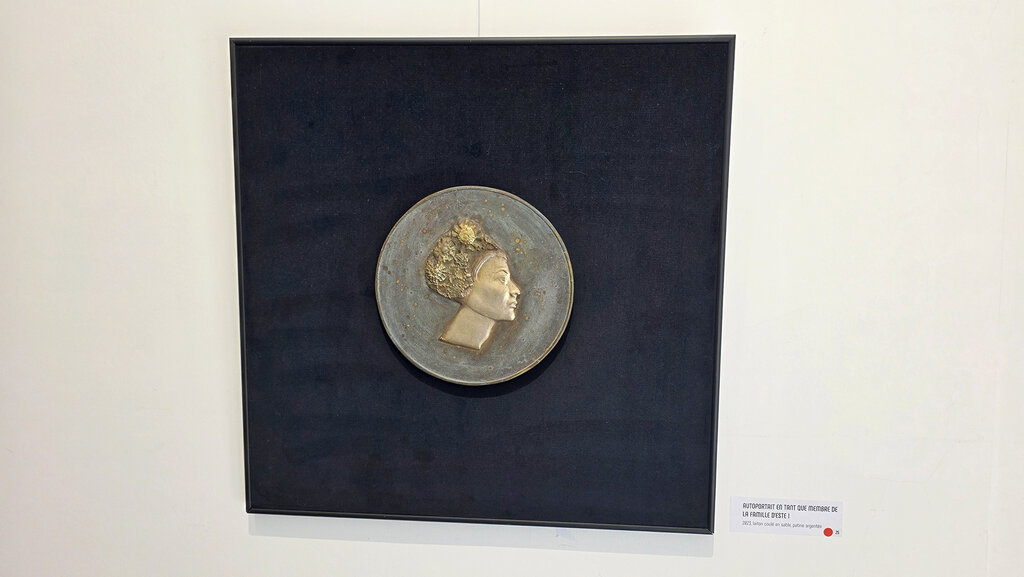
PHOTO Daniel Nenchev
The exhibition features works with diverse themes - from Balkan brutalism and the architectural environment of Skopje to nature, female power and timeless biblical images. The artist combines ancient stories with contemporary references, sometimes with a sense of humour: "People loved each other in ancient times, people love each other now. Adam and Eve have already become Madame and Eve."
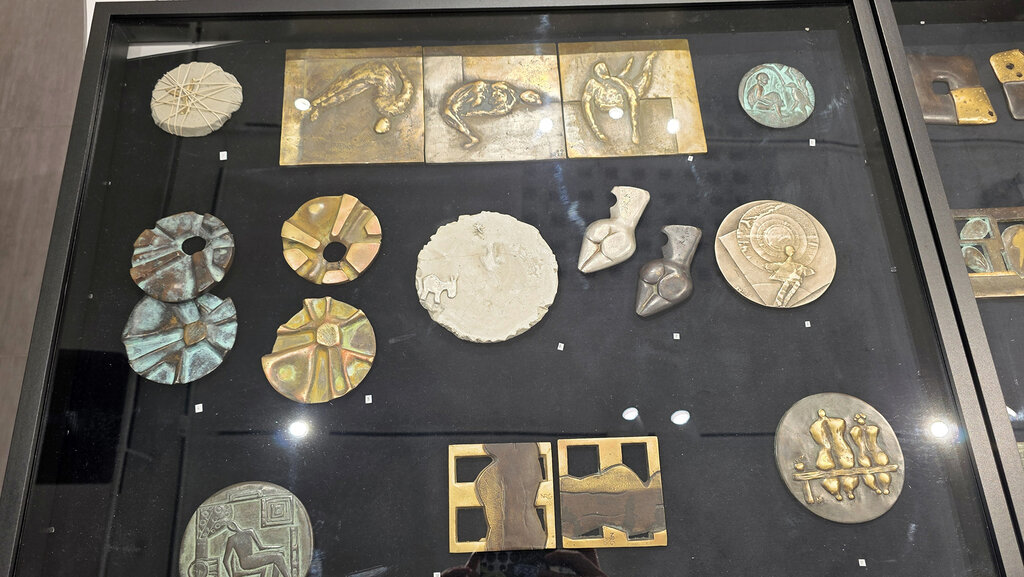
PHOTO Daniel Nenchev
Nadia Rozeva studied in the United States, Germany and Austria, as well as in the National Academy of Art in Sofia under Prof. Bogomil Nikolov. Her works are part of the collections of the British Museum in London, the Economy Museum – Royal Coin Cabinet in Stockholm, the National Art Gallery in Sofia, the Museum of Bergen and the Museum of Coins and Medals in Kremnica. She is also the author of the "Golden Rose" statuette for the festival of Bulgarian feature cinema.
Today, the artist lives in Paris and collaborates with Monnaie de Paris. As a demonstrator of medal techniques, she presents to visitors her way of working and the traditional knowledge used in her works.
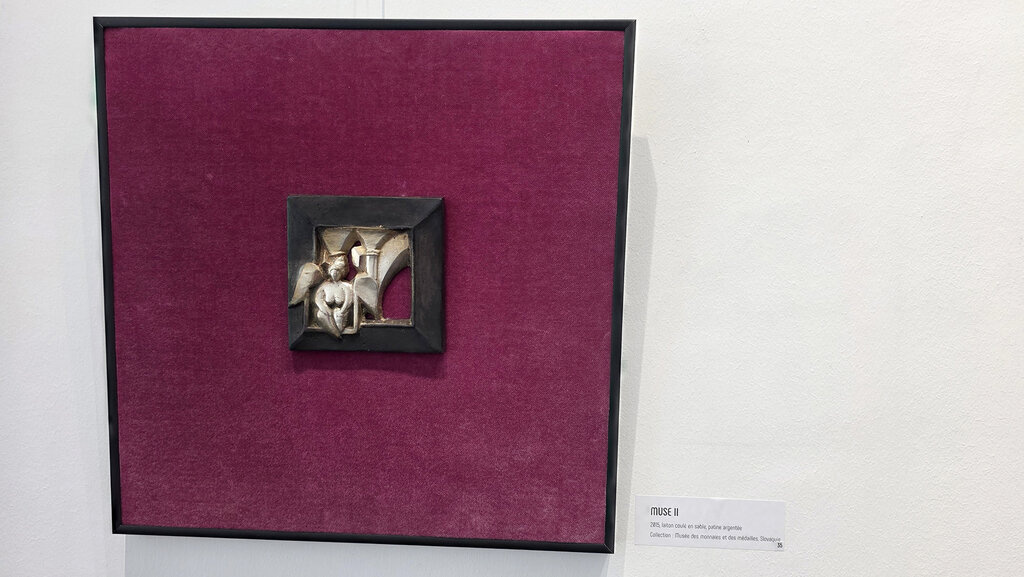
PHOTO Daniel Nenchev
The exhibition at the Bulgarian Cultural Institute was opened with a presentation by Dr. Béatrice Coullaré – Head of Collections and Conservation at the Monnaie de Paris (Paris Mint) and one of the established French specialists in the field of artistic medals. According to Rozeva, Coullaré highlights the poetics and masterful execution of the works, as well as the way in which the artist takes the medal beyond the traditional boundaries of the genre.
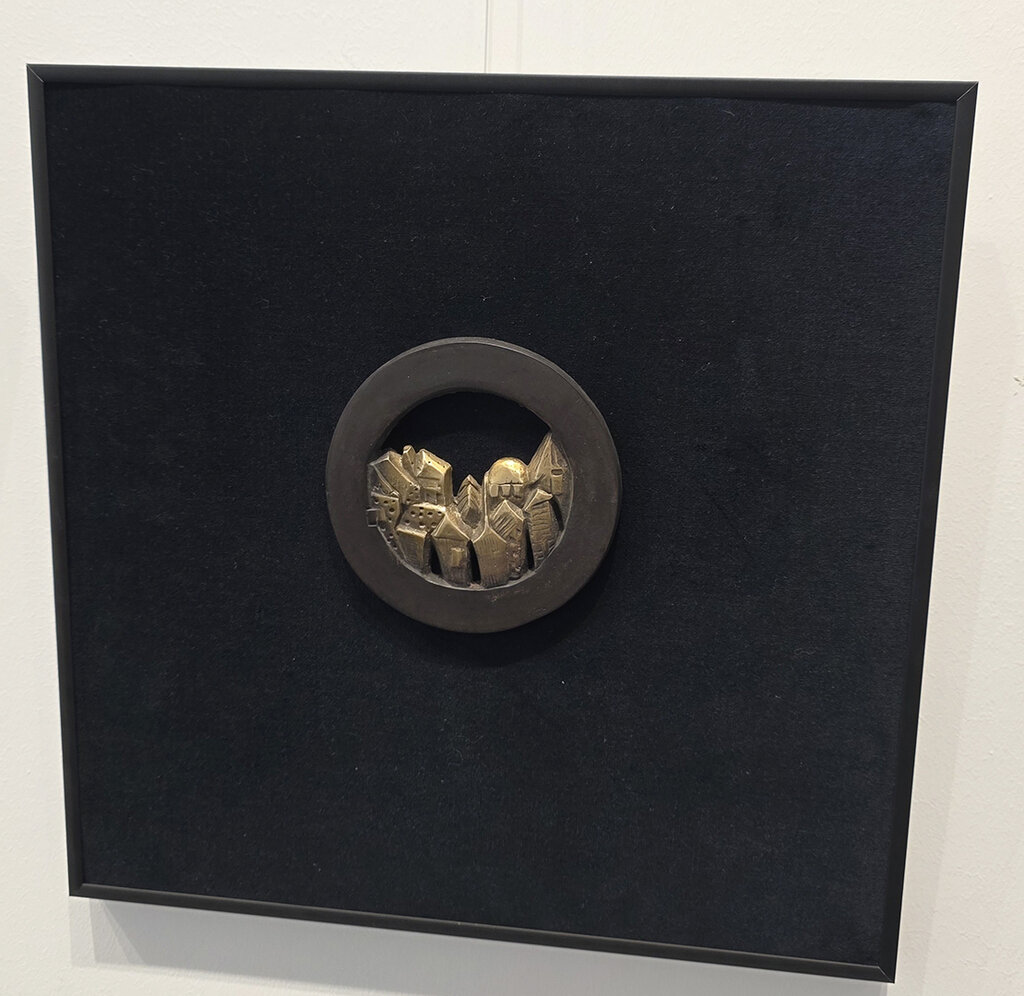
PHOTO Daniel Nenchev
"Intimate Monuments" shows how a seemingly small plastic form can carry monumental power – not through its size, but through the concentration of images, memory, material and personal experience.
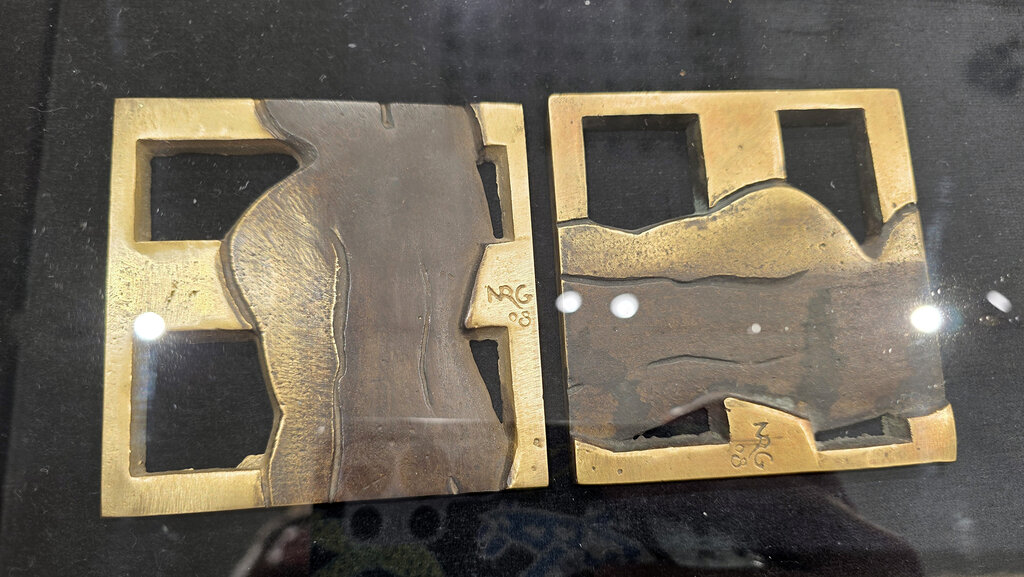
PHOTO Daniel Nenchev
The exhibition can be seen until the end of August 2026.
This publication was created by: Alexander Markov