


Penka Kasabova – the white swallow of Bulgarian preschool education
Although separated, Penka Kasabova and bass Boris Hristov remained spiritually connected until their last moments
Wednesday 12 August 2026 18:20
Wednesday, 12 August 2026, 18:20
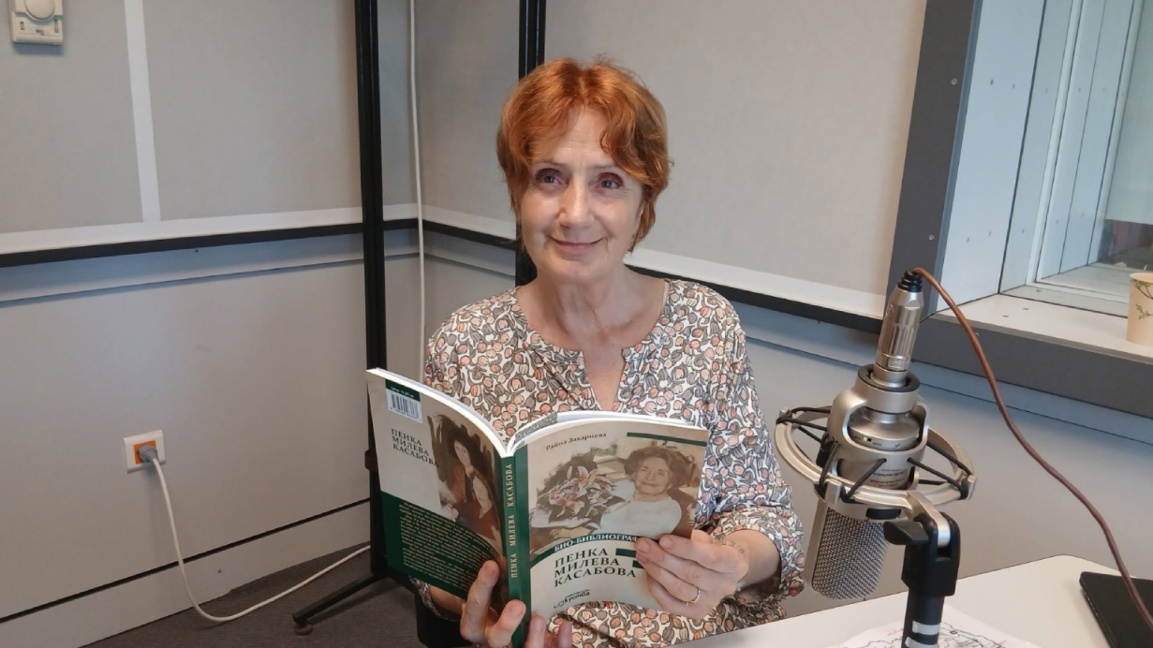
Raina Zaharieva
PHOTO Diana Tsankova
Font size
At the beginning of the past century, a father, captivated by the kindergarten he saw on "Solunska" street in the capital, promised himself to check whether female teachers were being trained there. Later, in front of his already grown daughter, he uttered the words: "This work is useful and sooner or later it will develop. Let's see if Pesha will be the one to push it forward!". Having just received her high school diploma and dreaming of becoming an astronomer, the girl perceived what she heard as a message that filled her heart open to service with love and dedication.
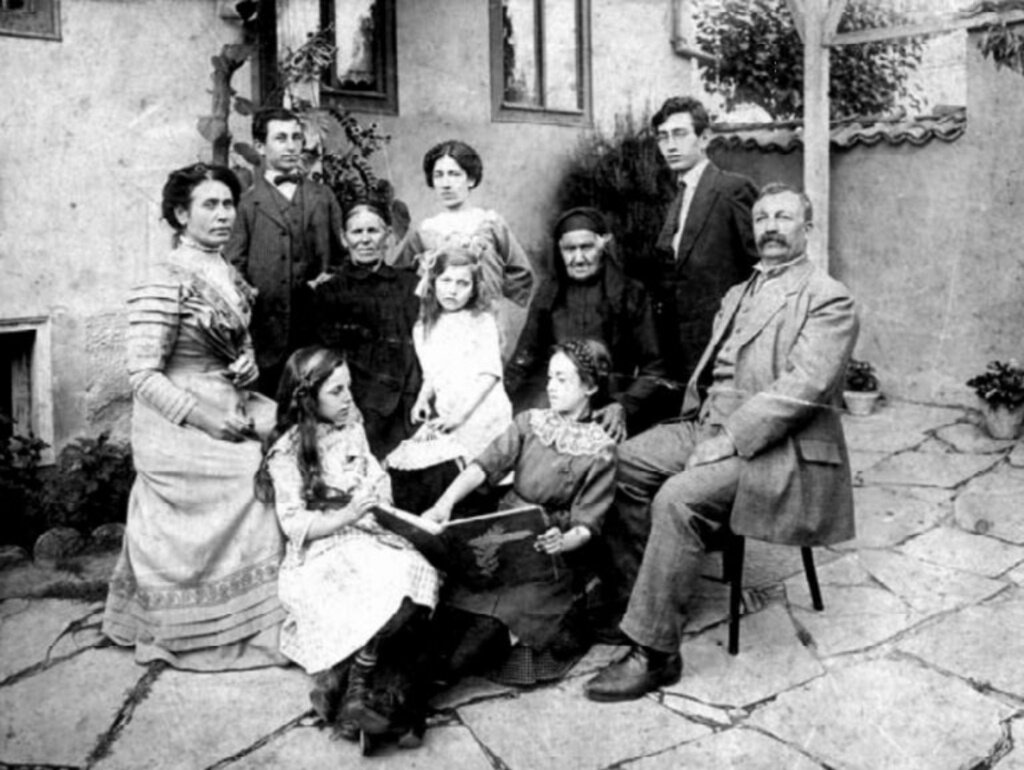
PHOTO geomilev.com
Penka
Kasabova was born in 1901, on August 12, in Stara Zagora into the
large family of teacher and bookseller Milyo Kasabov. One
of her brothers was poet Geo Milev. Two years after her father's
prophetic words, Pesha, as she was affectionately called, had already
completed Elizabeth Clarke's pedagogical course at the American
Kindergarten in Sofia.
"Elizabeth
Clark saw in her a future artist because she was artistic and
responsible," says Assoc. Prof. Raina Zaharieva, PhD in
Educational Psychology, a long-time lecturer at Sofia University and
her friend. "In 1928, the teacher took the student to her
university in Chicago to study for three years. Penka Kasabova
returned prepared and becoming a «white swallow»
of preschool education, managed to bring out the individuality of
each child - something that even our modern education system has not
achieved."
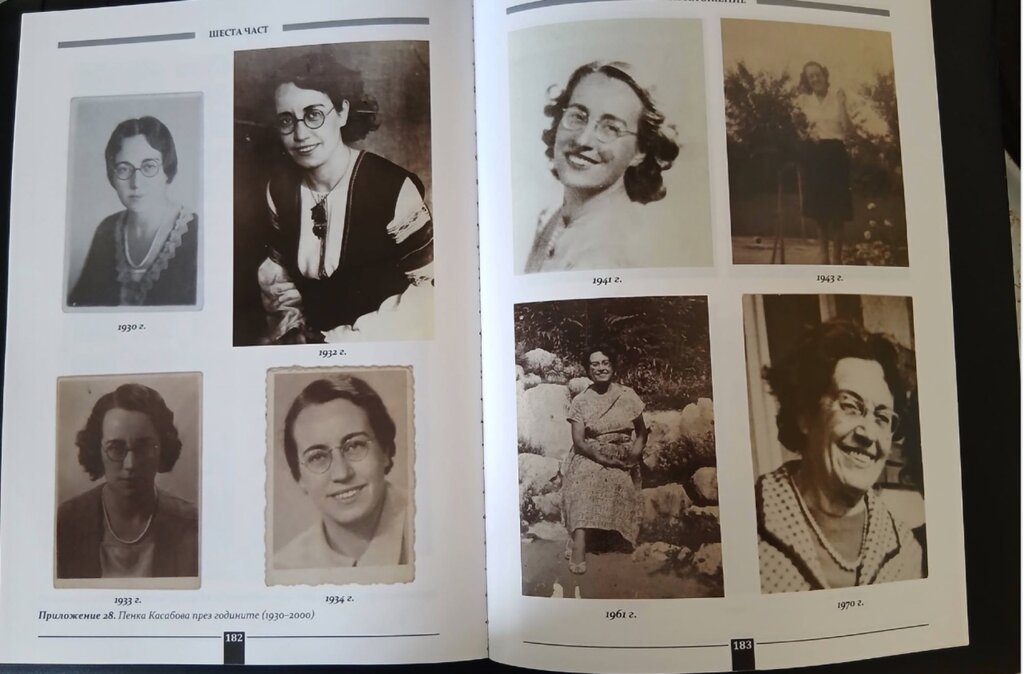
PHOTO Raina Zaharieva's book "Bio-bibliography Penka Mileva Kasabova"
In 1932, Penka Kasabova became Elizabeth Clarke's successor and, as head of the kindergarten and the existing pedagogical institute, trained hundreds of teachers who accepted the profession as their mission. She also worked to change the attitude of teachers and parents towards children, as well as government policy in this area. She also opened kindergartens throughout the country, including summer ones in the villages - in them, while mothers harvested, children learned to eat with utensils and on a tablecloth, memorized poems and songs. In her magazine «First Steps» she created sections for all participants in preschool education, and an empty page became the occasion for her niece Leda Mileva to write her famous poem «The White Bunny», with which all Bulgarian children later grew up.
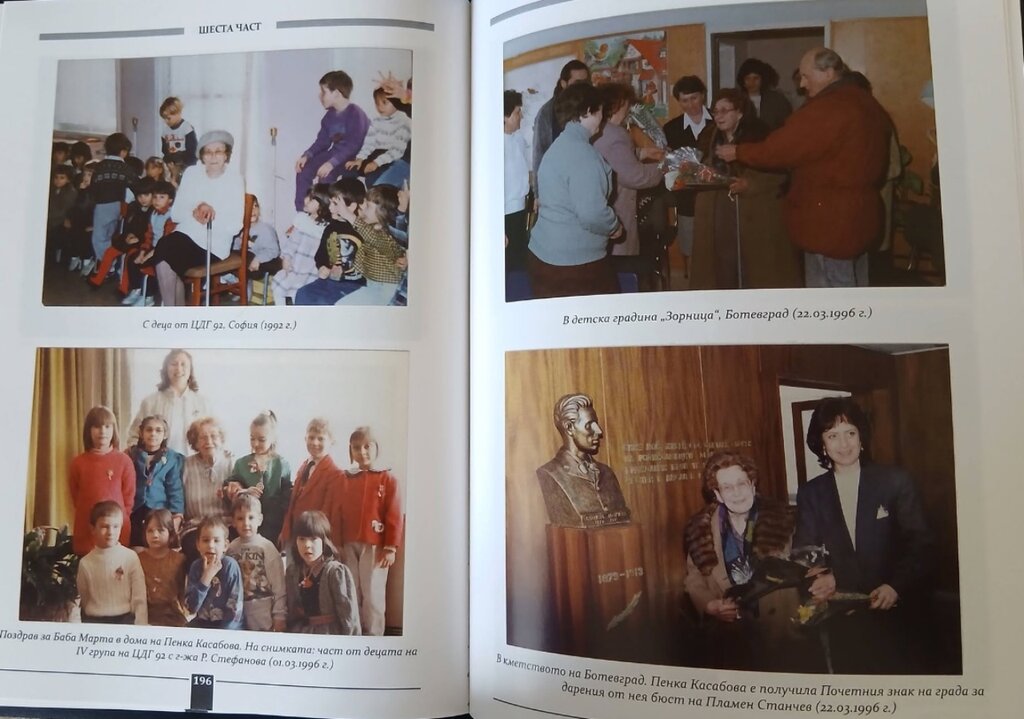
PHOTO Raina Zaharieva's book "Bio-bibliography Penka Mileva Kasabova"
"Penka
Kasabova used the project method," adds Raina Zaharieva. "For
example, for three months the teachers worked on the topic «Fire
Department» and she took everyone to the institution to see how it
works. And everything that a child needed to know about the Bulgarian
language, mathematics, the world around them, they
learned within the framework of a
project, including songs, drawing, dancing. She
combined all the knowledge as it is in life and gave it to the
children. At the end, there was a concert in front of the parents."
The
first Bulgarian with a diploma in preschool education applied the
knowledge and skills learned across the ocean,
but adapted to local
conditions and turned the belief that it is better to correct a
child's first steps than the crooked paths of an adult into a guiding
motif. Later, she would say
that working with children was a form of serving
God.
Penka
Kasabova will go down in history with another fact – she was among
the first to discover the immense talent of opera singer Boris
Hristov, encouraging his growth with love and faith. The two met at a
meeting with the "Gusla" choir, where she took
girls from her preparatory course for teachers.
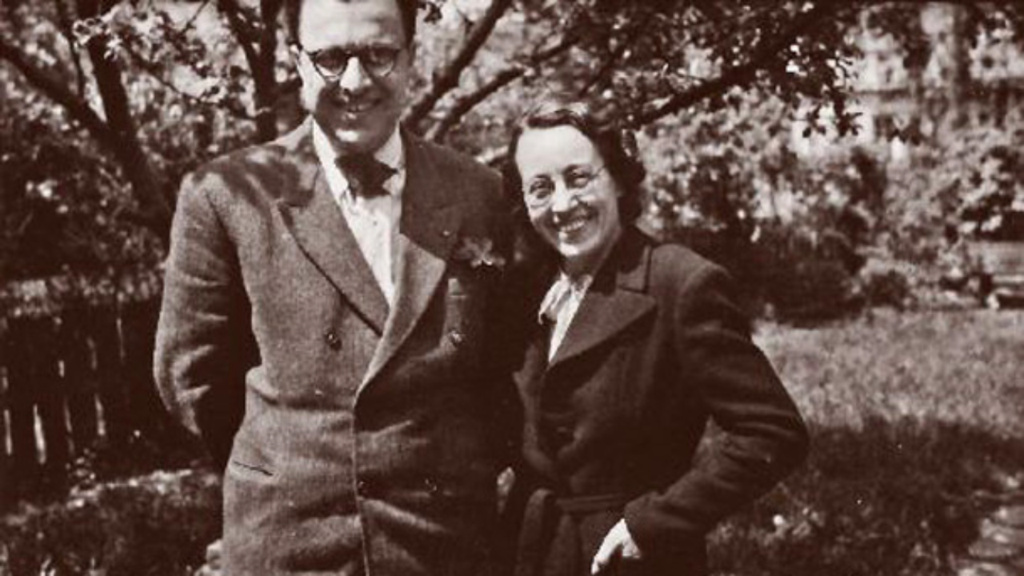
PHOTO geomilev.com
"The
meeting was
wonderful, but Penka was
thirteen
years older than him," Raina Zaharieva says. "Boris was
young, bohemian, who
drank
and
smoked.
The Tsar discovered
his talent and he went
to study in Italy. She did
not stop keeping in touch with him - at first she sent
him tobacco, but then she told
him that he should not smoke or drink. She told
him: «When I see your name on a poster that you are participating in
some opera, then we will get married!» She loved
him, but set conditions to get the best out of him. And she really
saw
his name on a poster."
Meanwhile,
the communists came to power and Boris Hristov was
banned from returning to his homeland and Penka Kasabova from
visiting him. The alternative for her was to report to the "State
Security" about the Bulgarians in Italy, but she refused.
They
exchanged about 180 letters, in which they discussed, among other
things, the psychological characteristics of the opera characters and
with her guidance Penka Kasabova contributed to his authentic
presence on stage.
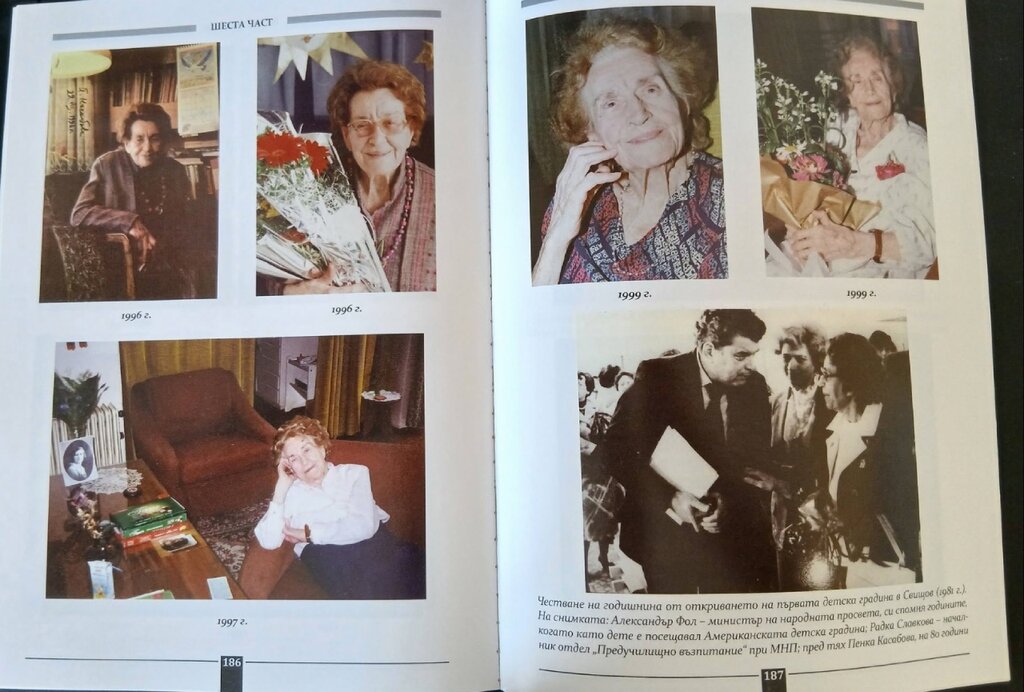
PHOTO Raina Zaharieva's book "Bio-bibliography Penka Mileva Kasabova"
In 1948, Penka Kasabova was fired from the Ministry of Education, where she held the position of chief inspector of preschool education, because she refused to fulfil the task ordered by communist leader Georgi Dimitrov to introduce the "Soviet method" in kindergartens. She was declared a spy and it was decided that she would be evicted from the capital. At the end, Kasabova was allowed to stay in Sofia, but without permission to work.
Penka Kasabova left this world a year before becoming 100 years old. Until her last breath, she maintained her dignified posture and, although she remained faithful to her only love, she did not feel lonely, because her students, friends, and nieces, scattered around the world, visited her. Raina Zaharieva, appointed by Penka Kasabova during her lifetime to deliver the epitaph, would keep in her heart an eternal truth:
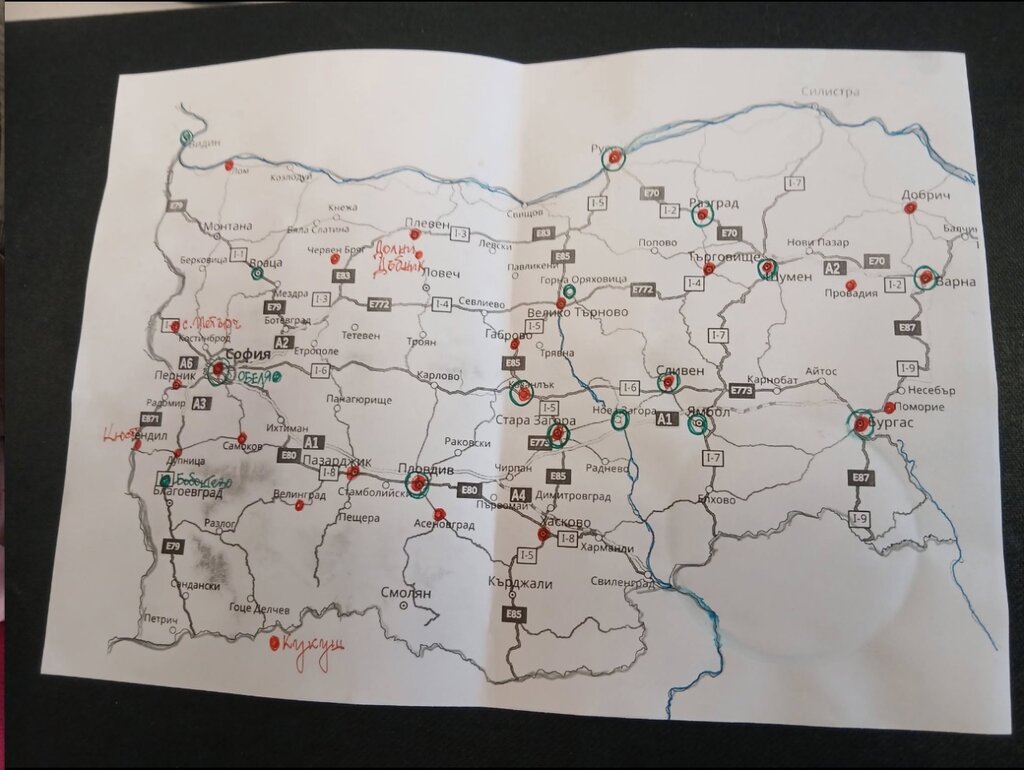
Map of the schools opened by Penka Kasabova
PHOTO Diana Tsankova
"She
said that love connects people with an invisible thread and when you
love unconditionally, you help. Animalistic is to plunder, to attack. Her life was not about surviving, she was climbing to the
top. Development, self-respect, dignity - that's what I will remember
her for."
125
years
after Penka Kasabova's birth, there is not even a street named after
her in her hometown. The Municipality of Stara Zagora is still
assessing whether four decades dedicated to the education of children
across the country deserve this generous gesture.
This publication was created by: Alexander Markov