


News
Railway line Edirne-Lesovo-Yambol to connect Bulgaria with Turkey toward Romania
Friday 14 August 2026 09:27
Friday, 14 August 2026, 09:27
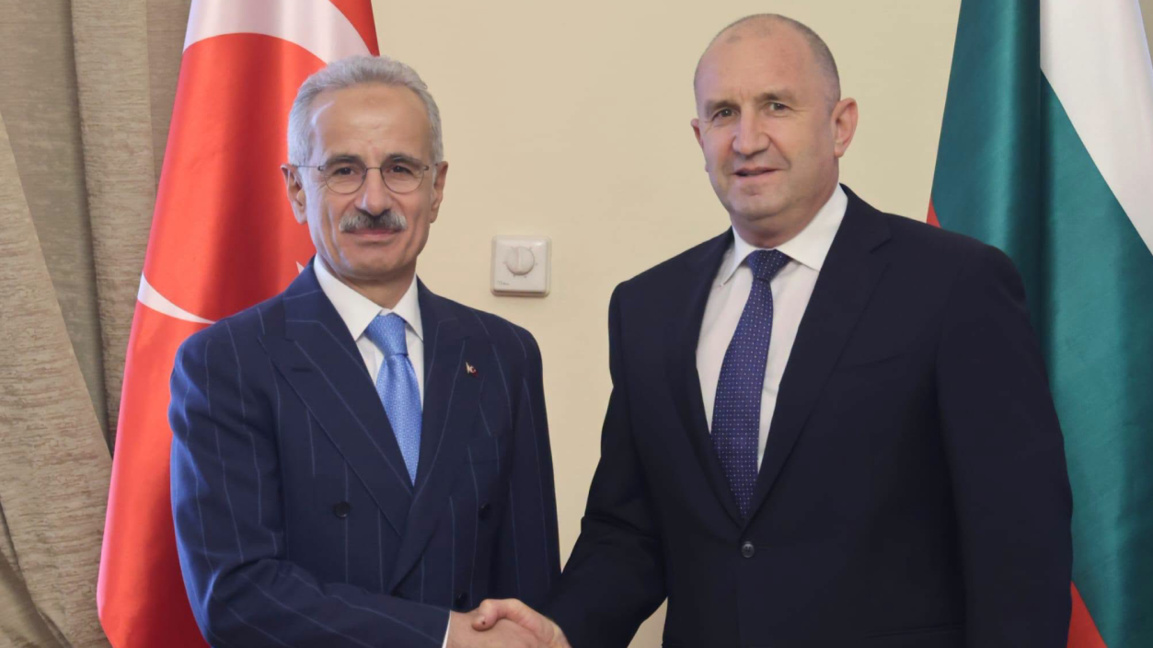
PHOTO Council of Ministers
Font size
“The future of our region will increasingly be determined by connectivity between Bulgaria and Turkey as a factor in the development of Southeast Europe, creating new opportunities for exchange between Europe and Asia,” Prime Minister Rumen Radev said at a meeting in Sofia with Turkish Transport Minister Abdulkadir Uraloglu, the government press service reported.
Radev also highlighted the importance of the Edirne-Lesovo-Elhovo-Yambol railway line, which will be built as an alternative route to the railway line passing through the heavily congested Kapitan Andreevo–Kapıkule border crossing, the Council of Ministers said.
The meeting also emphasized joint work on green-energy transmission corridors, as well as routes for the transit of natural gas to Europe.
Rumen Radev also said that the cross-border energy connection between Bulgaria and Turkey is of enormous importance to the region. The conditions created to adapt the contract between Bulgargaz and BOTAŞ to current market conditions are already leading to renewed interest in natural-gas deliveries from Bulgaria’s neighboring countries along this route.
Turkish Transport Minister Abdulkadir Uraloglu told the Bulgarian News Agency (BTA) that both Turkish and Bulgarian companies and specialists will be actively involved in the upcoming construction of the “Black Sea” motorway between Varna and Burgas.
He said that during his meetings in Sofia, they also discussed the future construction of the “Black Sea” motorway, which will continue toward Romania and is expected to be built by Turkish investors.
Noting that Turkey attaches great importance to the project, Uraloglu stressed that “for Turkish investors, the issue is not simply to come, build the road and leave.” According to the minister, the project is likely to be implemented as a public-private partnership and will continue for many years.
Edited by Ivo Ivanov
This publication was created by: Rositsa Petkova