


Author
Vesela Krasteva
Tuesday 18 August 2026 15:13
Tuesday, 18 August 2026, 15:13
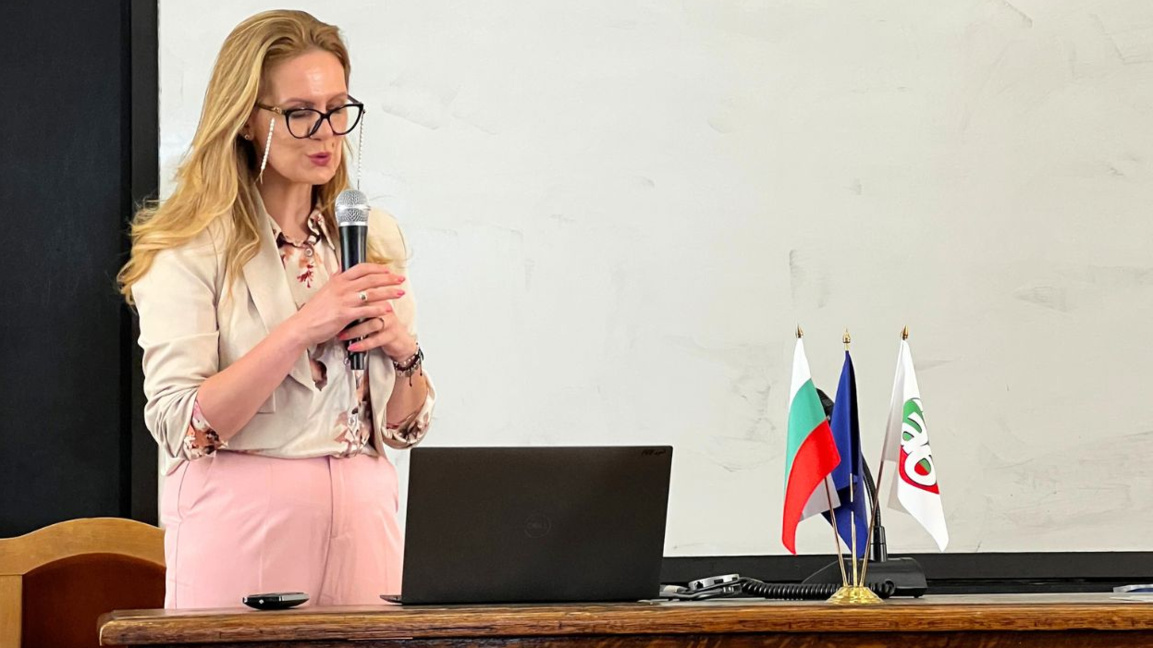
PHOTO Vesela Krasteva
Font size
On the threshold of the new school year and before the summer vacation of the Bulgarian MPs, talks of legislative changes in the education system of the country started again. At the end of July, the ruling party Progressive Bulgaria proposed changes to the Preschool and School Education Act, which are aimed at early identification of language problems among students, improving language integration, developing moral, social and civic competencies and introducing lessons on virtues and religions. The proposed amendments provide for standardized tools for assessing language skills upon entering kindergarten, at the end of preschool education, upon enrolment in first grade, as well as upon return from abroad or for children with international or temporary protection.
During the new plenary session of the National Assembly, the proposals will be discussed at the committee level and if the changes are adopted they could enter into force in the 2028-2029 school year.
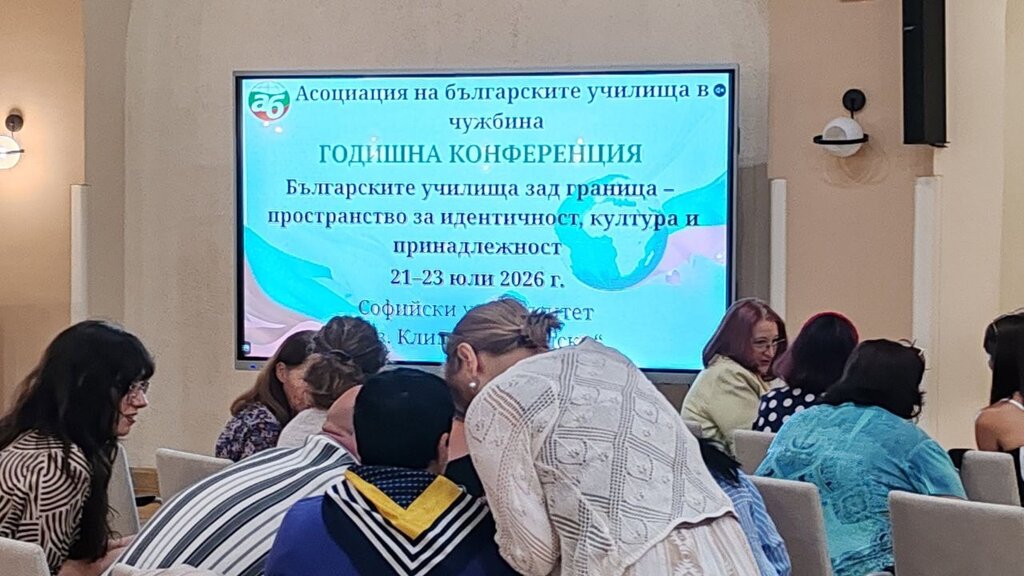
PHOTO Facebook/ABSA
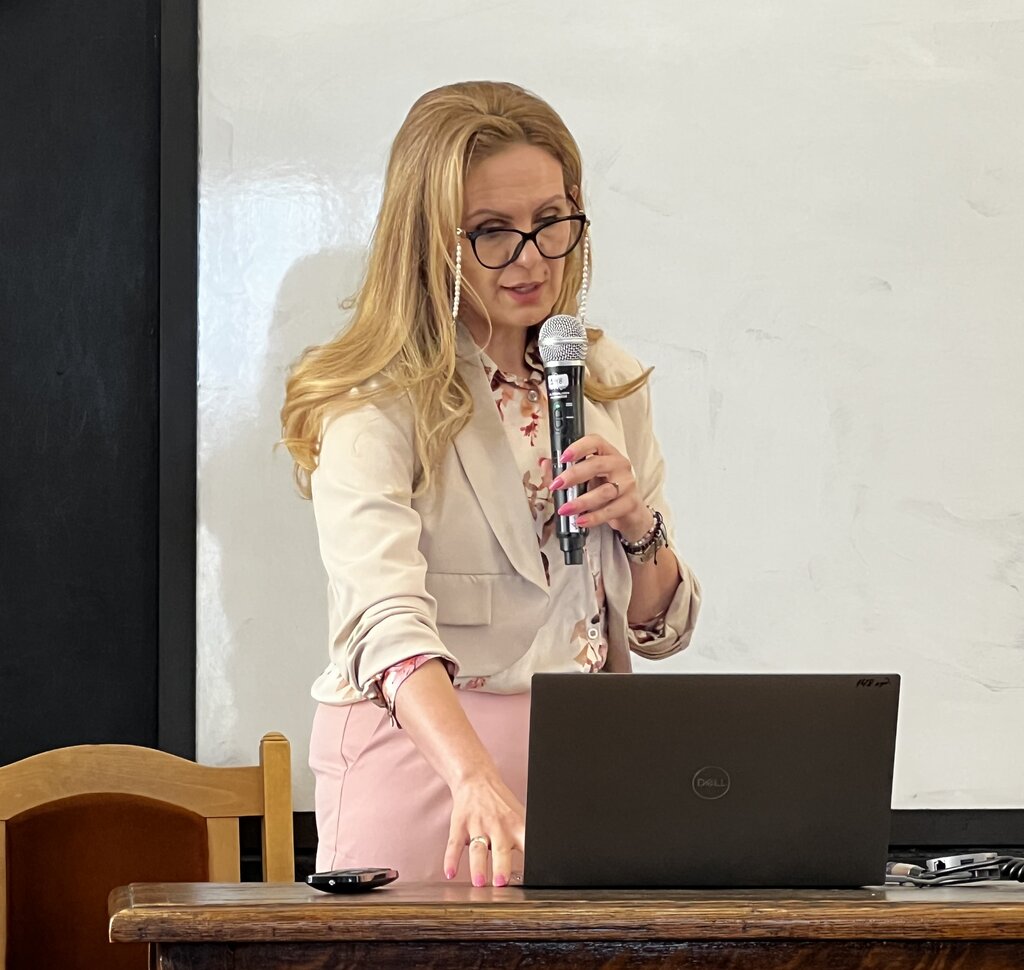
The teaching and learning of Bulgarian as a second and foreign language, the methods and tools for support in today's reality were also discussed within the framework of the 19th edition of the Annual Conference, organized by the Association of Bulgarian Schools Abroad at the end of July in Sofia. Assoc. Prof. Dr. Venera Mateeva-Baycheva - lecturer in Bulgarian as a foreign language in the Department of "Bulgarian as a Foreign Language" of the Faculty of Slavic Philology at Sofia University "St. Kliment Ohridski" told the attendees about the "Rechenitsa" project - an integral system for teaching Bulgarian as a foreign language. The system is aimed at everyone for whom Bulgarian is not their mother tongue, including foreign students studying at Sofia University, as well as Bulgarians living outside the country, including students from Bulgarian Sunday schools from the age of 12 and up, or after the 5th grade.
Assoc. Prof. Dr. Venera Mateeva-Baycheva
PHOTO Vesela Krasteva
"It includes individual elements that can be used both independently and connected. Their main goal is to create learning models in which communicative competence is achieved, i.e. students can easily and quickly enter into communication in Bulgarian in our environment. We are working on creating textbooks that will be aimed first at our foreign students, but in fact we know that we are creating textbooks that will be widely used around the world in different environments.”
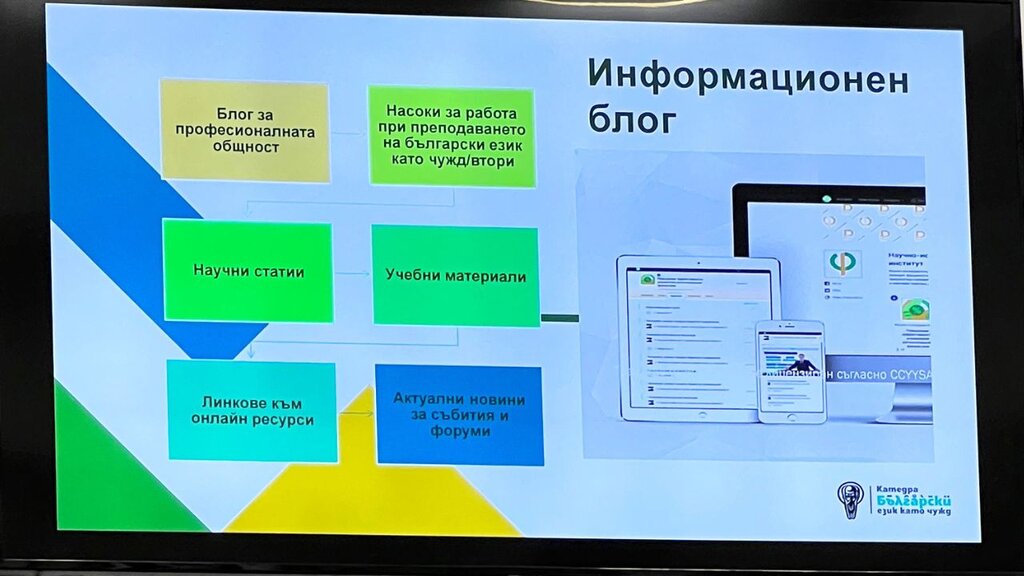
PHOTO Vesela Krasteva
The
teaching materials include a variety of texts – stories, news,
brochures, instructions, timetables and forms, selected according to
the language level and communicative goals. Methodological guidelines
are also provided for teachers who teach Bulgarian at university or
school level around the world.
"Level
A2 is the level of Bulgarian language expected by our official
authorities," she says.
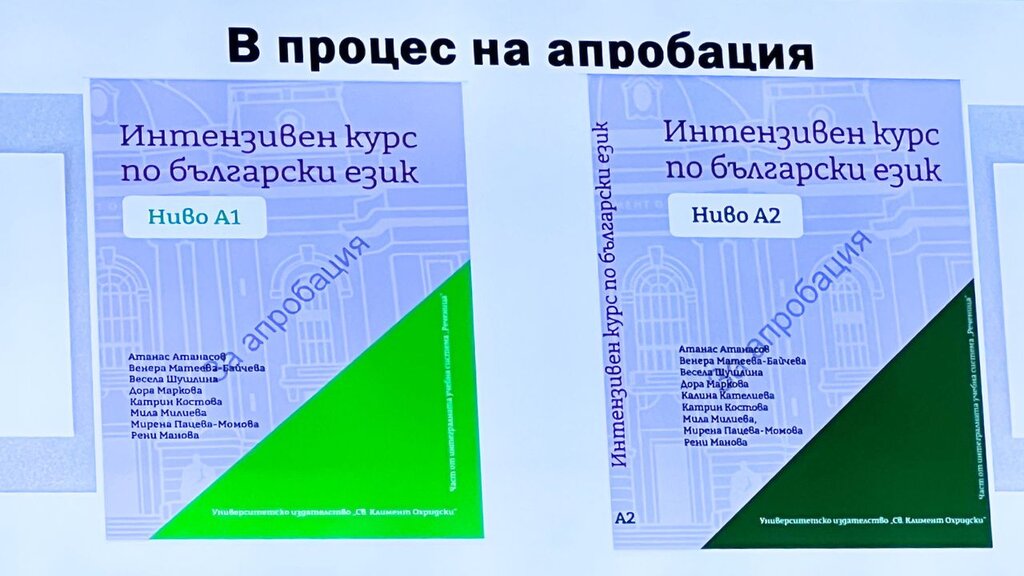
PHOTO Vesela Krasteva
The
teacher told Radio Bulgaria that the new textbooks for levels A1 and
A2, which they will use to teach Bulgarian as a foreign language,
have already been created within the framework of the "Rechenitsa"
project
by linguists at Sofia University "St. Kliment Ohridski".
Their content was also discussed during the 63rd Summer Seminar on
Bulgarian Language and Culture, which took place from July 12 to
August 1 at Sofia University. After the test period is completed and
the necessary corrections are made, they are expected to be printed
by the University Publishing House in September.
A
multilingual thematic dictionary has also been developed for levels
A1 and A2, which contains over 1800 words in Bulgarian, English,
German, Russian and Czech. The dictionary includes thematically
organized vocabulary, the most frequently used etiquette formulas,
word combinations and applications and is intended both for work in a
learning environment and for practical communication.
In
the next academic year, textbooks for higher language levels will
also be developed. "This is a big event for us and our community
of Bulgarian studies
scholars,
because the university's last edition was from 2014," Assoc.
Prof. Baycheva says. During her presentation and within the framework
of the Annual Conference of the
Association of Bulgarian Schools Abroad
it was once again noted that studying Bulgarian
language can happen
as learning a second or
a foreign
language,
but also as a form of a heritage language.
PHOTO Vesela Krasteva
"This
term "heritage
language" has been introduced in recent years and it has already
been mentioned several times that our Sunday schools have students
who are second and even third generation migrants, i.e. the language
now remains even as a second one for the parents of these children. This
is the heritage
language in the family, but this language is not active as
they communicate among themselves, in their everyday life in another
already acquired first language. This terminology - first language,
second and heritage
language, is not completely clearly defined in our scientific
theories, but the distinction comes along the line of the frequency of
use. In
fact, here the colleagues from the Sunday schools have their enormous
contribution, because even in the position of heritage
language,
Bulgarian is a wealth for the growing children with Bulgarian roots
and Bulgarian origin."
Methodologically
and organizationally, the differences in studying Bulgarian as a
second, foreign or heritage
language are not great, Assoc. Prof. Baycheva says.
That is why she and the team of scientists from the "Rechenitsa"
Project
used
the experience of their predecessors in teaching Bulgarian as a
foreign language as
a base,
but they weave this methodology and theory into the new situations of
today.
PHOTO Vesela Krasteva
"And
we do this with the knowledge of the mission we have for
all people who would like to speak Bulgarian well. No matter whether
these will be foreigners who have come to our country to study or
work, whether these will be people who have lost direct contact with
the Bulgarian language and do not live here, or whether these will be
the children of families from Bulgarian minorities. We believe that
we could create models by which the Bulgarian language will be active
as the official language of our country," Assoc. Prof. Baycheva
says.
PHOTO Vesela Krasteva
In
conclusion, she says
that "the Bulgarian language is not easy, but it has its
inspired ambassadors around the world who do not stop doing what is
necessary to make it more popular for studying
and to make speaking pragmatically easier. And our language is
already gaining serious popularity."
The
"Rechenitsa"
Project
is indefinite and will be completely open to all users, because its
mission is such - for Bulgarian speech to sound everywhere in the
world where it is needed.
This publication was created by: Alexander Markov