


Author
Tsvetana Toncheva
News
Petar Hristoskov and his brilliant “12 Caprices for Solo Violin”
Friday 28 August 2026 20:00
Friday, 28 August 2026, 20:00
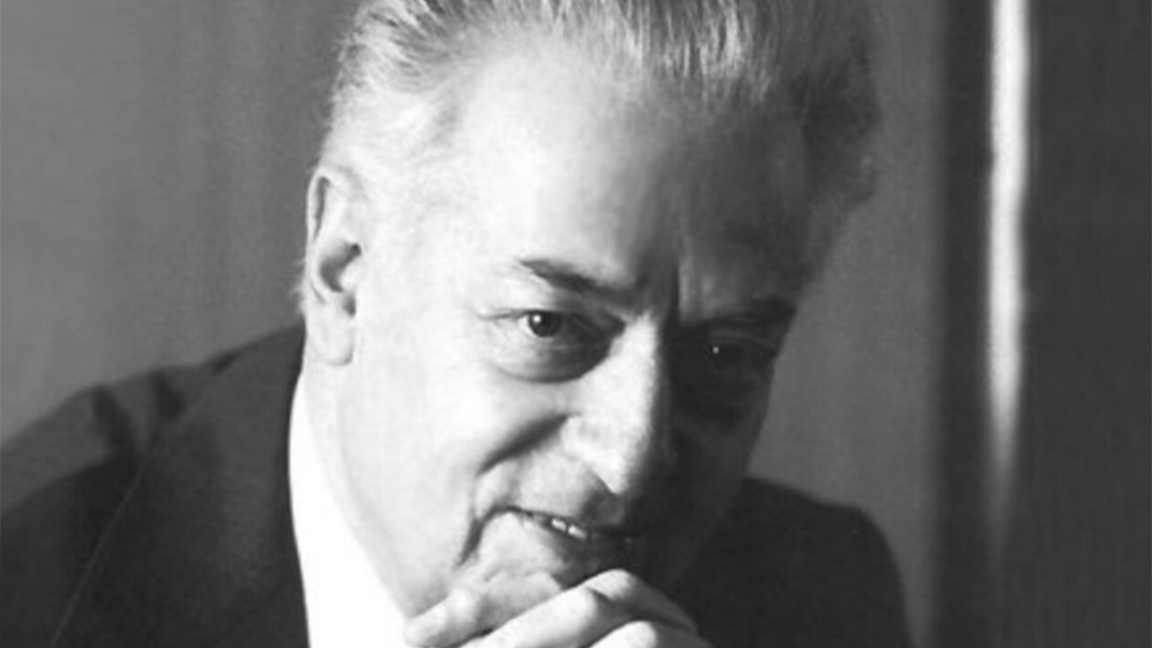
Petar Hristoskov (1917–2006)
PHOTO archives.bnr.bg
Font size
Petar Hristoskov (8 March 1917 – 19 July 2006) was one of the most prominent figures in Bulgaria’s musical culture—an outstanding performer, original composer and educator who made an enormous contribution to Bulgarian music. He was born in Knyazhevo, one of the capital’s outlying neighborhoods, where from an early age he was exposed to the distinctive folk tradition of the Shopluk region and its highly dissonant folk songs. Later, the music of the Shopluk became a fundamental element of his creative work and largely determined his expressive means, performance style, and aesthetic views.
Petar Hristoskov’s first violin teacher was Dimitar Popov, the father of the renowned Bulgarian violinist and conductor Sasha Popov. Petar was an extraordinary child—he would sometimes practice for twelve hours a day and occasionally improvise short pieces. This laid the foundation for the improvisational nature of his musical thinking.
At the age of just nine, he gave his first solo recital. At twelve, he performed Wieniawski’s and Mendelssohn’s demanding concertos for violin and orchestra in public, and at fourteen, he performed Tchaikovsky’s Violin Concerto, one of the greatest challenges in the violin repertoire.
In 1936, Hristoskov graduated from the Music Academy in the class of Sasha Popov. Following further studies in Berlin with the distinguished violinist Gustav Havemann, he embarked on an active concert career in Bulgaria and across Europe. His repertoire was impressive, ranging from pre-Classical works to compositions of the 20th century. His ability to combine a career as a soloist with chamber music and teaching was truly remarkable.
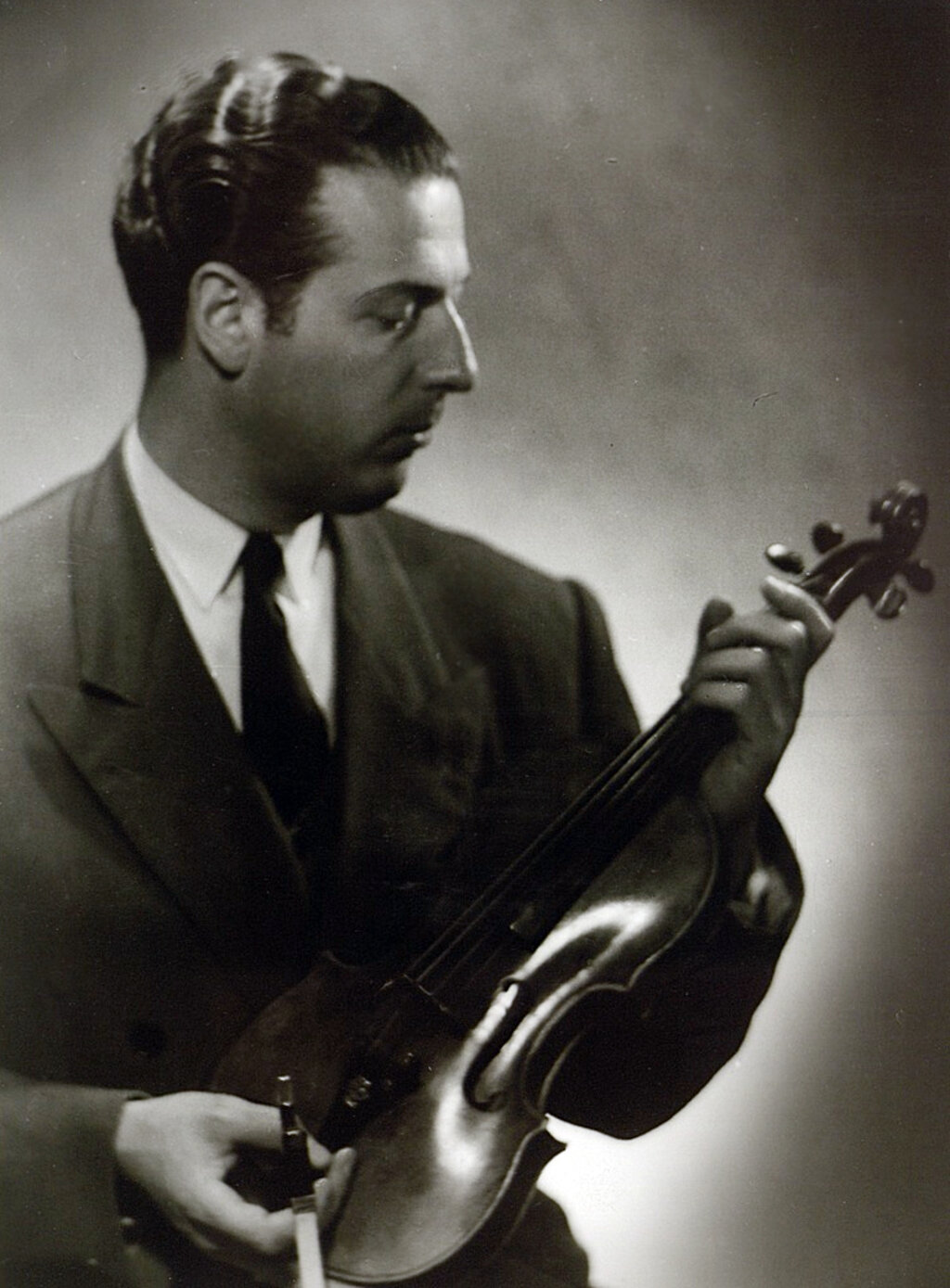
PHOTO visitplovdiv.com
Hristoskov began teaching at the Music Academy in 1945 and became a professor in 1950. He trained generations of Bulgarian violinists, and his influence extended far beyond his own academic career, playing a significant role in the development of the Bulgarian violin school.
As a composer, he wrote more than 40 works, primarily chamber and orchestral pieces, with works for violin predominating. His 12 Caprices for Solo Violin, Op. 1, were the first to reveal his distinctive compositional style.
The caprice genre is generally associated with freedom, virtuosity and experimentation. In Hristoskov’s work, however, these qualities are guided by a profound artistic vision, in which the intonations of Bulgarian folk music are not merely decorative elements, but serve as the starting point for the creation of an individual musical language. In his 12 Caprices, characteristic modal, rhythmic, and melodic features of the Bulgarian musical tradition serve as the basis for creating virtuosic and highly expressive violin writing.
One of the most beloved pieces among both performers and audiences is the lively Rachenitsa:
Of particular importance is the composer’s first-hand experience as a performer, with an intimate and masterful knowledge of the instrument. He employs its technical possibilities not merely as a display of virtuosity, but as a means of artistic expression.
The 12 Caprices draw on the genre, structure, and stylistic conventions of Western musical models, such as Paganini’s 24 Caprices for Solo Violin, while establishing new standards of instrumental mastery and artistic achievement.
One of the most popular pieces in the cycle, “Little Toccata”, is a favorite encore among Bulgarian violinists, with a great number of versions and arrangements for different instruments and ensembles.
The brilliant toccata genre was highly popular in 20th-century music. Unlike many of the lavish examples created by Debussy, Ravel, Prokofiev, Khachaturian, or Pancho Vladigerov, Hristoskov’s “Little Toccata” is not only bright and captivating, but also fresh, lively, simple, and elegant.
Refined taste, technical brilliance, originality and universality—all of these qualities make Hristoskov’s “12 Caprices for Solo Violin” much more than a regional stylistic model.
Today, the pieces from this cycle are an important part of the contemporary Bulgarian violin repertoire.
Translated by Kostadin Atanasov
This publication was created by: Kostadin Atanasov