


Author
Diana Tsankova
News
20-year-old Desislava Marinova creates authentic Bulgarian folk costumes
“Interest in the tradition is growing, including among children”, says Desislava Marinova
Wednesday 16 September 2026 11:56
Wednesday, 16 September 2026, 11:56
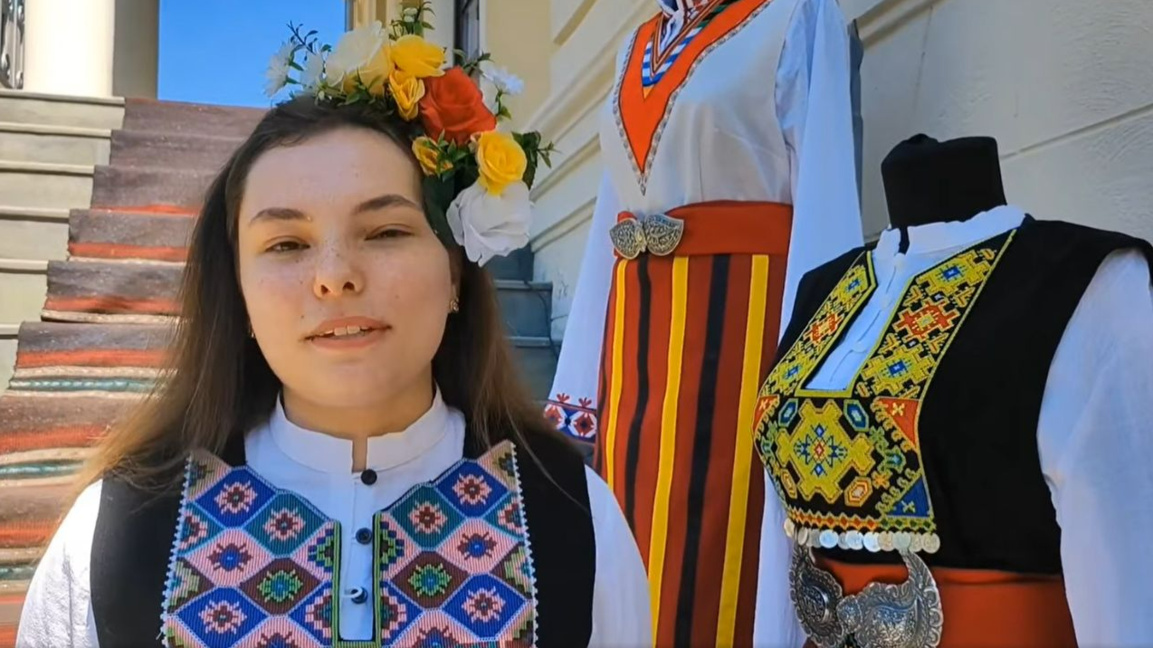
PHOTO BNR Burgas
Font size
The embroidery that adorns Bulgarian traditional costumes resembles the traditional folk dance, known as the horo. The interweaving of its threads transcends time—much like the dance itself, which welcomes yet another outstretched hand. Joining this unique journey between past and present is a 20-year-old young woman who finds meaning and inspiration in reviving authentic traditional Bulgarian attire.
Desislava Marinova has been helping at her mother’s tailoring workshop in Aytos since she was a child. As more and more customers began ordering traditional costumes, she discovered the aspect of the craft where she could make her own contribution—embroidery.
“What I love most is making the costumes as authentic as possible, so that they resemble the originals as closely as possible”, says Desislava. “I really like the costume I’m wearing at the moment. It is from the museum in Elhovo, and I made it myself. My favorite is the bridal costume from Samokov, but I haven’t made it yet because I don’t feel confident that I’ve reached the level of skill required. Actually, I love them all”, Desislava Marinova goes on to say.
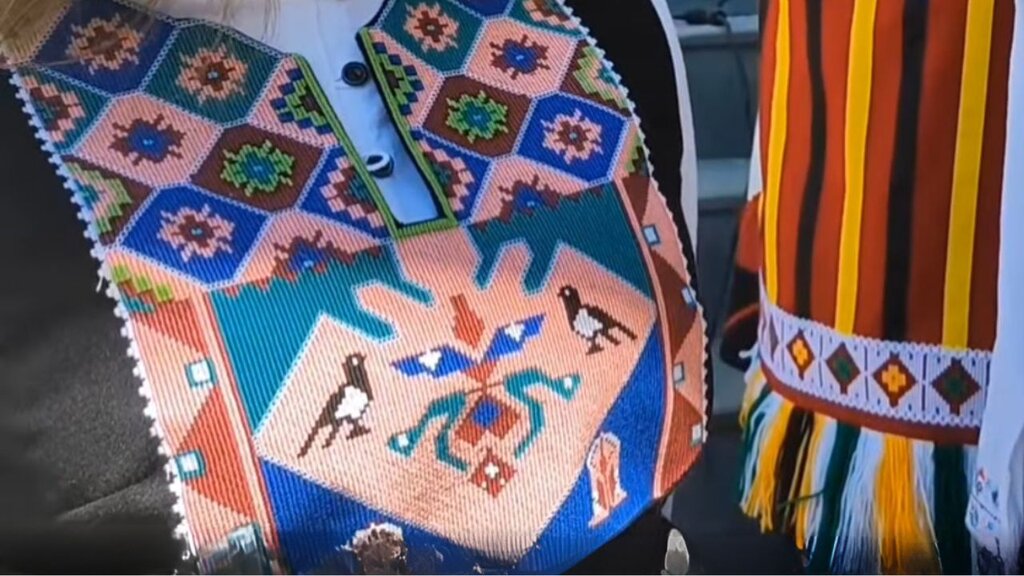
PHOTO BNR Burgas
To make the costumes as close as possible to the original garments, mother and daughter draw on sources from different periods. The process involves researching the specific ethnographic region, as well as paying close attention to the fabric, colors, and characteristics of the embroidery.
“There is a lot of information available online”, says Desislava. “We also buy a lot of research books. We visit libraries and museums as well, because they have books and other materials that are no longer in circulation and can’t be found in bookstores. Wherever we go, we talk to people and ask questions—they love telling us how their grandmothers and mothers used to make the clothes. We regularly have customers who like traditional costumes from their villages. Their grandmothers pass their old costumes down to them, but they are now too old to be worn. They ask us to make them a new one, so they can carry on the family tradition.”
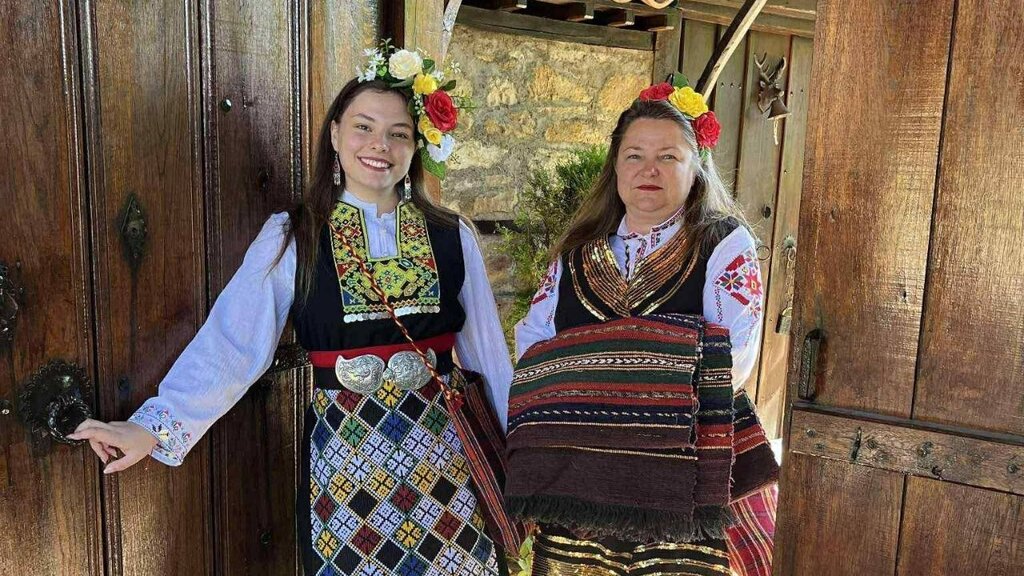
PHOTO Facebook /Atanaska Marinova
Over the past two years, Desislava Marinova has made numerous traditional costumes. “I can’t give an exact number. I find one from a particular region that I like, and I’m always working on something new.” The most difficult part, she says, is mastering the old techniques that are gradually disappearing over time.
“Today, the technology is different, and it makes it very difficult to recreate the authentic way of making these costumes”, says Desislava. “We can’t weave. Many of the pieces are woven, and we have to decorate them with embroidery. This prevents us, to some extent, from making the costumes 100 percent faithful to the originals. The embroidery is not done by hand, but by machine. We also try to use materials that are as natural as possible, such as cotton and wool, to make them as close to the originals as we can.”
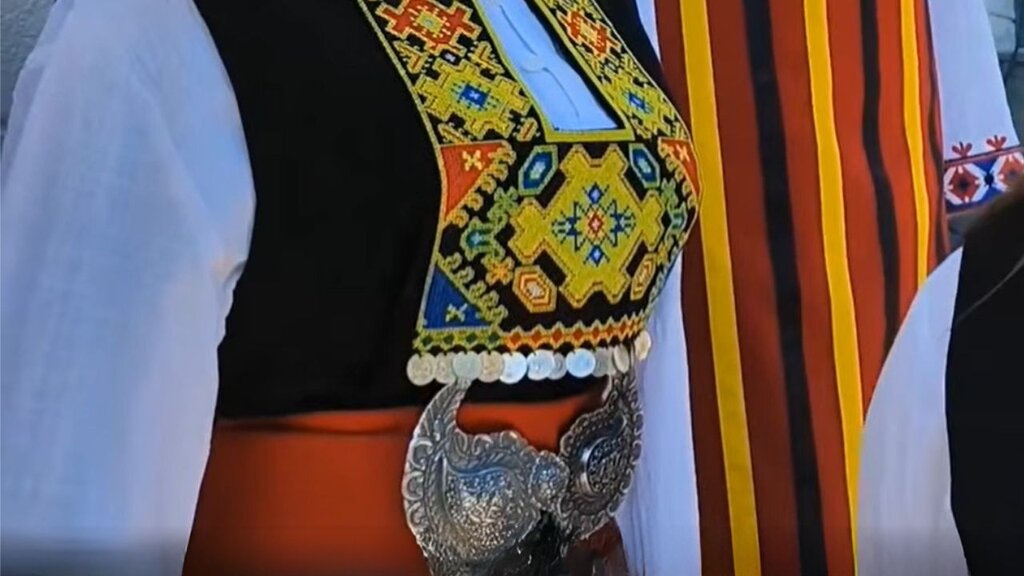
PHOTO BNR Burgas
The young craftswoman is determined to continue recreating the authentic spirit of the clothing once worn by Bulgarians, as interest in folk costumes continues to grow, including among children. Meanwhile, she is about to earn her university degree, once again in a field connected to her greatest passion—ethnography.
And for those who believe that her craft belongs to the past, she has a ready answer: “Traditional Bulgarian costume is part of our history, and it must be passed down from generation to generation.”
Text: Diana Tsankova (based on an interview by Stefka Bakardzhieva for BNR’s Radio Burgas)
Translated by Kostadin Atanasov
This publication was created by: Kostadin Atanasov