


Author
Gergana Mancheva
News
Ancient Serdica mosaic “Paradise” takes centre stage in Katya Lekova exhibition
Thursday 17 September 2026 14:00
Thursday, 17 September 2026, 14:00
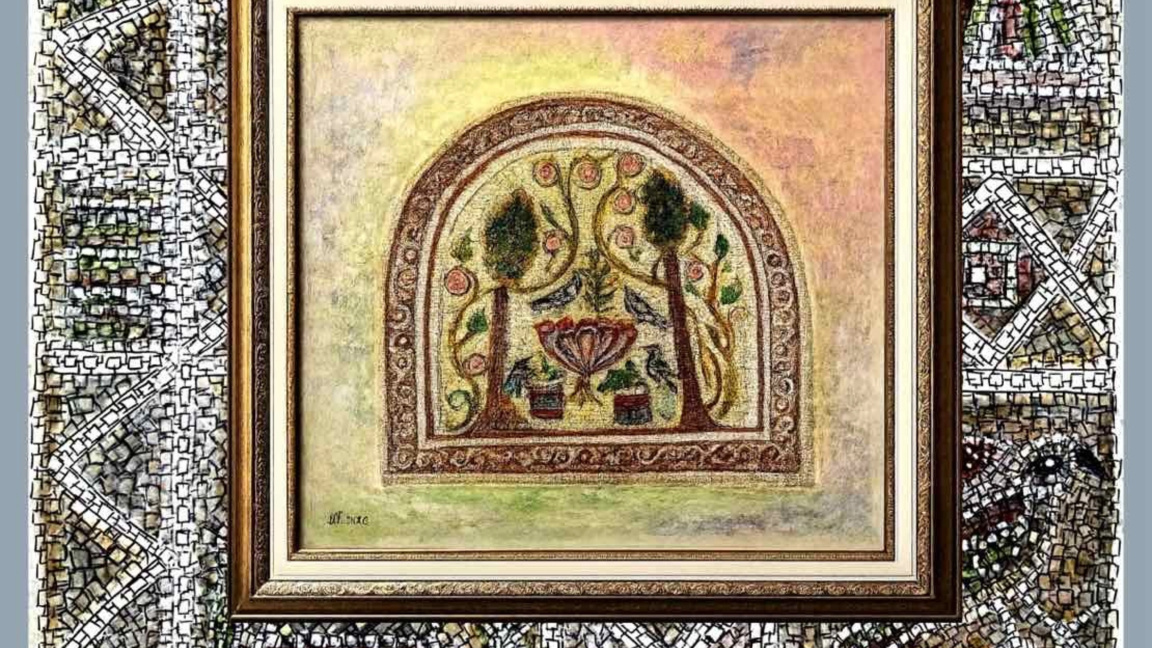
PHOTO Czech Center Sofia
Font size
Around 40 ancient and early Christian mosaics are presented by Associate Professor Katya Lekova in her latest, sixth exhibition of paintings on glass. Her entire professional career was spent teaching organic chemistry at South-West University Neofit Rilski, but she now devotes herself to her greatest hobby – searching for stone mosaics and transferring their rich palette of colours and forms onto glass. She has visited many museums around the world and seen the mosaics displayed in Sicily and Rome, but says that Bulgaria, too, has much to be proud of, and mosaics are part of that heritage. They can be found in the Small and Great Basilicas in Plovdiv, while beautiful examples have also been discovered at the ancient Villa Armira near Ivaylovgrad. There is even an entire museum devoted to mosaics in the town of Devnya, which Lekova has also visited.
A wealth of mosaics has been uncovered during excavations of ancient Serdica. One early Christian example particularly caught Katya Lekova’s attention, and she has recreated it in her exhibition. It is the mosaic known as Paradise – one of the most remarkable examples of mosaic art from Late Antiquity. The mosaic dates from the 3rd century and comes from the apse of the basilica beneath today’s St Sophia Church in the capital.
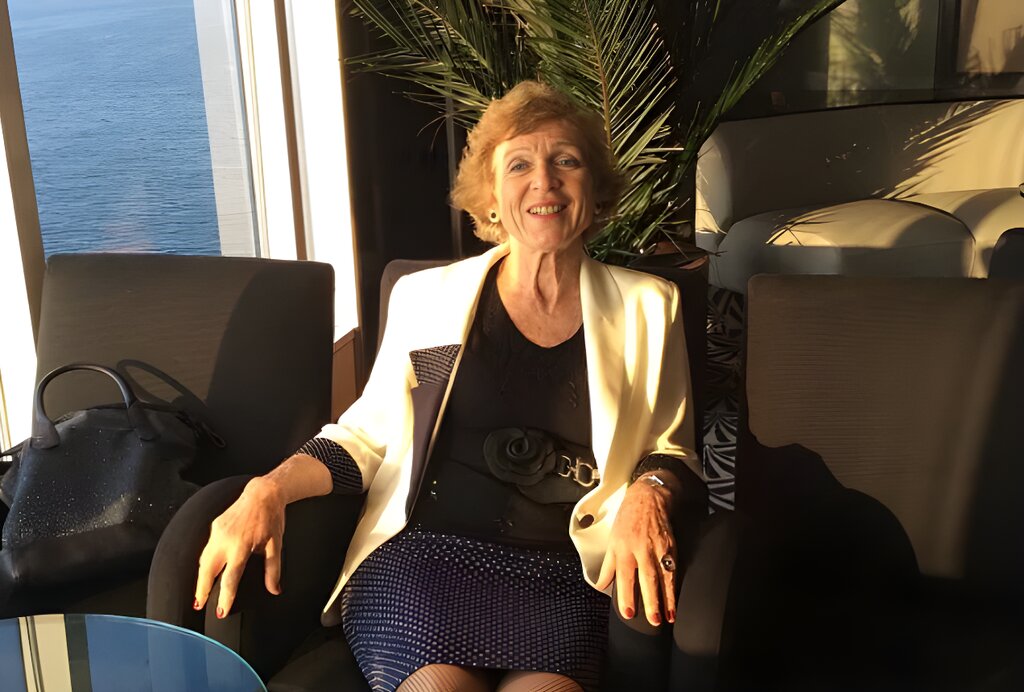
PHOTO katyalekova.com
It is made of stone and smalt tesserae – small pieces of stone and coloured glass carefully selected for their shapes and colours. At the centre of the composition is a large palm branch flanked by two doves. Below are two baskets filled with plants, with two more doves pecking at them. On either side stand two cypress trees entwined with vines. For early Christians, all this symbolised Paradise, with the doves representing the souls of the faithful.
Today, the stone mosaic Paradise belongs to the National Archaeological Institute with Museum at the Bulgarian Academy of Sciences. Its discovery and preservation date back to the early years of archaeology in the young Bulgarian state. Associate Professor Katya Lekova tells the story of the Czech scholar behind the find:
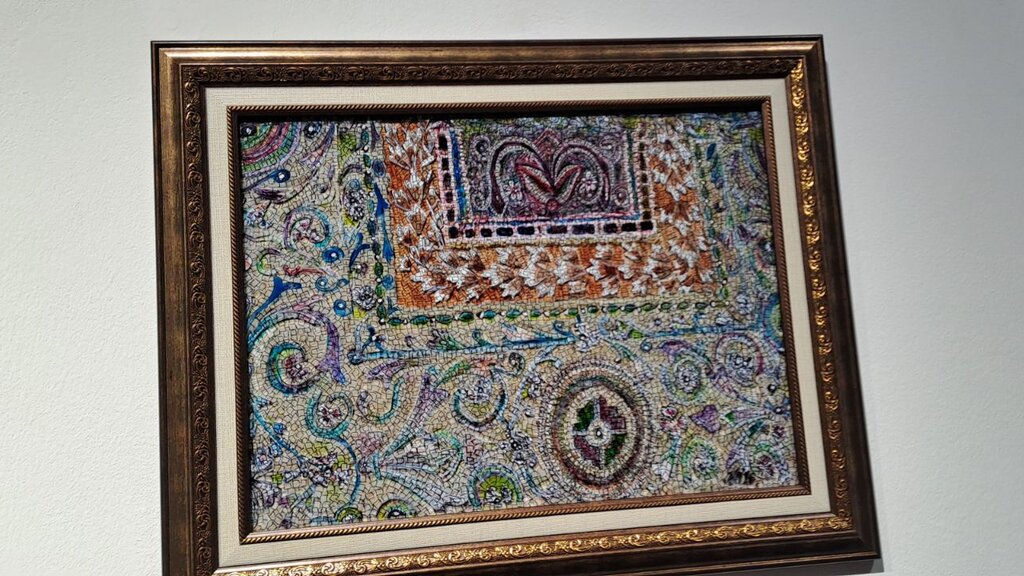
PHOTO Gergana Mancheva
“Václav Dobruský (1858–1916) was a Czech archaeologist who came to Bulgaria after graduating from the Faculty of Philosophy at Charles University in Prague. This was shortly after the Liberation. He first took up teaching and spent ten years teaching Latin at the high school in Plovdiv, and later in Sofia. He subsequently began lecturing at Sofia University, where for 20 years he taught various subjects – ancient archaeology, Thracology and numismatics.
“He was an erudite man who gave a great deal to Bulgaria. Alongside his teaching, Václav Dobruský took part in numerous excavations throughout the country. You may sometimes see him described as a Bulgarian archaeologist of Czech origin. But in fact, he was a Czech who spent most of his life in Bulgaria. Sadly, he died at just 58, but he gave 30 years of his active life to Bulgaria.
“In 1893, it was Dobruský who discovered the Paradise mosaic.
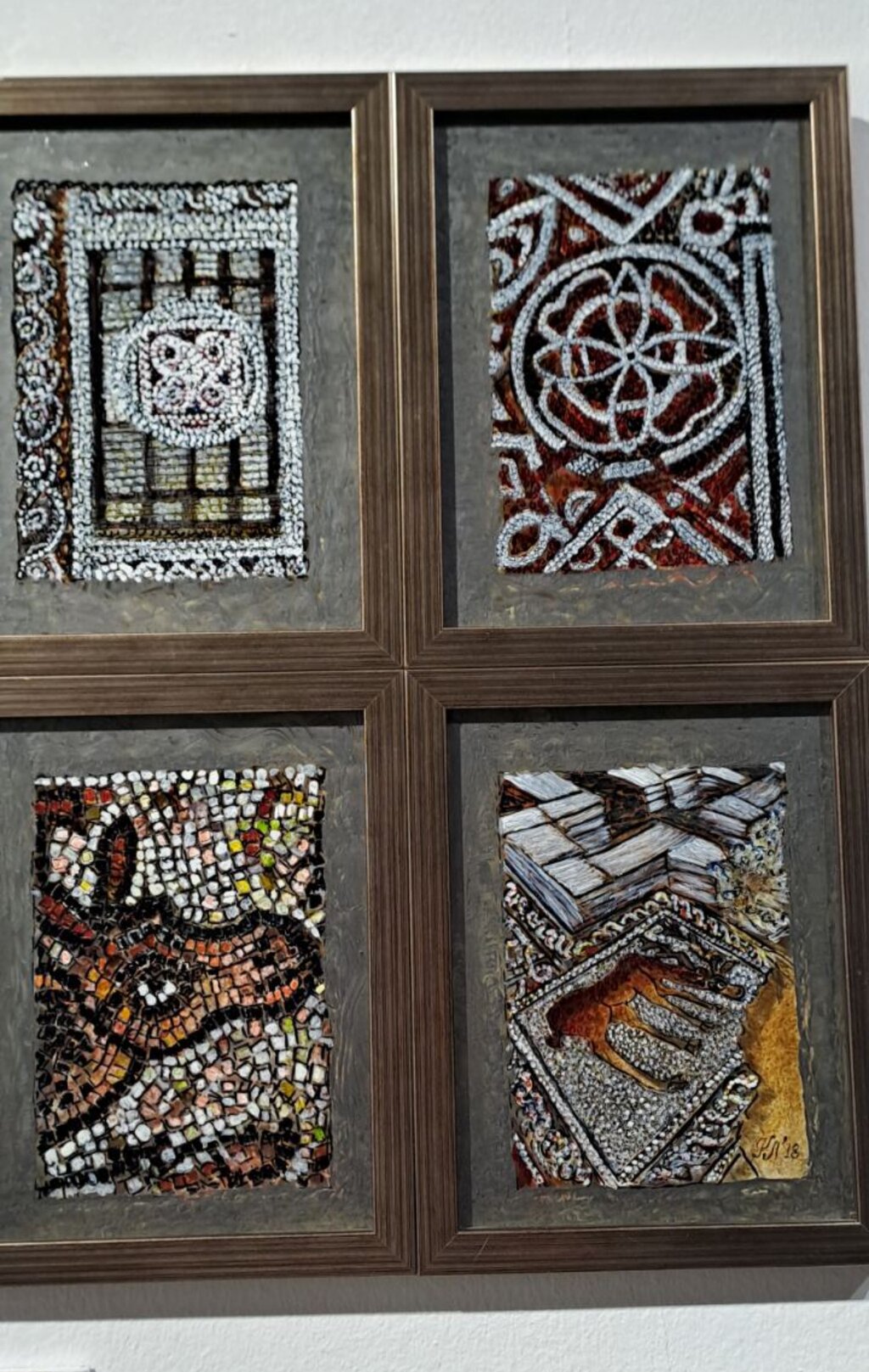
PHOTO Gergana Mancheva
“Something else that is not widely known is that he was the first director of what was then called the National Museum, which later became today’s National Archaeological Institute with Museum at the Bulgarian Academy of Sciences – or, as we know it, the Archaeological Museum in Sofia. Václav Dobruský himself opened the museum in 1905 in the presence of Prince Ferdinand.”
Lekova’s exhibition also includes several innovative digital works. Using three-dimensional imagery, she recreates mosaics that have been destroyed and cannot be restored, but whose appearance and place of discovery are known from surviving records.
Paradise, found beneath St Sophia Church, is a very different case. Exceptionally well preserved, it was the first mosaic in Bulgaria to be lifted and moved from its original location. Restored and preserved in its authentic form, it can now be seen at the National Archaeological Museum. Other mosaics from the same period are in poorer condition, and restorers have chosen to leave them where they were discovered.
Lekova sees Paradise as distinctive both in its style and in the world it depicts:
“This mosaic is quite different from the examples typical of our region. It is more restrained and focuses on the early Christians’ idea of the heavenly world. There are two trees, vines winding around them, and birds. Two of the birds are drinking from a special vessel of the kind used in ancient times for wine and water. Here, a palm branch has been placed in the vessel. All of this expresses the elation of the early Christians and the way they imagined the heavenly world. There was a sense of great excitement because Christianity had by then been recognised as a religion. Before that, Christians had been persecuted and Christianity regarded almost as a heresy. Many people had lost their lives for spreading the Christian faith. This is precisely what the mosaic depicts – the triumph of Christianity and its establishment as a major religion.”
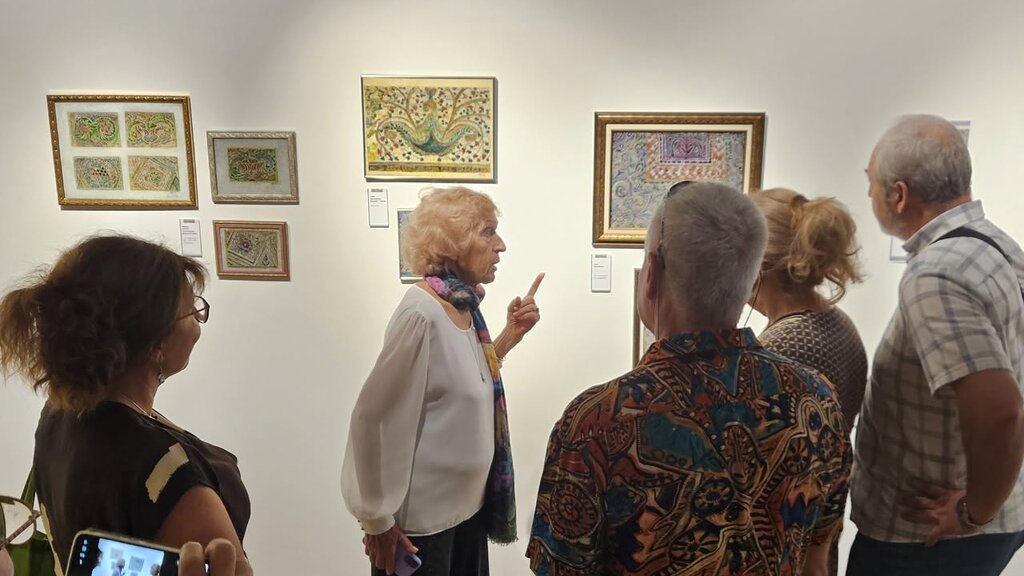
PHOTO Czech Center Sofia
For Lekova, the mosaics also testify to the skill of the craftsmen who created them. They knew how to achieve proportion, beauty and durability with tiny pieces of coloured stone.
“The fact that we find mosaics in so many places in Serdica, left literally beneath our feet, should make us proud to be heirs to a city inhabited by people of great spiritual refinement, who looked to the future and left us their legacy through these mosaics,” she says.
“And the fact that some of the finest and most talented mosaic craftsmen worked here is another piece of history that continues to inspire specialists, scholars and anyone fascinated by the stories of the ancient city.”
Editor: D. Semkovska
This publication was created by: Elizabeth Radkova