


Author
Bozhidar Janev
News
Monument to the Unknown Soldier in Sofia – symbol of the Bulgarian warriors
Tuesday 22 September 2026 19:13
Tuesday, 22 September 2026, 19:13
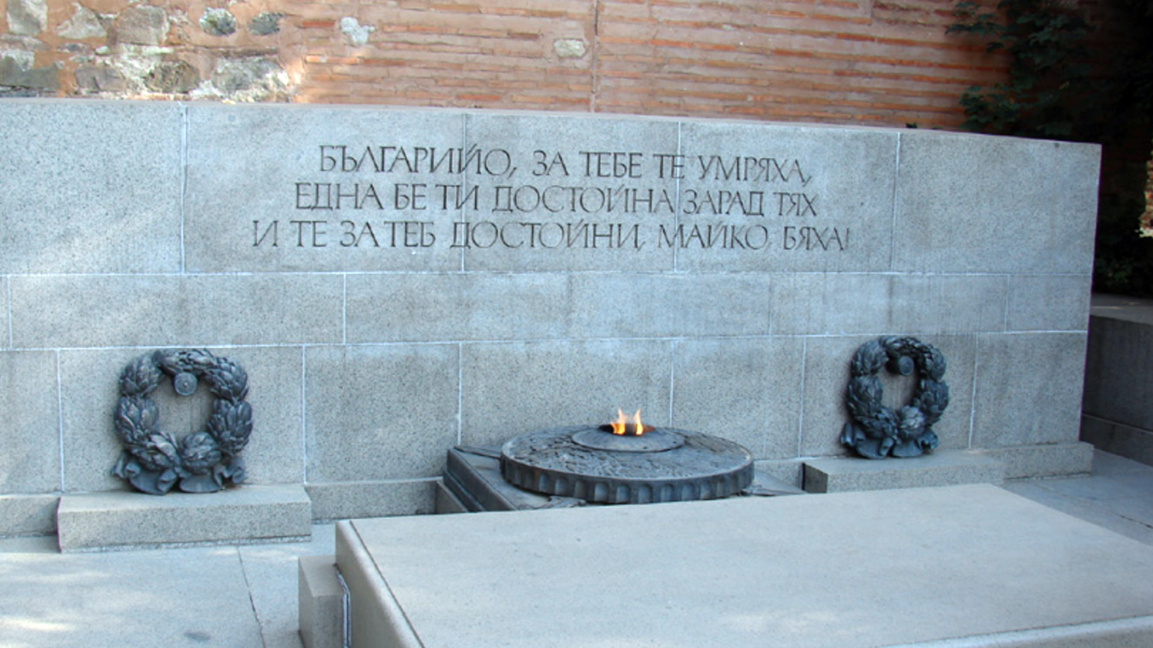
PHOTO Bozhidar Janev
Font size
September 22, 2026 marks the 45th anniversary of the unveiling of the
Monument to the Unknown Soldier in Sofia in its current form. The first monument of this
kind was put up in Great Britain in 1920 and many other countries who
took part in World War I followed suit. The story of the Bulgarian
equivalent is fraught with stumbling blocks of all kinds. Its
appearance was altered more than once, but the symbolism it conveys
has remained the same.
Here is more about the monument and its history from historian Dr.
Alexander Mirkov:
“A commission was selected in 1918 for making an architectural
monument like this. Four years later the Minister of Education Stoyan
Omarchevski proposed that a fund be set up to raise the money needed.
The political turmoil in the country at the time put a spoke in the
wheels of this idea. On 14 December, 1926 a special commission headed
by Minister of War, General Ivan Vulkov entrusted sculptor Andrey
Nikolov with the work. The spot where it was to be erected was also
selected – the southern side of St. Sofia church. It was decided
that the monument should be the symbolic tomb of all known and
unknown Bulgarian soldiers who lost their lives in the struggles for
the liberation, reunification and defence of Bulgaria.”
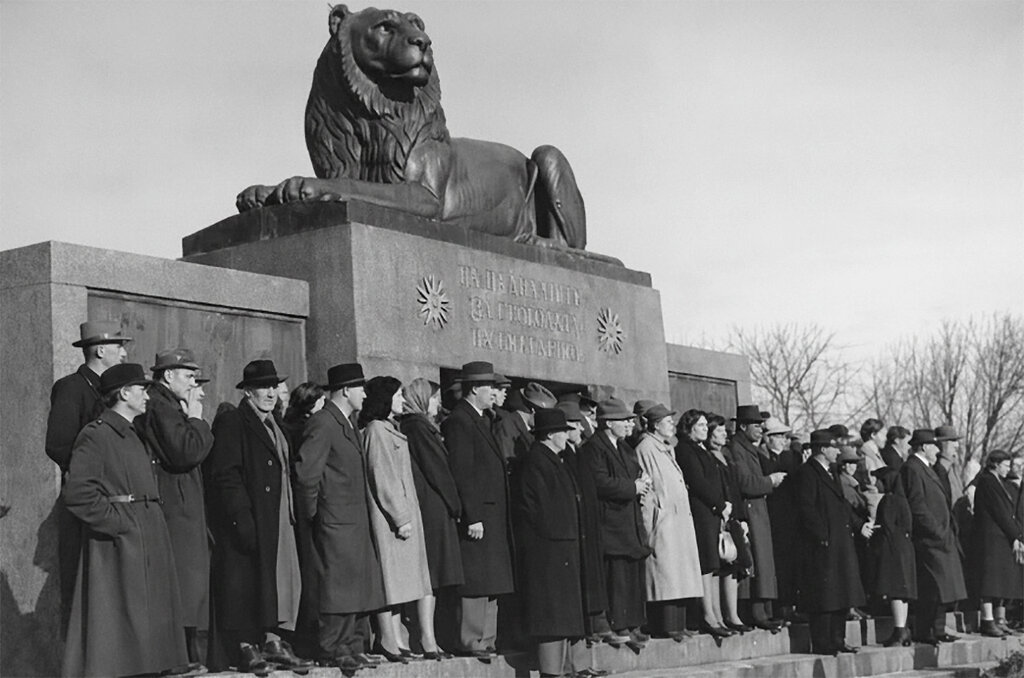
The Monument to the Unknown Soldier at its inauguration in 1941
PHOTO archive
After much hesitation what the monument should look like and where it
should stand exactly, the project was finally given the go-ahead.
When was the monument actually inaugurated and what has its fate
been?
“The official inauguration was in 1941 and the last word in this
was that of Tsar Boris III. The composition incorporated several
principal elements. The central figure was that of a lion made of
bronze as the symbol of the nation. The monument had a granite
sarcophagus-plinth in bronze relief with two metal crosses of honour
inscribed “To all those who laid down their lives for their country
– everlasting glory!”
The sarcophagus was flanked by bas-reliefs on both sides: on one side there was a weeping willow, the symbol of sorrow and on the other – two women bowed down by their suffering. But this monument was not to survive long. During the Allied bombing raids of Sofia it was severely damaged. After the radical political changes – the communist coup on 9 September, 1944 the spot was “cleaned up” and the sculpture of the lion was moved twice. Later, minister of construction and roads General Ivan Vinarov gave orders that the lion be placed on top of a round plinth in front of the entrance to the former royal residence Vrana near Sofia. After that the lion mysteriously vanished and it was only in 1975 that it was found at a camping site near the residence by members of the public and was stored away at the National Museum of Military History.”
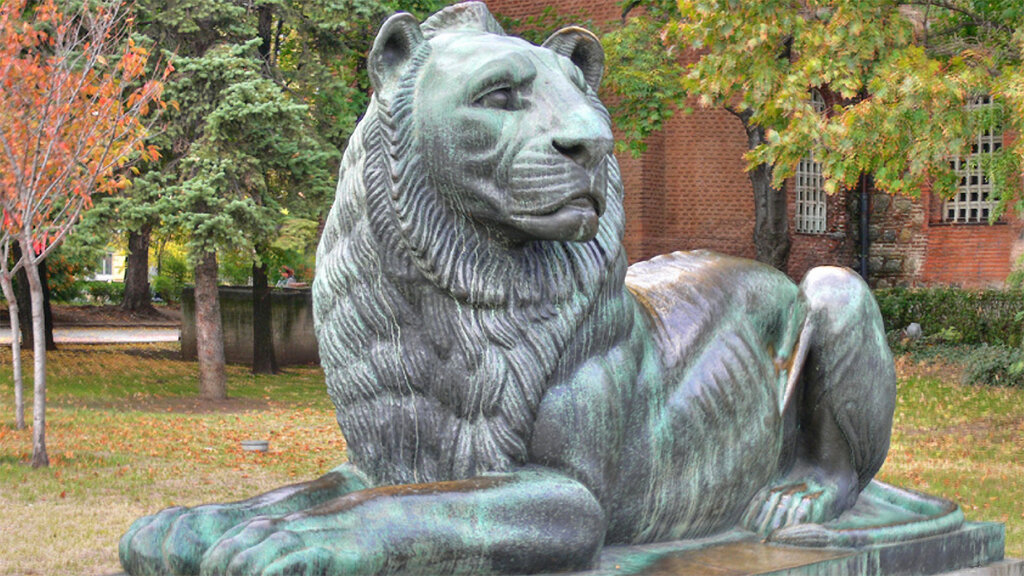
PHOTO Bozhidar Janev
The question of constructing a monument to the unknown soldier all
over again only came up in the 1970s. Dozens of competitions were
organized, all kinds of projects were proposed but none were
ultimately approved. Pencho Kubadinski, member of the Politburo of
the Central Committee of the Bulgarian Communist Party suggested that
the monument to the unknown soldier be constructed on the same spot
but that its appearance be altered. The question arises - when was
the monument restored as it now stands?
“In 1980 a team of architects headed by Nikola Nikolov and sculptor
Prof. Lyuben Dimitrov was commissioned to do the job, as a matter of
urgency. The monument was inaugurated with a lavish military ceremony
on 22 September, 1981. The monument bears all the necessary markings
– unpretentious but grand, bathed in the light of the eternal fire
with laurel wreathes on both sides and an inscription – a stanza
from Ivan Vazov’s poem “The new graveyard above Slivnitsa”.
What does the monument look like in our day:
“A sarcophagus with 15 cartridge casings containing soil from all
corners of Bulgaria and the mortal remains of unknown soldiers from
different historical sites. This is what makes the monument a symbol
of honour, patriotism and the self-sacrifice of all Bulgarian
soldiers. It is a symbol of the bond between generations, past and
present. The sculptural composition includes the figure of the lion
from the old monument. As time went by the Monument to the Unknown
Soldier has come to embody Bulgarian statehood.”
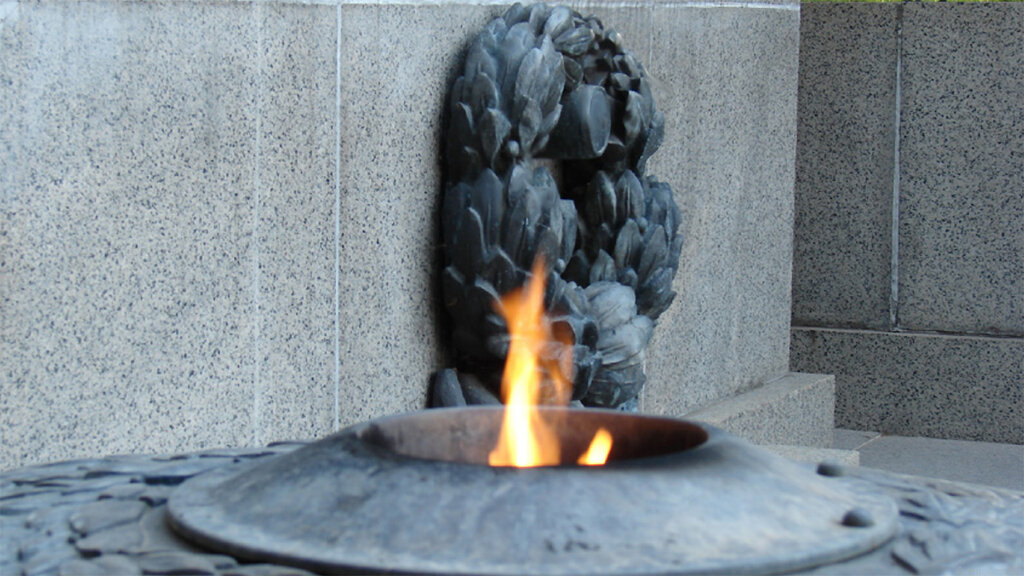
PHOTO Bozhidar Janev
English version: Milena Daynova
This publication was created by: Alexander Markov