


Author
Tsvetana Toncheva
Thursday 24 September 2026 15:36
Thursday, 24 September 2026, 15:36
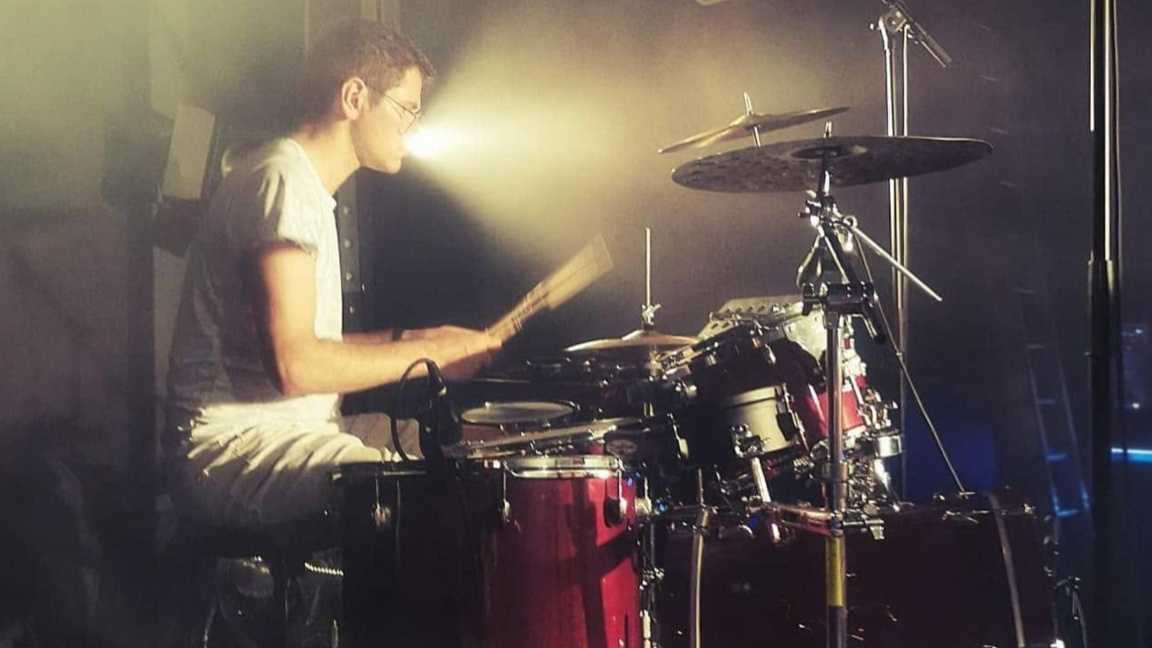
PHOTO Facebook / victorkrausmusic
Font size
The sound of the bells at Dragalevtsi Monastery, just outside the Bulgarian capital, echoes much farther than one might imagine – all the way to concert halls across Europe. For percussionist Victor Kraus, that sound became a musical motif and the starting point for an unusual piece, “Electronical Sofia”.
Victor Kraus was born in Luxembourg in 1982 into a family of pianists. His mother is Bulgarian, his father is from Luxembourg, and his paternal grandmother is French. He studied at the Hochschule für Musik Karlsruhe, where his mentor was renowned Japanese percussionist Isao Nakamura, and at the Strasbourg Conservatory under Emmanuel Séjourné, the internationally acclaimed composer and percussionist whom Kraus considers the most important mentor in his life.
Kraus works across numerous musical styles and genres. As part of the percussion duo KrausFrink with Martin Frink, he has performed classical recitals at prestigious venues and festivals in Germany, Luxembourg and across Europe, as well as in China. Several leading contemporary composers from Luxembourg, Germany and Hungary have written pieces especially for the duo. He has released two albums of his own music: “Eat This” with KrausFrink and “VOLT” with NOMAD the GROUP.
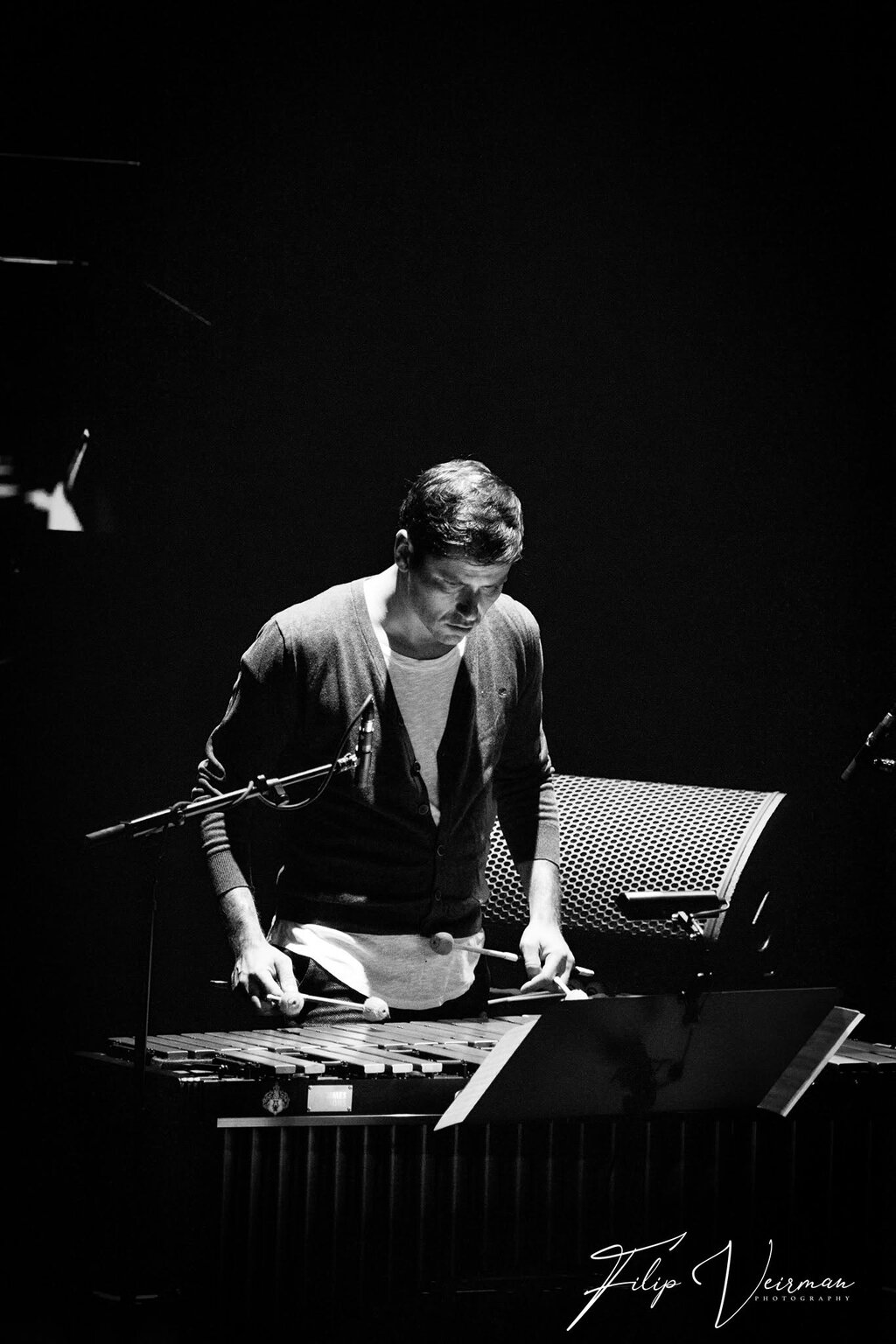
PHOTO Facebook / victorkrausmusic
In 2018, Luxembourg jazz trio Dock In Absolute invited him to tour Brazil, and he has been the group’s drummer ever since. His most recent appearance in Bulgaria was with the trio on August 14 at the Krakra Jazz festival in Pernik.
Speaking to Radio Bulgaria in excellent Bulgarian, Kraus recalls that his maternal grandparents were singers with the Bulgarian Choral Chapel, today the Svetoslav Obretenov National Philharmonic Choir. As a child, he came to Bulgaria several times a year. At around 17, he began travelling on his own, with a backpack, making his way around Europe with Bulgaria always his final stop. Today he visits his mother’s homeland with his own family at least once a year.
About a decade ago, going through a difficult period, Kraus came to Bulgaria and wrote “Electronical Sofia”, a piece for percussion trio inspired by Vitosha Mountain and Dragalevtsi Monastery.
“We have a small apartment in Sofia that belonged to my grandmother, and I ‘hid away’ there. There’s a piano there too. I went up Vitosha, where there’s a monastery. I was walking past it and at that very moment I heard them! I heard the bells – the little bells... the rhythm, the way they sounded... Something clicked, and I used those bells as the basis for the piece I wrote in the Sofia apartment.”
The opening vibraphone motif in the half-electronic, half-acoustic “Electronical Sofia” echoes the church bells of Dragalevtsi Monastery announcing the beginning of the liturgy. For Kraus, the motif, like the place itself, has a metaphysical quality.
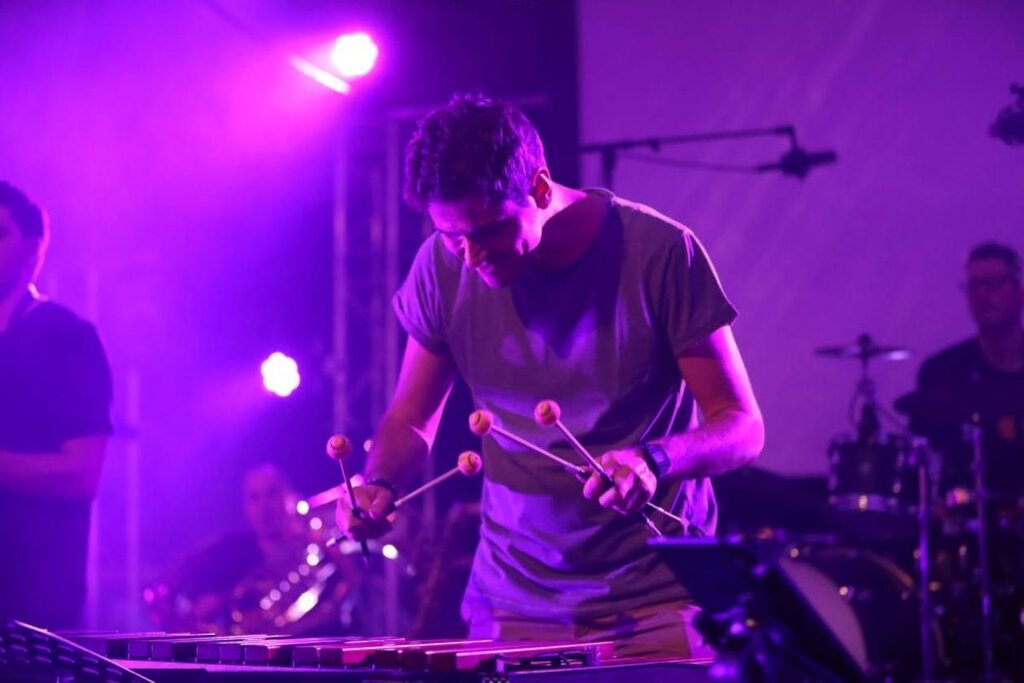
PHOTO Facebook / victorkrausmusic
Classical, jazz, electronic and ambient music, ethno, klezmer... Kraus finds it difficult to say which he loves most. His training is classical, as was his first project, the percussion duo KrausFrink, which performs contemporary music in prestigious concert halls, in recital and with orchestras. The duo also experimented with electronic music played on classical instruments. Their programmes combined contemporary works by renowned composers with music of their own – “in a way electronic music, but not exactly in style, because everything you hear is played live, not by some computer,” Kraus explains.
He describes his 13 years with KrausFrink as “absolute madness!”
“A lot of work. We were very young and imagined we could build a serious career that way – and in fact we did. But at the time we didn’t realise there simply wasn’t a market, because classical music is already a niche, and we were a niche within a niche: classical music and percussionists. That’s very exotic.”
After 13 years of intense work, he grew tired of the duo. New projects soon came his way, and within months Kraus found himself playing in six different ensembles – another demanding schedule. Today he has narrowed that down to three projects: VICTOR KRAUS GROUP, ethno ensemble NOMAD the GROUP and internationally known jazz trio Dock In Absolute.
Kraus agrees that Dock In Absolute has achieved international recognition despite coming from a country as small as Luxembourg.
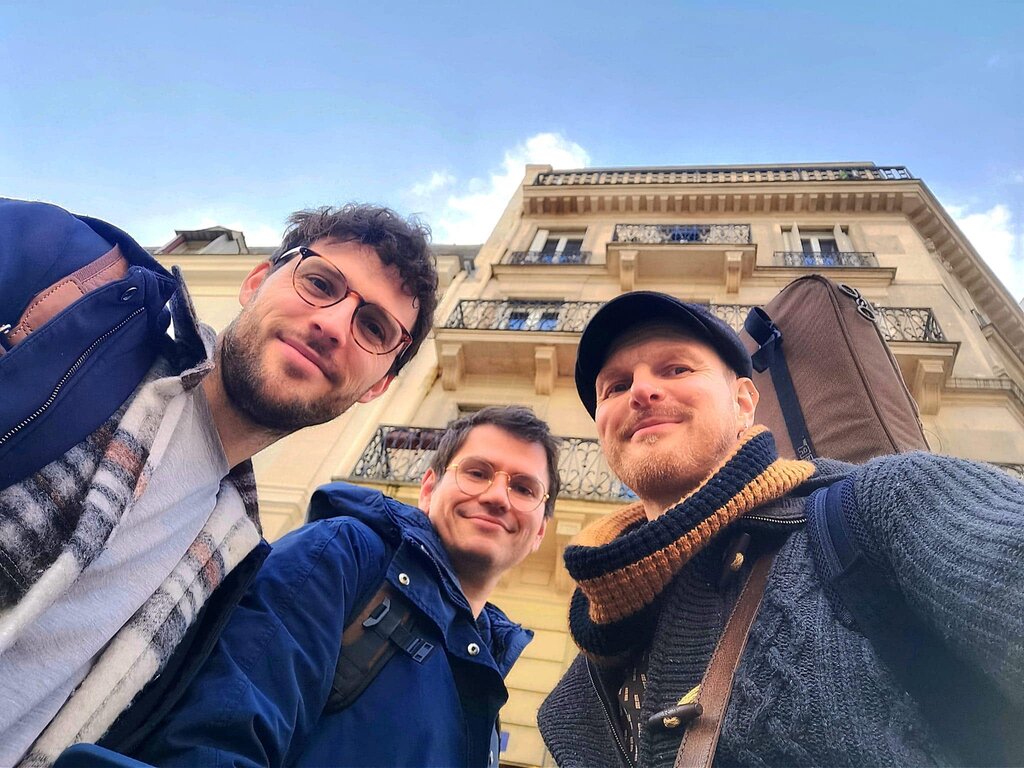
Dock In Absolute
PHOTO Facebook / victorkrausmusic
“Yes, because the country is so small, good musicians have to try to build a career abroad. And simply through the style of our music, we’ve managed to become very much in demand.”
For the past 17 years, Kraus has also taught at the Luxembourg Conservatory. He does not think teaching has made him a better instrumentalist, but says it has given him a different perspective on music. He speaks proudly of one of his most successful students, Jassen Geisel, the son of Bulgarian flautist Maria Miteva, whom he taught for ten years. Recently, at the age of 15, Jassen was admitted to the Mozarteum University in Salzburg, where he will study with renowned percussionist Martin Grubinger.
At the Conservatory, Kraus teaches children of different ages. So how does he relate to today’s children and teenagers, and what does he make of the criticism so often directed at their generation?
“I don’t think there’s anything to be disappointed about, because young people are the result of what we adults are. Twelve-, thirteen-, fourteen-, fifteen-year-olds aren’t responsible for what they are. They are what we have brought them up to be, according to what we offer them. When I get on a train and my child says, ‘Dad, give me the phone,’ I have to say, ‘No phone. Look outside – look at the cows.’ But then all the child sees on the train is adults on their phones – so what am I supposed to say?
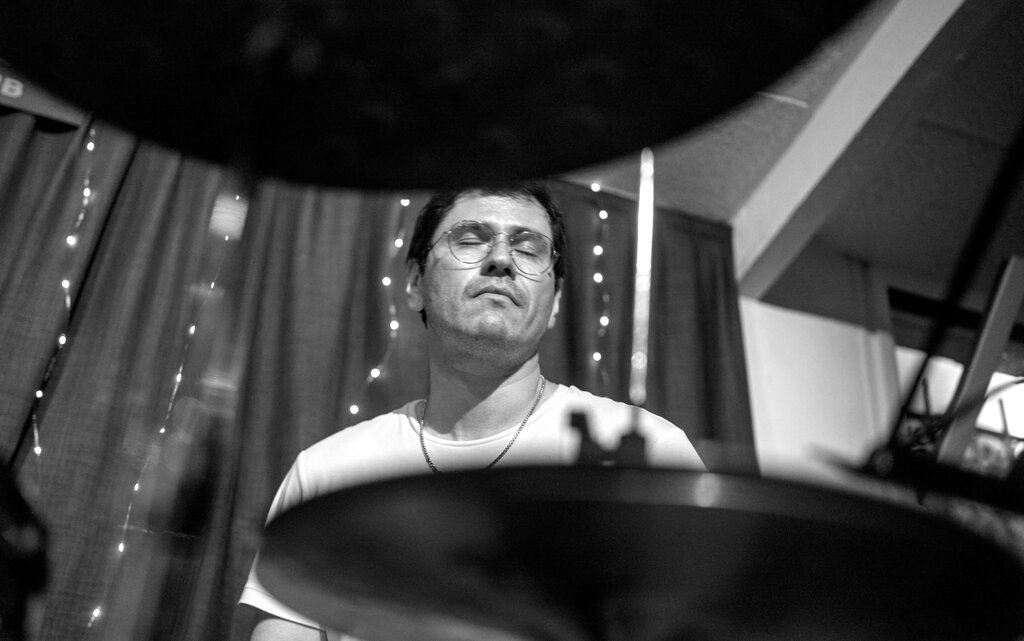
PHOTO Facebook / victorkrausmusic
“Yes, I understand the question. It’s true there is a serious problem with concentration, and I can see that very clearly myself – from when I started teaching in 2009, when smartphones were still something new, to today’s generation, which is growing up with them. There’s a big difference.
“Is there a future? To tell you the truth, with the way things look at the moment – geopolitically, environmentally – I find it very hard to be optimistic about the future. Yes, I have three children, and as a father I can’t exactly depress them... I also have to give my students confidence in life and in the world. But we need to pull ourselves together – the liberal, democratic and humanist forces in society need to take things much more seriously, because politically things don’t look very good at the moment, especially in Western Europe. The extremists are at the door, waiting – in France, in Germany, everywhere. And if the extremists come to power in France and Germany, then things get very bad indeed.”
Kraus knows a number of successful Bulgarian musicians working in Europe, among them percussionists Boris Dinev and Vassilena Serafimova. In his view, Bulgaria lacks strong national branding and remains relatively little known abroad. One exception, he says, is the international reputation of Bulgarian vocal music and the global name of the Mystery of the Bulgarian Voices. He believes Bulgaria could and should do much more to promote its music and musicians, because the country has remarkable talent at a very high level.
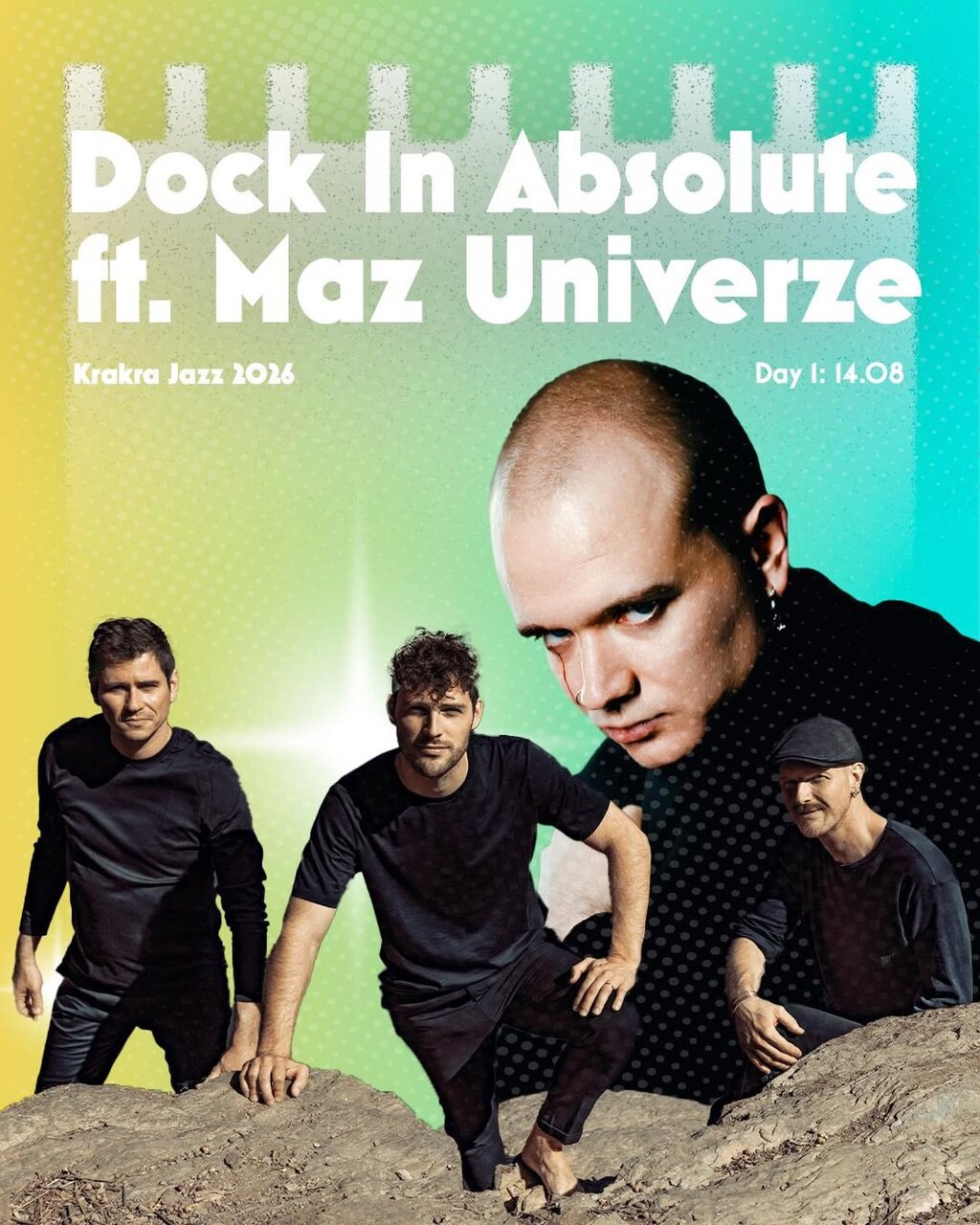
PHOTO Facebook / victorkrausmusic
So what does Bulgaria mean to him?
“On the first level, of course, it’s simply emotion and nostalgia, because as a child I spent a lot of time in Bulgaria – in Sofia, in the Balkan Mountains, in Teteven. On another level, I grew up in one of the richest countries in the world, but I know the culture, the language and the alphabet of one of the poorest in Europe – poor in the economic sense – and at the same time one of the richest culturally.
“For me, Bulgaria brings together this high culture and something more, something very authentic, a little wild, because Bulgarians are very connected to nature, to their very old culture... I really like the way people think... It’s quite a relaxed country – I mean in the way people live.”
And what is the one thing he would want everyone in the world to know about Bulgaria?
“I think the first and most important thing is the beauty – the beauty of nature, of course. And the beauty of the vocal music, of the Bulgarian voices, precisely the ‘mystery’ of those voices... Or the combination of the voices and nature!
“I think that because I’m a musician, that’s the most important thing for me – for people to know these Bulgarian voices. You don’t find that anywhere else in the world. It’s unique to this country and absolutely magical.
“You know, my wife and I got married in Oreshak, in the Troyan Balkan, and we were lucky enough to have the Eva Quartet sing at our wedding. It was an absolutely magical moment. So if you ask me for one thing in Bulgaria that everyone really should know, it’s the voices. The Mystery of the Bulgarian Voices.”
Editor: Elena Karkalanova
This publication was created by: Elizabeth Radkova