


News
Highlights of Bulgarian musical culture
Stop, Don’t Leave… – Mitko Shterev’s hit that outlived the film Adaptation
Friday 2 October 2026 17:05
Friday, 2 October 2026, 17:05
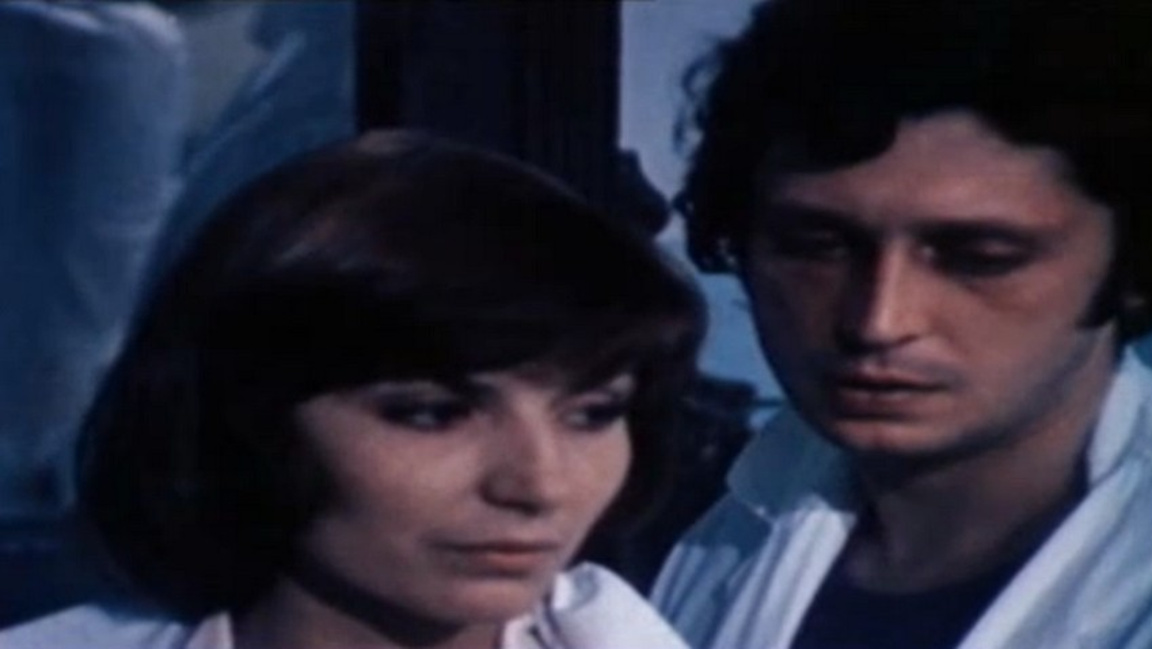
A still from the film Adaptation.
PHOTO BNT
Font size
Adaptation, better known by its opening line “Stop, don’t leave…”, is one of the best-loved songs written for Bulgarian cinema. It features in the film of the same name, Adaptation, a three-part television drama shot in 1979 by acclaimed director Valo Radev (1923–2001).
Written by Rayna Tomova and Valo Radev, the story centres on a psychiatric clinic. Its patients suffer from fear – fear of other people, of love, of life and of death. Among them is the beautiful Veronika. The young psychiatrist Dr Bankov devotes almost all his time to his patients, using group psychotherapy, an unconventional method at the time. Each participant is expected to share their fears and try to speak, act and feel without fear. Unlike the others, Veronika is unable to overcome her inner barriers during the sessions, but falls in love with the doctor. That emotion proves to be the key to her inner drama.
In the 1970s, addressing the suppression of the individual and the lack of prospects for young people – sensitive, vulnerable and unwilling to adapt – was more than controversial. Seen as an allegory of Bulgarian society, the film angered people and institutions that insisted individuals should conform to what the system expected of them.
Dr Vlado Bankov had a real-life prototype – Georgi Kamenov (1942–2006), one of the pioneers of group psychotherapy in Bulgaria, who began running the first psychotherapy groups in Sofia in the early 1970s. The prevailing ideology at the time regarded psychotherapy and psychoanalysis as “decadent bourgeois”. Even before the film appeared on screen, Dr Kamenov was subjected to pressure and humiliation, his groups were discontinued and he was compelled to emigrate.
In 1979, Adaptation won several national awards, including for directing and cinematography, while Eli Skorcheva, who played the female lead, received an award for her debut from the Union of Bulgarian Filmmakers. The drama, however, was subsequently taken off the screen amid controversy, and Valo Radev was called upon to explain himself before the Bulgarian Communist Party Central Committee’s Culture Commission.
The 1981 cinema version of Adaptation was his final film. Whether for ideological reasons or because of a family tragedy – his only son was killed in a car accident – Radev never made another film.
Yet while controversy swirled around Adaptation, its music took on a life of its own.
In 1979, the 33-year-old Mitko Shterev was already a well-known composer and pianist, founder of the popular rock band Diana Express, and the creator of arrangements and dozens of popular songs. Today, Shterev is established as one of Bulgaria’s foremost composers of film music. His unforgettable scores include those for The Double, Doomed Souls, Combination, Cry for Help and My Darling, My Darling.
Shterev’s remarkable gift for melody is distinguished above all by an irresistible romanticism, tenderness, sentimentality and poignancy capable of moving even the most prosaic pragmatist to tears.
In the song from Adaptation, this extraordinary musical talent meets the poetry of Ivan Peychev (1916–1976). Described as a “giant poet” and a “prince of poetry”, he is considered one of the most subtle and delicate lyric poets among Bulgaria’s masters of the written word.
He has been described as “a poet with golden nails in his lips”, “a pure romantic and bohemian, an extraordinary bard of scandal and rebellion, a shield against violence, vulgarity and demagoguery in life and art”, and a man of “unconventional habits, something of a white crow” – “tall, thin, limping like Rimbaud, long-haired, unemployed and impractical, with an incomparable combination of brutality and tenderness, audacity and gentleness, abandon and shyness”.
Although Peychev had been dead for three years when Adaptation was filmed, his poetry was so popular that Valo Radev incorporated several of his poems into the screenplay, where they are recited by the characters.
“I will be sad without your hands”, “rivers are quiet beneath the bridges”, “the harbours lie deserted and still” – the absence of the person one loves transforms reality itself.
The great Bulgarian pop singer Vasil Naydenov sounds movingly vulnerable and emotionally exposed in this confession. “No, don’t leave!” is both a declaration of love and an expression of the fear of separation. The film Adaptation is about the fear of being yourself; the song of the same name is about the fear of losing the person you love.
“Stop, Don’t Leave…” undoubtedly contributed to the film’s success, while the performance by Vasil Naydenov and Diana Express remains a golden classic of Bulgarian pop music to this day.
This publication was created by: Elizabeth Radkova