


Author
Yoan Kolev
News
Literature Night nestles in 12 Bulgarian cities – and one village
Thursday 1 October 2026 19:28
Thursday, 1 October 2026, 19:28
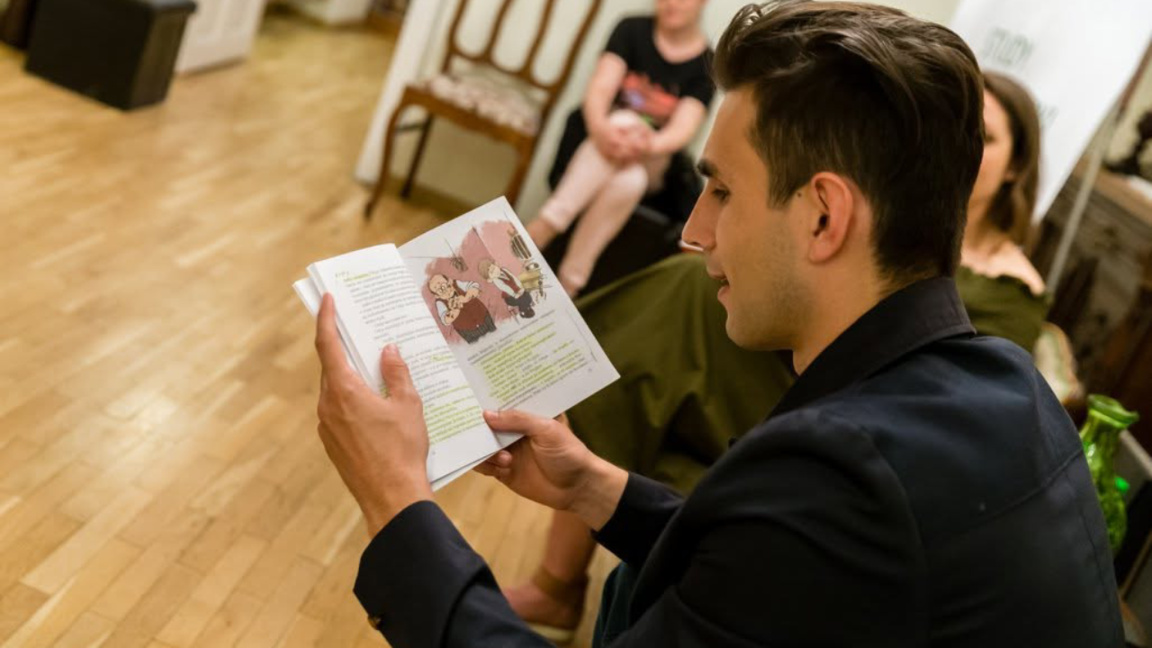
PHOTO Facebook/ "Нощ на литературата" Ivo Chupetlovski
Font size
For the 15th year, Bulgaria is taking part in Literature Night, an initiative that introduces audiences to works by authors who rarely find themselves in the spotlight. Readings take place in unusual venues known as “reading nests”.
This year, on 1 October, European and Bulgarian literature will find a home in 12 cities – Sofia, Plovdiv, Varna, Burgas, Blagoevgrad, Veliko Tarnovo, Gabrovo, Dobrich, Lovech, Pazardzhik, Ruse and Stara Zagora – as well as in one Bulgarian village: Chavdar.
Why Chavdar?
Chavdar lies at the foot of the Balkan Mountains, 70 kilometres from Sofia. With a population of around 1,300, it is the only village in one of Bulgaria’s smallest municipalities. Yet it is also one of the country’s best-developed villages and in recent years has emerged as a destination for cultural tourism.
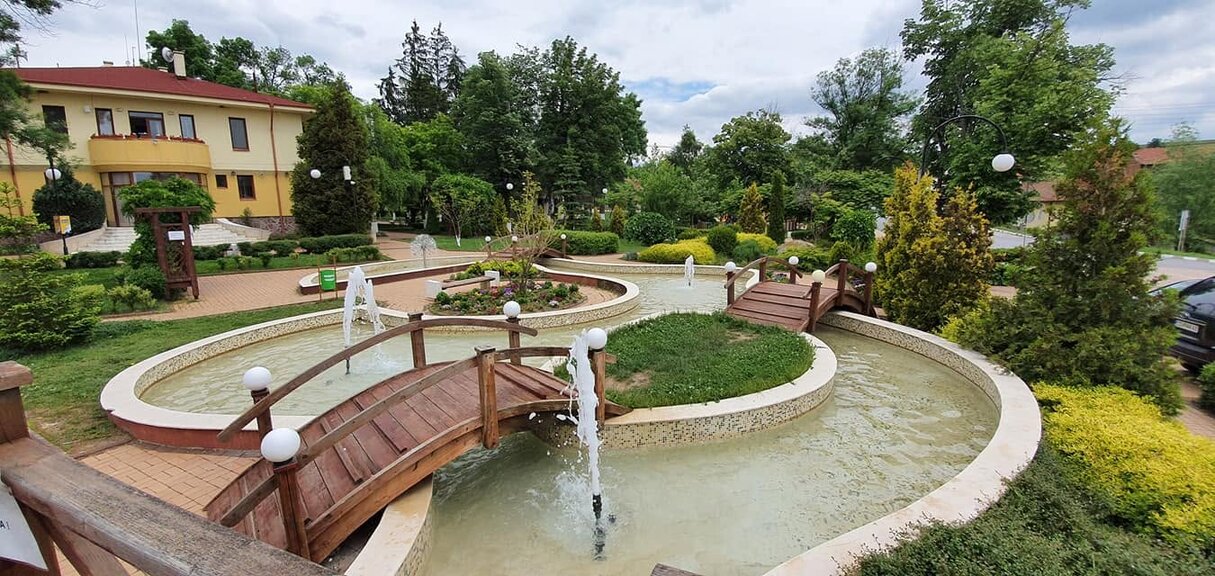
The village of Chavdar.
PHOTO Facebook / Svetlozar Zhelev
It is home to the Topolnitsa Archaeological Park, with replicas of 7,000-year-old Neolithic dwellings and a museum devoted to prehistoric culture, as well as an interactive folklore centre that presents local traditions through modern digital technology. The municipality also stages a wide range of events, from rock and folklore festivals and motorcycle gatherings to one of Bulgaria’s largest board-game festivals and the nationally known Christmas Village.
But what has put Chavdar on Bulgaria’s literary map?
“There are certainly two municipalities in Bulgaria that stand apart in terms of cultural life, events, new initiatives and the conditions they create for culture and literature to flourish,” says publisher and lecturer Svetlozar Zhelev. “One is a large municipality – Burgas – and the other is one of the smallest, Chavdar.

PHOTO Facebook / Svetlozar Zhelev
“Much of this is due to the personal efforts and dedication of Chavdar Mayor Grigor Daulov. Seven years ago, while still a municipal official, he launched another initiative that laid the foundations for turning Chavdar into a village known for literature and books. It was called Month of the Book. Some of the leading contemporary Bulgarian writers have since visited, including Georgi Gospodinov, Rene Karabash, Zdravka Evtimova, Teodora Dimova, Zahari Karabashliev, Radoslav Bimbalov and Nikolay Terziyski.
“All this helps create the conditions for a vibrant cultural life. Over the years there have also been weekends devoted to different arts, concerts and theatre performances. Culture and literature need continuity.
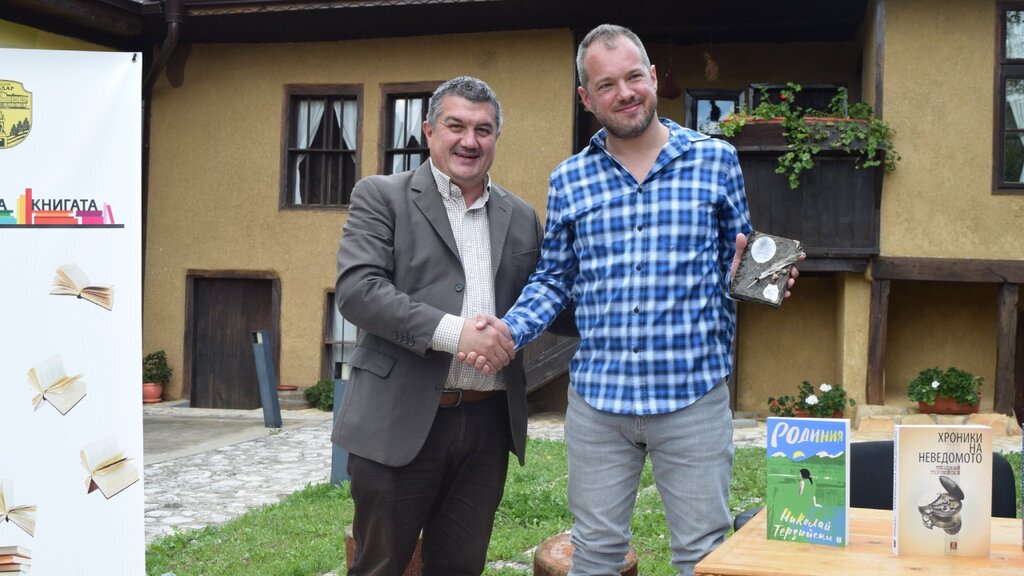
Chavdar mayor Grigor Daulov, left, and writer Nikolay Terziyski.
PHOTO Facebook / Svetlozar Zhelev
“Chavdar has now built a community of people who read, are interested in literature and attend literary events. But building such a community takes time. It requires continuity, vision and perseverance.”
This year, the village is taking part in Literature Night with no fewer than three reading nests.
For Svetlozar Zhelev, books are not simply a cause but a way of life. It is therefore no coincidence that he has been closely involved in developing Chavdar as a literary destination. The village now even has a writers’ residency of its own.
“The idea is to give authors an opportunity to work on their new books and also meet readers in Chavdar. At the same time, we want to create opportunities for Bulgarian writers to spend time working with translators from Bulgarian into other languages. I hope the residency will become more international and that foreign writers will come here to work with Bulgarian translators on translations of their books.”
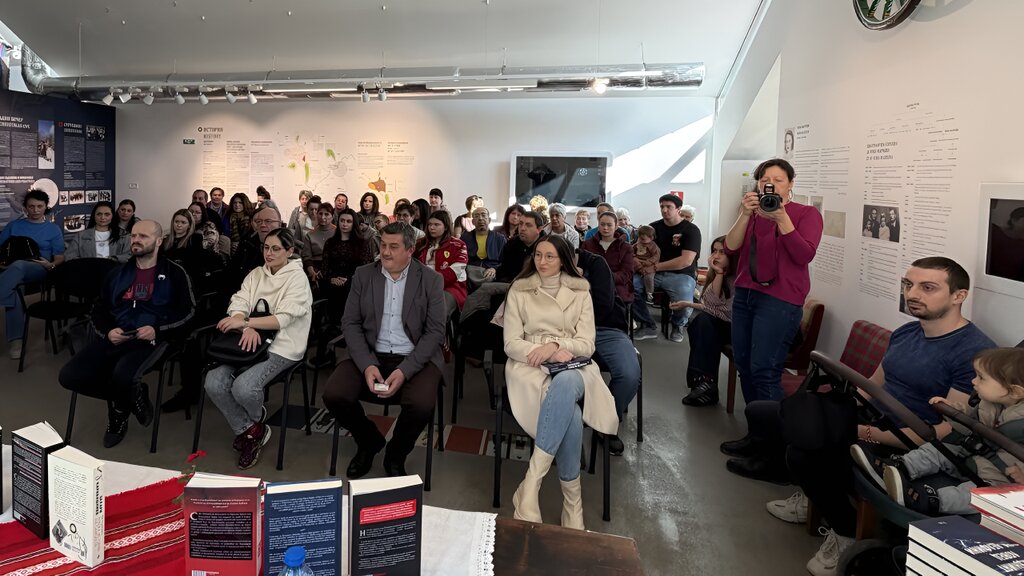
PHOTO Facebook / Svetlozar Zhelev
At a time when information reaches us from every direction and in countless forms, the book, once one of our main sources of information, is now seeking out its readers in digital and audio formats as well. But to what extent can initiatives such as Literature Night, along with the many festivals that have brought colour to the streets of Bulgarian cities, help promote reading as an enjoyable and, above all, rewarding way to spend our free time?
“Every initiative of this kind certainly helps young people understand how important reading is and how beautiful literature can be. Whether young people are actually reading more is very difficult to say. Reading habits are extremely difficult to measure.
“Because of the digital environment we all live in, the pressure on our time, the endless scrolling and the digital habits we develop, reading ultimately becomes something almost exotic – something we keep saying we don’t have time for,” Zhelev says.
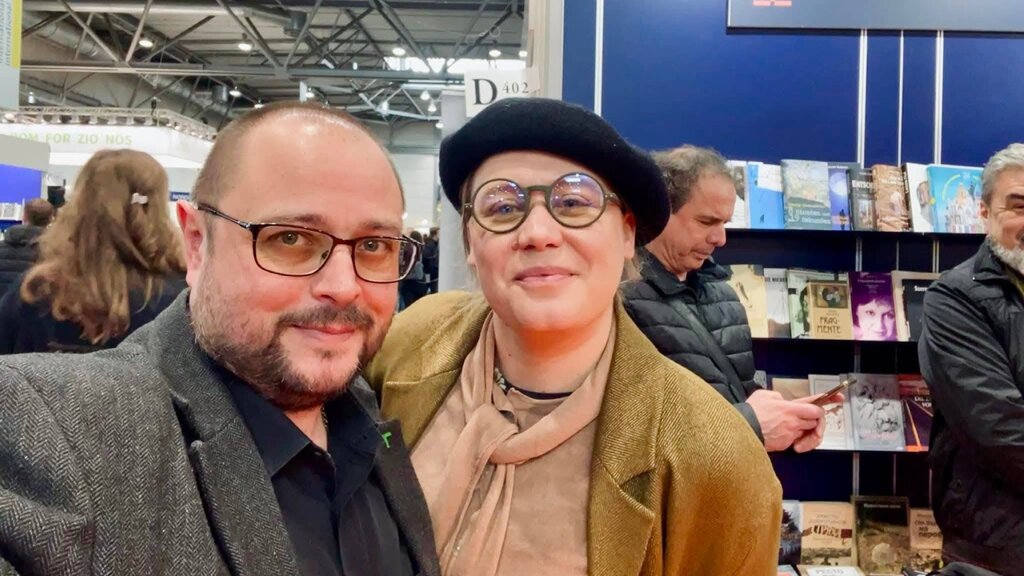
Svetlozar Zhelev and writer Rene Karabash.
PHOTO Facebook / Svetlozar Zhelev
Reading habits may be difficult to measure, but Svetlozar Zhelev’s encounters with young people, both through the Translator-Editor master’s programme at Sofia University and in everyday life, leave him convinced that there are still many Bulgarians who read. He nevertheless places great hopes in every possible way of attracting more readers from this generation, because reading is an exceptionally slow, rewarding and beautiful pursuit.
And now another Literature Night is upon us – an opportunity to give ourselves over to it.
Editor: Elena Karkalanova
This publication was created by: Elizabeth Radkova