


Author
Yoan Kolev
The sunset and new dawn of Tsar Samuel of Bulgaria
Thursday 1 October 2026 21:26
Thursday, 1 October 2026, 21:26
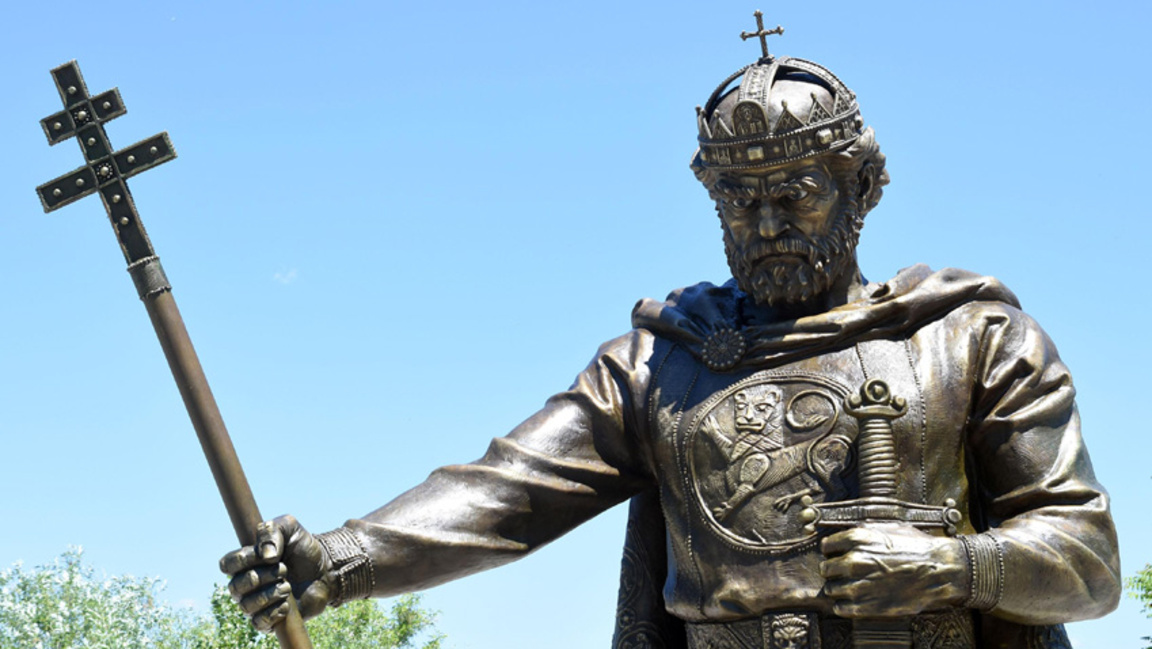
PHOTO Bulphoto
Font size
On 6 October 1014, one of the most remarkable rulers of medieval Bulgaria, Tsar Samuel, died in Prespa. A military commander who spent decades at war with Byzantium, he was a ruler whose tragic fate marked the closing chapter of the First Bulgarian Empire. His life ended dramatically, but he stands tall in Bulgaria’s historical memory.
In the late 10th and early 11th centuries, Samuel spent much of his life as a commander and ruler in an unrelenting struggle to defend the Bulgarian state against Byzantium. According to a Byzantine source, Samuel’s heart gave out at the sight of his soldiers, blinded on the orders of Emperor Basil II.
“We should remember that the war began before Samuel emerged on the scene and was perhaps the longest Bulgarian-Byzantine war fought in the Balkans. It lasted half a century, and for around 40 of those years, Samuel was the one who led the people, the army and the state,” Prof. Georgi Nikolov, a lecturer in medieval Bulgarian history at Sofia University St Kliment Ohridski, told Radio Bulgaria.
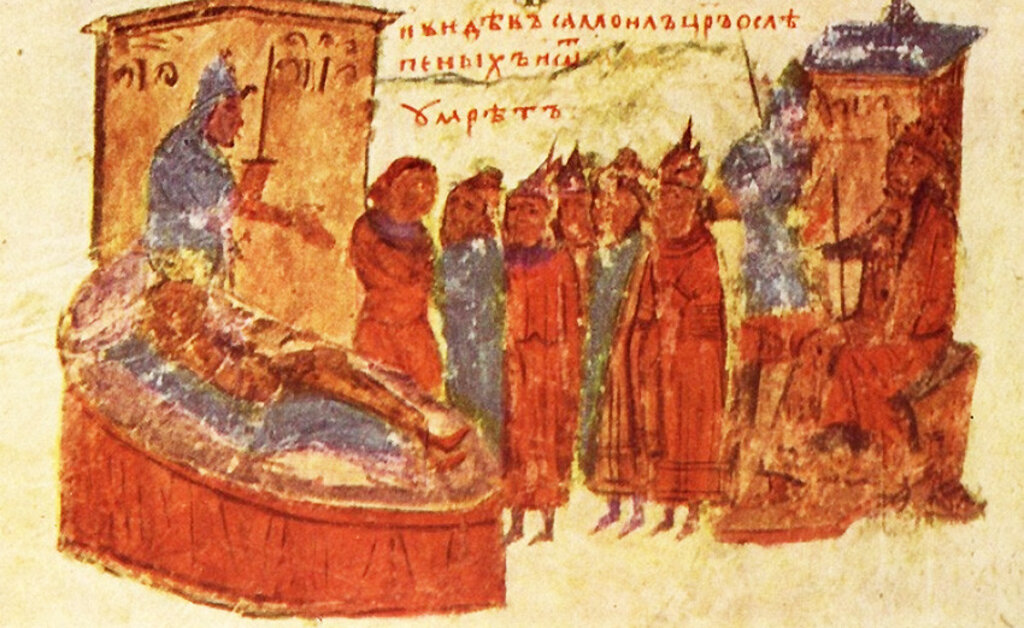
A medieval miniature depicting the death of Tsar Samuel.
PHOTO Archive
“The Byzantine historian John Skylitzes wrote of Samuel: ‘He was a warlike man who knew no rest.’ Something similar appears in the Life of St Nikon Metanoeite, where Samuel is described as ‘unsurpassed in courage and invincible in strength’. These descriptions give us perhaps the clearest picture of him.
“Samuel died in 1014, but we see Tsar Kaloyan referring to him in his letters to Pope Innocent III at the beginning of the 13th century. A little later, the Byzantine author John Staurakios, chartophylax of Thessaloniki, wrote in a panegyric to St Demetrius of ‘that Samuel who is still on the lips of the Bulgarians’. That was 200 years later, and we again find Samuel mentioned in Bulgarian translations of Byzantine chronicles,” the professor adds.
Historians point to various factors behind the decline of the First Bulgarian Empire (681–1018). Among them were the wars of Tsar Simeon (893–927), which exhausted the country in its confrontation with Byzantium. Ultimately, the defeat at Kleidion, where a Bulgarian army of 14,000 was captured and subsequently blinded, proved decisive in the struggle between Bulgaria and Byzantium.
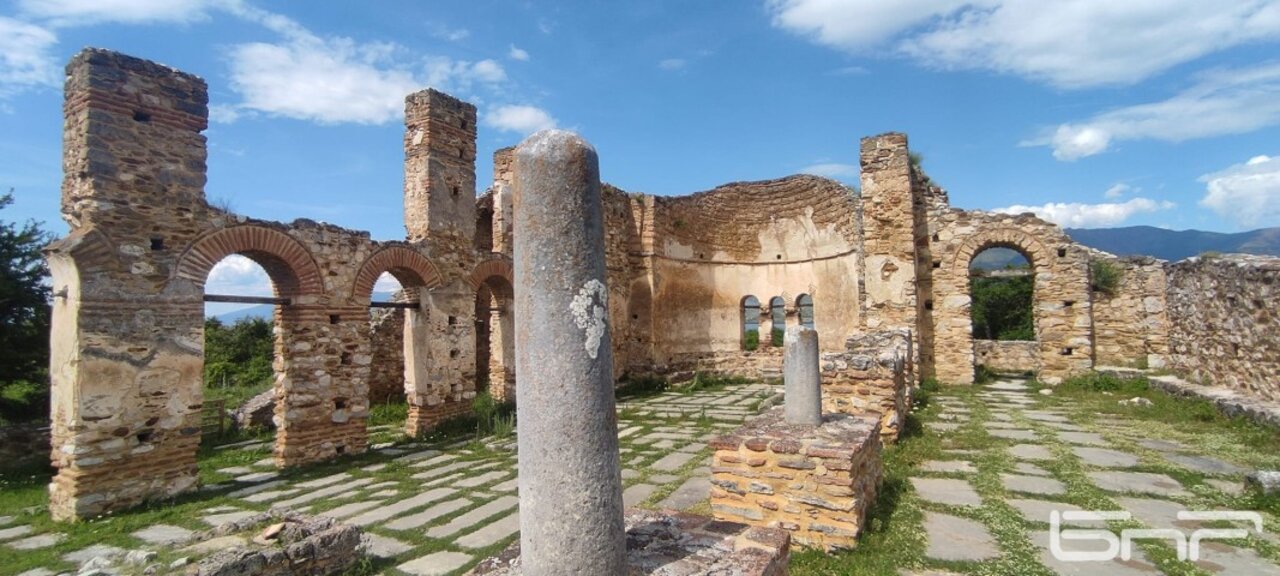
The Basilica of St Achillios on the island of the same name in Small Prespa Lake. Tsar Samuel’s sarcophagus is on the right.
PHOTO Merim Tenev
According to Prof. Nikolov, “the age of Tsar Samuel has remained in the memory of the Bulgarian people from the Middle Ages to modern times. There is, however, a certain difference: over the past 100 to 150 years, the emphasis has fallen heavily on the blinding of his army and his subsequent death. The immense suffering he endured, which led to his death, has inspired more than a few literary writers.”
Prof. Georgi Nikolov believes that through his tenacious resistance, Tsar Samuel became not only a symbol of the sunset of the First Bulgarian Empire, but also an inspiring dawn for the generations that would later restore Bulgarian statehood.
“There is something remarkable in our history that few people seem to notice. If we look carefully at some Bulgarian sources from the 11th and 12th centuries, we see Byzantine governors of the southwestern Bulgarian lands being referred to as Bulgarian tsars. In other words, it seems that in the minds of these Bulgarian chroniclers of the time – if we may call them that, in a very loose sense – the state continued to exist, albeit under the rule of others.
“What is even more remarkable is that after nearly 170 years, that state was restored. And if we look further ahead, after the Ottoman conquest – after 500 years under Ottoman rule – it was restored once again. How many peoples can point to such an example – their state surviving like the phoenix, rising again and again?”
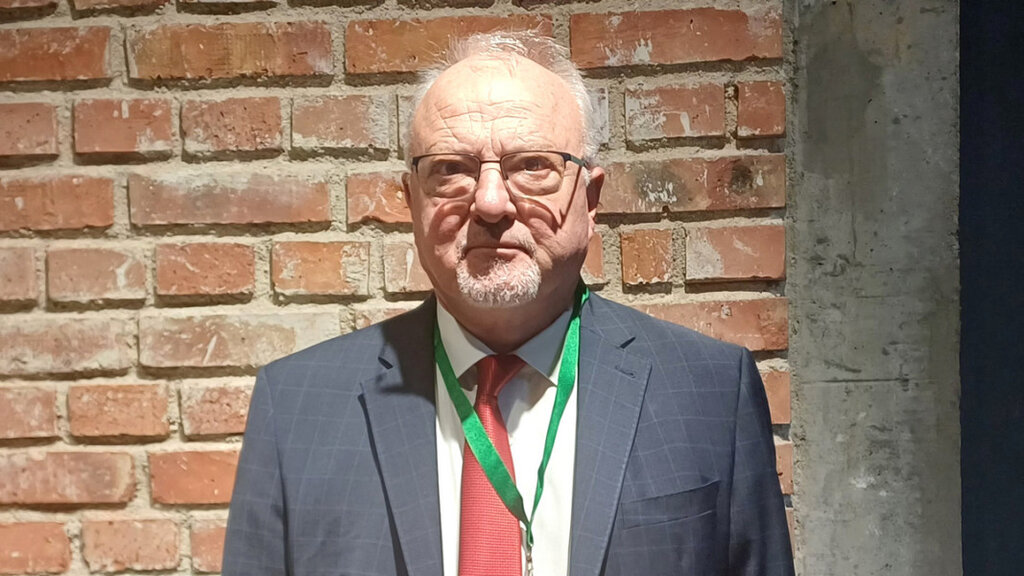
Prof. Georgi Nikolov
PHOTO BNR
Tsar Samuel was buried in Prespa, in the Basilica of St Achillios on the island of the same name, now in Greece. It was there, in 1969, that Greek archaeologist Nikolaos Moutsopoulos discovered the remains of the Bulgarian ruler. On 3 October, they are due to find their final resting place in Bulgaria’s present-day capital, Sofia.
Today, the two Prespa lakes form a pristine natural haven, where pelicans share the waters with fish and cattle graze peacefully on the island. Perhaps one day Greek and Bulgarian archaeologists will undertake new excavations there that could reveal the foundations of the royal palaces.
“There have been some smaller-scale studies,” Prof. Nikolov notes, before returning to the history of the site. “During the uprising of Georgi Voyteh in 1072, we have evidence that the Byzantine authorities used Western mercenaries against the Bulgarian rebels. The sources say that Alemanni and Franks attacked and destroyed the palaces at Prespa, as well as the Basilica of St Achillios, looting its valuables, liturgical objects, icons and whatever else they could take. There is even an account of a crusader taking certain objects and subsequently being punished by God, and so on.
“So a large part of these artefacts was destroyed. But, of course, it is a matter of reaching an agreement. Given goodwill on both sides, our scholars at Sofia University and those I know at the University of Thessaloniki could agree on such a project and find common ground in studying a site such as the island of St Achillios in Small Prespa Lake. That would be extremely valuable to us.”
Amid the ruins of St Achillios, the question of what remains from the age of Tsar Samuel is still with us. The answer lies not only in archaeological finds, but also in the memory of a ruler whose name is one of the symbols of Bulgarian statehood.
Editor: Elena Karkalanova
A 2015 television film by Ivo Ivanov, made during the creation of the monument to the Bulgarian ruler in Sofia, reveals some fascinating details about the reconstruction of Tsar Samuel’s appearance:
This publication was created by: Elizabeth Radkova