Author
Krasimir Martinov
Article
Sacred Sites of the Eastern Rhodopes: St John the Batist Monastery
Sunday 4 October 2026 14:03
Sunday, 4 October 2026, 14:03
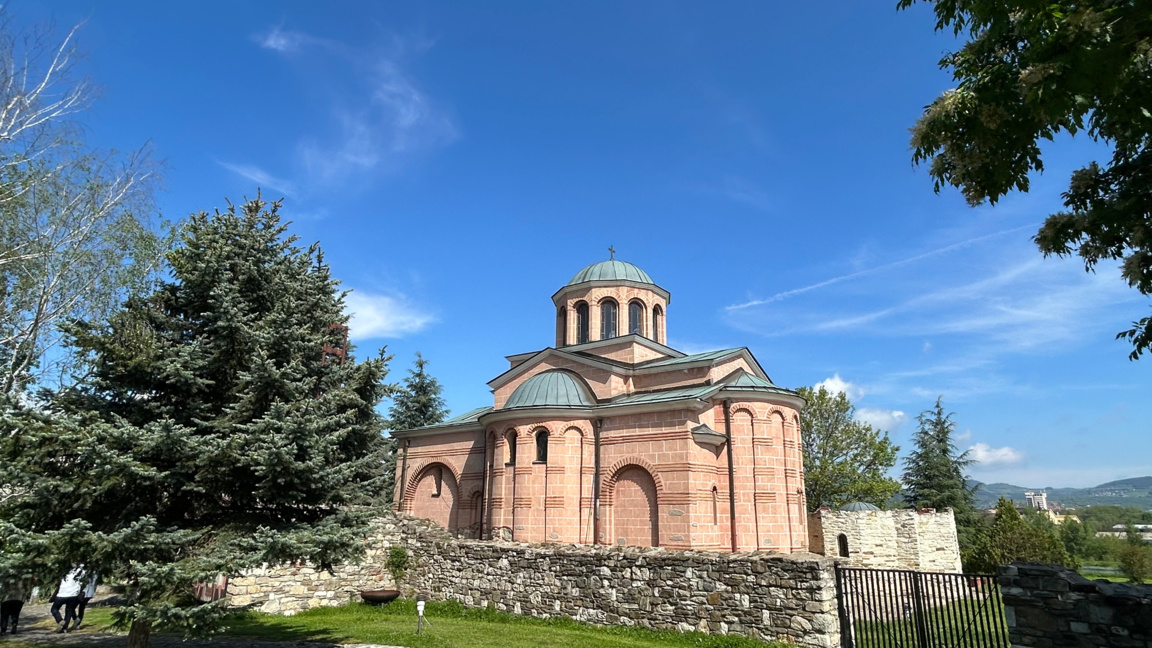
Saint John the Forerunner church in Kardzhali
PHOTO Krasimir Martinov
Font size
Nestled in the heart of the Eastern Rhodopes, between the two banks of the Arda River, lies the southern Bulgarian city of Kardzhali. Its people bear different names, profess different faiths and follow different traditions. Yet, contrary to what one might expect, these differences do not divide them. Quite the opposite: diversity is one of the defining features of the region.
In a series of publications, Radio Bulgaria will introduce you to three of the sacred sites of the Eastern Rhodopes in Bulgaria: the Orthodox Church of St John the Baptist in Kardzhali, the wooden mosque near the village of Podkova, and the spiritual centre of Elmalý Baba Teke near the village of Bivolyane.
The first stop on our route is the medieval Church of St John the Forerunner, which once formed part of an important medieval monastic complex.
As soon as visitors enter the church, they are struck by the remarkable interplay of preserved medieval masonry, partially surviving frescoes and traces of later restoration. The sections of stonework and the surviving frescoes have been preserved in their original form. The church remains an active place of worship, while at the same time being a protected cultural heritage site, as our guide, Georgi Kyuchukov, explains:
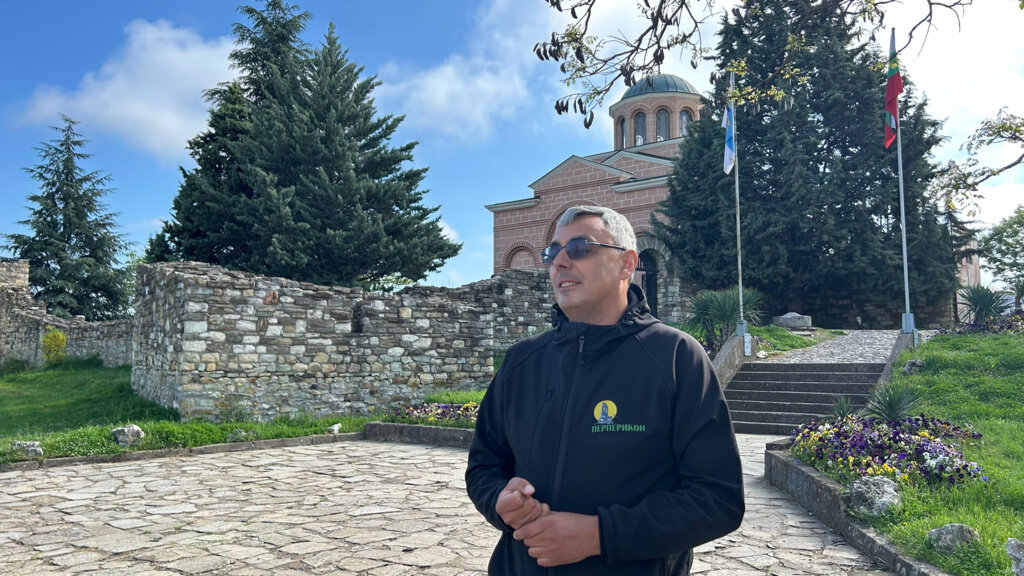
Guide Lyubomir Kyuchukov
PHOTO Krasimir Martinov
“Yoan Predtecha (John the Forerunner) was the name of the church in the Middle Ages as well. We know this thanks to an act of vandalism committed by a Bulgarian who visited the church at the time. Using a sharp instrument, he inscribed on one of the frescoes in Old Bulgarian: ‘I, Dobromir, wrote in the Holy Prodromos.’ This tells us that the man’s name was Dobromir, while the church in which he wrote was called ‘Prodromos’, a Greek word meaning ‘Forerunner’ or ‘Precursor’. This was one of the principal monasteries in the region of Ahridos, as the area corresponding to present-day Kardzhali was known in the Middle Ages.”
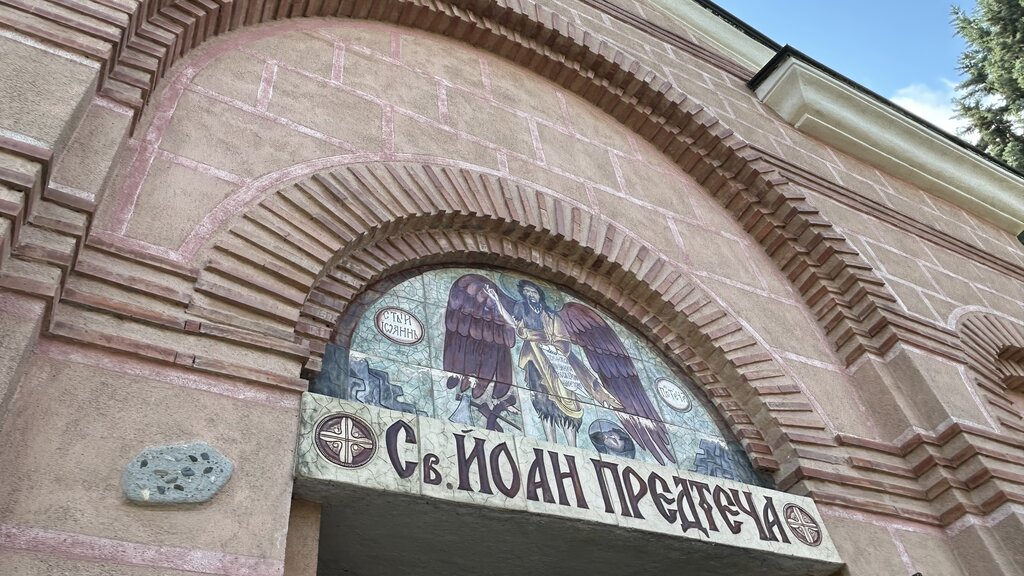
PHOTO Krasimir Martinov
The monastery must have been a place of considerable importance in its day, and was probably quite wealthy as well, judging by the archaeological finds unearthed at the site. Several discoveries attest to the significance of this sacred foundation:
“The first was made in 1998, when restoration work on the monastery began,” Georgi Kyuchukov continues. “The people working inside came upon a tomb, probably that of the monastery’s founder. From the grave came the oldest ecclesiastical textile ever discovered in Europe. It is an epitrachelion, a liturgical vestment, embroidered entirely in gold. Most likely, it was the gold that enabled the textile to survive to the present day. The epitrachelion has been restored and will be displayed at the Historical Museum in Kardzhali once a display case with the appropriate climate-control conditions has been provided.
“Archaeologists estimate that such a burial would, at the time, have cost approximately as much as the construction of an entire medieval town.
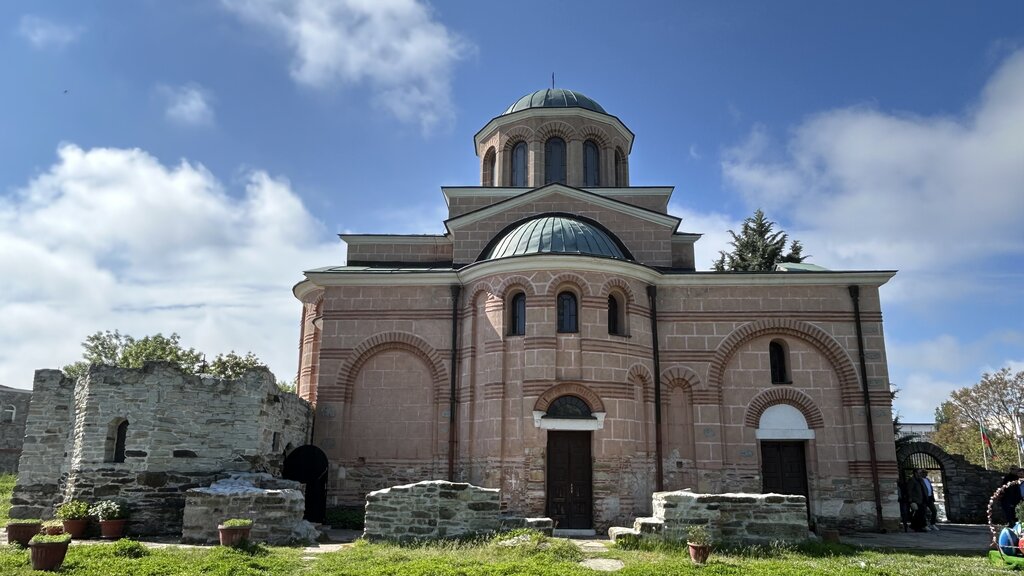
The monastery complex "St John the Forerunner" in Kardzhali
PHOTO Krasimir Martinov
“The second piece of evidence pointing to the importance of this monastery dates to 1206. That was the year when, for a brief period, the Byzantine Empire ceased to exist and the newly established Latin Empire took its place. In that same year, a campaign by Latin knights set out along the Arda River. Their objective was to relieve the knight Renier de Trit, who was besieged in the fortress of Stanimachos, present-day Asenovgrad, together with his troops. They were under siege by the Bulgarian forces of Tsar Kaloyan.
“Among those taking part in the campaign was the man who left us the greatest body of information about the history of the Latin Empire, Geoffrey of Villehardouin. He wrote: ‘Evening found us before the well-guarded castle of Monech.’ This is a fortress well known to lovers of scenic views in the Kardzhali area.
“According to these accounts, the Latin knights remained at the fortress for about a week. It was there that they received the news that their emperor, Baldwin, had been killed by the Bulgarian Tsar Kaloyan in Tarnovo. And it was in the vicinity of Monech, probably at the fortress of Vishegrad, which served as the administrative centre of the region, that the barons’ council convened. The council decided that the next emperor of the Latin Empire should be the leader of the campaign, Baldwin’s brother Henry.mnOf course, the coronation had to take place officially in Constantinople, which is why the campaign turned back in the opposite direction.
But the same Villehardouin describes a meeting between the newly elected Latin Emperor Henry and Boniface of Montferrat, King of Thessalonica, who had set out for the lands of Ahridos because, and this is the sentence that concerns us, he believed in the immeasurable riches of the monasteries here.”
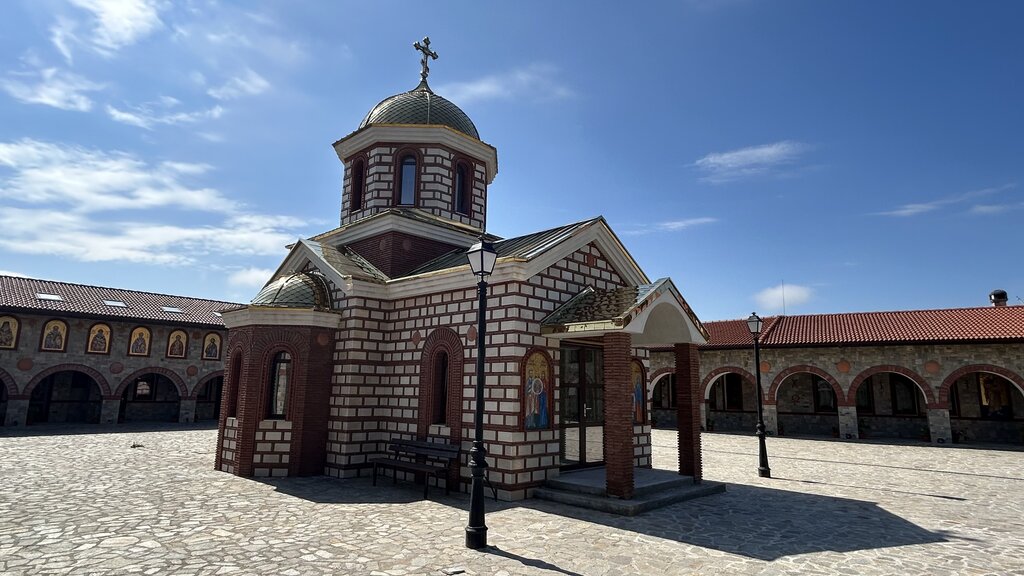
Saint John the Forerunner monastery in Kardzhali
PHOTO Krasimir Martinov
More fascinating stories about the medieval Monastery of St John the Baptist in Kardzhali can be discovered on site, in the church of the same name or at the city’s Historical Museum.
To conclude, it is worth noting that the old medieval church, restored between 1991 and 2001, now stands at the heart of a modern monastic complex, which includes a Sunday school and another church. The new church is called "Saint Sophia - Faith, Hope, Love".
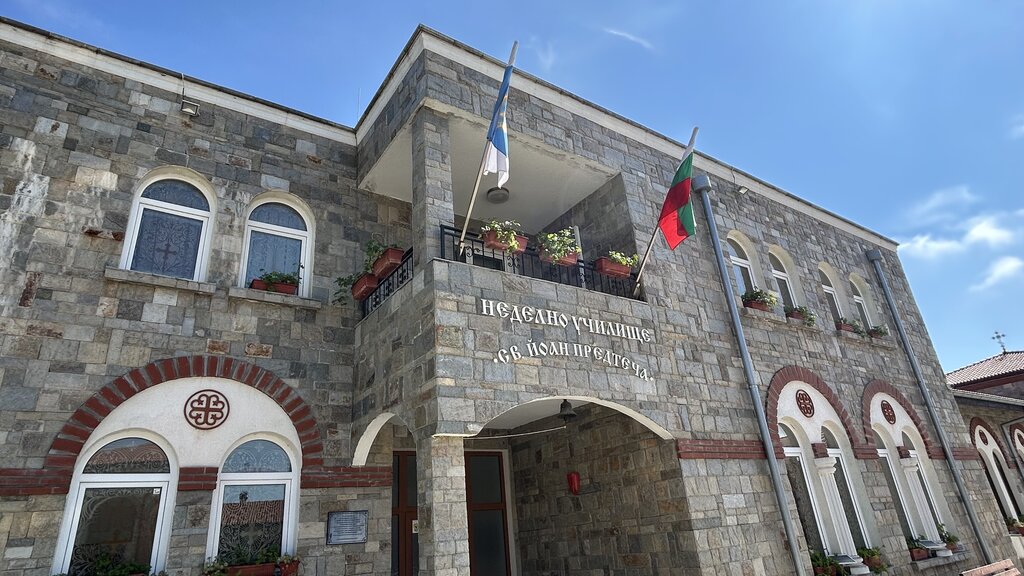
PHOTO Krasimir Martinov
From the beautiful courtyard of the monastery, a magnificent view opens out over the city and the so-called Water Mirror, a hydraulic engineering facility built to regulate the flow of the Arda River as it passes through Kardzhali.
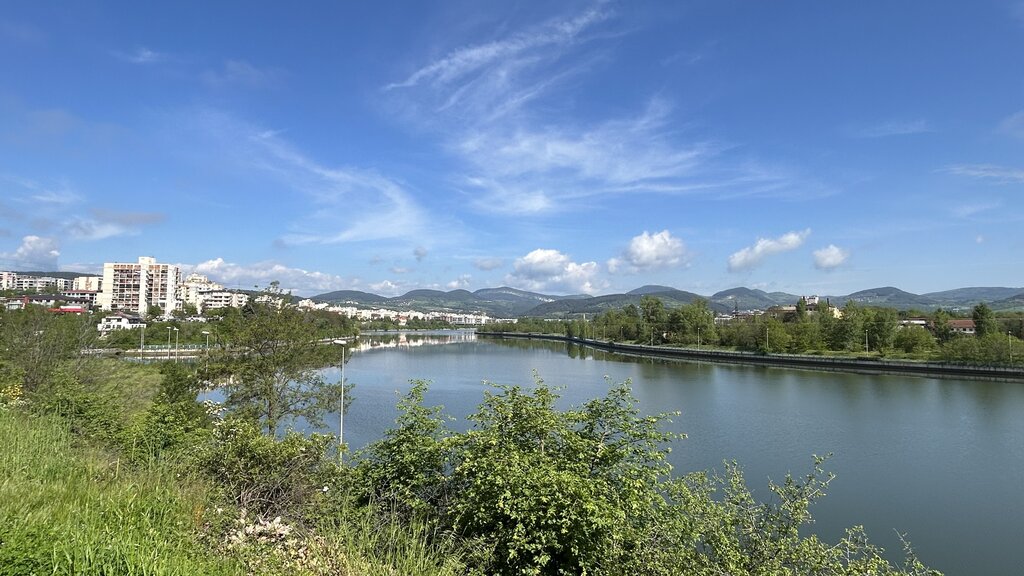
View of Kardzhali from the yard of the Saint John the Forerunner monastery
PHOTO Krasimir Martinov
English: R. Petkova
This publication was created by: Rositsa Petkova