


Author
Yoan Kolev
News
Low pensions and fewer workers pose a challenge to the pension system
The state should develop an active demographic policy, says economist Stoyan Panchev
Saturday 10 October 2026 08:25
Saturday, 10 October 2026, 08:25

PHOTO BGNES
Font size
More than 2 million Bulgarians rely on their pensions to get through the month. As of July 1 this year, the minimum pension in Bulgaria stands at EUR 347.51, while the maximum is EUR 1,738.40. Some 810,000 Bulgarians receive the minimum pension or less, while 9,195 receive the maximum amount. Meanwhile, the average monthly pension in the EU is around EUR 1,443, putting Bulgaria last among EU member states by this measure.
The issue of people’s incomes is always topical, while every attempt to reform the social sector raises more questions than answers. According to economist Stoyan Panchev, disparities in pension levels across different parts of the country are primarily due to income levels, which are unevenly distributed. He commented on the idea of a new regional division of Bulgaria, which has been periodically discussed for years. One proposal is to remove Sofia from the Southwestern Region and establish it as a separate “Capital” region:
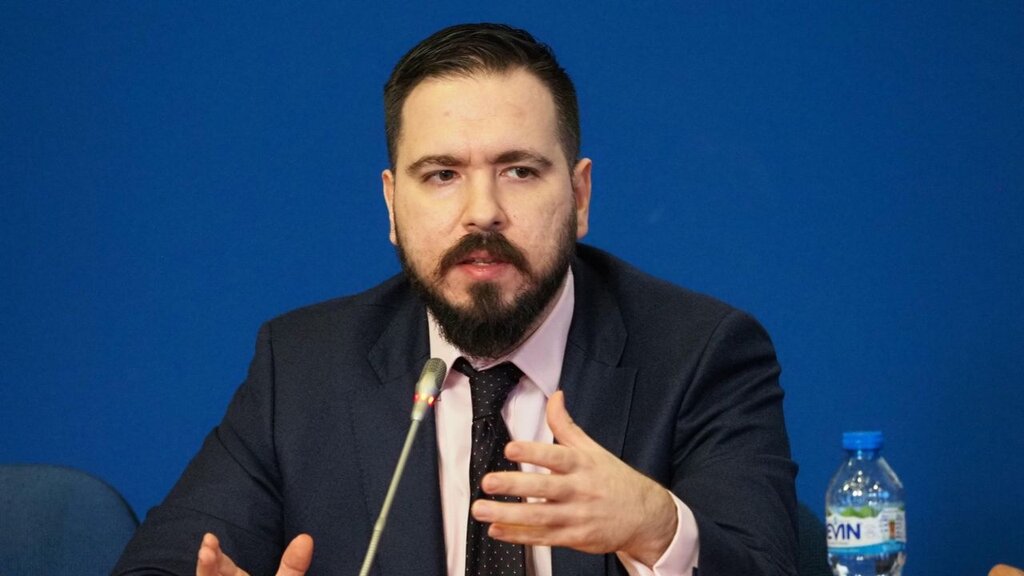
Stoyan Panchev
PHOTO BGNES
“As far as I know, this is the direction things are heading. In practice, we should have four regions, one of them being the capital region (there are currently six regions – editor’s note). This is the right approach because Sofia distorts the economic data for the Southwestern Region. It is a specific region with a high concentration of economic, administrative, and other activity, so separating it out would certainly be beneficial. I am not sure to what extent this will affect incomes, since they reflect not so much the administrative division into regions as other processes. I believe that a policy of decentralization is needed in the country, which is clearly one of the many policies that are not being actively pursued, so that we can see some effect in this area.”
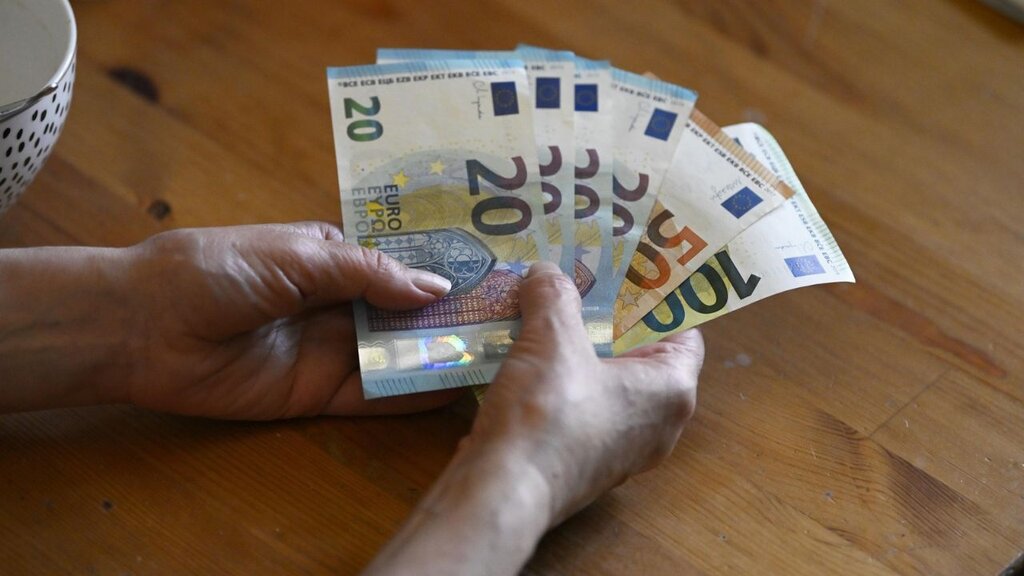
PHOTO BGNES
Stoyan Panchev noted that Bulgaria’s pension system is based on a pay-as-you-go model, which requires a certain number of pensioners to be supported by a certain number of working people:
“If we have a declining number of working people and an increasing number of pensioners, this will lead to a deficit in the pension system, making it increasingly difficult to finance. This means that if we want to address this problem in the long term, we need to work toward a much higher birth rate and many more people in employment in the future who will be able to overcome the deficit in the pension system.”

PHOTO BGNES
Stoyan Panchev believes that Bulgaria could introduce new ideas and mechanisms to promote demographic policies aimed at increasing the birth rate. He gave the example of how some of Hungary’s demographic policies could also be implemented in Bulgaria:
“For example, Hungary introduced a policy under which a woman with three or more children does not have to pay the so-called personal income tax. Perhaps we could arrange things so that in Bulgaria, mothers in this category would not have to bear most of the tax burden”, the economist said.
Currently, financial support for the birth of a child in Bulgaria is provided as a one-off payment of EUR 191.74 for a first child, EUR 460.17 for a second child, and EUR 230.09 for a third child, according to data from the Social Assistance Agency.

PHOTO Aflo Images
“It is important for Bulgaria to focus on studying what specific policies could be introduced to encourage higher birth rates, even by establishing a special body or commission to begin implementing them, because this is the most important policy a country can pursue,” Stoyan Panchev said.
Will the retirement age be raised?
The retirement age in Bulgaria is currently 62 years and 6 months for women and 64 years and 9 months for men. It will certainly increase in the coming years, the economist told Radio Bulgaria:

PHOTO BGNES
“ I would recommend doing this more quickly, because it is the least painful way to address the problem of having fewer working people relative to the number of pensioners. However, this should also be combined with demographic policies, because when you have such a large deficit in the pension system, you either have to stop indexing pensions, raise the retirement age, or find many more working people somewhere.”
The economist believes that, given the current state of the pension system, people who are now aged between 35 and 40, as well as younger generations, may not be able to retire at all, or at least not with a pension that would allow them to live a normal and dignified life.
Translated by Kostadin Atanasov
This publication was created by: Kostadin Atanasov