


News
Exhibition honours five Bulgarians who helped change America and the world
Tuesday 6 October 2026 15:33
Tuesday, 6 October 2026, 15:33

Petya Ilieva
PHOTO Desislava Shapkarova
Font size
The portraits of five people with Bulgarian roots who made their mark in the United States and achieved worldwide recognition can now be seen at bus stops in Sofia, Plovdiv, Veliko Tarnovo and Burgas. Alongside their faces are short accounts of their lives and achievements.
The exhibition is the latest project by Bulgarian painter Petya Ilieva, whose Art for Diplomacy initiative brings art and culture out of galleries and museums and onto the streets, where everyone can enjoy them. Bus stops were chosen deliberately: the idea is to give people walking through the city or waiting for public transport a chance to discover something new and perhaps take an interest in history, culture or science.
“All five have inspiring stories. As children, they had particular interests, and through hard work they managed to make their dreams come true,” Petya Ilieva told Radio Bulgaria in an interview.
“What they have in common is that they knew from an early age what they wanted to do. They received an excellent education in their chosen fields and pursued their work with great passion. For most of them, their parents played an important role, encouraging their curiosity with books and taking them to exhibitions across Europe.
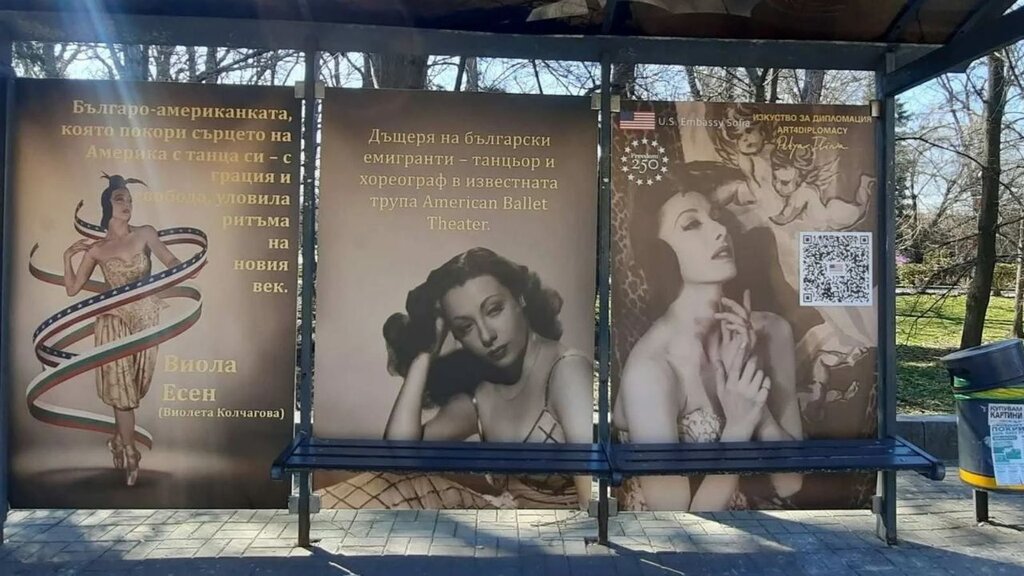
PHOTO Petya Ilieva
“We called the exhibition Bulgarian-American Angels. It was organised with financial support from the US Embassy in Bulgaria as part of the celebrations marking the 250th anniversary of American independence. We chose the name because these were Bulgarians who realised their full potential in America. They helped lay the foundations of engineering and space science, without which America would not be what it is today. None of the five ever lost touch with their homeland. Throughout their lives, whenever they had the chance, they made a point of mentioning their Bulgarian origins.”
Ilieva believes that the names of Assen Jordanoff, Peter Petroff, Viden Tabakoff, John Atanasoff and Viola Essen are probably unfamiliar to most Americans and many young Bulgarians. Yet in their respective fields, they remain pioneers whose work continues to inspire others.
Who are the five figures featured in the exhibition?
Assen “Jerry” Jordanoff (2 September 1896, Sofia – 19 October 1967, White Plains, USA)
From the skies over Sofia to the cockpits of American aircraft, Jordanoff was a Bulgarian aviation pioneer who helped shape modern flight.
An inventor, engineer and test pilot, he laid the foundations of aeronautical engineering in Bulgaria and wrote operating manuals for early American passenger aircraft. He is also credited with inventing the automotive airbag.
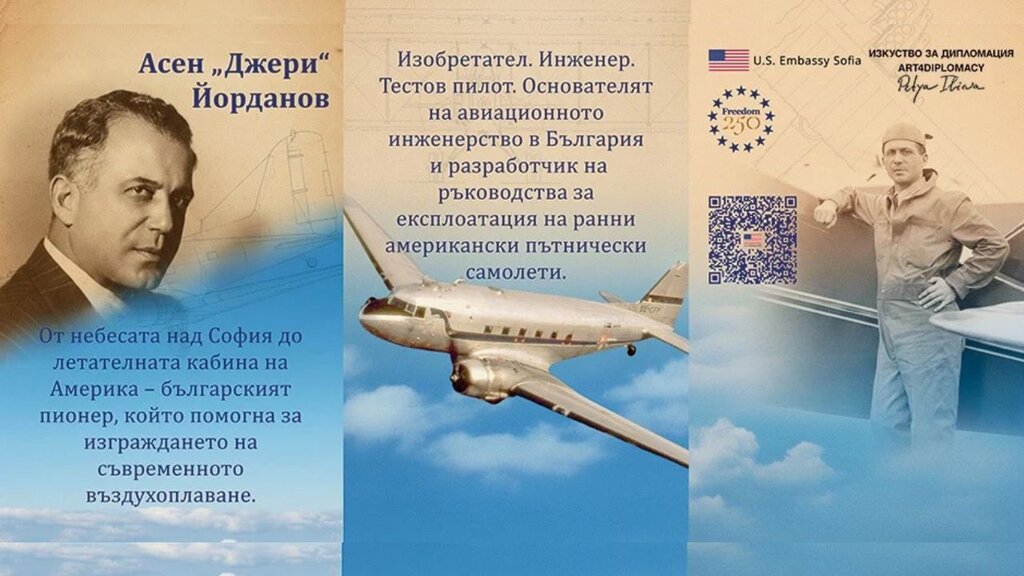
PHOTO Petya Ilieva
Viola Essen (stage name of Violeta Kolchagova)
A Bulgarian-American dancer who won over American audiences with her grace and freedom of movement, capturing the spirit of a new era in dance.
The daughter of Bulgarian immigrants, she became a dancer and choreographer with the renowned American Ballet Theatre and was among the pioneers of modern American ballet. She also had a romantic relationship with Marlon Brando.
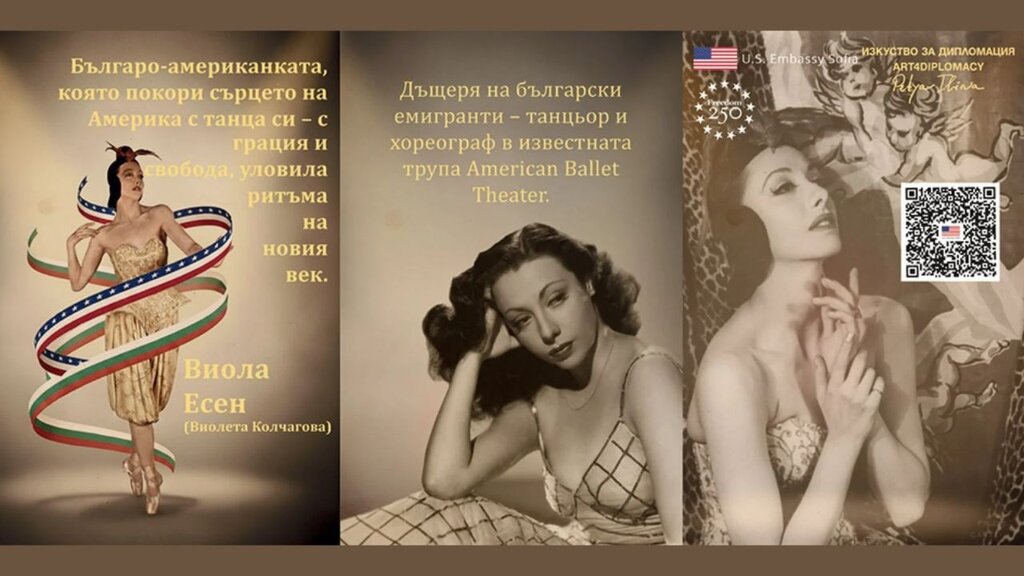
PHOTO Petya Ilieva
Peter Petroff (21 October 1919, Brestovitsa – 27 February 2003, Huntsville, Alabama, USA)
Born in the Bulgarian village of Brestovitsa, Petroff went on to become an engineer whose ideas contributed to the early years of America's space programme.
He worked as an engineer at NASA and is credited with developing early satellite telemetry systems, the digital watch and wireless heart-monitoring technology.
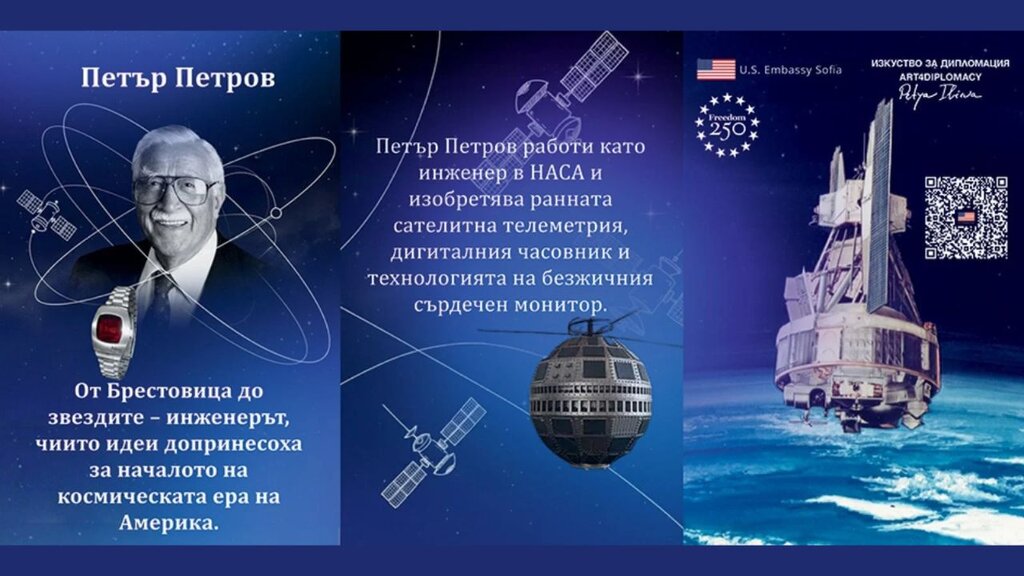
PHOTO Petya Ilieva
Viden Tabakoff (14 December 1919, Stakevtsi – 6 June 2015, Cincinnati, USA)
From the small Bulgarian village of Stakevtsi to NASA's Apollo programme, Tabakoff devoted his career to engineering and scientific research.
An engineer, scientist, inventor and university lecturer, he helped advance jet propulsion technology, contributing to the developments that made space exploration possible.
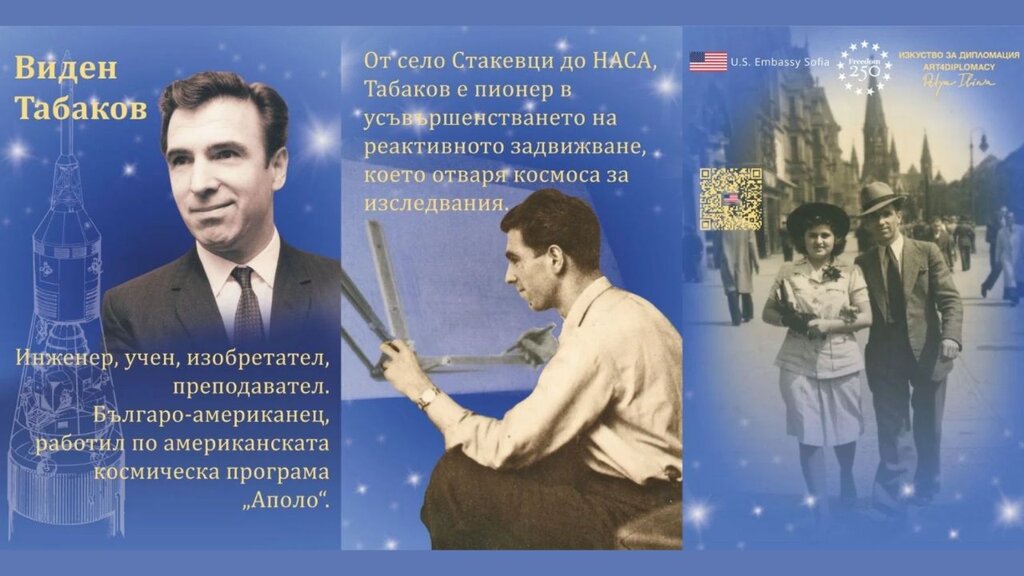
PHOTO Petya Ilieva
John Vincent Atanasoff (4 October 1903, Hamilton – 15 June 1995, Frederick, USA)
An American physicist and mathematician of Bulgarian descent, John Atanasoff is widely regarded as the “father of the computer”.
Between 1939 and 1942, he and his student Clifford Berry developed the world's first electronic digital computer at Iowa State University, laying important groundwork for modern computing.
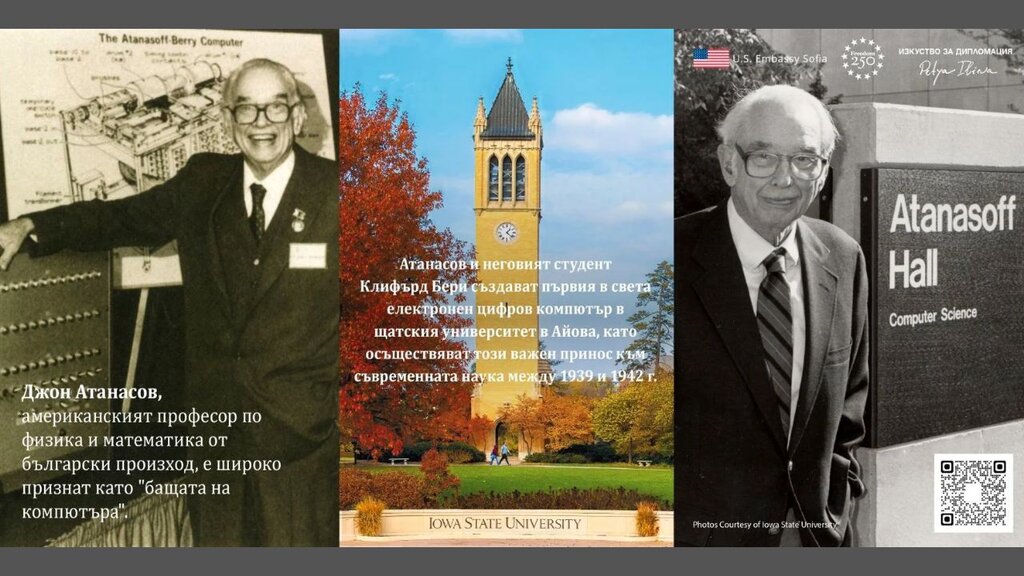
PHOTO Petya Ilieva
Five different lives, five different stories, all connected by their Bulgarian heritage. Through Bulgarian-American Angels, Petya Ilieva hopes to encourage more people to discover who these figures were and how their work contributed to progress around the world.
The printed panels will also travel to other locations, giving more people a chance to learn about their achievements.
“I hope that one day we can take the exhibition to the United States as well, so that the wider public there can get to know these people too,” Ilieva said.
Author: Desislava Semkovska
Supervising editor: E. Karkalanova
This publication was created by: Elizabeth Radkova