


Author
Diana Tsankova
BG contribution
Dimitar Paskov: The Bulgarian scientist who pioneered a treatment for polio
His development of Nivalin earned him international recognition and helped pave the way for a medicine still used today
Sunday 11 October 2026 10:35
Sunday, 11 October 2026, 10:35
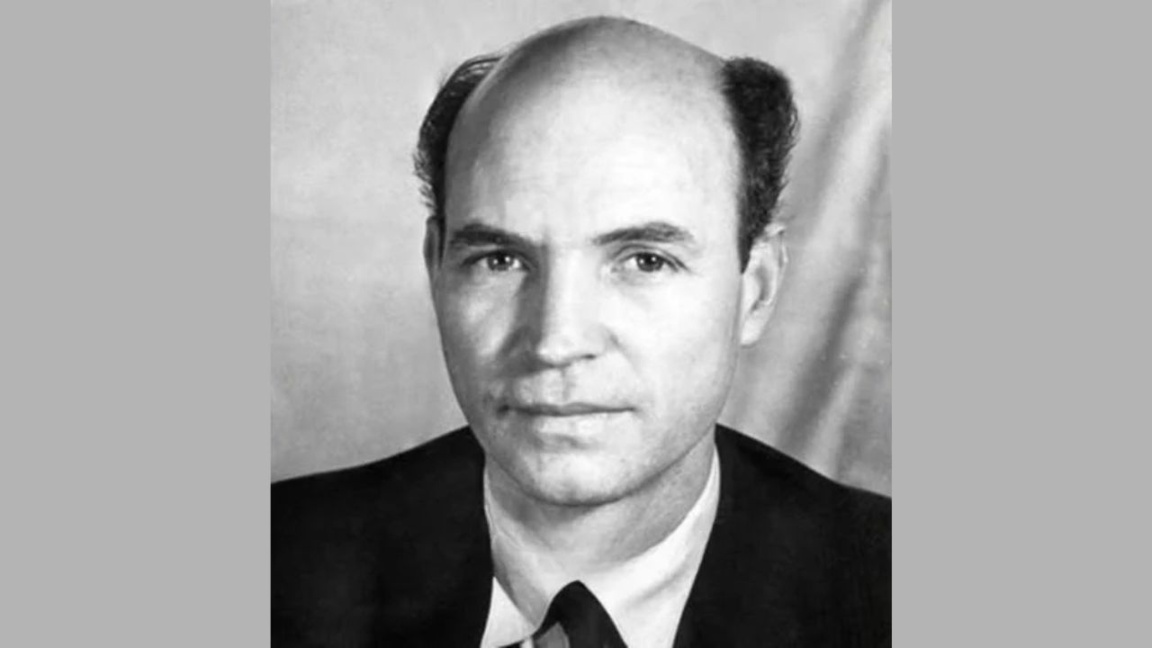
PHOTO Facebook / BNT
Font size
At the height of the polio epidemics that swept through the world in the 1950s, a Bulgarian doctor received what seemed like guidance from above – an insight that would offer hope to children facing lifelong paralysis.
According to a widely told story, he noticed a sudden improvement in the condition of a young girl who had drunk water from a glass of snowdrops standing on her bedside table in hospital. From this apparent coincidence came an idea that would help bring about an important advance in the treatment of polio-related paralysis, thanks to a medicine called Nivalin.

PHOTO Pixabay
The story of the remarkable Bulgarian doctor Dimitar Paskov begins on 18 October 1914 in the village of Gorno Brodi, near what is now the Greek city of Serres. After the First World War, Aegean Macedonia remained outside Bulgaria's borders, and his family, along with hundreds of thousands of refugees, decided to settle in Sofia.
In 1940, Dimitar Paskov graduated from the Faculty of Medicine at Sofia University and became a doctor in the village of Byaga, in southern Bulgaria. Four years later, he found himself at the front, tending to wounded Bulgarian soldiers. There he earned a reputation as “a universal favourite among soldiers and officers, helping everyone and always having a kind word for all”.
After the Second World War, he chose a career in science and travelled to Leningrad, determined to lay the modern foundations of Bulgaria's school of experimental pharmacology. There he met traditional healers and worked alongside medical specialists conducting research into animals and plants.
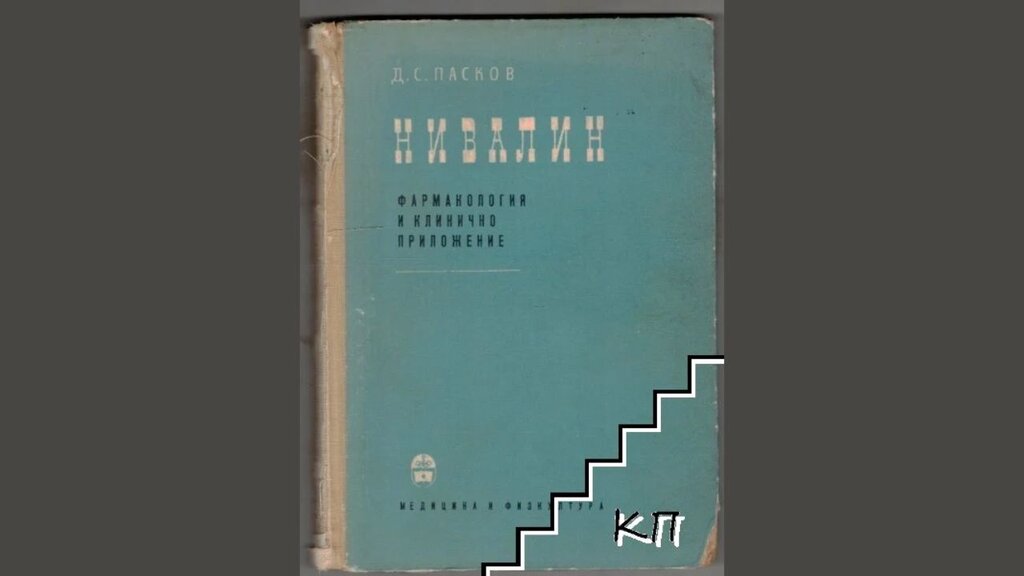
Paskov’s book on Nivalin and its applications.
PHOTO Knizhen Pazar
On returning to Bulgaria, Paskov became head of the Department of Pharmacology at the Higher Medical Institute in Sofia. His knowledge of the country's wealth of medicinal plants – a wealth which, he believed, was surpassed only by that of the Himalayas – helped him make his great breakthrough in 1956. His research into plants containing galantamine, including the common snowdrop (Galanthus nivalis) and the summer snowflake (Leucojum aestivum), led to the development of Nivalin, a medicine based on this naturally occurring alkaloid.
“After consuming cooking oil adulterated with machine oil, I fell ill and went blind. I travelled to Vienna, Brussels and London in search of a cure, but without success. I heard that in Bulgaria there was a professor who treated blindness like mine with a medicine derived from snowdrops. I arrived in Bulgaria blind and returned home able to see with both eyes. Three words I shall never forget: snowdrop, Nivalin, Paskov,” the Frenchwoman Marcella Goetz wrote in her diary.
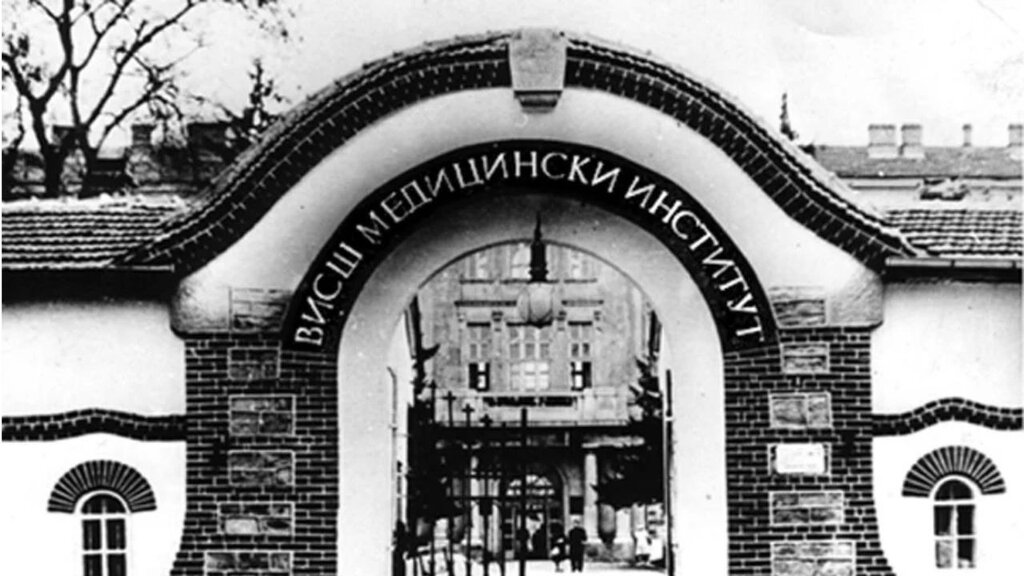
PHOTO mu-sofia.bg
While the medicine was gaining recognition around the world, a bitter campaign was unfolding against Dimitar Paskov in his own country. He was accused of plagiarising the achievements of “great Soviet science” – possibly, according to accounts of the controversy, under Soviet pressure to ensure that the discovery remained Soviet intellectual property. Although Academician Sergei Anichkov, under whom the Bulgarian scientist had defended his doctorate, acknowledged Paskov's contribution to the development of the medicine*, a series of reprisals followed. Paskov was dismissed from his leadership position at the Institute of Experimental Medicine and resigned from the Higher Medical Institute.
Meanwhile, the man who had become the target of envy and intrigue in his own country was winning international recognition for his pioneering contribution to Nivalin, a Bulgarian medicine developed using locally sourced plant material. In 1961, French television broadcast a film about the scientist and his medicine. He was also invited to lecture at the Sorbonne.
A year later, the University of Bologna published Paskov's first work, Pharmacology and Clinical Application of Nivalin. Shortly afterwards, he published a monograph, translated into Italian and Russian, in which he described his research in detail. The work also became a model textbook of experimental pharmacology.
Undoubtedly, his greatest honour was the international Ennio Award for scientific achievement, presented to him in Naples and described as the equivalent of a medical “Oscar”.

PHOTO Pixabay
Dimitar Paskov died in 1986, leaving humanity a medicine whose active ingredient remains in use today. Galantamine is now used particularly in the symptomatic treatment of Alzheimer's disease, while Nivalin has also been employed in treating various neurological and neuromuscular conditions.
His legacy also includes some 120 scientific papers in pharmacology, a textbook for doctors and medical students, 20 inventions and a number of medicinal preparations based on Nivalin. Those who believed they owed their recovery to him expressed their gratitude in many ways. There were even press reports of a newborn girl being given the name Nivalina.
Voted “Person of the Century” by the people of the town of Peshtera, the scientist was laid to rest amid a sea of snowdrops. Thousands came to bid him farewell, lining his final path with the delicate, fragrant flowers whose medicinal properties had helped him bring hope to people suffering from paralysis far beyond Bulgaria's borders.

PHOTO Pixabay
* Although galantamine had previously been isolated and studied by Soviet researchers. Paskov's pioneering pharmacological work, alongside that of his Bulgarian colleagues, helped turn the substance into Nivalin, a medicine used in treating neurological and neuromuscular disorders, including paralysis associated with polio. - Editor's note.
Supervising editor: E. Karkalanova
English editor: E. Radkova
This publication was created by: Elizabeth Radkova