


Author
Elizabeth Radkova
News
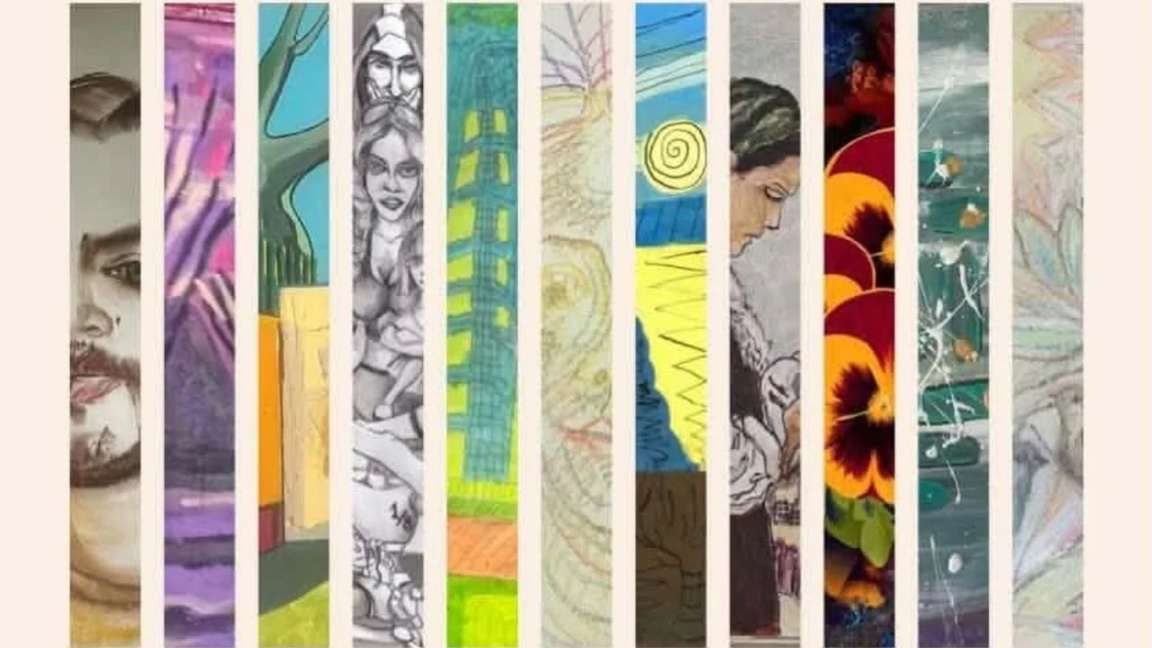
Sofia exhibition explores the ‘Contours of the Soul’
Paintings by patients of the Prof. Nikola Shipkovenski Mental Health Centre mark World Mental Health Day
Friday 9 October 2026 14:27
Friday, 9 October 2026, 14:27
Изложба в София търси контурите на душата
PHOTO Daniela Popova
Font size
“Art is a wound turned into light.”
Georges Braque
According to Bulgaria’s National Mental Health Strategy, around 5% of the population suffer from severe mental disorders, including schizophrenia, bipolar disorder and severe psychoses. Nearly 20% of Bulgarians experience anxiety and depression, with the country ranking 17th worldwide for the prevalence of these conditions, according to the Global Mental Health Report.
World Mental Health Day, observed on 10 October, is an opportunity to reflect on these issues and raise public awareness. This is precisely what the doctors at the Prof. Nikola Shipkovenski Mental Health Centre in Sofia have set out to do. They have launched an inspiring initiative to mark the occasion through the visual arts – an exhibition entitled Contours of the Soul.
We spoke to one of the driving forces behind the project, Dr Antoana Uzunova, a resident doctor specialising in psychiatry at the Prof. Nikola Shipkovenski Mental Health Centre.
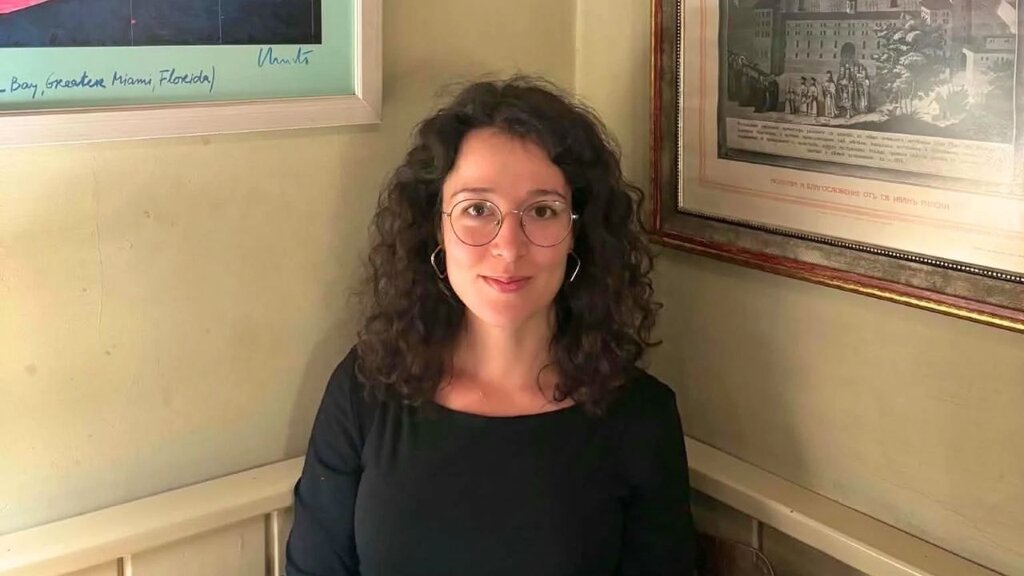
Dr Antoana Uzunova
PHOTO Personal archive
“The idea for this exhibition actually came about two years ago, when I mentioned during a conversation with a graphic designer that many of our patients were creative and that quite a few of them painted,” Dr Uzunova recalls.
“I shared the idea with several patients. They were really excited about it, and their enthusiasm gave me even more energy and inspiration to carry on and make it happen – or rather, for my colleagues, the team and me to make it happen together. It was also made possible thanks to the House of Cinema, which gave us the opportunity to hold the exhibition, and our partnership with Collegium Private Psychiatry.
“The title Contours of the Soul was suggested by a colleague. I think it is a beautiful metaphor because the soul has no boundaries, yet part of our role is to explore and understand it, as far as that is possible. And art is one way of doing so,” Dr Antoana Uzunova explains.
Every patient who wanted to take part was welcome. As it turned out, many possessed enormous creative potential, sometimes without even realising it themselves.
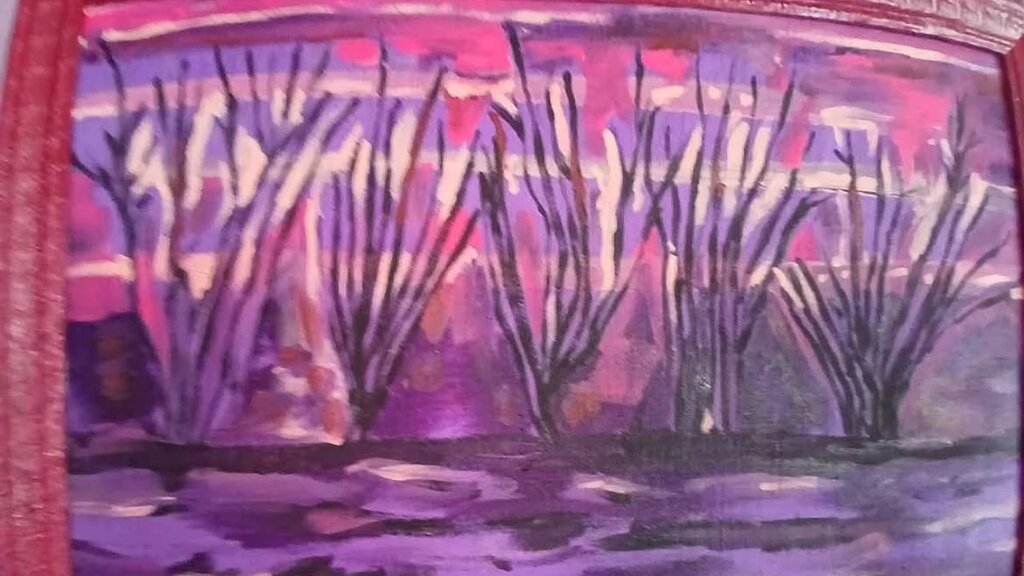
PHOTO Antoana Uzunova
“At the time, we had a patient who was a very creative person. She encouraged the other patients to express themselves through art. Even people whose everyday lives are rather grey, and whom I would never have imagined had such talent, produced works with remarkably deep and varied themes, each touching the viewer in its own way,” Dr Uzunova says.
Why do so many people with mental health conditions turn to art?
“I think it gives them a sense of freedom, a kind of relief, because very often their inner world and the processes taking place within them are far from easy to cope with. Art is one way of releasing some of the inner burden they carry.”
But is it possible to identify a mental disorder from someone's paintings?
“Personally, I'm not an expert in this field, so I can't really say. There are paintings which, when you look at them, would give you absolutely no reason to suspect that the artist has a mental illness. But there are others in which certain characteristics can be discerned.
“You might find an answer to your question in the books by Associate Professor Aleksandar Marinov, who was another source of inspiration for this exhibition. He worked as a psychiatrist in the town of Byala and wrote two books based on the art of his patients. They contain numerous illustrations of paintings, along with a considerable amount of theory about the relationship between art and mental illness.”
How important are hobbies for maintaining good mental health?
“I think they're very important. I often ask the patients I work with about their hobbies, what they enjoy doing, and I try to encourage them to pursue those interests. Because when someone has sunk into a hole, so to speak, they lose motivation and forget about the things they once enjoyed.
“What I've seen among the patients, particularly in the run-up to this exhibition, is just how much it has helped them develop this potential within themselves.”
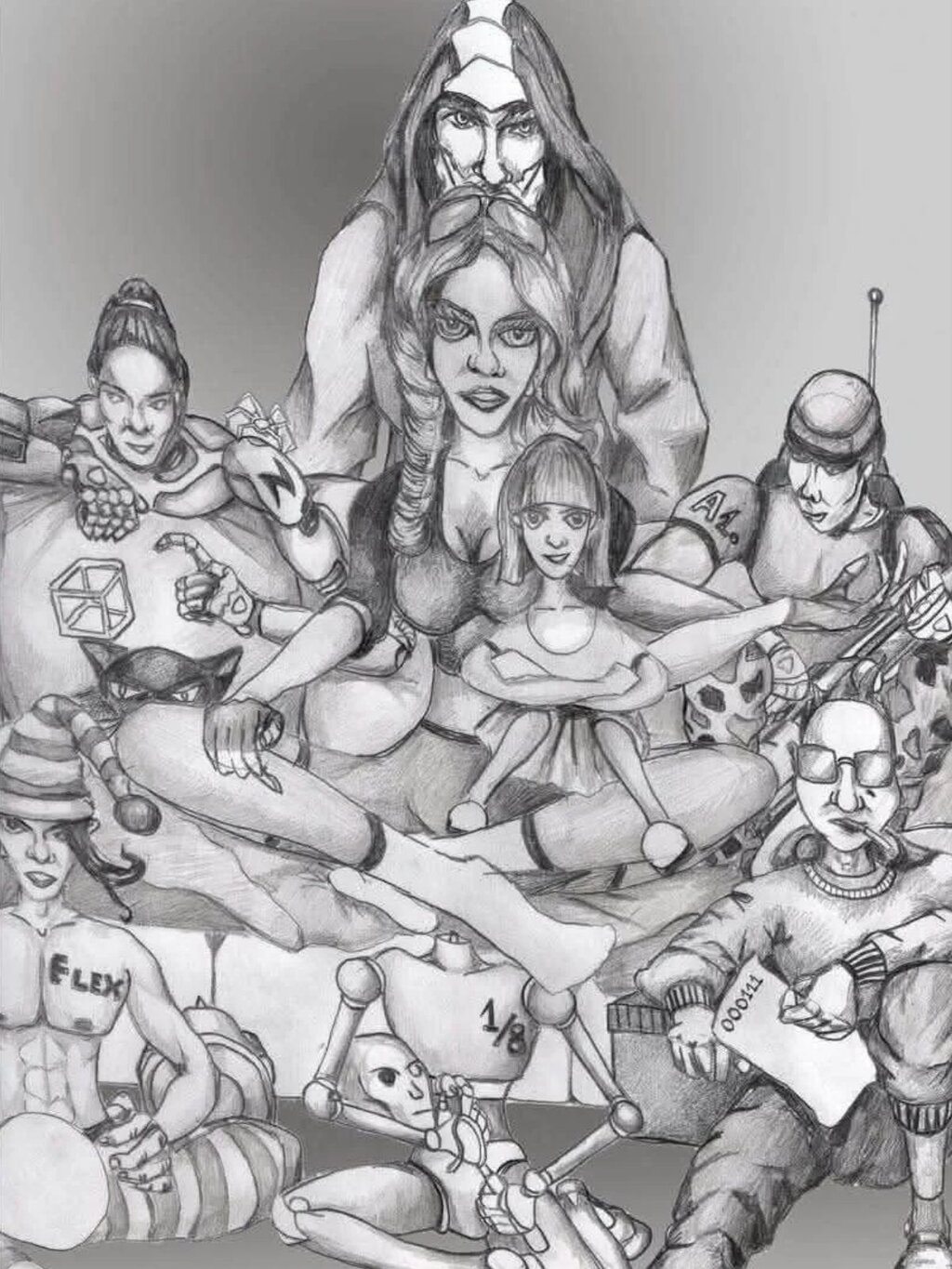
PHOTO Antoana Uzunova
Prevention, as the saying goes, is the most important part of treatment. What can we do to maintain good mental health?
“Yes, of course. It's always important to talk about prevention and looking after our health. There are all sorts of practices that can help, including physical activity and sport, but above all, talking and communicating, because as human beings we need to connect with one another.
“Perhaps each of us should set aside 10 or 15 minutes every morning just for ourselves – and generally try to make more time for ourselves and for personal reflection. We should make time for the people close to us and for the things we love doing.
“We need to take care of our mental health in the same way that we look after our physical health.”
The exhibition Contours of the Soul opens at the House of Cinema in Sofia at 6 pm on Saturday, 10 October. The paintings will remain on display until the end of the month.
Editor: E. Karkalanova
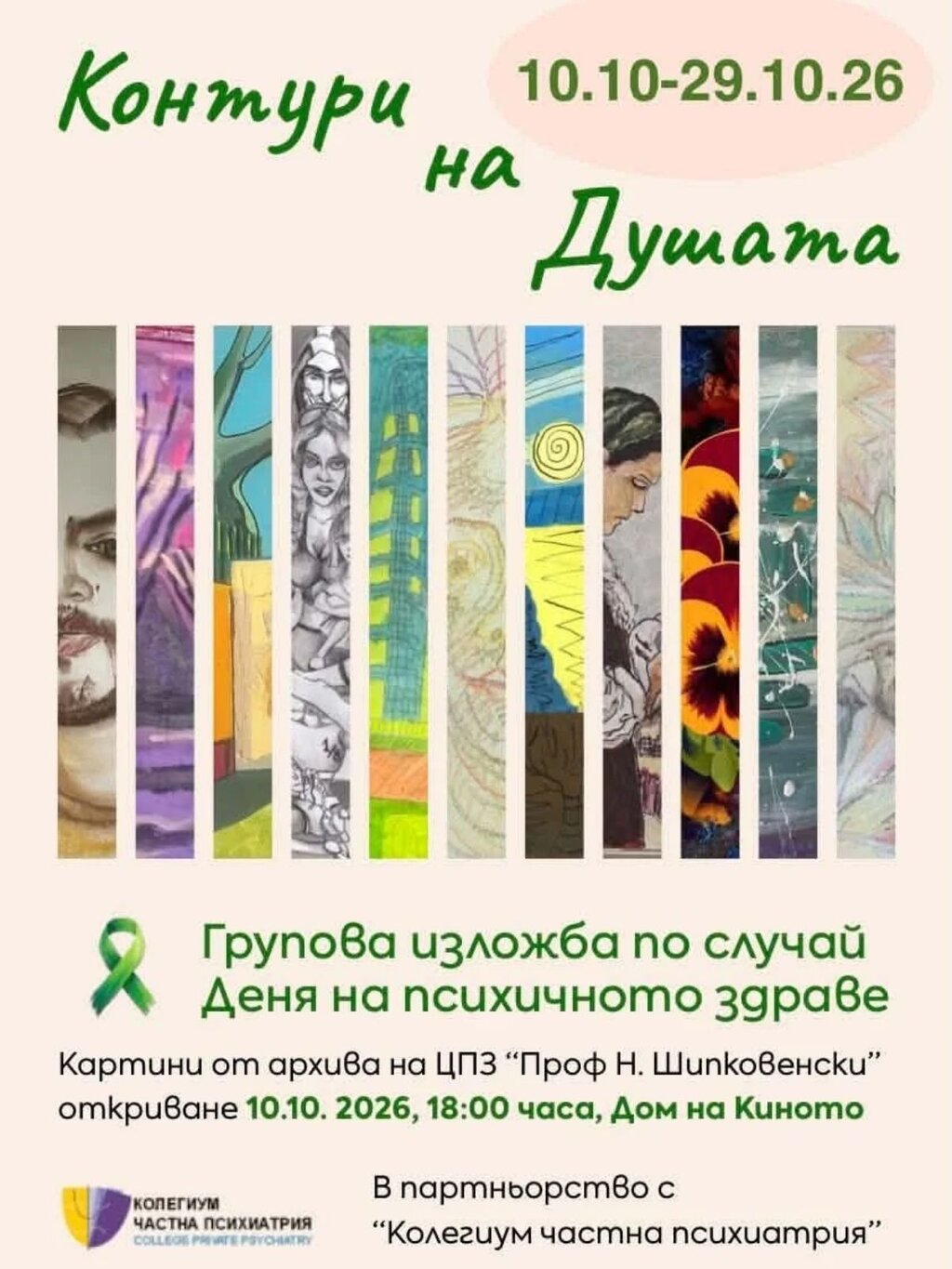
PHOTO Poster design: Daniela Popova
This publication was created by: Elizabeth Radkova