


Author
Albena Bezovska
From Radio Bulgaria's best collection
On Petkovden: Legends of Saint Petka of Bulgaria
Wednesday 14 October 2026 07:05
Wednesday, 14 October 2026, 07:05
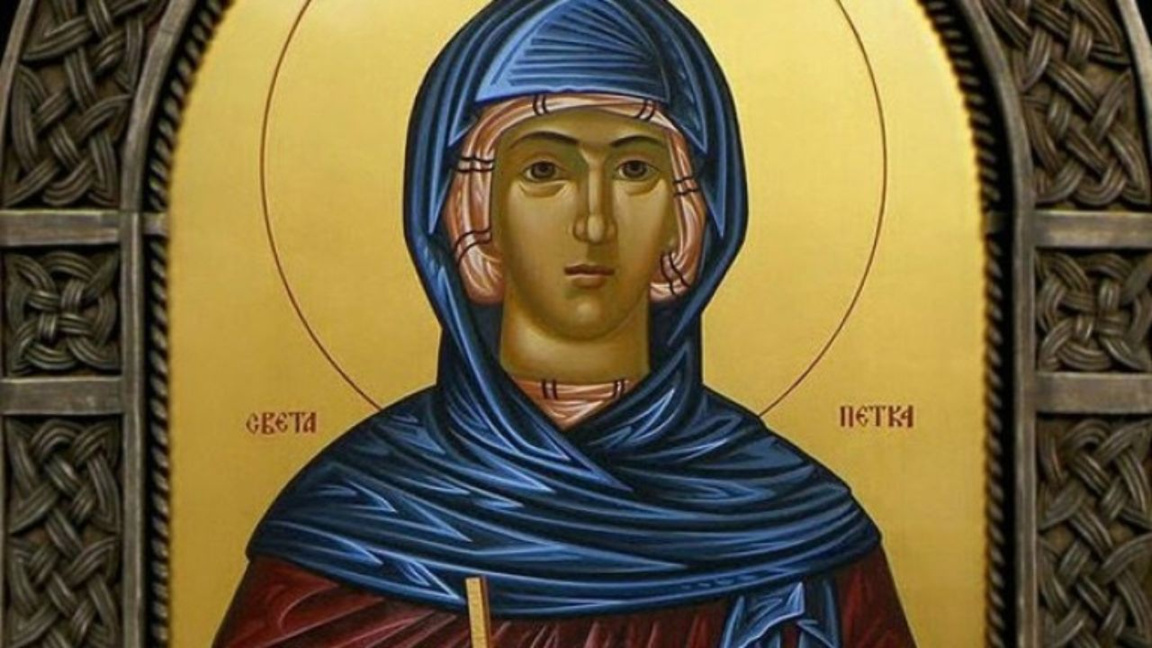
PHOTO BNR (archive)
Font size
On October 14, the Orthodox Church commemorates Saint Petka, one of the most popular and beloved saints in Bulgaria. Folk tales and legends attribute supernatural powers to her. Her hagiographies also recount the miracles attributed to Saint Petka.
Saint Paraskeva, known among Bulgarians as Petka, was born in Epivates, in present-day Selimpaşa in Türkiye. She lived in the 10th and 11th centuries. When her parents died, her brother had already become a monk. Paraskeva gave away all her possessions and devoted herself to an ascetic life. After spending five years in a small monastery, she set out on a pilgrimage to Jerusalem and the Tomb of Christ. She then withdrew into the Jordanian desert, where she devoted herself to fasting and prayer. According to the saint’s hagiography, one night, while she was praying, an angel appeared before her and told her to return to her homeland. “There you shall leave your body on earth and carry your spirit to the heavenly realms”, the angel told her.
The author of her hagiography was Patriarch Euthymius, one of the great spiritual leaders of medieval Bulgaria. The Bulgarian people reinterpreted his writings in their own way, while preserving the main facts of Saint Petka’s life. In Bulgarian folklore, Saint Petka is considered a relative of Saint Nedelya and Saint Demetrius. Nedelya is her sister, while Demetrius, known as Mitre in some regions, is their nephew.
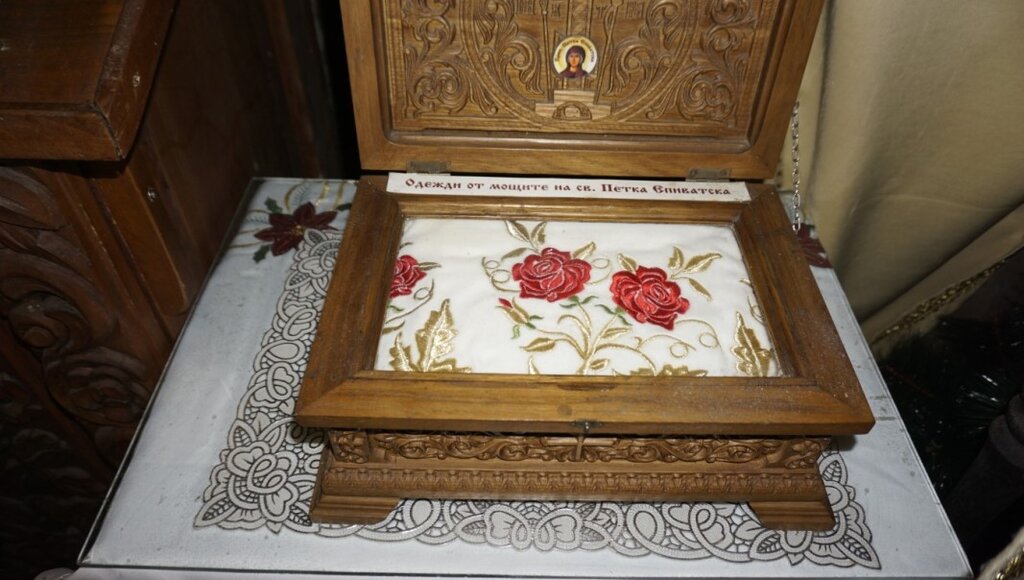
PHOTO Radio Vidin
According to her hagiography, the saint’s relics were discovered by accident. When she returned to her native land, she did not tell anyone who she was. After her death, she was buried by strangers. One night, Saint Petka miraculously appeared in the dreams of two people simultaneously, revealing her name to them. Surrounded by light, she asked that her incorrupt body be transferred to another place.
From 1238 until Bulgaria fell under Ottoman rule in the late 14th century, her holy relics rested in the old capital of Veliko Tarnovo, in the Church of Saint Petka Tarnovska. After being transferred several more times, they have been kept since 1641 in the Metropolitan Cathedral of Iași, a city in northern Romania.
Legends tell of countless miraculous healings attributed to her relics: people with disabilities regained the ability to walk, the blind recovered their sight, and those suffering from serious illnesses suddenly found themselves cured. According to Bulgarian folk belief, even praying to Saint Petka is said to bring help. She is believed to be especially powerful in cases involving eye problems, blindness, mental disorders, and infertility. To this day, sick people continue to spend the night in monasteries or chapels, bringing offerings with them. They usually adorn her icon with a new headscarf and a sprig of basil.
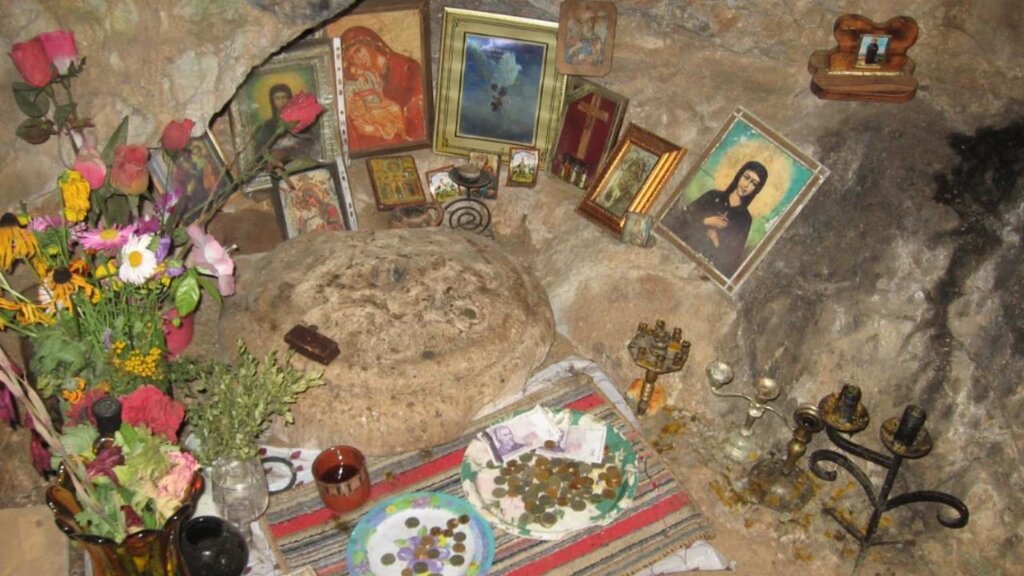
Her relics are not the only things believed to possess miraculous powers. A legend from western Bulgaria tells how Saint Petka found shelter in a cave near the town of Tran. A group of religious persecutors was pursuing her, but she managed to escape. She carried a small bag of flour with her. Inside the cave, she lit a fire and baked bread. While there, she noticed another entrance. When her pursuers finally discovered her hiding place, the saint escaped through a narrow crevice in the rocks. Traces of her footsteps remained, along with the small loaf of bread, which instantly turned to stone. Today, a chapel stands inside the cave, and local people believe that the water trickling down its walls has healing properties.
The Chapel of St. Petka in the cave
PHOTO svetimesta.com
In Bulgarian folk legends and songs, Saint Petka can cross the boundary between worlds. Together with Archangel Michael, she guides souls as they pass into the afterlife. Alongside her sister Nedelya, she also builds a bridge between the two worlds, which only righteous souls may cross.
According to folk belief, Saint Petka is the patron saint of Friday, as her name suggests. St Petka is the protector of women, women in childbirth, and the home, and her feast day is observed every Friday. Certain types of work are forbidden on this day, and the saint is believed to punish those who violate these prohibitions.
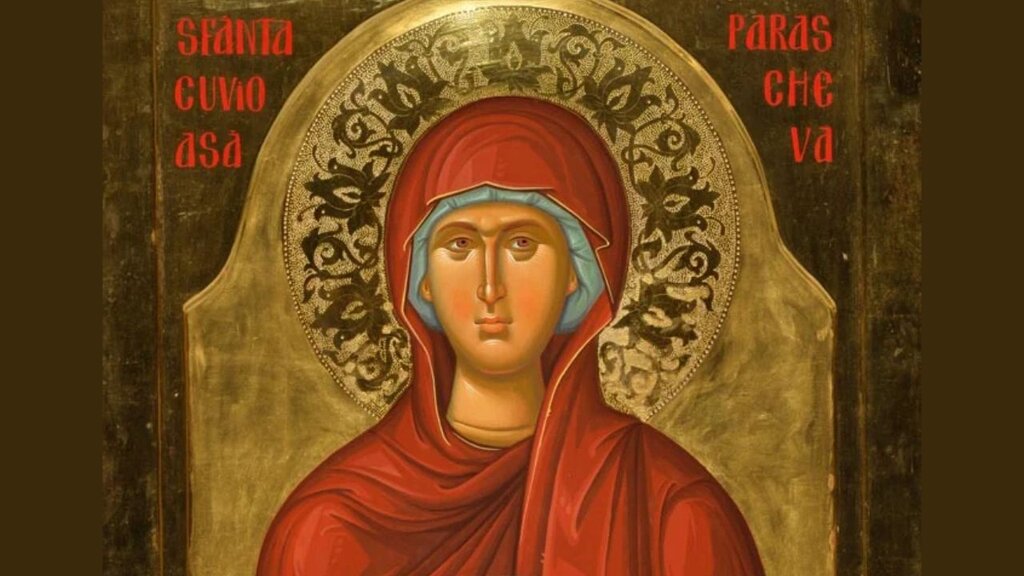
PHOTO plovdivskamitropolia.bg
In Bulgarian folk tradition, the relationship between Saint Demetrius and Saint Petka is reflected in the meaning and significance of their feast days. The folk calendar marks Petkovden (October 14) and Dimitrovden (October 26) as the end of the season of intensive agricultural work. Around these dates, hired workers receive their wages and sign contracts for the next working season.
In the folk calendar, the period between Petkovden and Dimitrovden holds sacred significance. It represents a transition between the seasons, as Bulgarians traditionally believe that winter begins on Dimitrovden. No new activities should be started during this period, as they are believed to be doomed to failure. Women, in particular, should avoid working with wool, cutting fabric, or sewing clothes.
Petkovden also marks the beginning of various family celebrations. In the past, each community would dedicate a particular day to the guardian spirit of the family hearth. These celebrations were known by different names, including svetets, slava, and obrok. They were marked by church services, communal sacrificial feasts, and, of course, lively traditional dancing.
Having finished bringing in the harvest, Bulgarians would put on their new clothes and go out to celebrate. The traditional dances performed on Petkovden were also known as hora za sglyada — dances associated with matchmaking. Women with unmarried sons would attend the village gathering to look at the young women and choose potential brides for their sons.
Translated by Kostadin Atanasov