


Author
Krasimir Martinov
News
Sacred sites of the Eastern Rhodopes: The Wooden Mosque near Podkova
Sunday 18 October 2026 10:35
Sunday, 18 October 2026, 10:35
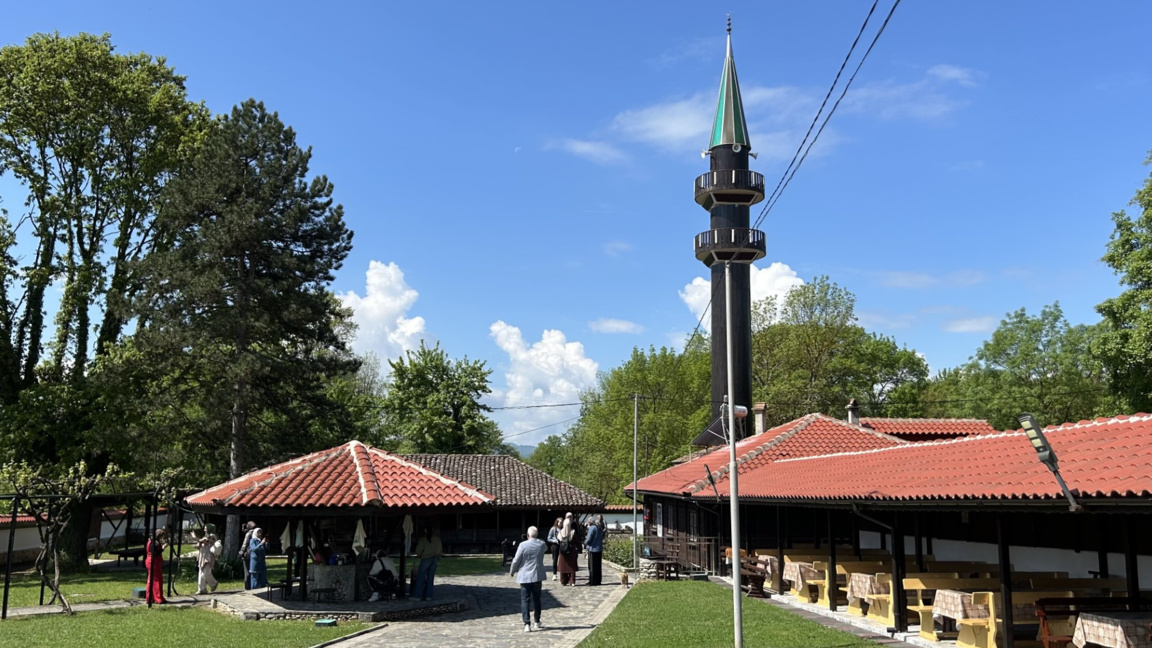
The Wooden Mosque above the village of Podkova
PHOTO Krasimir Martinov
Font size
High above the village of Podkova, in the Kardzhali region of southern Bulgaria, rises the minaret of one of the country’s oldest mosques— the Wooden Mosque, also known as the Mosque of the Seven Maidens.
This sacred place is deeply revered by the local population, made up largely of Bulgarian Muslims and ethnic Turks who follow Islam. It is also included in tourist routes showcasing the cultural and historical heritage of the Eastern Rhodopes and draws many visitors every year.
Although the year of its construction is known-1428-little else is known about the mosque’s history. Tour guides, however, are eager to tell the legend that the Wooden Mosque was built by seven young women whose loved ones never returned from war. They sold all their dowries to buy the building materials and constructed the mosque in a single night. Afterward, they were never seen again.
It is believed that this happened on 6 May, during Hıdırellez, a spring festival celebrated by Muslims. Every year on this date, people from across Bulgaria, as well as neighbouring Greece and Türkiye, gather in the mosque’s courtyard. They recite mevlid (verses praising the life and deeds of the Prophet Muhammad), read from the Quran, and offer prayers. Guests are also treated to pilaf.
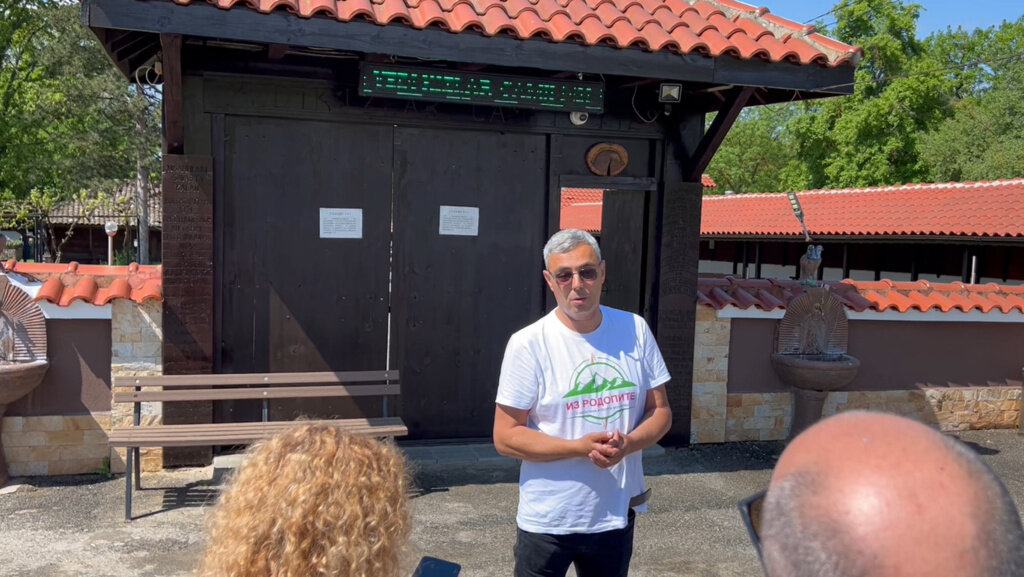
Tour guide Georgi Kyuchukov
PHOTO Krasimir Martinov
“As we mentioned, this is a legend in which the seven maidens lose their fiancés”, explains our tour guide, Georgi Kyuchukov. “But if we walk a little further, right next to the mosque, you will see seven unmarked graves. They were most likely built in their honour and are linked to the story we have just told. Perhaps this suggests that the story is more than just a legend. It is something the people here believe in.”
The mosque, which is nearly 600 years old, is also remarkable for its architecture. It is said that not a single nail was used in its construction. In 2009, the mosque was restored using traditional building techniques and designated a cultural monument. The 24-metre-high wooden minaret was built in 2018.
The village cemetery is located right next to the mosque and can be reached via its beautiful courtyard. The area is dotted with stones believed to possess healing properties.
''Local people believe that the stones give energy and have the power to heal. No one knows how long these stones have been here, but people revere them as places they visit to heal their ailments. You will notice pieces of clothing tied to the surrounding trees. This is based on the belief that you must leave something of yourself behind so that your illness stays here and does not follow you back home.''
One of the most remarkable is the “Pierced Stone”, known in Turkish as “Demitlikaya.” It is believed to cure various ailments, including infertility. The only condition is that visitors pass through the hole in the stone three times in a counterclockwise direction.
''People believe that the mystical healing powers of this place are strongest on the night of 5–6 May. Passing through the stone three times in a counterclockwise direction is said to bring forgiveness for your sins. One stone is used to relieve joint pain by kneeling on it. Another is believed to heal lower back pain, and a third that is believed to cure headaches. Each stone has a sign explaining what visitors should do at that particular spot.''
If our guide’s story about the Wooden Mosque near the village of Podkova has sparked your interest and you are already making plans to visit, here is a useful tip: the village, located just 15 kilometres from the Bulgarian-Greek border, is accessible by train as well as by car.
The journey aboard the “Rhodope Caterpillar”, as locals affectionately call the diesel train that crawls along the slopes of the Eastern Rhodopes, promises a unique experience. You can catch it in Dimitrovgrad, Haskovo or Kardzhali, and it will take you to Podkova railway station, the southernmost railway station in Bulgaria.
Translated by Kostadin Atanasov
This publication was created by: Kostadin Atanasov