


Author
Krasimir Martinov
News
A week in Budapest dedicated to Bulgaria and Bulgarian-Hungarian friendship
Monday 19 October 2026 14:10
Monday, 19 October 2026, 14:10
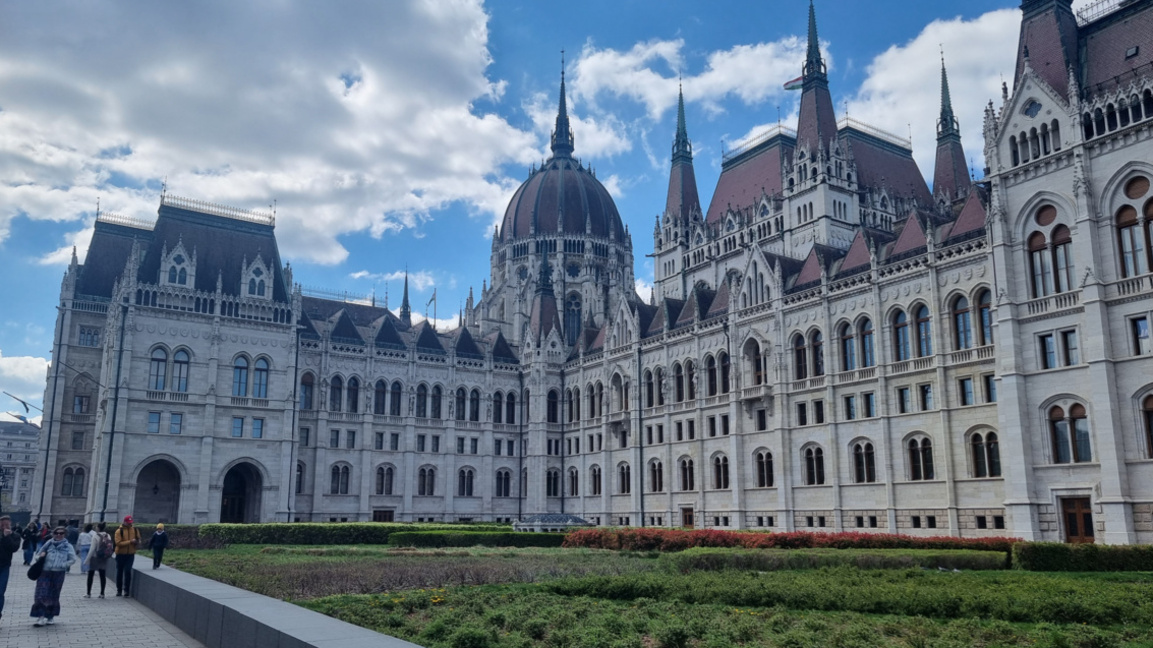
The Hungarian Parliament Building
PHOTO BTA
Font size
The Day of Bulgarian-Hungarian Friendship, the 21st World Meeting of Bulgarian Media, and two anniversaries of Bulgarian cultural organisations make October a month of remembrance, continuity and spiritual ties between Bulgaria and Hungary.
On October 19, when the Bulgarian Orthodox Church honours St. John of Rila, Bulgaria and Hungary celebrate Bulgarian-Hungarian Friendship Day. In 2026, the occasion carries special significance, marking ten years since the date was officially designated as a day of friendship between the two countries. The date connects contemporary relations with a shared historical heritage and the memory of the saint whose relics were taken to Esztergom in the 12th century.
The connection between St. John of Rila and Hungary is part of the historical memory underpinning the celebration. In 1183, during a military campaign through Bulgarian lands, King Béla III of Hungary had the saint’s relics transferred to Esztergom. The relics were later returned to Bulgaria, but the memory of this historical event remains a symbol of the spiritual closeness between the two peoples.
Esztergom remains one of the places where this connection is commemorated. By tradition, the feast of St. John of Rila and Bulgarian-Hungarian Friendship Day are marked at the city’s basilica, where a bilingual memorial plaque dedicated to the saint was unveiled on October 19, 2016.
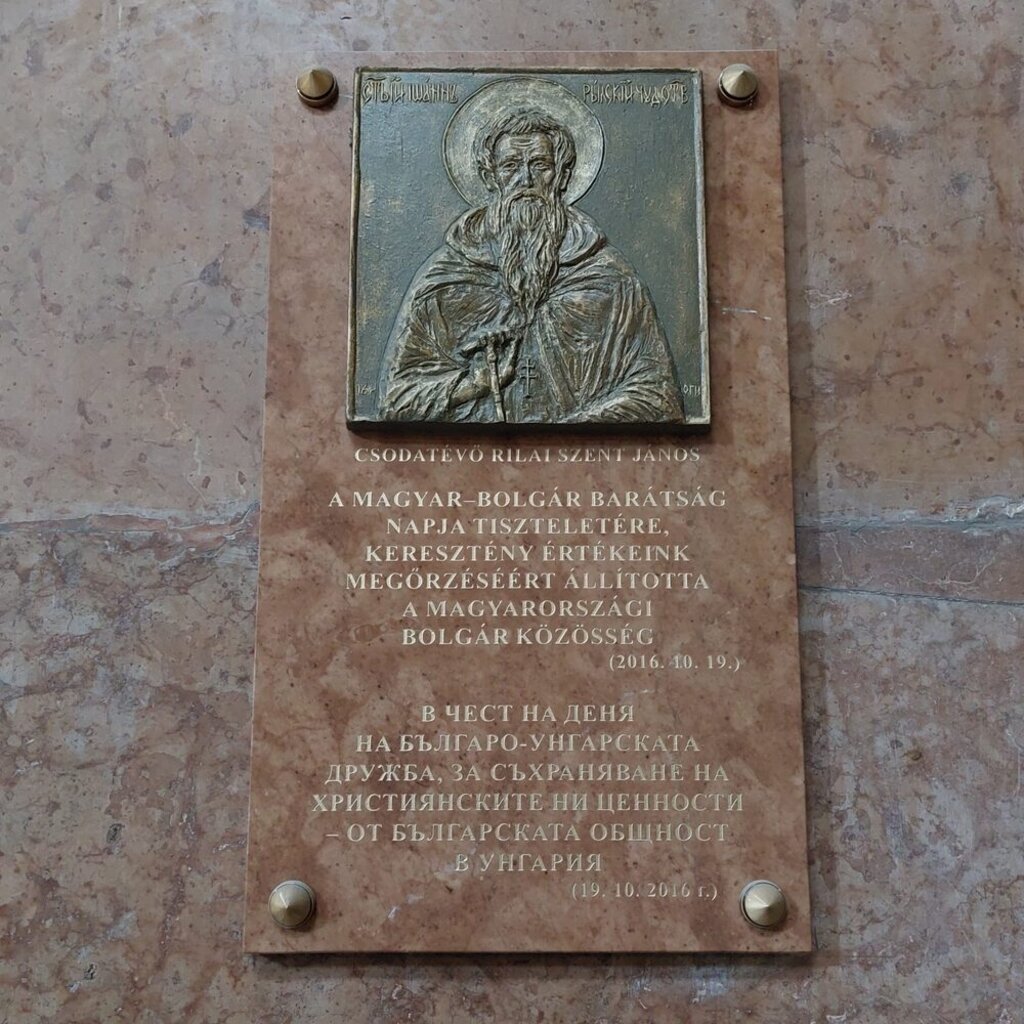
The commemorative plaque dedicated to St John of Rila at Esztergom Basilica
PHOTO BTA
The 21st World Meeting of Bulgarian Media officially opens today in Budapest, the capital of Hungary. The forum is organised and hosted by the Bulgarian News Agency (BTA).
This year’s edition is mottoed “Media and Leaders”. The event, which will take place in Budapest and Esztergom, is expected to bring together participants from 25 countries, including Bulgaria, both in person and online.
The Bulgarian National Radio is represented by its Director General, Milen Mitev.
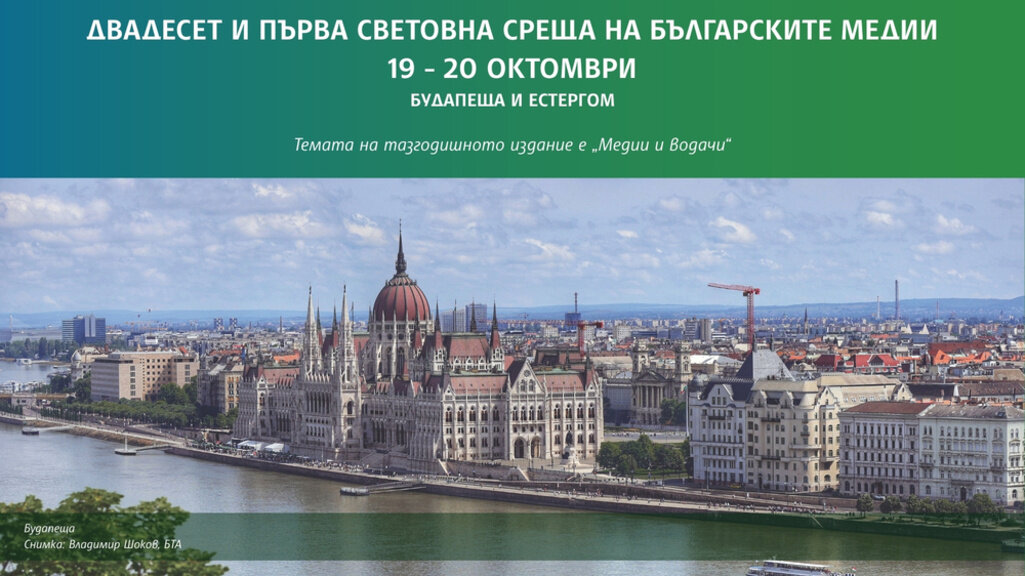
21st World Meeting of Bulgarian Media
PHOTO BTA
Today’s programme includes a visit to the Hungarian Parliament and a meeting with MP Márton Hajdu, Chair of the Foreign Policy Committee. At 11:30 a.m., an exhibition dedicated to Bulgarian-Hungarian Friendship Day will open at the Barankovics office building. Bulgaria’s Ambassador to Hungary, Maria Anguelieva, and Simeon Varga, the representative of the Bulgarian community in the Hungarian Parliament, will deliver welcome addresses, the Bulgarian News Agency (BTA) reported.
The 21st World Meeting of Bulgarian Media will begin at 2 p.m. with a wreath-laying ceremony at the memorial plaque dedicated to St. John of Rila at the Cathedral of the Assumption of the Blessed Virgin Mary and St. Adalbert, and a prayer service led by Metropolitan Anthony of Western and Central Europe and Father Csaba, the episcopal delegate for the Esztergom Basilica.
The official opening of the 21st World Meeting of Bulgarian Media will take place at 6:30 p.m. at the Bulgarian Cultural Institute in Budapest.
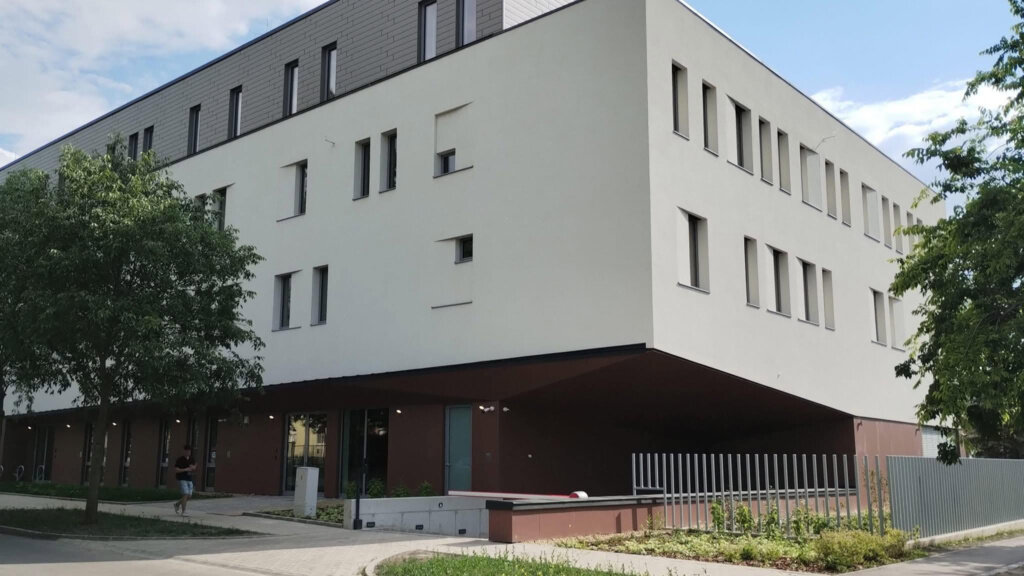
The building of the Bulgarian School and Kindergarten in Budapest
PHOTO Bulgarian School and Kindergarten-Budapest
Behind the official celebrations of Bulgarian-Hungarian Friendship Day, diplomatic meetings and media forums, however, is a community that has kept the Bulgarian language, traditions and cultural memory alive in Hungary for decades. Its cultural life is sustained through schools, theatre, dance ensembles, music and Bulgarian-language publications. These organizations are not isolated from one another but form an interconnected cultural environment where generations come together and pass on their knowledge, skills and sense of identity.
“Bulgarians here are a very close-knit community. We are not just a school, a theatre or a dance ensemble operating separately”, Vanya Kotorova, principal of the Bulgarian School and Kindergarten-Budapest, told Radio Bulgaria.
This is in fact one of the most distinctive features of Bulgarian cultural life in Hungary. Children who study Bulgarian often participate in dance ensembles as well. The school organizes workshops with theatre professionals, while festivals and concerts become shared events for the entire community.
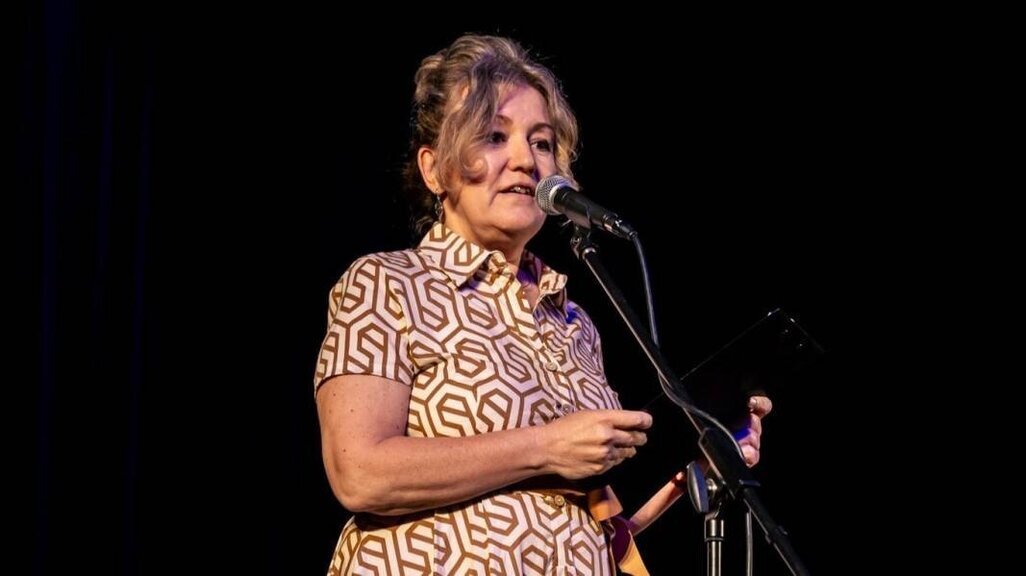
Vanya Kotorova
PHOTO Personal archive of Vanya Kotorova
“We are a small community, yet our cultural life is exceptionally rich”, says Vanya Kotorova, adding that October is a particularly eventful monthfor Bulgarians in Hungary, marked by several important cultural anniversaries.
Jantra-Bulgarian Folkdance Group and The Rositsa Folk Dance Ensemble are among the most iconic representatives of Bulgarian cultural life in Budapest.
On 23 October, Jantra-Bulgarian Folkdance Group will celebrate its 30th anniversary with the music and dance performance JANTRA 30 at the Vígszínház Theatre. The show will feature both dance ensembles, the Pravo and Slavia orchestras, and performers showcasing the richness of Bulgarian folk music and dance.
The Malko Teatro theatre company is also marking 30 years of cultural activity. Founded in 1996, it has established itself over the years as a space where theatre, music, movement and contemporary forms of stage expression come together.
Meanwhile, Hemus magazine continues to showcase Bulgarian literature, art, history and public life, creating opportunities for cultural exchange between Bulgarian and Hungarian authors and readers. The magazine’s 35th anniversary will be marked on 21 October with the opening of Danube-Bridges, an exhibition by photographer Péter Gyukics.
On 23 October, Hungary marks the 70th anniversary of the beginning of the student uprising against Soviet rule. On that day in 1956, a peaceful student demonstration began in Budapest and quickly grew into a mass protest involving more than 200,000 people. The demonstrators called for the withdrawal of Soviet troops, democratic reforms and freedom of speech.
Translated by Kostadin Atanasov
This publication was created by: Kostadin Atanasov