


Author
Krasimir Martinov
News
21st World Meeting of Bulgarian Media – Budapest 2026
Social media are changing Bulgarian media abroad too
A conversation with Evgeni Veselinov, editor-in-chief of the US-based website BulgariCA
Saturday 24 October 2026 14:25
Saturday, 24 October 2026, 14:25
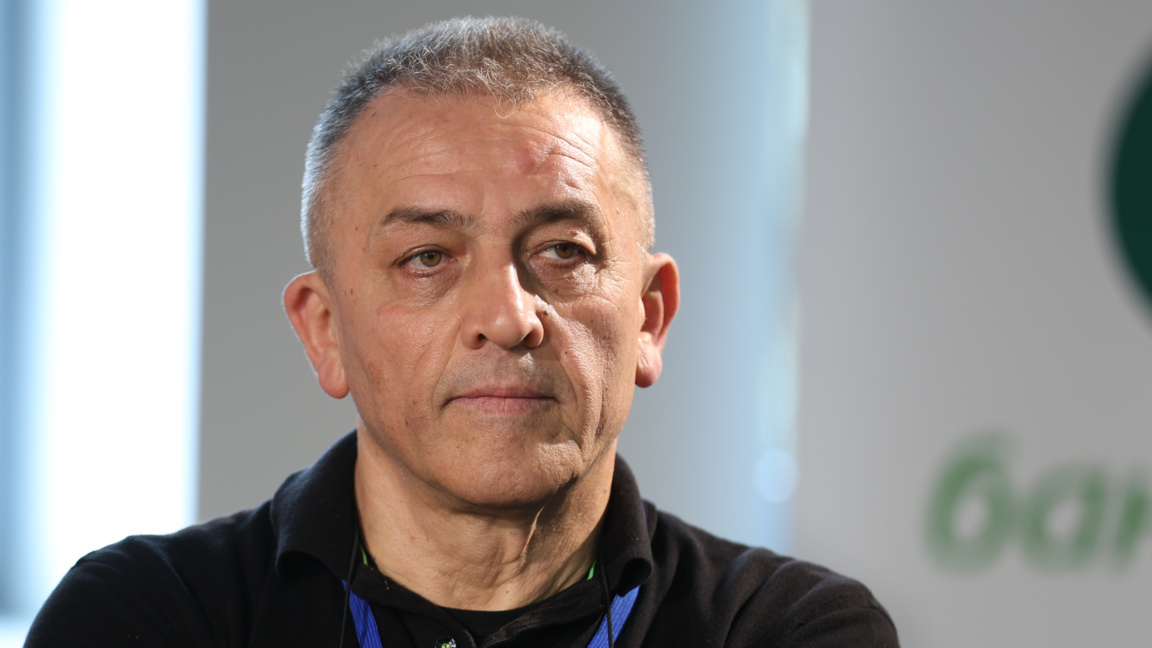
PHOTO BTA
Font size
Social media are changing the way Bulgarians abroad get their news, while a lack of support from Bulgarian institutions remains a serious problem for communities overseas.
Evgeni Veselinov, editor-in-chief of the US-based website BulgariCA, spoke about these challenges in an interview with Radio Bulgaria's editor-in-chief, Krasimir Martinov.
He also raised two issues he believes deserve greater attention from the Bulgarian authorities: the shortage of priests at Bulgarian Orthodox churches on the US West Coast and the lack of a separate parliamentary constituency for Bulgarians abroad, leaving them without direct representation in the National Assembly.
The conversation took place during the 21st World Meeting of Bulgarian Media, organised by the Bulgarian News Agency (BTA) in Budapest. Veselinov brought with him an icon of St John of Shanghai, which Metropolitan Antony of Western and Central Europe blessed at the Bulgarian Orthodox church in the city.
A meeting place for Bulgarian media around the world
"The very fact that this forum has been held for 21 years is something important and significant," Veselinov told Radio Bulgaria.
He described the World Meeting of Bulgarian Media as the first major forum devoted to Bulgarians abroad. First held in 2005, it came before a series of initiatives to support Bulgarian communities overseas, including the introduction and expansion of state funding for Bulgarian schools abroad.
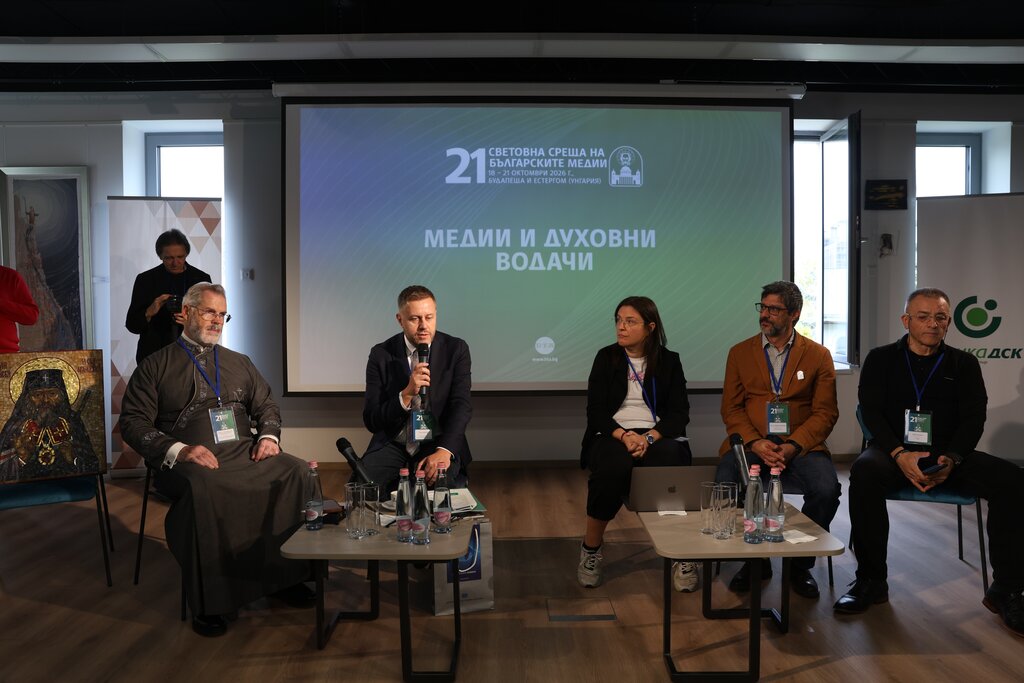
Evgeni Veselinov takes part in the “Media and Spiritual Leaders” panel at the 21st World Meeting of Bulgarian Media.
PHOTO BTA
Veselinov himself went on to establish a Bulgarian school on the US West Coast after setting up a Bulgarian media outlet there. For him, the value of the Budapest meeting lies in the opportunity to talk to fellow journalists, share experience, make contacts and see what has worked elsewhere.
He found the meetings with representatives of Bulgaria's national broadcasters particularly useful, including talks with Bulgarian National Radio Director General Milen Mitev and Bulgarian National Television Director General Milena Milotinova.
Veselinov has also seen first-hand how the media landscape is changing. Print publications are steadily losing ground, while digital platforms are becoming the main way people get their news.
"My reach increased thousands of times when I joined social media," Veselinov said. He sees their main advantages in the speed with which news can spread and the immediate feedback from readers. Social media also bring journalists and their audiences closer together, he believes, helping to build trust.
Asked what attracts the most interest among BulgariCA's readers, Veselinov mentioned news of deaths in the Bulgarian community and appeals for help. Stories about the achievements of Bulgarians, whether children, artists or scientists, are also popular.
Readers are particularly interested in events they would be unlikely to hear about elsewhere. Travel information, practical advice and articles about religious holidays and traditions also attract a regular audience.
Another important change, Veselinov said, is that readers can now comment on stories and join discussions much more easily, largely thanks to social media.

PHOTO Pixabay
Faith connecting East and West
The conversation also turned to an icon of St John of Shanghai that Veselinov had brought from the United States to Budapest for the feast of St John of Rila, Bulgaria's patron saint.
The icon is unusual in both its design and its weight. Made of crystal and coloured glass mounted on a heavy wooden base, it weighs around 40–50 kilograms and looks quite different from a traditional painted icon.
For Veselinov, it symbolises the spiritual bond between East and West.
"St John of Rila is associated with Bulgaria, while St John of Shanghai is associated with San Francisco, where his tomb is.
"The idea is that faith and knowledge are the light at the end of the tunnel. Whether we are talking about John of Rila or John of Shanghai, the message is the same – peace, light, love and faith," he explained.
The icon travelled from Los Angeles via Sofia to Budapest, where it was blessed at the Bulgarian Orthodox church. It is due to be taken to The Hague on 8 November, with Metropolitan Antony of Western and Central Europe expected to attend.
For Veselinov, the journey shows how faith can bring people together, however far apart they live.
Faith remains strong, but churches lack priests
Veselinov said Bulgarians abroad have kept their faith, although fewer people now attend church. He suggested that one reason may be the shortage of priests, which makes it difficult to hold regular services and maintain an active church community.
In Los Angeles, for example, three Bulgarian organisations have their own buildings, two of them churches. Yet neither church has a resident Bulgarian priest, and services can only be held when a priest is available.
Bulgarians abroad lack direct parliamentary representation
Veselinov also raised the question of political representation for Bulgarians living abroad. He believes the absence of a separate electoral constituency for overseas voters leaves them without direct representation in the National Assembly and adds to the feeling that their concerns are being ignored by politicians back home.
He argued that low voter turnout among Bulgarians in the United States cannot be separated from the way Bulgarian institutions treat their communities abroad. "People say: Why should I vote when I don't know who counts my vote or how it will be represented?" he said and pointed to Hungary as an example of a different approach. There, national minorities can have a parliamentary representative who is able to raise issues and propose initiatives, although without the right to vote.
Supervising editor: E. Karkalanova
This publication was created by: Elizabeth Radkova