


Author
Ivo Ivanov
Bulgaria remembers the revolt of 1185 on St Demetrius’ Day
Led by brothers Peter and Asen, the uprising ended nearly two centuries of Byzantine rule
Monday 26 October 2026 07:10
Monday, 26 October 2026, 07:10
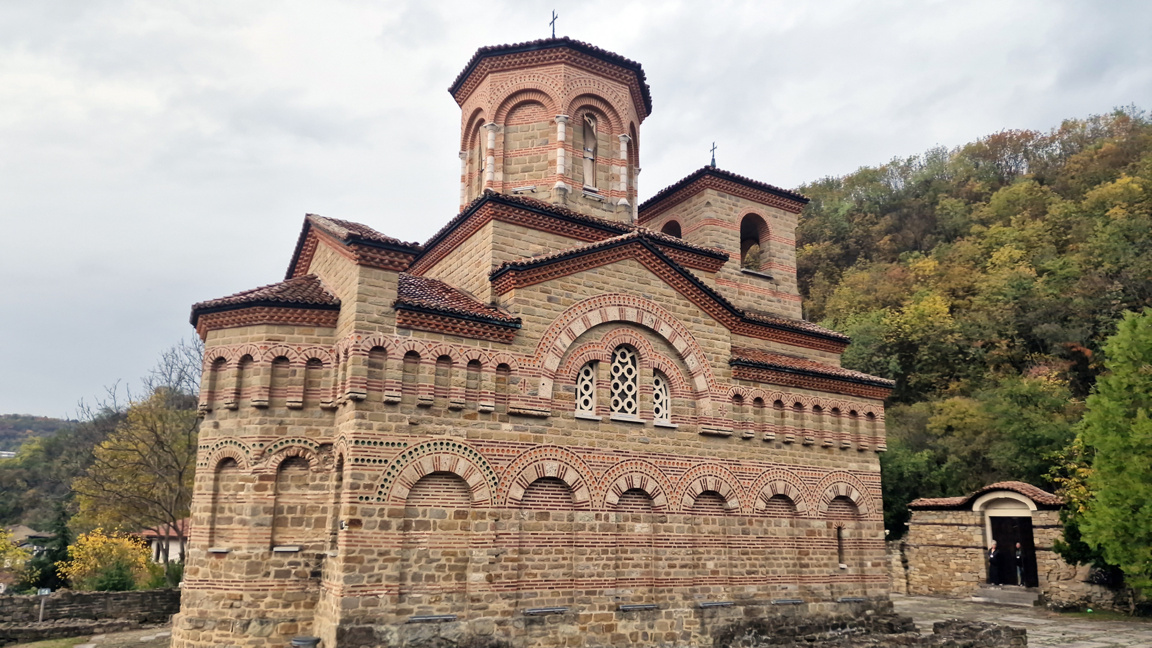
The Church of St Demetrius of Thessaloniki in Veliko Tarnovo, where historical accounts place the proclamation of the uprising led by the brothers Peter and Asen.
PHOTO BTA
Font size
In 1018, after half a century of warfare, the First Bulgarian Empire was conquered by Byzantium. Despite repeated Bulgarian uprisings, Byzantine rule lasted more than a century and a half. In the autumn of 1185 or early 1186, the local nobles Peter and Asen launched a new uprising in Tarnovgrad. After three years of fighting, Bulgarian independence was restored.
In 1185, the Byzantine emperor Isaac II Angelos sought a marriage alliance with his strongest European neighbour, marrying the ten-year-old daughter of King Béla III of Hungary. Her dowry included the regions of Braničevo, Belgrade and the Morava valley, then inhabited by Bulgarians. But, as the senior imperial official Niketas Choniates writes in his chronicle, “being reluctant to pay for the wedding celebrations from the state treasury, he extracted the money from his subjects… and stirred up hostility among the barbarians around Mount Haemus, chiefly against himself and the Romans, who were formerly called Moesians and are now known as Vlachs and Bulgarians”.
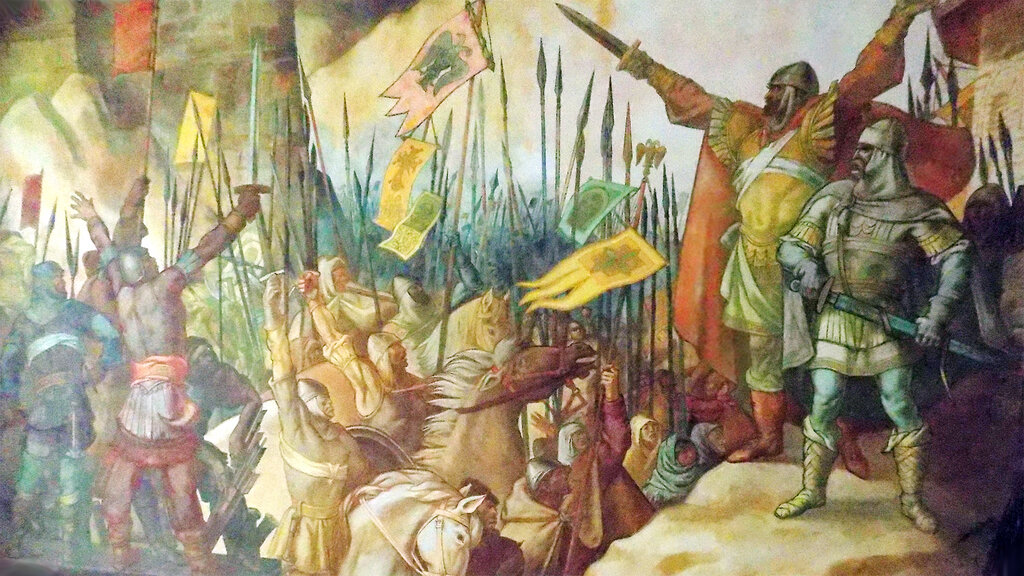
“The Uprising of Asen and Peter” by Georgi Bogdanov, 1961.
PHOTO museumvt.com
“The instigators of this evil, who stirred up the entire people, were a certain Peter and Asen, two brothers,” Choniates continues. “What words could convey what these godless and impious men did to the Romans? What account could encompass these Iliads of misfortune?” he exclaims dramatically.
Bulgarian historian Professor Plamen Pavlov, citing fellow historians, points out that Bulgarians commonly call it the “uprising of Asen and Peter”, although the correct order is “Peter and Asen”. Until 1194, the leading figure was the elder brother, Theodore, who took the royal name Peter and provided the ideas behind the movement.
The uprising was proclaimed at the consecration of a church the brothers had built in Tarnovo, dedicated to St Demetrius of Thessaloniki. His feast day, 26 October, is therefore traditionally regarded as the date the uprising began.
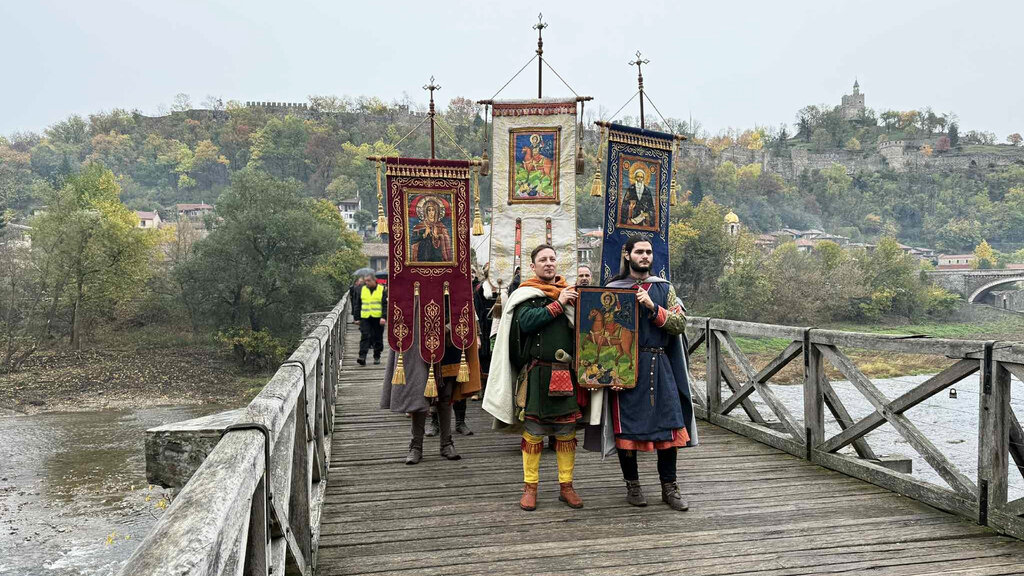
PHOTO BGNES
“They persuaded these fervent people to proclaim that God had decreed freedom for the Bulgarian and Vlach peoples and had consented to their deliverance from the long yoke. That was why Demetrius, the martyr of Christ, had left Thessaloniki and his church there, abandoning the Romans, and had come to help and protect them in their undertaking,” the chronicler recounts.
Even after Bulgarian independence was restored, the first tsars of the Asen dynasty – the brothers Peter, Asen and Kaloyan – continued to fight Byzantium. Their struggle was long and hard, with many setbacks. It continued until the Fourth Crusade captured Constantinople in 1204, forcing the remnants of the once-great Eastern Roman Empire into exile. The Latin Empire established by the crusaders then attempted to conquer Bulgaria, but suffered a crushing defeat at Adrianople, present-day Edirne. The victory of Tsar Kaloyan, who ruled Bulgaria from 1197 to 1207, proved enough to deter the Latins for good.
Editor: Elena Karkalanova
This publication was created by: Elizabeth Radkova