


Author
Irina Nedeva
Interview
Investigative report exposes investment funds channeling money to arms industry under the banner of “sustainability”
“Strasbourg Calling” EU should increase funding for investigative journalism
Interview with Voxeurop’s editor-in-chief Gian-Paolo Accardo on billions invested in defence companies through ESG funds
Interview with Gian-Paolo Accardo
Monday 26 October 2026 11:15
Monday, 26 October 2026, 11:15

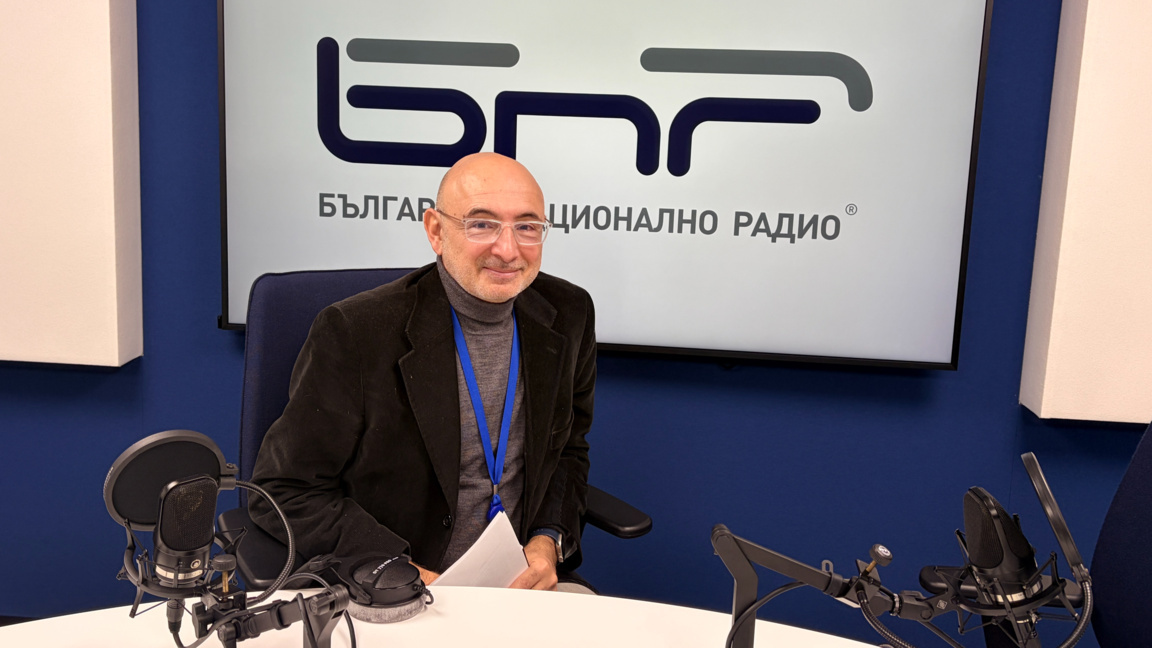
PHOTO Irina Nedeva
Font size
Can a tank be green, and can a bomb manufacturer be part of an investment portfolio marketed as sustainable and responsible? An investigation by Voxeurop traces how nearly €50 billion in investments reach defence companies through investment funds.
Meanwhile, the European Commission maintains that defence financing is compatible with social sustainability, provided certain conditions are met.
Where does Europe’s need to rearm end and the rebranding of the arms industry as a public good begin? And do investors in these funds know what their money is financing?
The investigation entited "War made sustainable: how green investment funds bankroll the arms industry with EU backing" documents a rise in investments in military companies held by funds classified as sustainable. The amount flowing directly into the arms industry rose from €14.5 billion in 2021 to €49.8 billion in 2025.
The investigation was one of the finalists for the 2026 Daphne Caruana Galizia Prize for Journalism, whose winner was announced on October 21 at the European Pariament in Strasbourg.
Speaking to Bulgarian National Radio (BNR) on the special live programme “Strasbourg Calling", Gian-Paolo Accardo, editor-in-chief and co-founder of Voxeurop, explains the findings:
“My two colleagues Giorgio Michalopoulos and Stefano Valentino, who are also Italian journalists, examined data on 118 companies, including the largest publicly traded defence industry companies whose shares are held in the portfolios of 3,037 investment funds. We analysed data covering the period from 2021 to 2025, which is freely available from the London Stock Exchange.”
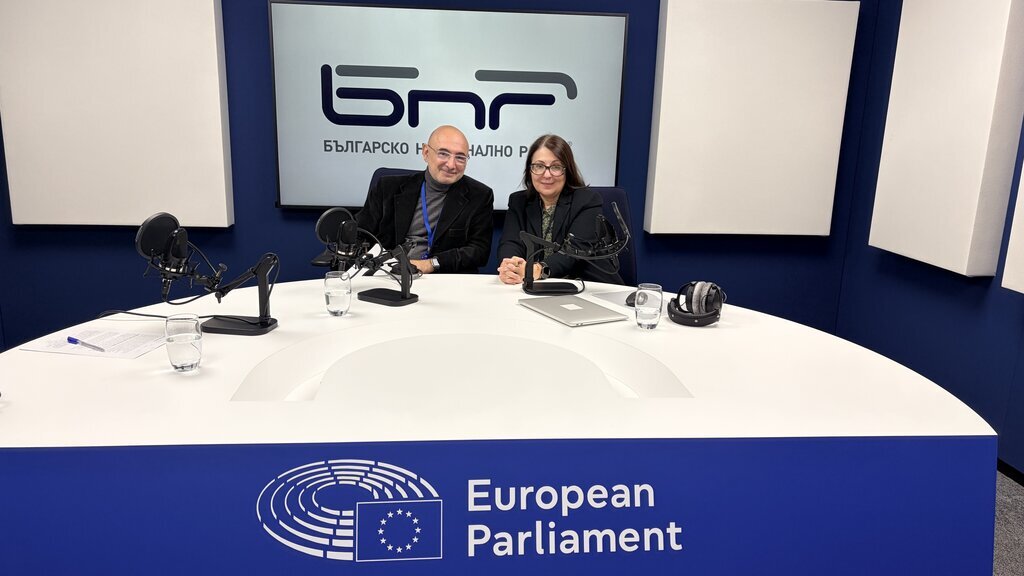
Gian-Paolo Accardo and Irina Nedeva on “Strasbourg Calling” programme at the European Parliament, 21 October 2026
PHOTO Rositsa Petkova
European regulations distinguish between funds covered by Article 8, which promote environmental and social characteristics, and Article 9 funds, which must have sustainable investment as their objective. Gian-Paolo Accardo explained:
“The investment funds we investigated operate under both Article 8 and Article 9. These are the green funds we looked into. The problem is that there are no legal restrictions preventing such green funds from investing in defence and arms companies. The only exception is when they manufacture weapons deemed unethical, such as chemical or nuclear weapons. This means they can quite legitimately finance the production of tanks, drones, ammunition and what are known as conventional weapons.”
According to Accardo, ordinary investors are often unaware that by investing in these funds, their money may be used to support weapons production. At the very least, they should be informed, he believes.
“Investigative journalism is very expensive, and we are forced to rely on private funding. The European Union provides some funding, but it is not enough, so our goal is to see it increased,” Accardo said.
The full interview of Irina Nedeva with Gian-Paolo Accardo was aired on BNR's Horizon channel on October 21 and can be heard HERE.
This publication was created by: Rositsa Petkova