News
Presidential Election 2026
Bulgarians abroad feel neither represented nor representative
Hristina Karagueorgieva in the Netherlands: Our compatriots expect Bulgaria to stay on its European path
Sunday 1 November 2026 20:55
Sunday, 1 November 2026, 20:55
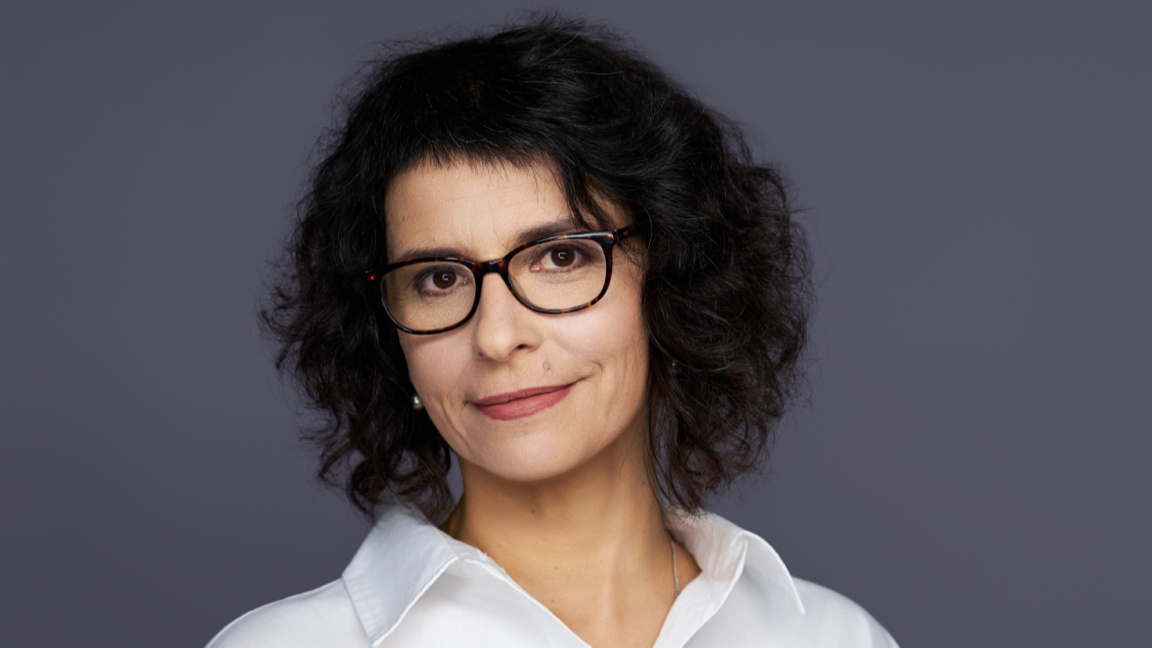
Hristina Karagueorgieva
PHOTO Private archive
Font size
On 1 November, Bulgaria went to the polls for the second round of its presidential election. Bulgarian citizens living abroad were among those casting their ballots. What accounts for the low voter turnout in this election? What do our compatriots abroad expect, and what challenges will face the country’s next head of state? We seek answers to these questions in a conversation with Hristina Karagueorgieva, who has been living in the Netherlands for many years. She holds a master’s degree in International Relations and Political Science, works as a translator and is a former editor with Radio Bulgaria’s English-language service.
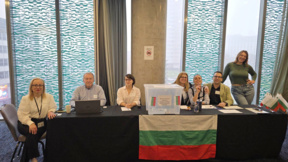
On election day, she had already cast her ballot in Amsterdam, where, she says, everything was well organised. The low turnout in this election, however, raises the question of what is keeping so many Bulgarians, both at home and abroad, from exercising their right to vote. Is it political apathy, distrust in the country’s governance, or the feeling that their vote will make no difference? Here is Hristina Karagueorgieva’s view:
“Although many of the factors you have listed apply equally to Bulgarians abroad and those living in Bulgaria, and another factor is that we are currently voting in a presidential rather than a parliamentary election (the president’s powers being fairly limited by the Constitution), one thing we cannot overlook is that, for decades, numerous political players in Bulgaria have deliberately sought to restrict the vote from abroad. They have done so through legislative and administrative manoeuvres and restrictions on the number of polling stations, or by trying to suggest that, because we live abroad, we do not understand the situation in Bulgaria well enough to vote, or even that we have no moral right to decide who governs the country.
And this has had an effect. That is why, for Bulgarians abroad, a decisive factor is the strength of their civic consciousness: the understanding that every citizen has inalienable rights and that it is our human, civic and, if you will, patriotic duty to keep voting. By voting, we also stand up for ourselves, because Bulgaria’s foreign policy directly affects us; we vote for the loved ones we have left behind in Bulgaria, and, above all, for that hypothetical Bulgaria of the future, to which we might return one day if such a possibility ever becomes reality.”
PHOTO Private archive
There are also generational differences among Bulgarians abroad. According to our interviewee, younger people are showing an increasingly strong commitment to civic engagement:
“Over the past 15 years, I have noticed greater engagement, precisely because of increased international mobility. And this is most evident among younger people,” Hristina Karagueorgieva observes. “On the one hand, this means the emergence of a young generation with an increasingly developed political and civic culture, which, partly thanks to its Western education, is more inclined to vote. This also explains the degree of moral panic among certain sections of Bulgaria’s political elite, because these young people, having experienced a functioning democracy from within, will sooner or later want to reclaim that still hypothetical Bulgaria which has been stolen from them by what we call the status quo.
What do I mean by that? I mean the exploitation of low levels of civic engagement in Bulgaria as a tool for manipulating institutions in order to preserve the feudal reflexes of the past: total political and economic control exercised for the personal benefit of a privileged few. And, as we all understand, not least because in such an environment they would have no opportunity to fulfil their potential if they returned to Bulgaria.”
According to Radio Bulgaria’s interviewee, this presidential campaign has confronted voters with questions that go far beyond domestic political divisions. The war in Ukraine and recent political developments at home have pushed foreign policy and Bulgaria’s place in a changing international environment to the forefront:
“The election debate was largely shaped by two factors: the war in Ukraine and the parliamentary elections, which sent Bulgaria into a foreign policy turn that was not entirely unexpected. Yet those in power have failed to navigate it effectively, given their almost daily political, communication and strategic blunders. These not only create conceptual and political uncertainty, but also replace reality with moral relativism. This could have serious consequences for Bulgaria.
That is why, whereas foreign policy did not play a particularly significant role in electoral choices until recently, today it is a central issue that can neither be ignored nor obscured by petty domestic political disputes. The question is whether voters have the foresight to recognise the threats facing Bulgaria for what they are today and respond adequately to the geopolitical risks that threaten not merely their everyday lives, but also the possibility of preventing a war in Europe,” Karagueorgieva stresses.
In her view, it is precisely the issue of national security that sets this presidential election apart from previous ones:
“The high level of risk to national security and the two very different strategies for addressing the danger, which reflect two fundamentally different worldviews or visions of Bulgaria’s place in the world. This situation, incidentally, is not new. To some extent, it is a re-enactment of a distinctly Bulgarian tragedy.
On the one hand, we have a relatively small middle class, oriented towards Europe and meritocracy, inclined to uphold universal values such as human rights, the rule of law and an international order based on international law, all of which are rooted, broadly speaking, in the ideals of the Western European Enlightenment.
On the other hand, we have a more traumatised form of pragmatism, a culture of poverty and survival, of learned helplessness and moral compromise, in which people bow to those more powerful than themselves. This is a culture that is currently harming Bulgaria.
In this sense, the great divide today concerns where Bulgaria stands in relation to what we need most at this moment: European solidarity. Does Bulgaria see itself merely as a recipient of solidarity, or as a worthy partner in the face of danger?”
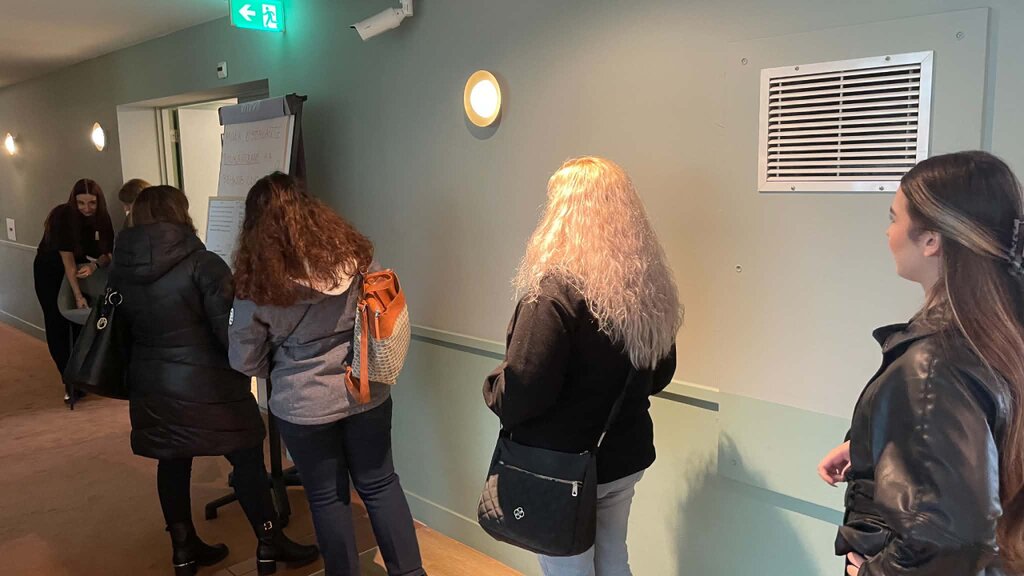
PHOTO Private archive
Do Bulgarians abroad, as a rule, have specific expectations of the next president? Do they feel that the country’s institutions listen to them sufficiently? And if not, what needs to be done to strengthen the ties between Bulgaria and its communities around the world?
“Your question about whether they feel heard by the institutions has a very simple answer: no. This is also because they feel that they are neither represented nor regarded as representative at the same time. In my view, the blame lies with the antagonistic rhetoric directed at Bulgarians abroad within Bulgaria itself,” Hristina Karagueorgieva replies.
“As for their expectations, they want Bulgaria to stay on its European path. And when it comes to relations with Bulgarian communities abroad, what is needed is political will in Bulgaria to stop viewing these communities either as something alien or as a resource expected to rescue the country from its demographic crisis. Such instrumentalisation of human beings is cynical, to say the least. We are all equally human, and we are all equally Bulgarian.”
Regardless of the outcome of the run-off, the next head of state will have to operate in a complex domestic and international environment. What, in our interviewee’s view, will be the greatest challenge facing the new president?
“I would say it will be the need to manage several simultaneous crises: geopolitical, economic, foreign policy and a crisis of trust in institutions. All this is unfolding in a complex environment of hybrid and information warfare, in which Bulgaria’s vulnerabilities, stemming from everything that has failed to happen so far, are becoming increasingly apparent,” Hristina Karagueorgieva from the Netherlands told Radio Bulgaria.
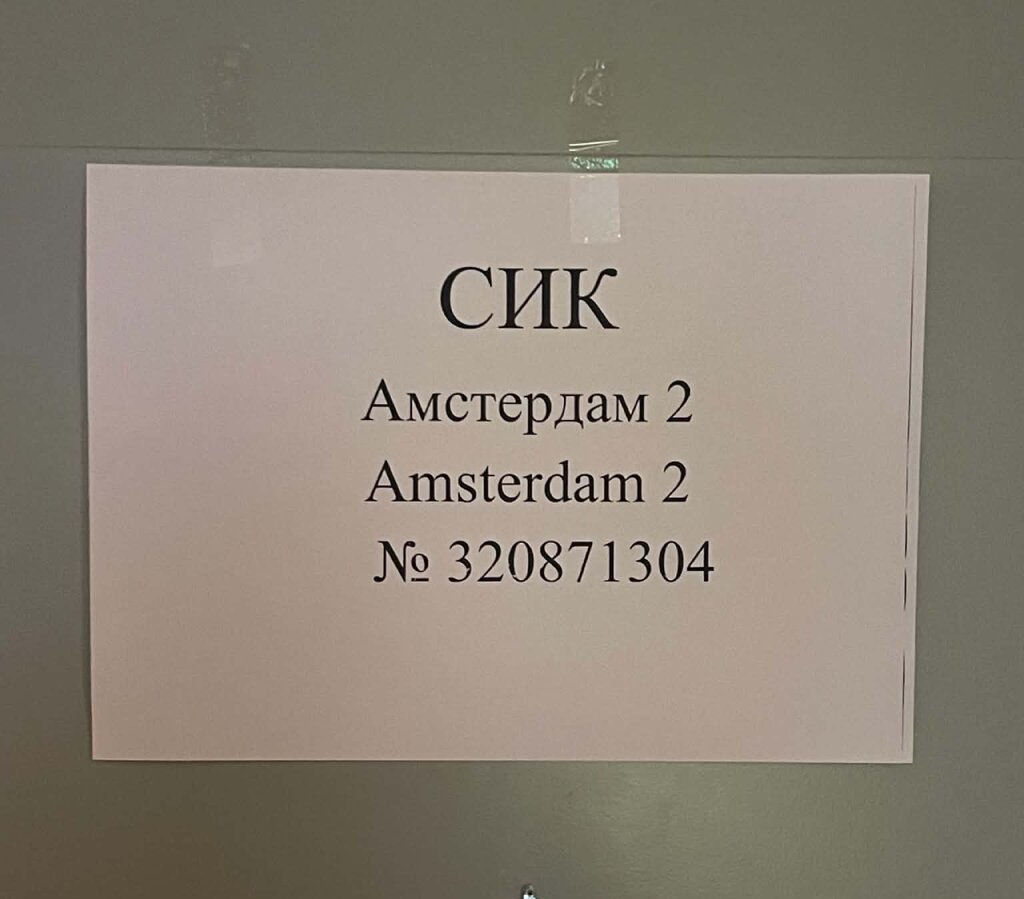
PHOTO Private archive
This publication was created by: Rositsa Petkova