


Author
Miglena Ivanova
Sunday 8 November 2026 11:05
Sunday, 8 November 2026, 11:05
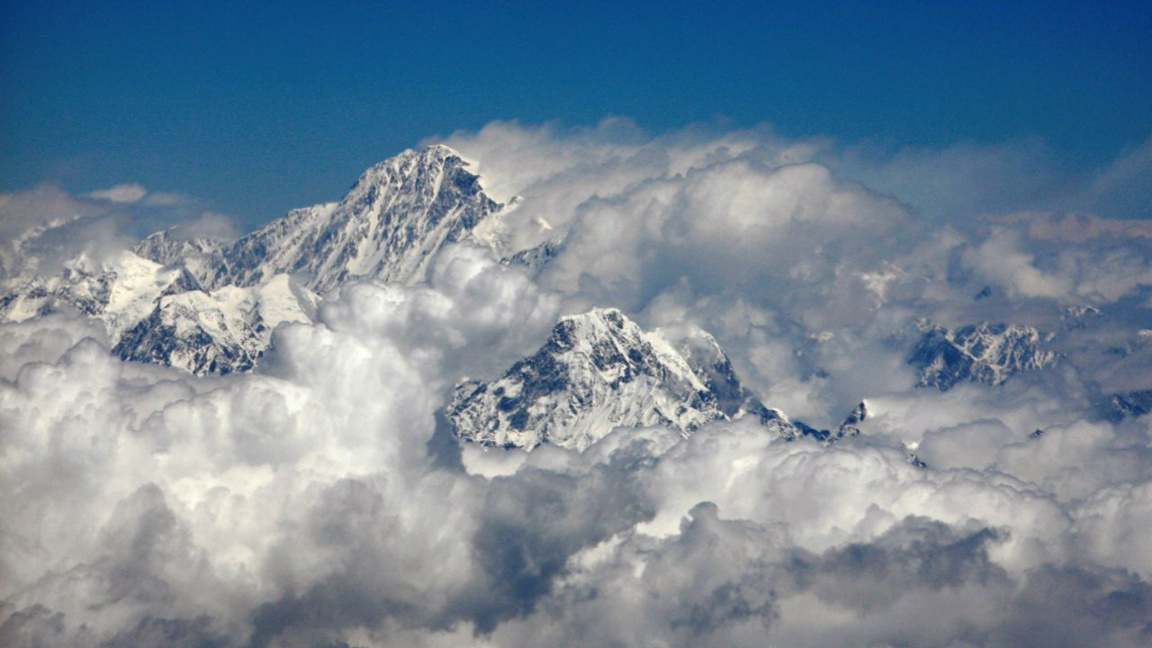
PHOTO Reuters
Font size
The human dream of conquering Everest first took shape back in 1852, when the mountain was identified as the highest peak on the planet, known at the time as Peak XV. Yet its first confirmed ascent was not achieved until 1953, by New Zealander Edmund Hillary and his Nepalese Sherpa companion Tenzing Norgay. Thirty-one years later, Bulgarian mountaineers left their mark on the summit for the first time.
Since then, 18 Bulgarians have reached Everest, with a total of 20 successful ascents, as two of our climbers, Nikolay Petkov and Atanas Skatov, have stood on the summit twice.
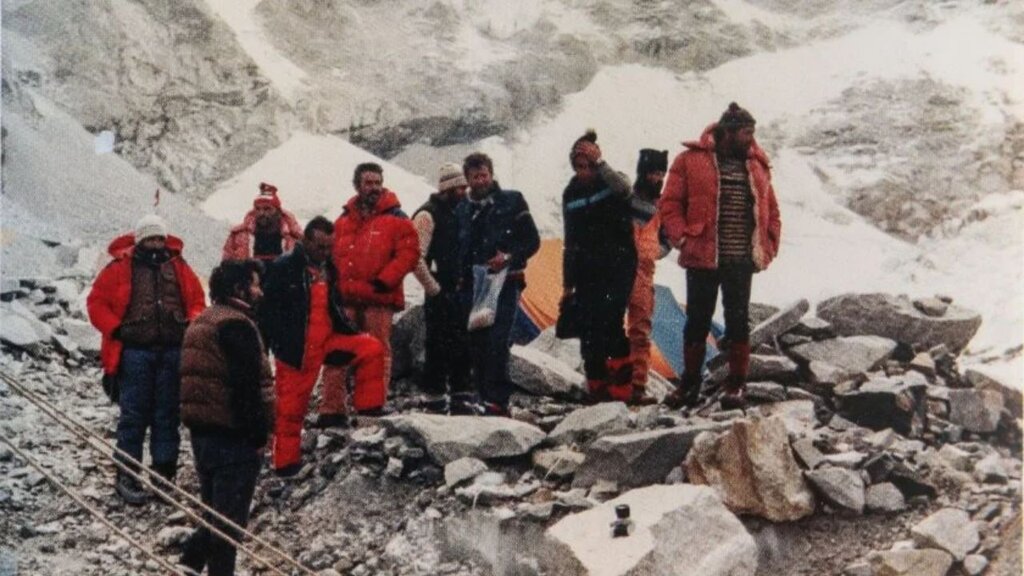
The Bulgarian expedition to Everest in 1984
PHOTO Avram Avramov/ Private archive
It all began with a major Bulgarian expedition in 1984, comprising 24 climbers under the leadership of Avram Avramov. Its objective was to reach the summit via the most challenging route, the West Ridge. The Bulgarian team arrived at Base Camp in March and spent weeks preparing for the climb.
Among them was Hristo Prodanov, who was the first to set off for the summit, accompanied by Sherpa Rinji. The date was 20 April. However, the Sherpa encountered difficulties and was forced to turn back. Prodanov pressed on alone, without supplementary oxygen.
At 6:10 p.m., he made radio contact with Base Camp: he had become the first Bulgarian to reach the highest point on Earth. The team at Base Camp congratulated him and asked how he was doing and whether he had encountered any problems. His reply was:
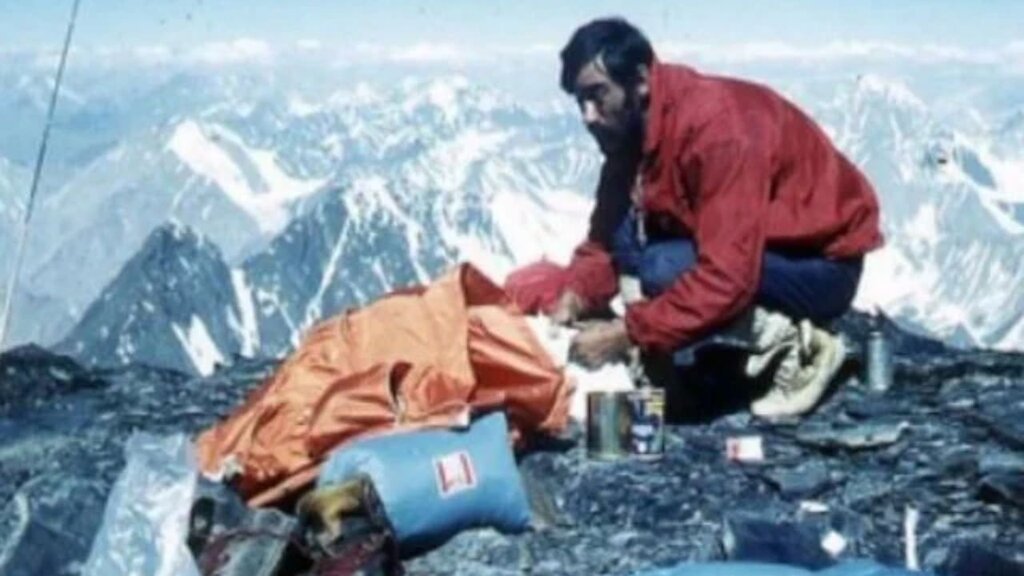
Hristo Prodanov
PHOTO Private archive
“There are no problems at all. It is just cold. I managed to take five shots in the sunlight. I am having trouble with the camera. The Soviet climbers (editor's note) have built a pyramid out of four [empty oxygen] cylinders. I photographed their flag, too. That is all I can see up here.”
But it was already late. Prodanov spent half an hour on the summit before beginning his descent. Night caught up with him high on the West Ridge. With no tent or sleeping bag, at an altitude of more than 8,000 metres, he was forced to spend the night in the open.
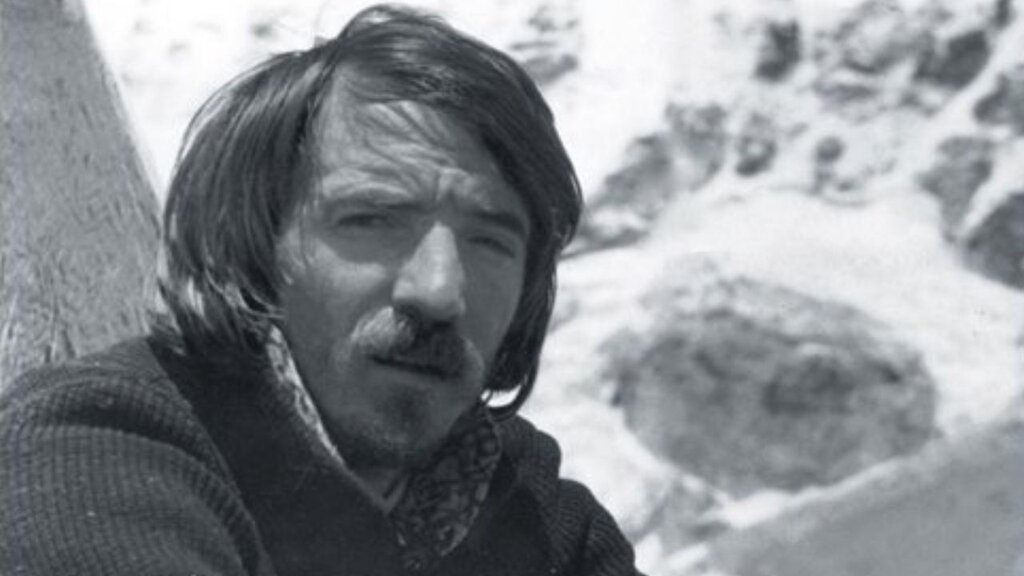
Lyudmil Yankov
PHOTO Private archive
The following day, radio contact with him became increasingly difficult. Some members of the expedition set out to search for Prodanov. Among them was Lyudmil Yankov, who pushed ahead at the fastest possible pace in a desperate attempt to save his friend. He climbed 1,330 metres in elevation and reached approximately 8,500 metres. The effort cost him four frostbitten fingers, whose phalanges would later have to be amputated. The search yielded no result. Hristo Prodanov was never found. The expedition, however, had to continue its mission.
On 8 May, Metodi Savov and Ivan Valchev reached Everest via the West Ridge. Savov was also the expedition's cameraman, filming footage of the historic Bulgarian ascent. The following day, Nikolay Petkov and Kiril Doskov also reached the summit.
But further dramatic moments lay ahead. During the descent, after spending a night out in the open high on the mountain, Savov came close to losing his life. He was rescued by Nikolay Petkov and Kiril Doskov, but the severity of his frostbite later necessitated a partial amputation of his foot. The four climbers completed the historic Bulgarian traverse of Everest. In 1984, Savov later explained the significance of the Bulgarian achievement:
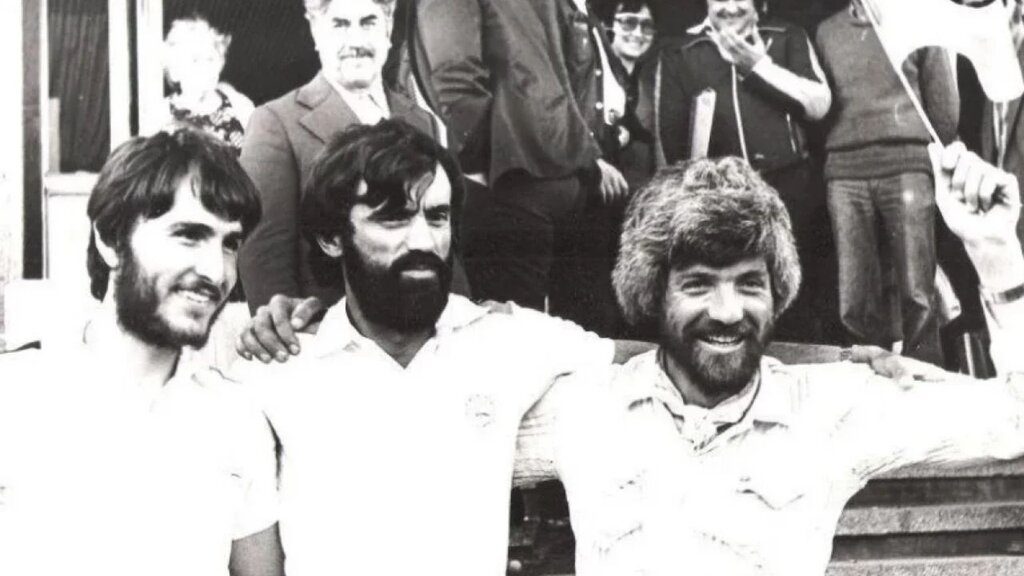
Metodi Savov, the first on the right
PHOTO Private archive
“This is not a Bulgarian route. It is known as the Yugoslav Route because the Yugoslavs were the first to climb this peak by this route, among 12 expeditions, if I am not mistaken. We were the second. What I want to emphasise is just how difficult this route is: so many expeditions have failed and so many lives have been lost along it. It is an extremely difficult, extremely harsh route, also known as the ‘Cruel Route’. But I speak of a Bulgarian traverse. That means completing a circuit: you climb the summit via the West Ridge and descend by the classic route back to Base Camp. That was the novelty of our Everest expedition. No expedition had ever been conducted in this way before.”
The expedition's final tally was five Bulgarians reaching the summit, four completing the historic traverse, and the tragic loss of Hristo Prodanov. His ascent nevertheless remains an outstanding achievement in world mountaineering. Hristo Prodanov was the 13th person to reach Everest without supplementary oxygen and the first to do so via the West Ridge without an oxygen apparatus. Since 1984, no one has completed another ascent along the entire length of the West Ridge.
For Lyudmil Yankov, what happened in 1984 went far beyond the personal ambitions of individual climbers. In an archival recording from the year of the ascent, preserved in the Bulgarian National Radio's Golden Archive, he recalls:
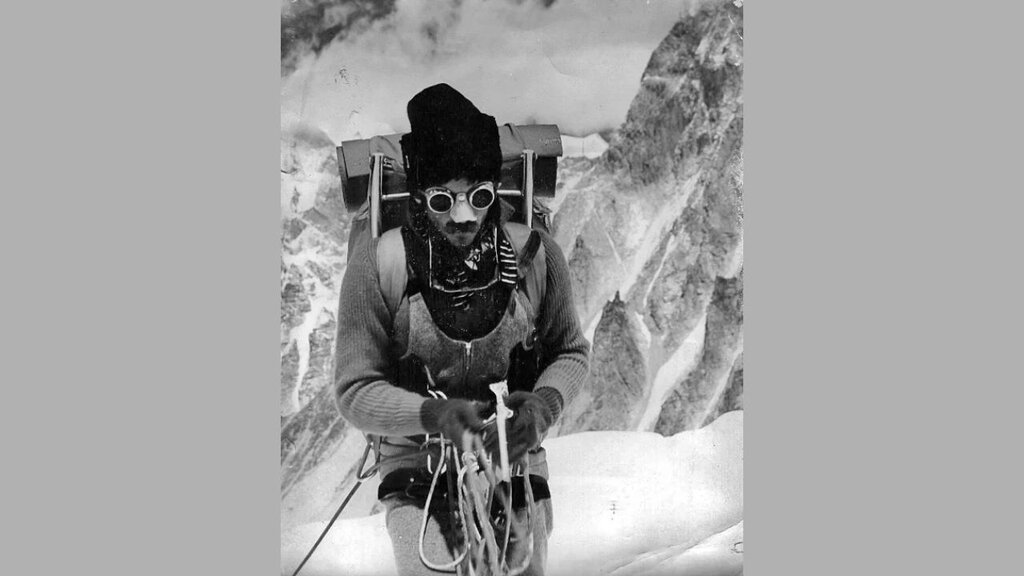
Lyudmil Yankov
PHOTO Private archive
“Bulgaria sent us to Everest, so we had no right to return without succeeding. Something entirely new happened: at a certain point, mountaineering ceased to be a sport for our own sake. It became something connected with our entire nation, with Bulgaria. Reaching the summit became a matter of prestige and national dignity, and we are happy that we succeeded because, for us, and I do not want this to sound too grandiloquent, there was no other way. We had to climb Everest; we had no right to leave it for another time. It was the dream of generations of Bulgarian mountaineers, and we did our best to make it come true.
What will remain with me from this expedition is the example it set, showing us how one can die for a dream. What Hristo did, something for which I still hear criticism from people who cannot comprehend what he accomplished on Everest, will always remain in my mind and in my heart as an example of a way of thinking, of total self-giving, of strength of character and of striving towards a great ideal.”
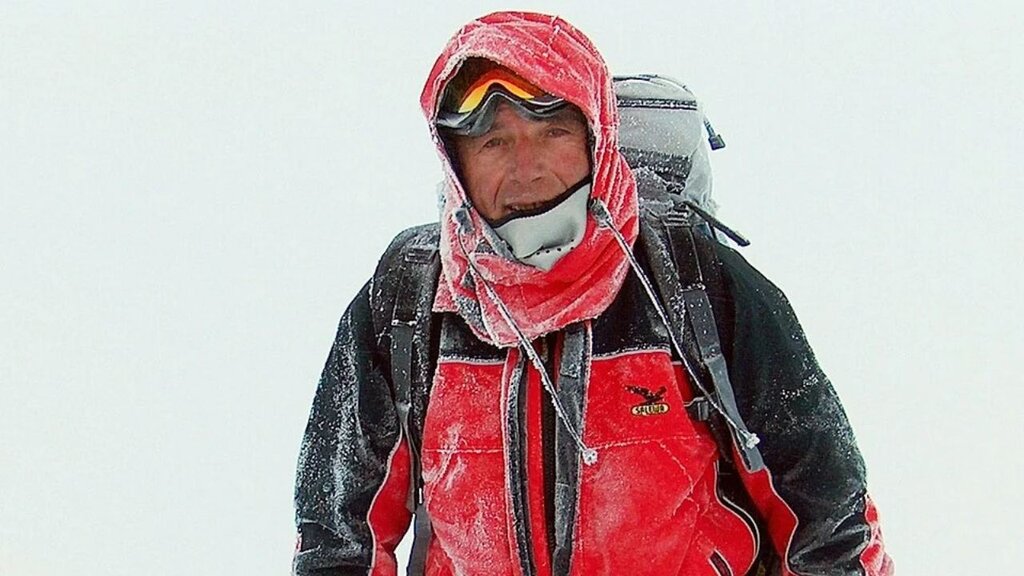
Doichin Vassilev
PHOTO Lyubomir Ivanov
The next Bulgarian ascent came 13 years later. In May 1997, Doychin Vassilev reached Everest. The mountaineer and documentary filmmaker had also taken part in the 1984 expedition, and this time he fulfilled his dream.
During the landmark Bulgarian national expedition of 2004, Petko Totev, Nikolay Petkov, Doychin Boyanov and Hristo Hristov reached the summit.
For Nikolay Petkov, this was his second ascent, but by a different route, from the north, via Tibet. During the descent, however, he developed serious vision problems. Doychin Boyanov came to his assistance.
The same expedition lost Hristo Hristov. He reached the summit without supplementary oxygen but disappeared during the descent.
Days later, Mariana Maslarova, the niece of Hristo Prodanov, also disappeared on the mountain. She had joined a Russian-Brazilian commercial expedition, hoping to reach Everest's summit just as her uncle had. Her ascent was never confirmed.
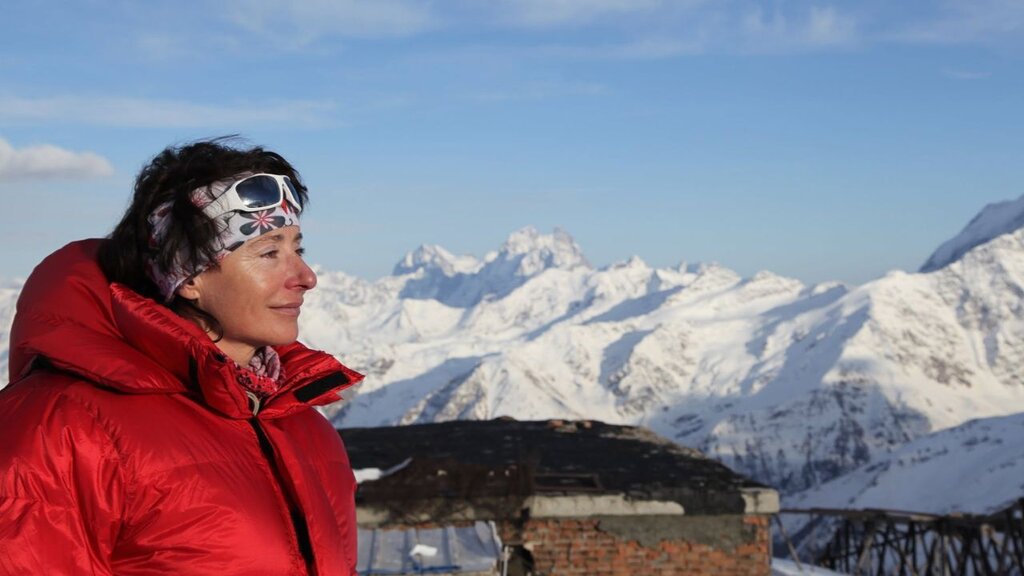
Petya Kolcheva
PHOTO Facebook /Petya Kolcheva
On 22 May 2009, Petya Kolcheva became the first Bulgarian woman to reach Everest. Her husband, Kamen Kolchev, stood on the summit alongside her. Five years earlier, she had not been included in the landmark national expedition, but she refused to give up. A mother of three and a practising lawyer, she persevered with her preparations, climbing other major peaks along the way.
Gradually, large-scale national expeditions to Everest gave way to international commercial climbs. The mountain became more accessible to people with varying levels of mountaineering experience, although its extreme altitude, bitter cold and unpredictable weather continued to pose serious risks.
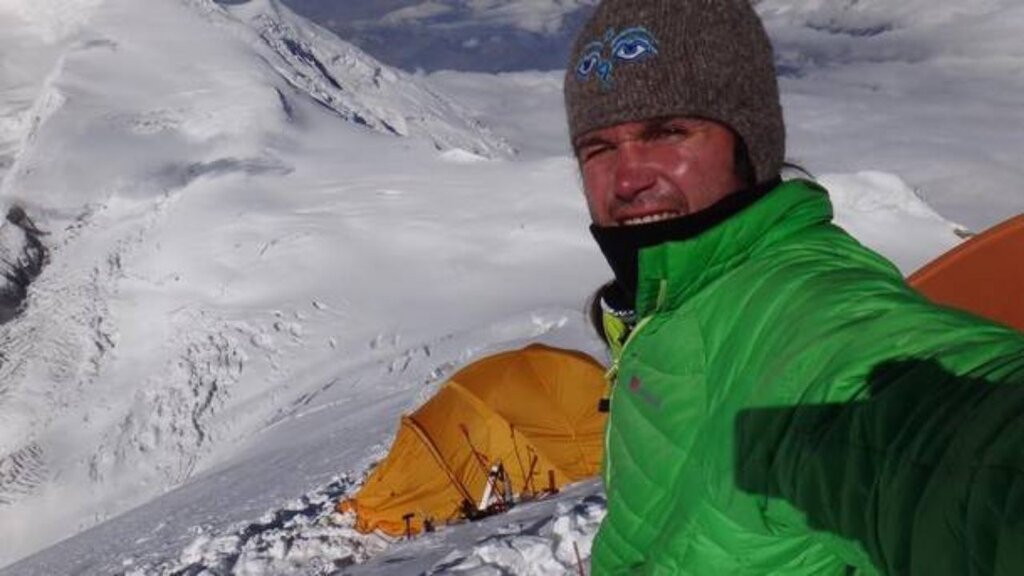
Atanas Skatov
PHOTO Private archive
In 2014, the first vegan to reach Everest was Bulgarian Atanas Skatov, who had taken up mountaineering just four years earlier. In 2017, he stood on the summit for a second time.
In May 2018, Slavi Nestorov reached the “roof of the world” as part of a commercial expedition. Lawyer Stefan Stefanov followed a day later. His preparations had been assisted by Bulgaria's renowned mountaineer Boyan Petrov, who was also planning to climb Everest that spring.
In 2004, Petrov had been excluded from the Bulgarian national expedition because of his diabetes. Fourteen years later, he had finally been given the green light to pursue his goal. By then, he had already climbed ten of the world's 14 eight-thousanders without supplementary oxygen. But before attempting Everest, he set off for Shishapangma, where he remained forever, close to the stars.
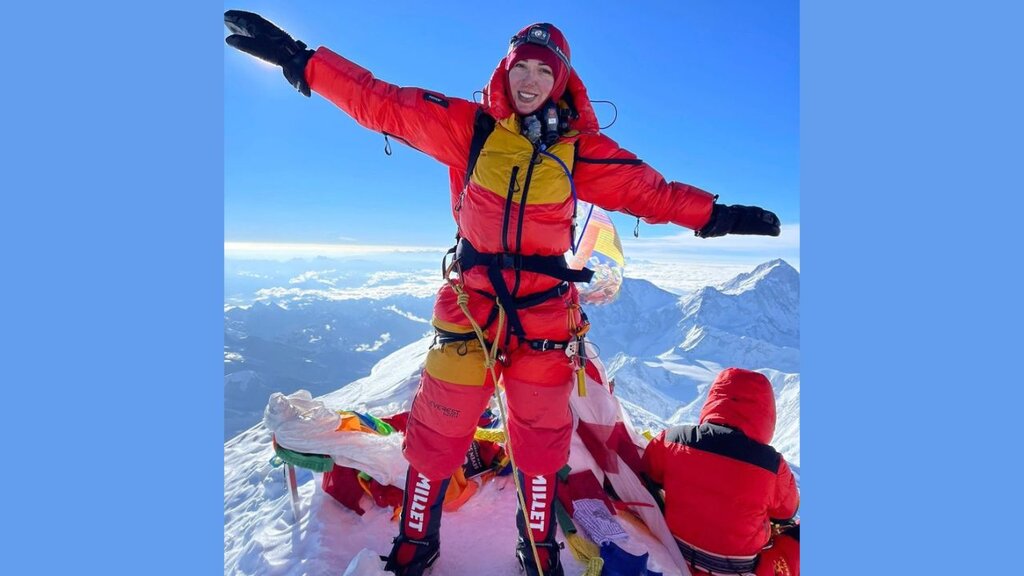
Silvia Azdreeva on Mount Everest, 15 May 2022
PHOTO Facebook /Silvia Azdreeva
On 15 May 2022, Silvia Azdreеva became the second Bulgarian woman to reach Everest. She was followed by Marieta Georgieva in 2024, Hristina Yosifova in 2025 and Georgi Kolevichin in 2026.
What is it about Everest that continues to inspire so many people to take on the challenge? And what does a climber feel when they finally reach the place they have dreamed of? Here is how Metodi Savov described it in 1984:
“Your goal, on the one hand, is to test yourself; on the other, to reach the summit; and, on yet another level, to prove that you are capable of achieving something. It is so profoundly human! And fourthly, to escape from that hell. People sometimes ask me: ‘What did you feel on the summit?’ What could I possibly feel, other than the desire to get away and descend as quickly as possible, back towards life? In other words, the emotions come when we are already down, among people, at Base Camp, when we arrive safe and sound. That is why they say a mountaineer has succeeded only when they have made it back down to Base Camp. Only then has the climb truly been completed.”
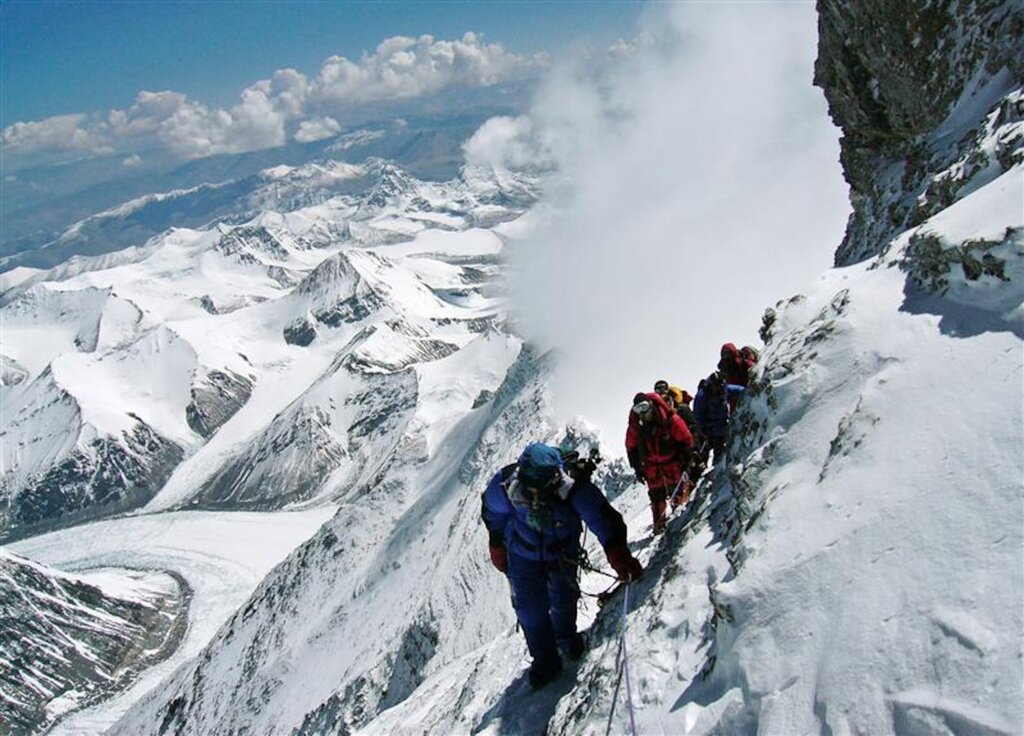
PHOTO Reuters
It turns out, then, that the summit is not the final destination, but only one stage of a journey that continues back towards life and towards the people waiting for you. That is why the story of Bulgarian mountaineers on Everest cannot be measured solely in metres gained in altitude. It is also written in the human destinies that have become forever bound to the mountain.
The archival recordings used in this article date from 1984 and are preserved in the Bulgarian National Radio's Golden Archive.
Photos: Reuters, Private archive, Lyubomir Ivanov, Facebook /Petya Kolcheva, Facebook /Silvia Azdreeva
Read also:
Bulgarian alpinism and mountaineering - beginning and development
Edited by Elena Karkalanova
English: R. Petkova
This publication was created by: Rositsa Petkova
- #Everest
- #Silvia Azdreeva
- #mountaineer Lyudmil Yankov
- #Hristo Prodanov
- #Hristo Hristov
- #Metodi Savov
- #Avram Avramov
- #Bulgarians on Everest
- #Bulgarian Everest ascents
- #Bulgarian Everest expedition
- #Bulgarian climbers on Everest
- #first Bulgarian woman on Everest
- #Atanas Skatov
- #Nikolay Petkov
- #Bulgarian Everest expedition in 1984
- #Mount Everest Bulgarians