


Author
Tsvetana Toncheva
Article
Bulgaria’s contribution to the history of the Bolschoi Don Kosaken choir
The ensemble will hold three concerts in Bulgaria in Gabrovo, Pleven and Sofia
Monday 9 November 2026 10:55
Monday, 9 November 2026, 10:55
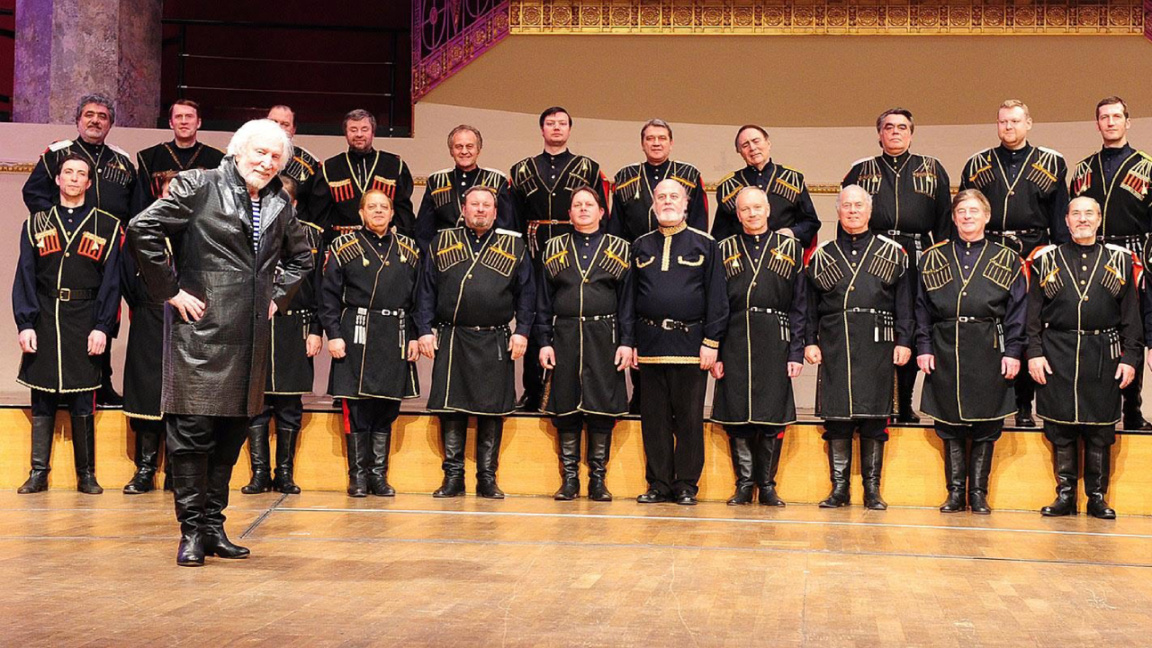
Bolschoi Don Kosaken choir
PHOTO bdk.at
Font size
From 9 to 11 November 2026, the soloists of the much-loved European ensemble Bolschoi Don Kosaken will perform in Bulgaria for the first time. The concerts in Gabrovo, Pleven and Sofia’s Bulgaria Hall are dedicated to Serge Jaroff, the legendary conductor of the world-famous Don Cossack Choir. The spring of 2026 marked the 130th anniversary of his birth.
The historic male vocal ensemble of the Don Cossacks was founded by Jaroff in 1921 in an internment camp near Istanbul, where White Russian émigrés were seeking refuge from the Red Army. Among the former Cossack officers, the young Serge Jaroff discovered men with extraordinary voices, bringing them together to form one of the world’s best-known choirs, an ensemble that would make Russian folk songs and Orthodox sacred music famous around the globe.
The choir’s history is closely intertwined with Bulgaria. In 1923, as troops were due to be transferred from Turkey to the Bulgarian city of Burgas, the Russian representative proposed that Jaroff and his choir be attached to one of the Orthodox churches there. It was in Burgas that the choir gave its first official professional concert before an audience. This was followed by a successful debut in June 1923 at the St Alexander Nevsky Cathedral in Sofia, and then an invitation to perform at Vienna’s Hofburg Palace.
The appearance in the Austrian capital proved a resounding triumph, marking the beginning of an illustrious career that would span almost 60 years, with more than 10,000 concerts around the world, appearances in Hollywood and an extensive recording catalogue.
One of the Don Cossack Choir’s defining features was the astonishing vocal range of its members, from the very lowest male voices, the octave basses, to tenors reaching the highest register of the male voice, the falsetto. Every singer had received classical training. Their performances were entirely a cappella, without instrumental accompaniment or amplification.
Jaroff conducted the choir on its final tour in 1979. After that, several ensembles continued the tradition.
Bolschoi Don Kosaken, or the Great Don Cossacks, was founded in 1981 and has since given more than 3,000 performances throughout Europe. Since 1991, the choir has presented annual Christmas concerts at Vienna’s prestigious Konzerthaus. It has appeared in hundreds of radio and television programmes and released dozens of CD and DVD albums, including recordings for the renowned EMI label. From its founding to the present day, the ensemble has brought together distinguished opera singers of various nationalities.
The choir’s first visit to Bulgaria has been organised by the Pleven Philharmonic Orchestra and its director, the eminent Bulgarian tenor Lyubomir Dyakovski. He has performed on every major opera stage in Bulgaria, as well as in numerous theatres and concert halls across Europe and North America. His repertoire includes more than 50 roles from the international opera and operetta canon, along with over 30 cantata and oratorio works.
For almost three decades, Dyakovski has been a soloist with the Vienna-based Great Don Cossacks, and in recent years he has also taken on the role of their conductor. In an interview with Radio Bulgaria, the celebrated musician recalls the history of the Cossack choir founded in 1981.
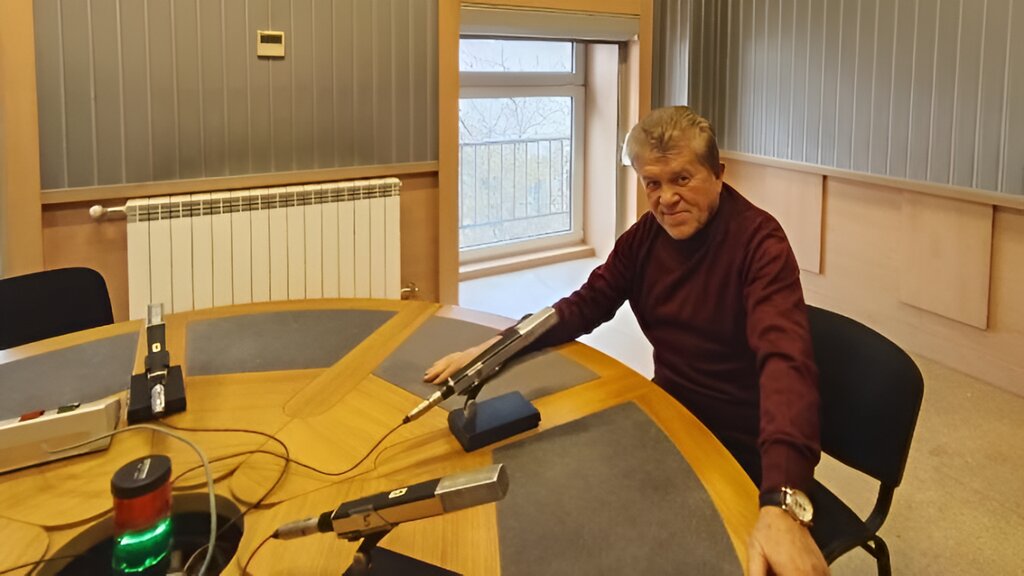
Lyubomr Dyakovski in the studio of Radio Bulgaria
PHOTO Radio Bulgara
“At the beginning, most of the choir members were Bulgarians, because in 1981 it was difficult to recruit singers from the Soviet Union. There was even an octet from the Bulgarian National Radio Choir called ‘Haidushka Pesен’, and this octet formed the backbone of the Great Don Cossacks’ first concerts. In the West, the ensemble is known as Bolschoi Don Kosaken, or the Great Choir of the Don Cossacks. Now, after all these years, I am delighted that I will be able to bring them to Bulgaria for the first time.”
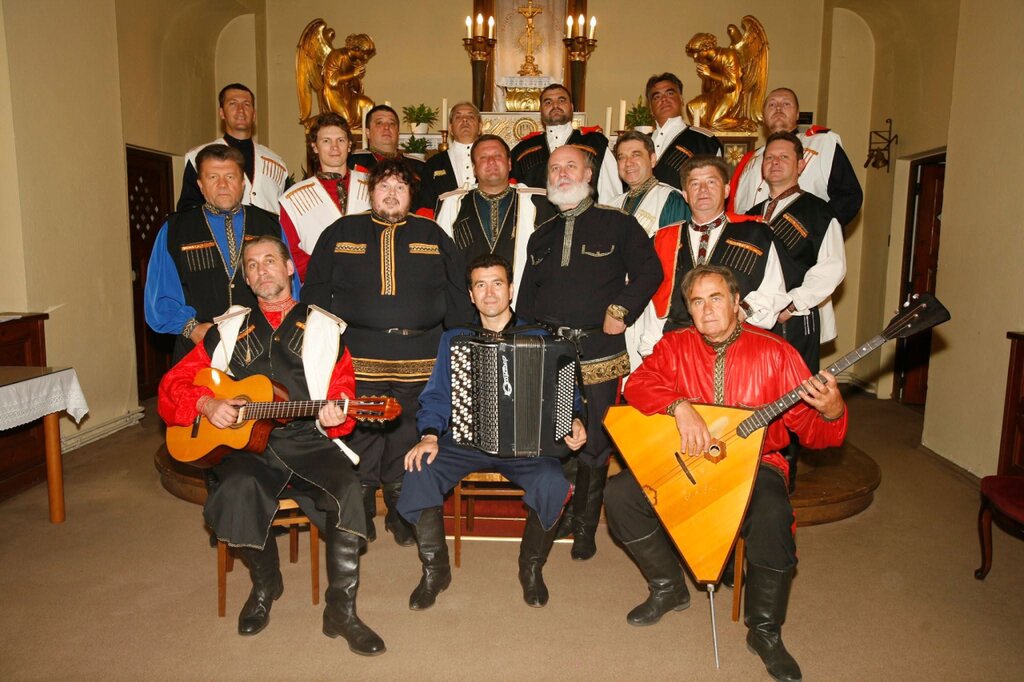
PHOTO bdk.at
Lyubomir Dyakovski explains that as early as 1923 the original Don Cossack Choir had caught the attention of a Western impresario, who heard the ensemble at the Russian Church in Sofia and recognised its potential for success in the West. At first, the singers travelled to Vienna posing as gardeners. They soon gained popularity in Austria and were invited to Paris to take part in the so-called Saisons Russes (Russian Seasons), in which Dyakovski himself also performed in the 1980s.
During the Second World War, the ensemble moved to the United States, where an extraordinary international career followed. The choir appeared in films and television programmes and made a vast number of recordings. Even Herbert von Karajan invited its singers to take part in a remarkable interpretation of Tchaikovsky’s 1812 Overture.
“They sing at the beginning, where the string quartet performs the troparion "Spasi, Gospodi, Lyudi Tvoya" (Save, O Lord, Thy People). This was something that had never been done before. I learnt about it by chance from an acquaintance of mine, Bogomil Manov, who took part in that recording as a soloist with Jaroff’s choir. Later, he also became a soloist in the early years of the Great Don Cossacks in Vienna.”
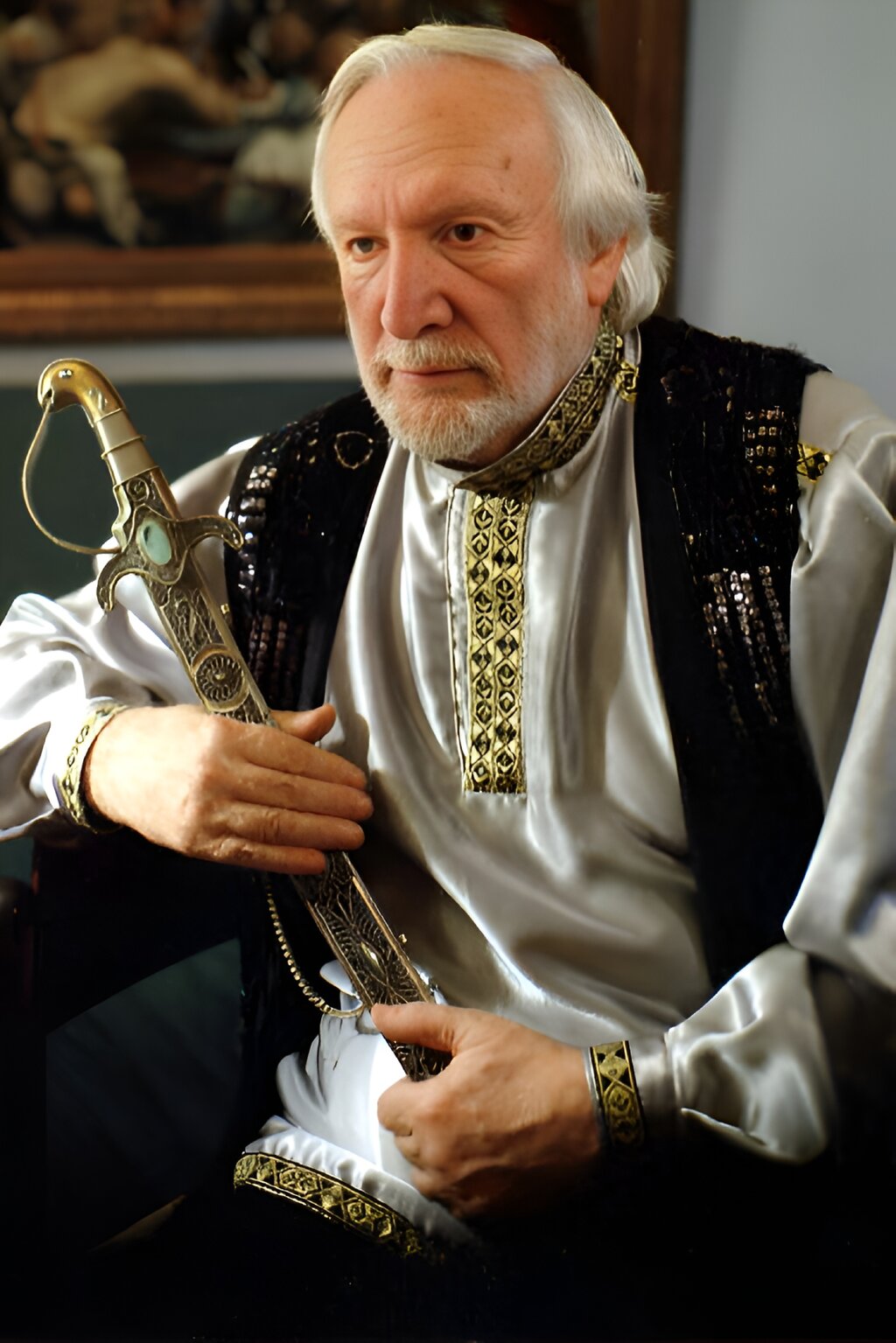
Prof. Petja Houdjakov
PHOTO bdk.at
The Great Don Cossacks came into being after Jaroff’s original choir ceased performing. The new ensemble was brought together by Professor Petja Houdjakov.
“Petya was born in Bulgaria. His father was Russian and his mother Bulgarian. He grew up in Sofia and started out as an accordionist,” Lyubomir Dyakovski recalls. “He performed with a very well-known accordion ensemble in the 1950s. Later, he became a dancer in a folk ensemble and spent several years as a ballet dancer with the State Musical Theatre. He then moved to the German Democratic Republic, where he worked as a dancer, before making his way to Austria semi-legally. He has lived in the West since 1961 or 1962.”
Lyubomir Dyakovski was among the first singers to join Houdjakov’s ensemble, most of whose members were Bulgarian. He came on the recommendation of the renowned Bulgarian choral conductor Mihail Milkov, founder of the Bulgarian National Radio Mixed Choir.
“The legendary Misho Milkov! We were very close friends. I had the pleasure of taking part in his concerts, both with the Radio Choir and with the Kaval Choir, and we made many recordings together. In the Cossack choir, I was a soloist. At the beginning, I sang almost half of the repertoire. In recent years, I have increasingly taken on conducting duties. I will also conduct in Bulgaria, and the Pleven Philharmonic Orchestra will be joining us.”
Jaroff’s original choir had a repertoire consisting mainly of Orthodox sacred music and Russian folk songs. Today, the Great Don Cossacks have an entire programme devoted to church music, but in Sofia they will perform only two such works, both by Dmitry Bortniansky. The year 2026 marks the 275th anniversary of the composer’s birth.
“There are always about ten songs in the repertoire of traditional Cossack concerts that are enormously popular. I used to sing them in choirs as a child. I remember that the sheet music for many of them, such as Kolokolchik, Vecherniy Zvon, Zhilo Dvenadtsat Razboynikov, Volga, Volga and Ey, Ukhnem, carried the credit: ‘arranged by Serge Jaroff’. Back then, we had no idea who Serge Jaroff was. There was a quiet rumour that he was a White Russian émigré, apparently not a very good person.”
The Don Cossacks are known to have rejected the October Revolution, joined the White Army and resisted the regime that subsequently took power in Russia, which led to their persecution.
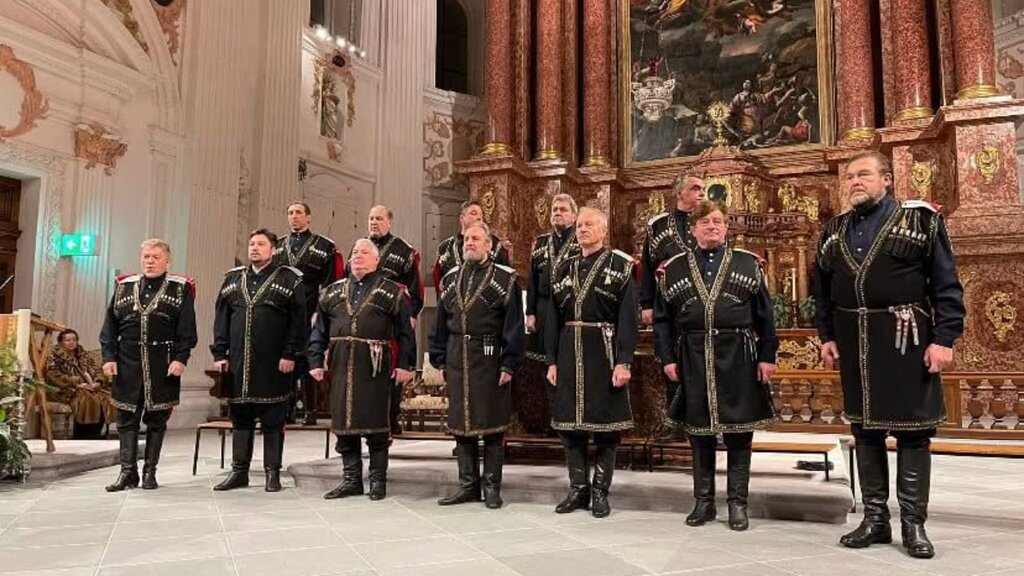
PHOTO bdk.at
“Well, they have never really got on very well with regimes,” Dyakovski says with a smile. “Yes, that is indeed what happened. It has always been my dream to bring them to Bulgaria, but somehow there was always something unresolved, something not quite right, or people would say that the time was not right. Besides, bringing them here was no easy task, as they are professional opera singers who are difficult to assemble for a series of major concerts. After Sofia, we are heading to Switzerland for five concerts, followed by Austria and then Germany. We will visit the major cities, and on 23 December our traditional Christmas concert at Vienna’s Wiener Konzerthaus will take place for the 36th consecutive year.”
So the choir continues to attract audiences and remains in demand across Europe?
“It has always been in demand, always! Interest in this music has never waned, even to this day. Over the past 40 years, I have met people who tell me, ‘This is the 19th time I’ve been to one of your concerts,’ while others say it is their 25th. And they always ask: ‘Will you be singing this song or that one?’”
Over the years, the Bolschoi Don Kosaken choir has counted several distinguished Bulgarian singers among their soloists, including bass-baritone Petar Yanakov and the wonderful baritone Nikola Vasilev. The ensemble, with its unmistakable Bulgarian contribution, has triumphed throughout Europe, from Palma de Mallorca and Cyprus to Finland. After Bulgaria, it will be welcomed by audiences in Switzerland, Slovakia, the Czech Republic, Austria, Germany and the Netherlands.