


Elisaveta Popantonova’s story of dignity under communist dictatorship
Known as the “Green Priest’s Wife”, Popantonova was sent to a concentration camp after delivering a fiery speech in Bulgaria’s National Assembly
Tuesday 10 November 2026 08:30
Tuesday, 10 November 2026, 08:30
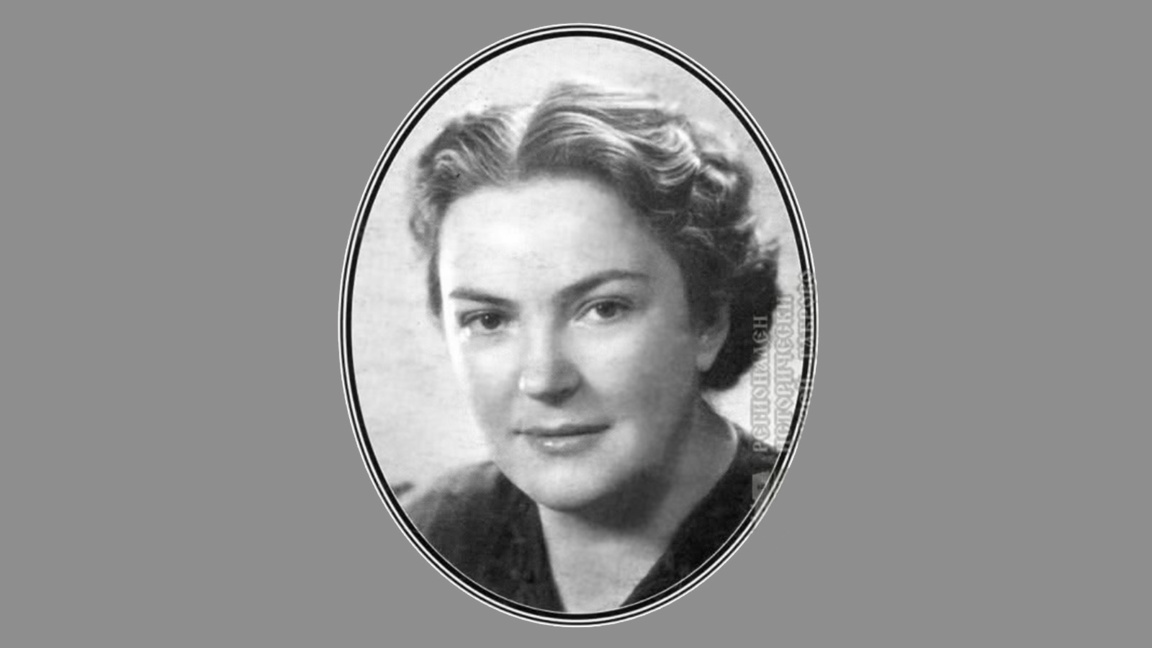
Elisaveta Popantonova (1910 – 1992)
PHOTO Gabrovo Regional Museum of History
Font size
She chose to stand up to brutality and hold on to her humanity when others behaved like beasts. In the name of justice, she held fast to the values her parents had passed on to her. That is the lesson of Elisaveta Popantonova’s life. She endured humiliation, beatings and torture, but no one could break her spirit.
Elisaveta Popantonova was born in Sofia in 1910 to Georgi Miladinov, technical director of the National Theatre, and Viktoria Seyzova, an accomplished violinist who had graduated from a teacher-training school. The family’s spacious home in the city centre was built in the Bulgarian National Revival style. Prominent writers such as Ivan Vazov, Peyo Yavorov and Pencho Slaveykov were among the family’s guests. The house also had a hiding place where couriers for the Internal Macedonian Revolutionary Organisation (IMRO) could take refuge.
In 1932, Elisaveta was serving on the board of the Orthodox volunteer educational brotherhood at Holy Trinity Church when she met Anton Popaleksandrov, a theology student at Sofia University. They soon married. Instead of going to Italy to continue her education, she followed him to his native village of Stanchov Han in the mountains near Tryavna. As mayor, Anton built a road, tapped a spring to bring water to the village and laid the foundations for a school. Elisaveta organised sewing classes and taught young women housekeeping and hygiene.
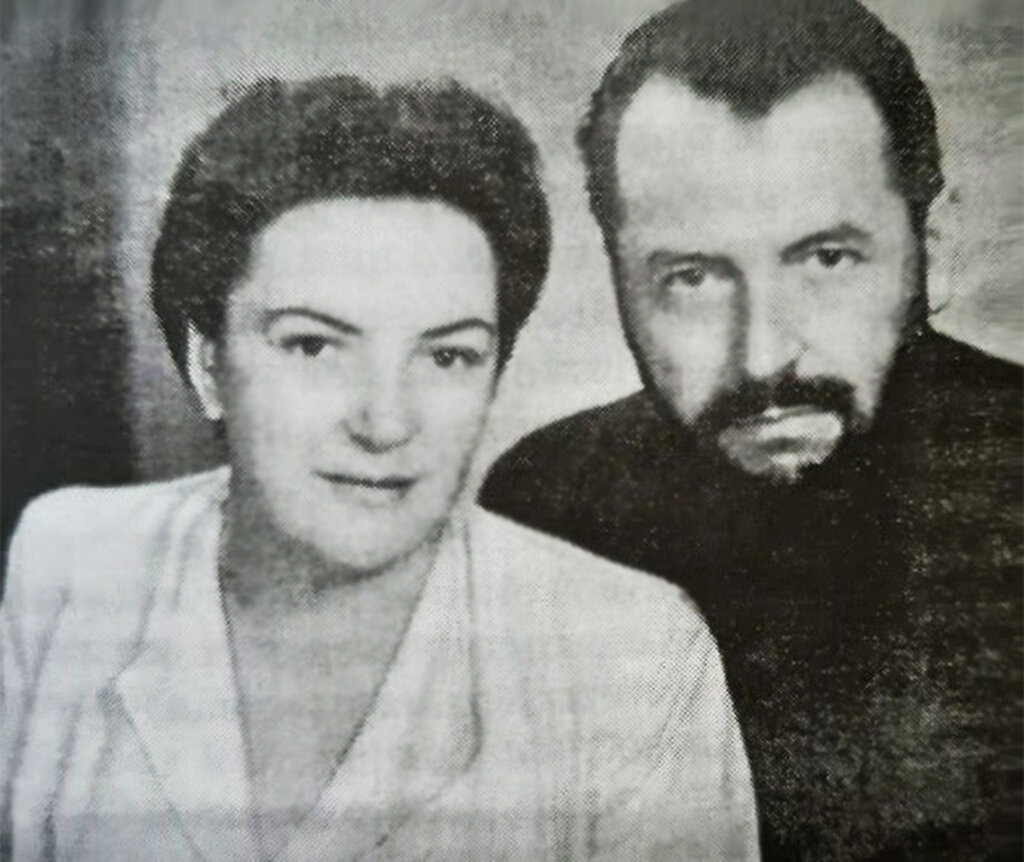
Elisaveta Popantonova with her husband, Anton Popaleksandrov.
PHOTO From the personal archive of Dr Mirela Kostadinova
Two years later, Anton was ordained a priest at the Church of the Holy Mother of God in Gabrovo and became active in the local community. Elisaveta taught at the vocational school and joined both the Motherly Care women’s society and the Orthodox Christian brotherhood at her husband’s church. The couple had two children, Viktoria and Alexander.
Then came 5 September 1944, when the Soviet Union declared war on the Kingdom of Bulgaria. The events that followed deepened the political crisis and led to the coup of 9 September 1944, which brought the communists to power by force. Life for Elisaveta and Anton’s family was turned upside down.
“On 9 September, the Fatherland Front seized power and Kimon Georgiev headed the new government,” journalist Magdalena Gigova told Bulgarian National Radio’s Radio Sofia. “The Popaleksandrov family hoped that Bulgaria would free itself from foreign influence, heal the wounds left by the war and take the road to democracy. Meanwhile, Nikola Petkov, a minister from the Bulgarian Agrarian National Union, called on all Agrarians to rebuild their organisation immediately. Elisaveta Popantonova was soon elected to the party’s town and district committees in Gabrovo.
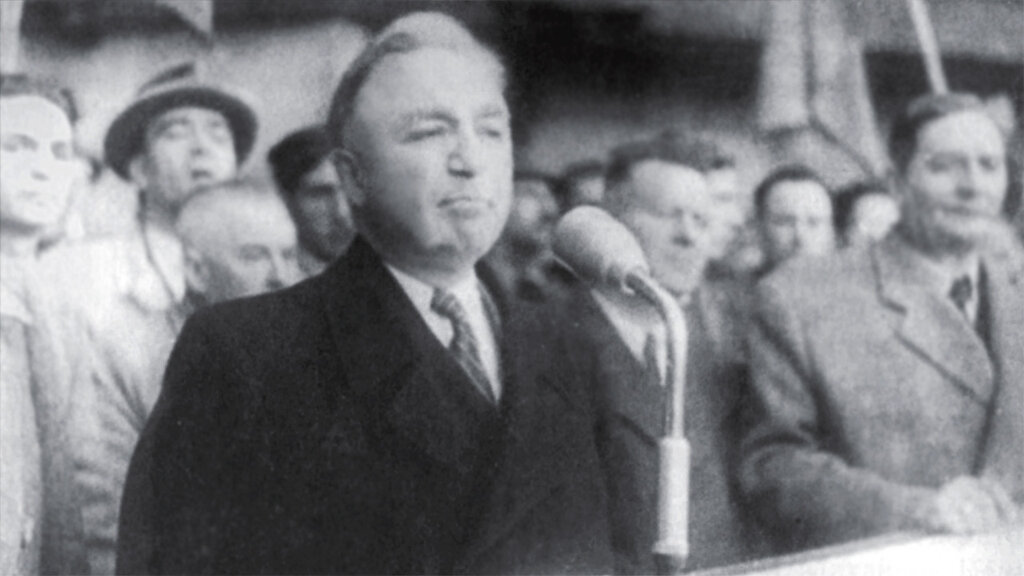
Nikola Petkov speaks at a Bulgarian Agrarian National Union election rally on 22 October 1946.
PHOTO bzns.bg
She refused to send people into forced labour
At a Fatherland Front meeting, she was told to sign a list of people who were to be sent into the forest to cut wood against their will. The Communist Party chairman threatened to send her to prison if she refused to sign. She still refused. The next day, she took the train to Sofia and went to Nikola Petkov’s home. He was visibly angry and told her she had done the right thing.
Clashes soon broke out between the communists and the Agrarians, and the Soviet Union ordered a crackdown aimed at removing the Agrarian Union’s leadership. On 26 August 1945, the Agrarian ministers left the cabinet and Nikola Petkov became leader of the opposition. In Gabrovo, Elisaveta Popantonova became a moral leader for the Agrarians. They called her the “Green Priest’s Wife”, the name by which she is still remembered.
“In the newspaper Narodno Zemedelsko Zname, she published an article entitled ‘Violence Is Powerless Against the Will of the People’, in which she drew a parallel between the suffering of Bulgarians under five centuries of Ottoman rule and what they were experiencing under the communists,” Gigova continued. “She wrote that the Fatherland Front was deciding the future of young people, that the children of Agrarians were denied certificates of good character and political reliability, and that they were being sent to camps and prisons. She also stressed that the Agrarian Union had been founded by honest people who wanted Bulgaria to have order and the rule of law, as any democracy should.”
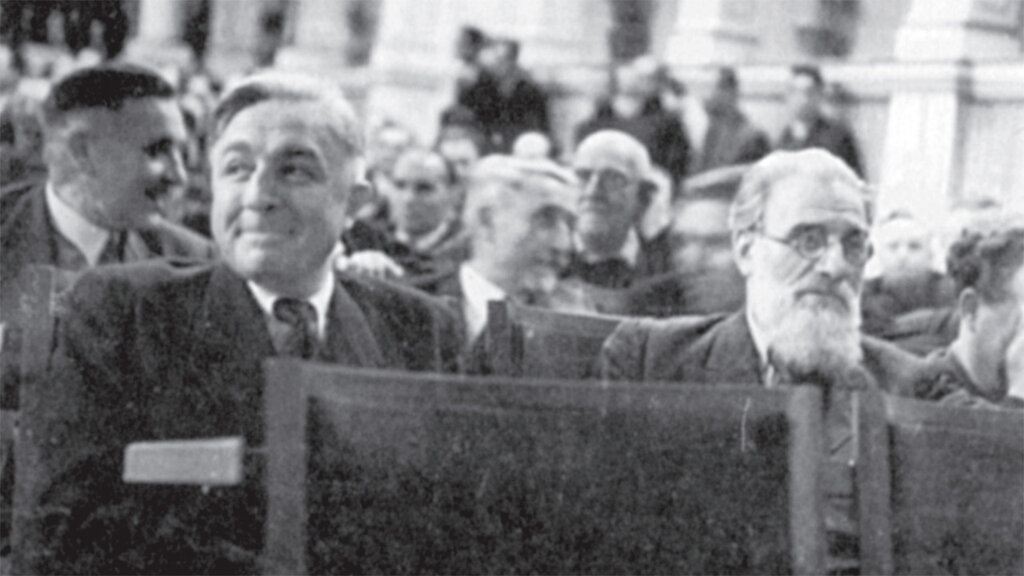
Nikola Petkov of the Bulgarian Agrarian National Union and Social Democrat Kosta Lulchev in Bulgaria’s Sixth Grand National Assembly, 1946–1947.
PHOTO bzns.bg
Popantonova was elected to parliament
After the article appeared, Popantonova was nominated to represent Gabrovo in parliament. Local people began to confide in her. They told her how their homes, land and livestock were being taken away, how they had been left at the mercy of party secretaries and how they were going hungry. Despite manipulation by the communists, she was elected to parliament in 1946.
During a debate on the draft budget, she challenged the majority’s claim that it was putting an end to poverty, destitution and unemployment and tackling every social problem at its root: “Has the creation of the new ministry brought any further social improvements that have truly changed people’s lives, now that we claim to be living in a new era under the Fatherland Front?” When MPs heckled her from the benches, she replied that begging had become widespread.
Beaten in church on Holy Saturday
Scuffles broke out in the chamber. Members of the majority demanded that Popantonova be removed from the rostrum. The crowd dragged her away, but fellow MP Kosta Lulchev came to her rescue. Days later, she returned to Gabrovo to celebrate Easter with her family. On Holy Saturday, State Security officers and police surrounded the local club of the Nikola Petkov Agrarian Union as its members met inside. Communists burst into the meeting, threatening to wipe out the opposition. A mob caught up with Popantonova in the street and tore her clothes, but she managed to reach the church where her husband served.
"He knocked out my front teeth"
“The first man to catch up with me pulled out a pistol and started hitting me with it. He shoved me into one of the bishop’s thrones opposite the oil lamp and struck me even harder with the pistol, hitting me wherever he could on the head. He knocked out my front teeth. Just then I got my hand free and knocked the pistol away. It flew five or six metres… He was stronger than me. He knocked me to the floor and began kicking and trampling me. Then another thug joined him, and another, and another… About ten men rushed in, hauled me to my feet, still beating me, and pressed my head against the icon screen of the Holy Mother of God. They pulled at the lamp to set my hair on fire, but the oil spilled and the flame went out. I thought, the Holy Mother of God saved me from being set alight and may have prevented a big fire,” Popantonova recalled years later.
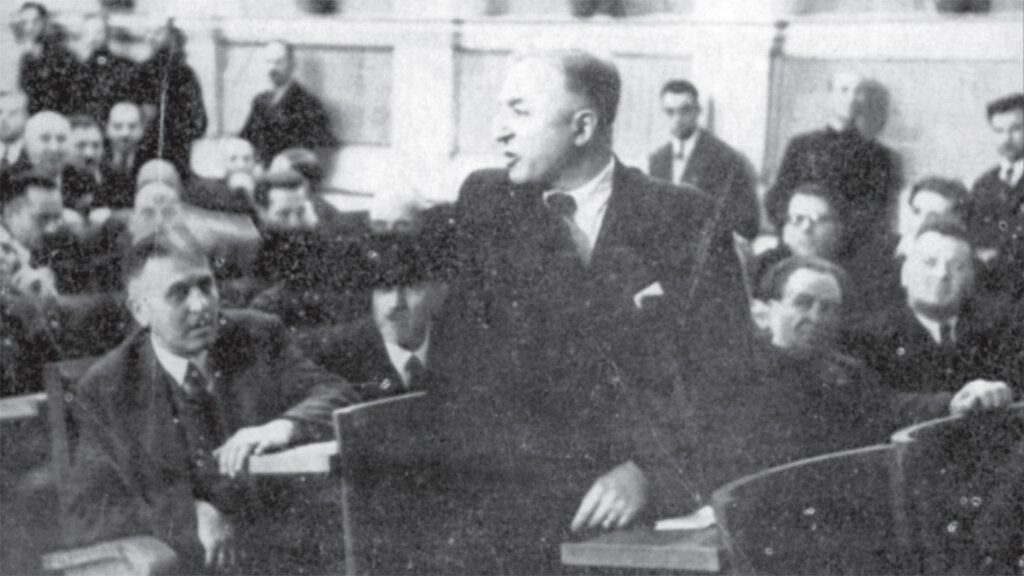
Nikola Petkov addresses the Sixth Grand National Assembly.
PHOTO bzns.bg
In 1947, Nikola Petkov was sentenced to death and the authorities began arresting MPs. State Security officers found Popantonova at four in the morning at her mother’s home, where she was staying with her two children. They arrested and beat her, then tied her to two posts with wire and kept her without food as rats scurried around her. She was eventually taken to the Bosna camp near the village of Nozharevo.
“The police took me to the camp steward’s room, stripped me and gave me a dirty shirt made of coarse cotton. I was in such a bad state that I paid no attention to any of it. The skin was gone from my entire back. A foul-smelling yellow liquid was seeping from the flesh… There were 70 women in the camp when I arrived. They took me to the room for political prisoners.
In prison with 1800 other women
There were teachers, pharmacists, wives of officers who had served under the monarchy, women from the Agrarian Union who supported Nikola Petkov’s ideas, and even a prima ballerina from the Cooperative Theatre. The women convicted of criminal offences were in the next room. More women arrived every Wednesday and Saturday, and soon there were 1,800 of them. They made bricks to build quarters for the new arrivals. They carried logs downhill. Some fell under the weight and had their limbs crushed. Sometimes we would be digging below the road. A cart from the village would stop and someone would toss us a bundle. It would roll into the bushes and we would pick it up. Inside there would be bread with cheese and cigarettes. The Turks are good people. The women carried stones on their backs and had to break them up, but they never managed to meet their quota. They were always hungry. At roll call we stood side by side. The commandant, Dimitrov, would ask, ‘Are you hungry? Open your mouths!’ We would open our mouths, and he would spit into one of our mouths.”
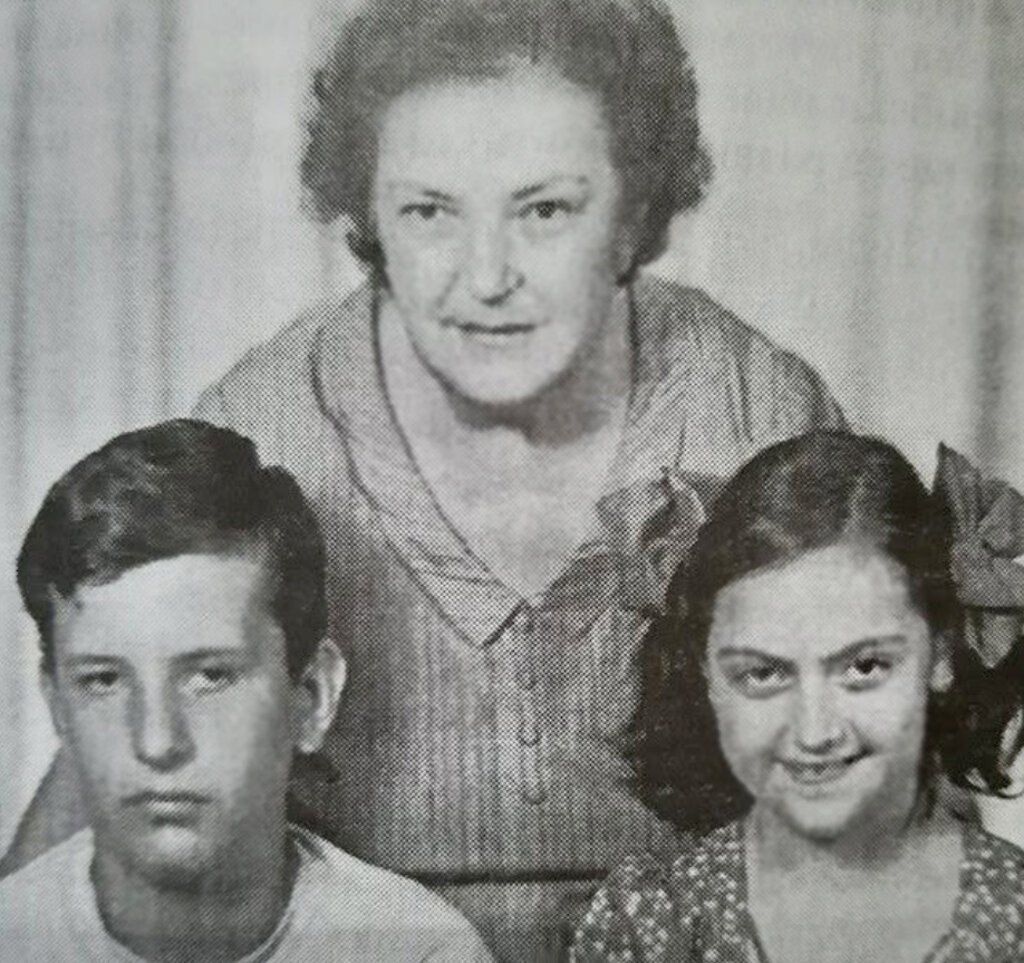
Elisaveta Popantonova with her grandchildren.
PHOTO From the personal archive of Dr Mirela Kostadinova
After her release from the camp, the authorities placed Popantonova under house arrest. They harassed the family at every turn. There was even someone keeping watch in the garden. Her husband was banished to serve at the cemetery church in the town of Elena. She was 62 when she was finally allowed to sell candles part-time in the very church where she had been beaten. She never received a pension because her years as an MP did not count towards it. Her husband died in 1982, but she remained loyal to the people of Gabrovo and did not return to her native Sofia.
The fall of communism
Popantonova lived to see the fall of communism in 1989. She waited in vain for someone from her party to get in touch, though most of her former colleagues had already died. To her surprise, some of the people who had hurt her, in body and spirit, came forward. The policeman who had stood at the door of the State Security offices as she was led in for questioning apologised. One of the men who had beaten her in the church sent his wife to ask for forgiveness. Another man from the security services saw her at the railway station in Gorna Oryahovitsa, dropped to his knees in remorse and even offered her a job on his work crew.
Today marks 37 years since Bulgaria’s break with communist rule on 10 November 1989. In 2000, the regime was declared criminal by law. We would do well to remember those who refused to bow their heads, even at the cost of their lives. Remembering the past helps us recognise the signs of oppression and threats to our freedom before they once again become a reality.
Text by Diana Tsankova, based on Magdalena Gigova’s account for The Addresses of Love on BNR’s Radio Sofia
Edited by Elena Karkalanova
This publication was created by: Elizabeth Radkova