


Author
Tsvetana Toncheva
News
Highlights of Bulgarian musical culture
In ‘Promise’, Vladimir Bashev’s poetry meets FSB’s music
Friday 13 November 2026 20:00
Friday, 13 November 2026, 20:00
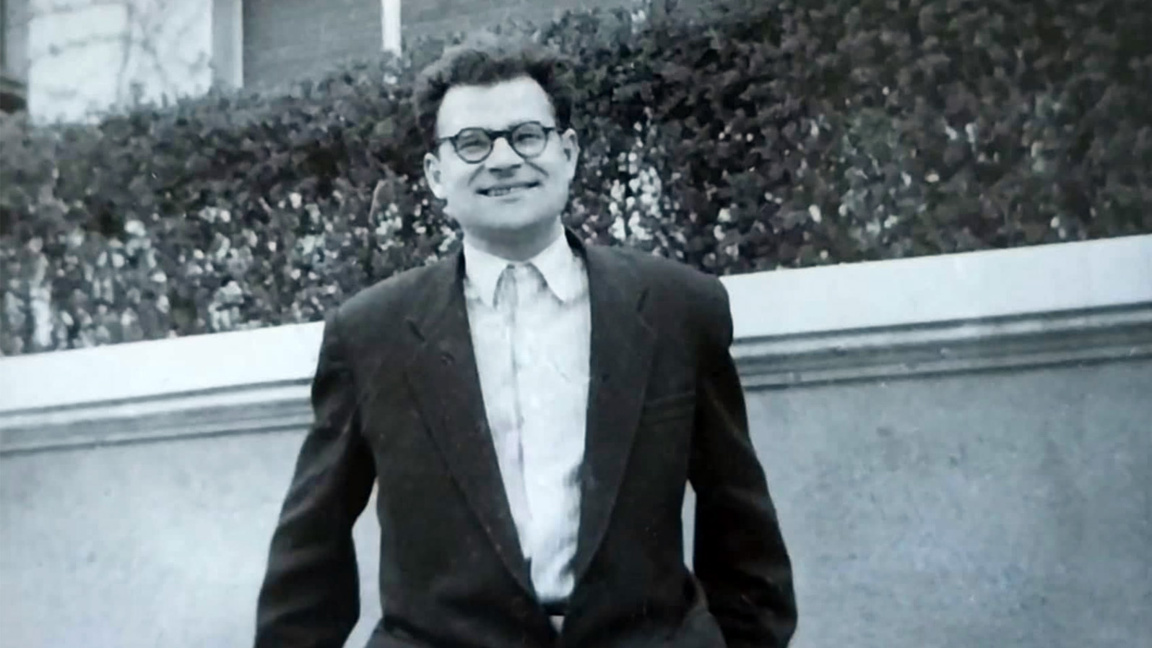
Vladimir Bashev (1935 – 1967)
PHOTO facebook.com/nlmfond
Font size
An intimate, tender confession of love, "Promise" was written in the middle of the last century by the young poet Vladimir Bashev. Years after his death, the poem found musical expression in a song of the same name by the celebrated Bulgarian rock band FSB.
I can’t remember - were you beautiful?
Sometimes,
at such close range,
the eyes lose their power
to see what is visible.
Vladimir Bashev (28 July 1935 – 19 November 1967) was a rare talent in Bulgarian literature of the mid-20th century. A poet, journalist, translator and public figure, he belonged to a generation that sought new forms of expression and extended the possibilities of Bulgarian lyric poetry. He graduated in Bulgarian philology from Sofia University, held senior positions at major publications and was elected to the leadership of both the Union of Bulgarian Writers and the Komsomol, the communist youth organisation. He was wholly loyal to the Communist Party and the Bulgarian authorities of the time.
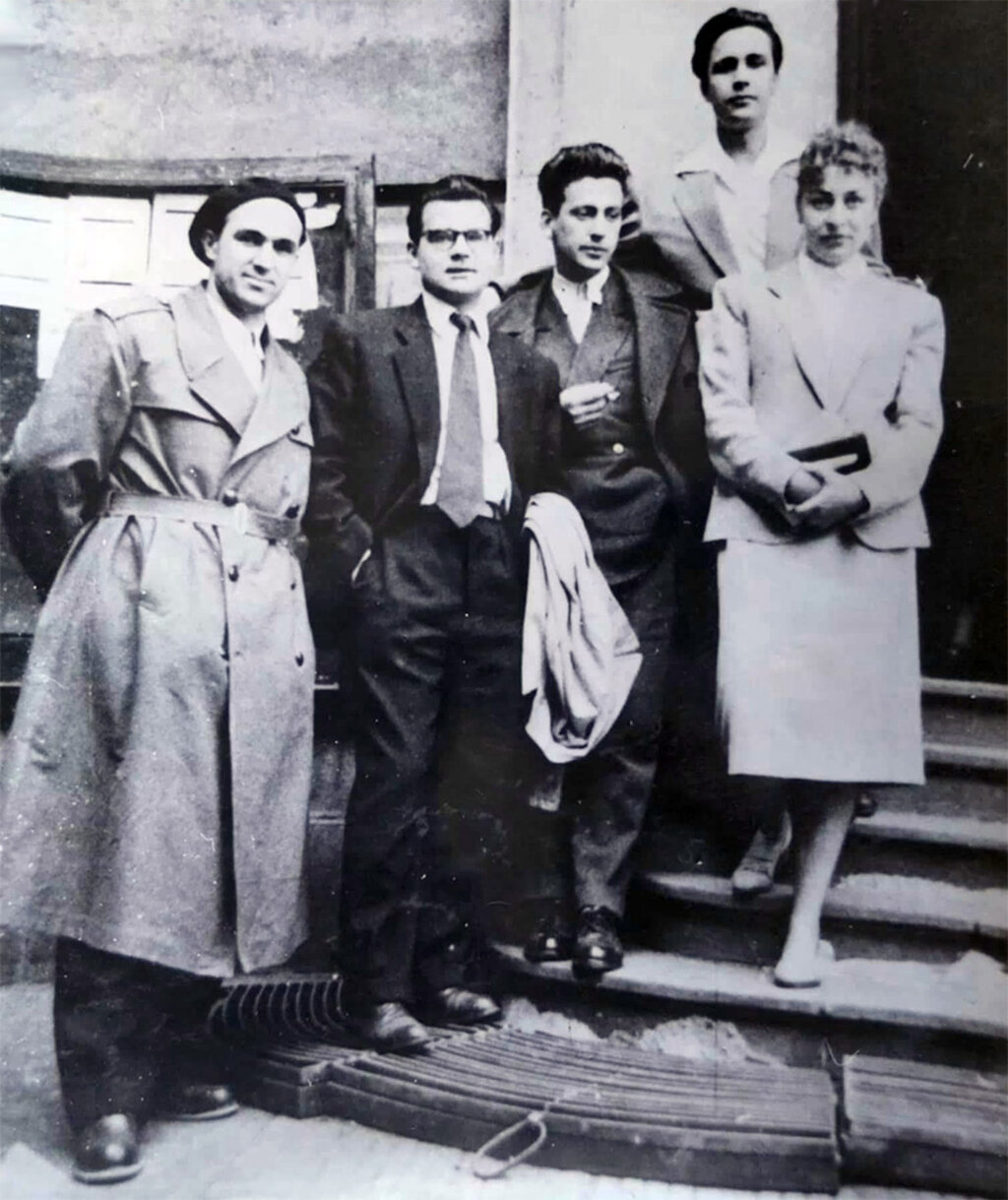
Vladimir Bashev with fellow students outside Sofia University in 1954.
PHOTO facebook.com/nlmfond
His line, “If we have nothing to give the world, what were we born for?”, came to be regarded as a motto for the poets of the 1960s who became established as the “April Generation”. Many were artists granted official standing and authority by the state, helping to construct the regime’s mythology. Bashev’s unequivocal political declarations and prominent public positions made him one of the generation’s leading figures, although official literary critics did not always look favourably on his poetry. There was a certain contradiction between how he lived and what he wrote, perhaps because behind his active public presence was a poet acutely sensitive to personal human experience.
In his short life of 32 years, Bashev produced seven poetry collections, longer poems, translations, journalism and librettos for operas and operettas. Many of his poems became the lyrics of popular songs. He was one of the distinguished Bulgarian composer Lyubomir Pipkov’s favourite poets. His words formed the basis of Pipkov’s monumental "Oratorio for Our Time" and his final opera, "Antigone 43". Bashev also wrote the libretto for "The Bridge", the first opera by the prominent Bulgarian composer Alexander Raychev.
Bashev died in a car accident on 19 November 1967. His beloved wife, 24-year-old Vera Gancheva, was with him in the car. She would become one of Bulgaria’s foremost translators from Scandinavian languages, as well as a publisher, university lecturer and author of books, essays and scholarly works.
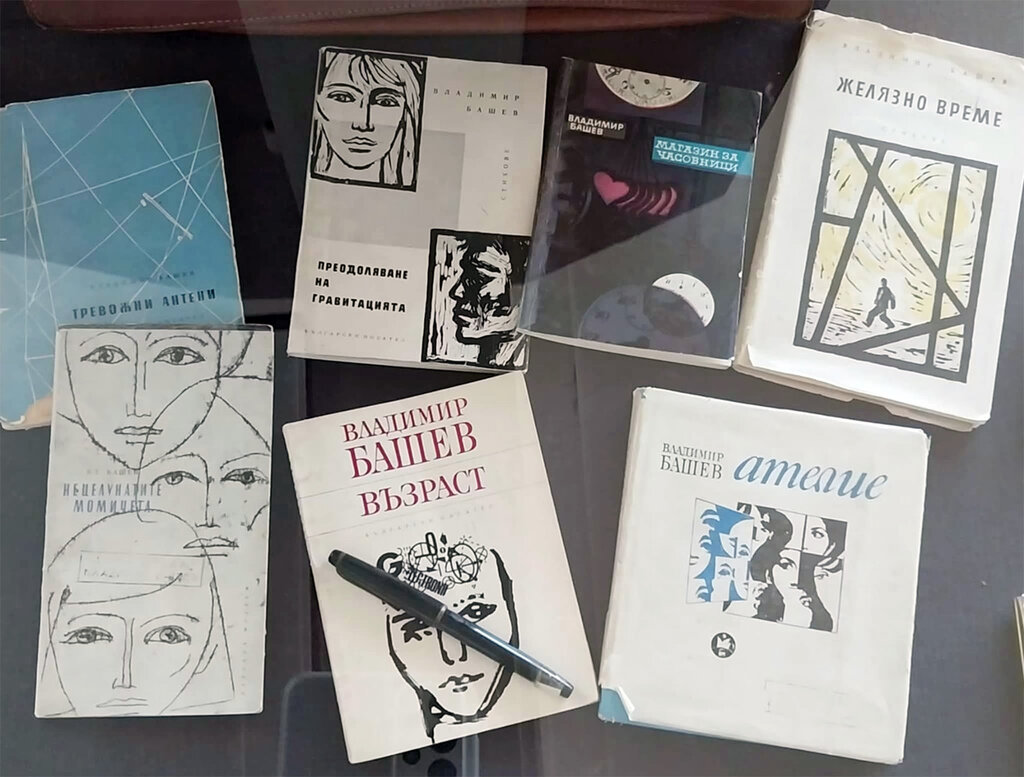
PHOTO facebook.com/nlmfond
Vera never remarried. Together with Bashev’s mother, she donated the flat where he had lived to the National Literary Museum. Today, the Vladimir Bashev Literary Study is a meeting place for contemporary poets, writers, musicians, performers and journalists. It also hosts the presentation of the national literary award bearing his name. Awarded every two years in November, the prize recognises a published poetry collection by an author aged 32 or younger — the age at which Bashev’s life was cut short.
Some poems seem to wait for their music before they can live again. Included on FSB’s 1983 album Ten Years Later, “Promise” reveals the tender side of Bashev’s poetic world. Its opening — “I can’t remember - were you beautiful?”- is unusual for a love poem. Instead of a rapturous description of the beloved, a memory. Her image dissolves into sensations. Sight loses its importance. What remains is touch, warmth, shoulders, lips, hands. Love is no portrait, but an experience. The final image - hands “born to be wings” that “promise a sky” - is a lovely symbol of boundless love.
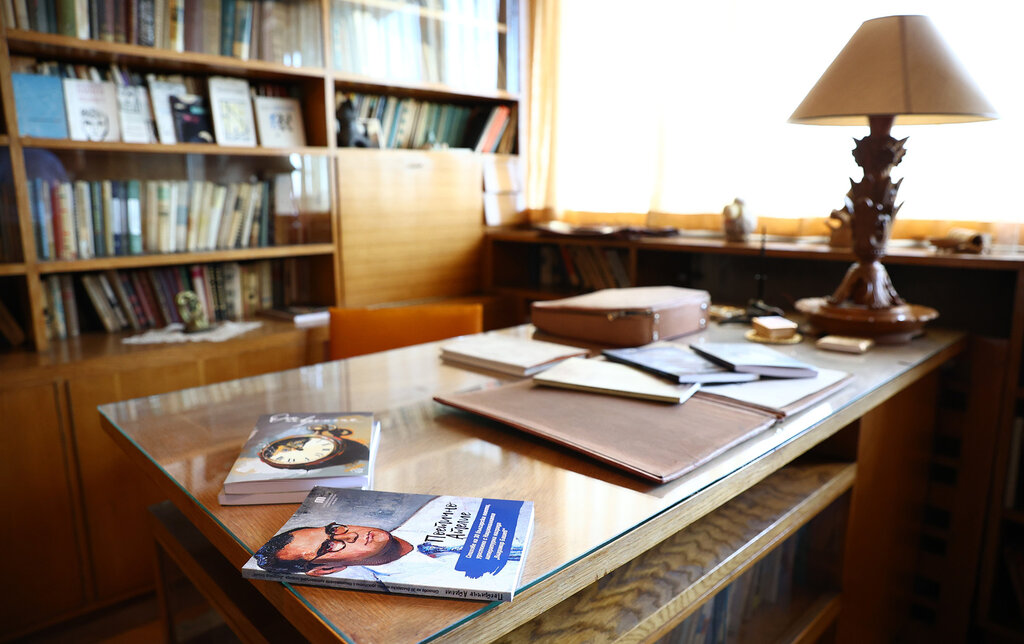
PHOTO BTA
FSB is a Bulgarian rock band whose work has become a benchmark for musical artistry. Its musicians have always had a particular feeling for words and the depth of meaning a lyric can hold. In “Promise”, Rumen Boyadzhiev, Konstantin Tsekov and Alexander Baharov carefully preserve the lyrical tone and imagery of Bashev’s verse. The music never displaces the poem; it gives it room to be felt in a new way. Sixteen years after his death, time had not dimmed its emotion, and his words still spoke to a new generation.
Today, too, “Promise” shows how good poetry endures. A song in which a poet meets, across time, musicians who recognised the power of his words. And the loveliest thing about that meeting is that it promises a sky.
Editor: Elena Karkalanova
This publication was created by: Elizabeth Radkova