


Article
The Bulgarian traces at Saint Catherine’s Monastery in Sinai
Tuesday 24 November 2026 06:00
Tuesday, 24 November 2026, 06:00
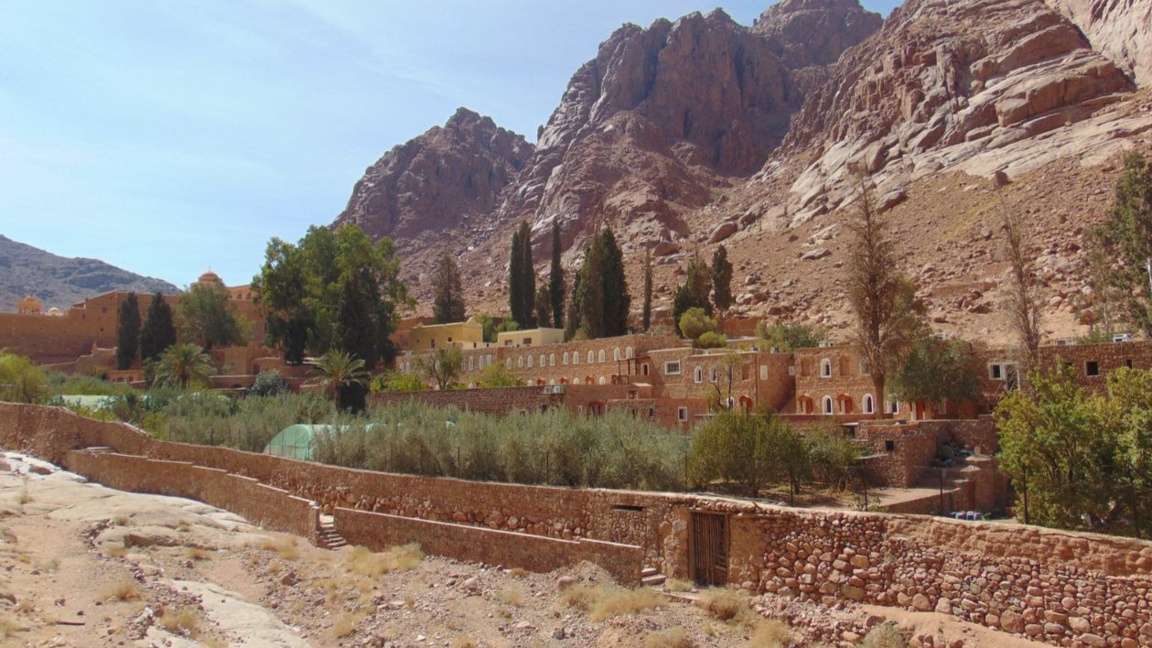
St Catherine’s Monastery in Sinai and the Wadi Feiran oasis
PHOTO Ivo Ivanov
Font size
On Mount Sinai, also known in the Bible as Horeb, at an altitude of 1,570 metres, in a mountain pass near the summit of Mount Moses, or Jebel Musa, stands the oldest continuously inhabited Christian monastery in the world. The monastic community originated in the Wadi Feiran oasis under the name of the Burning Bush, or the Transfiguration. After the 8th century, when the relics of St Catherine of Alexandria were brought to Sinai, the monastery became known by the name of the early Christian martyr who lived in the 4th century.
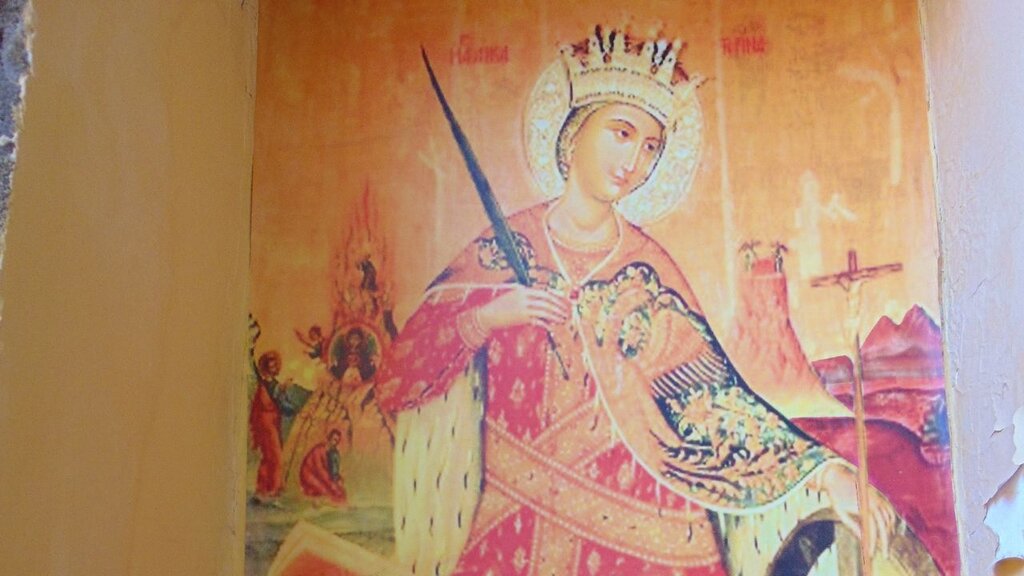
Following the transfer of St Catherine’s relics in the 8th century, the monastery took her name
PHOTO Ivo Ivanov
At the place where God appeared in a theophany and spoke to Moses from the burning bush, and where the Hebrew leader received the Ten Commandments, numerous monks settled in the rocky caves as early as the 3rd century.
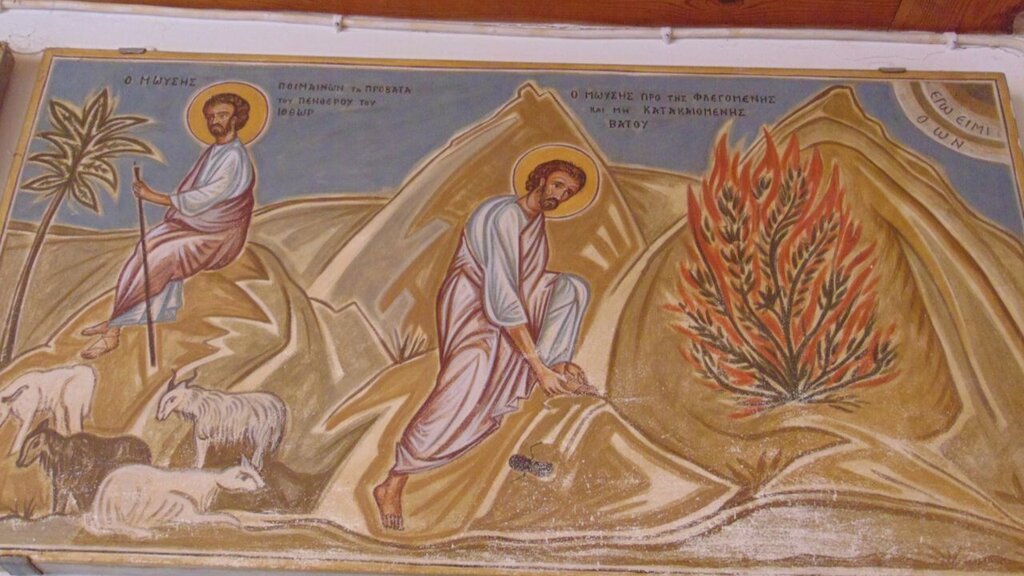
God spoke to Moses from the burning bush
PHOTO Ivo Ivanov
In the 4th century, St Helena, the mother of Emperor Constantine the Great, founded a monastery near the bush. It was fortified under Emperor Justinian the Great in the mid-6th century. According to tradition, when the Prophet Muhammad was still a travelling merchant, he was given shelter by the monastic brotherhood. Later, Muslims preserved the monastery’s privileges and autonomous status.
At the beginning of the 11th century, a mosque was even built within the monastery. This move saved the holy site from the destruction threatened by the fanatical Caliph Al-Hakim. Warned by the Bedouins of an impending attack, the monks converted one of the monastery’s rooms into a mosque in just three days. When the caliph saw the crescent moon, he was forced to withdraw.
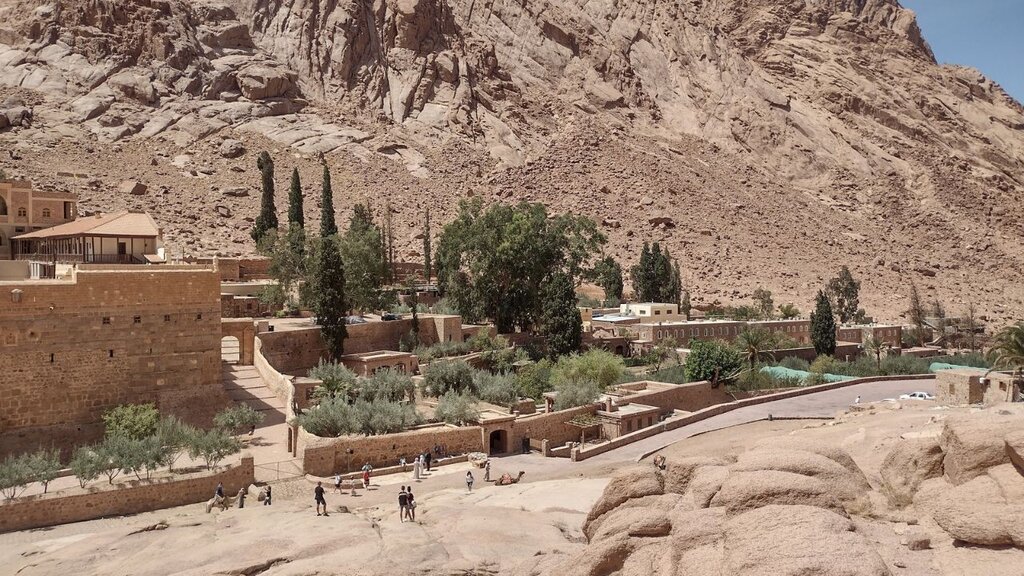
The first monks settled in the caves near the Burning Bush as early as the 3rd century
PHOTO Ivo Ivanov
Until the 15th and 16th centuries, the monastery’s brotherhood included Greeks, Syrians, Georgians, Armenians, Bulgarians, Russians, Serbs, Arabs and Latins. Today, its monks are predominantly Greek, but St Catherine’s Monastery continues to attract pilgrims from all over the world. After the Vatican, the Sinai monastery houses the world’s second-largest collection of its kind, comprising more than 3,300 manuscripts, 1,700 scrolls, 5,000 early printed books, historical documents and charters in 11 languages.
In the 19th century, at the behest of the Russian authorities, the German scholar Constantin von Tischendorf removed the Codex Sinaiticus from the monastery. It is one of 50 Bibles produced for the new imperial capital of Constantinople on the orders of Emperor Constantine the Great and revised by Eusebius of Caesarea, the first Church historian. Emperor Justinian gave the monks one of these Bibles as a gift.
Today, the manuscript known as the Codex Sinaiticus is held at the British Museum in London, having been sold there by the Soviet authorities.
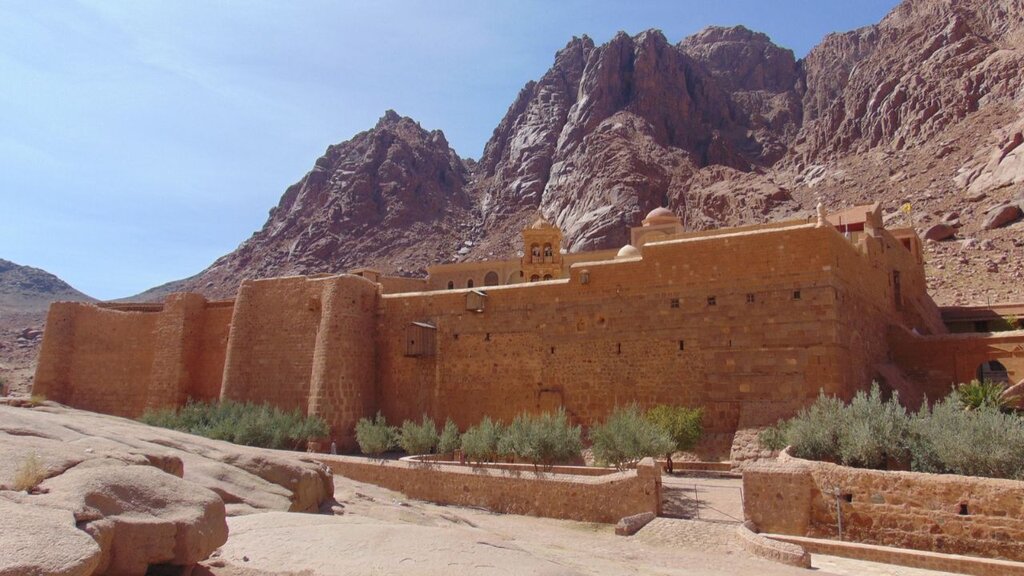
Emperor Justinian the Great built the monastery’s defensive wall in the 6th century
PHOTO Ivo Ivanov
Among the prominent Orthodox figures who lived and pursued their spiritual lives in the Wadi Feiran oasis were John Climacus, George of Sinai and Zosimas. In the 14th century, St Gregory of Sinai, the founder of Hesychasm, emerged from the Sinai monastic community. He went on to establish the Paroria Monastery on the border between Bulgaria and Byzantium. In the second half of the 14th century, Hesychasm became the official teaching of the Bulgarian Church.
In the mid-19th century, Archimandrite Porphyrius Uspensky studied 48 written monuments in Old Bulgarian, dating from the 11th to the 18th centuries, at the monastery. In 1975, during renovation work in the crypt of the Church of St George at St Catherine’s Monastery, further manuscripts were discovered, including 41 written in Old Bulgarian.
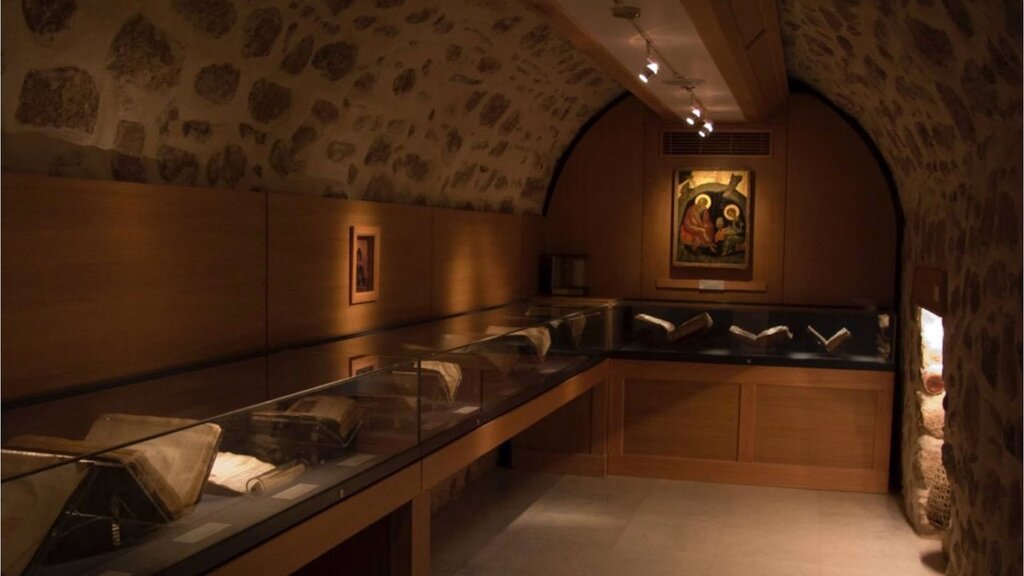
Part of the exhibition of early Christian manuscripts
PHOTO Ivo Ivanov
According to Associate Professor Archimandrite Pavel Stefanov, the manuscripts reached Sinai mainly by three routes: through the intermediary of the monasteries on Mount Athos; through Bulgarian pilgrims; and via the monastery’s own scriptorium, where Bulgarian men of letters worked.
The most important items in the Old Bulgarian collection are the Glagolitic manuscripts: the Sinai Psalter, comprising 209 parchment leaves; the Sinai Prayer Book, with 143 leaves; the Bichkov Psalter; and the Sinai Euchologion, all dating from the 11th century. They preserve valuable evidence of the language used during the literary mission of Saints Cyril and Methodius in Moravia and by their disciples in Bulgaria.
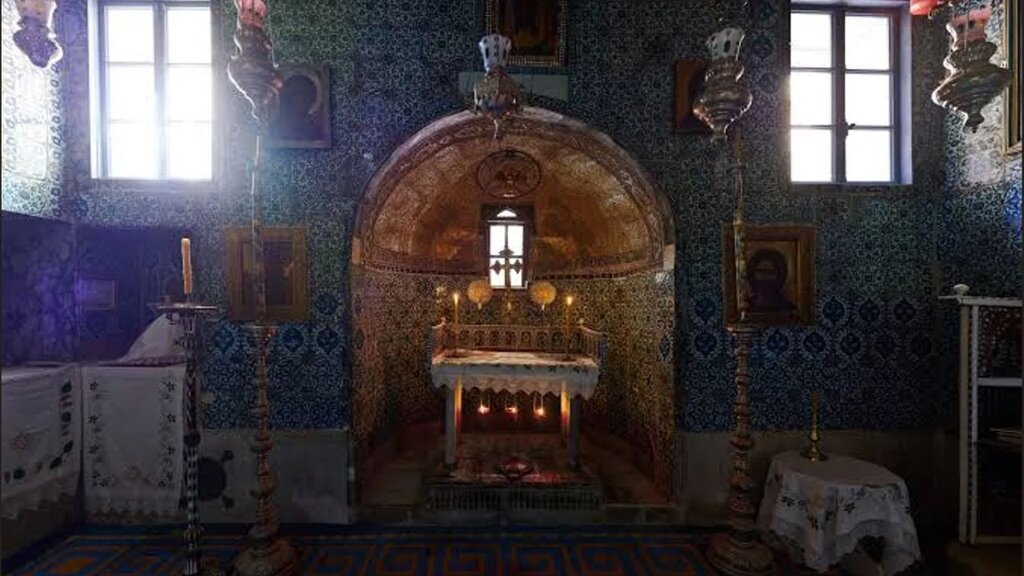
The altar of the Chapel of the Burning Bush
PHOTO Ivo Ivanov
The manuscripts and notes left or written here bear witness to the pilgrimages made to Sinai by devout Bulgarians. Monks from Sinai were in Sofia in 1555 and recorded the martyrdom of St Nicholas the New of Sofia.
In 1568, Father Peter of Nikopol visited the monastery, where Bishop Eugene was abbot, probably after making a pilgrimage to Jerusalem. He left a record of his visit not in a manuscript in another language, but in Old Bulgarian, in the 12th-century Dobromir Gospel.
Another well-known monk from Sinai during the Bulgarian National Revival was Polycarp, a native of the Bulgarian town of Kotel whose secular name was Petar Tsankov. The travelling monk Archimandrite Michael took him to St Catherine’s Monastery, where Petar became a monk and was ordained.
St Catherine’s Monastery in Sinai, Egypt, also preserves a number of Bulgarian artefacts associated with liturgical art, including reliquaries, vessels for the Eucharistic gifts, processional crosses and other finely crafted and richly decorated church furnishings. Among the objects visitors can see in the narthex of the monastery church is a precious marble font, which, according to its inscription, was donated by “Gerasim, Protosyncellus of Sinai, native of Plovdiv, 1783”.
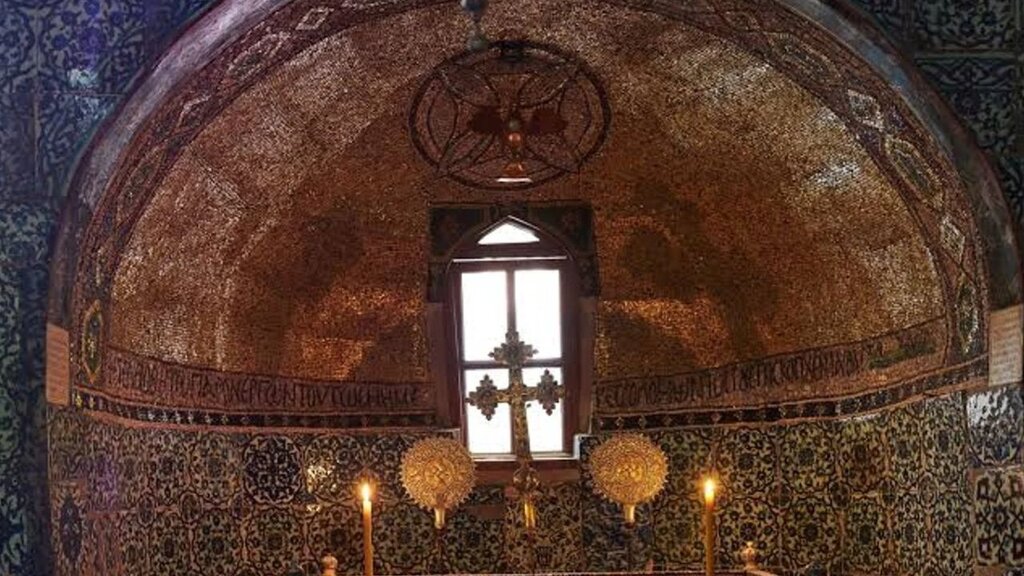
The silver covering donated by Hieromonk Cosmas of Varna
PHOTO Ivo Ivanov
Svetozara Georgieva Ratseva-Hristova, a researcher at Veliko Tarnovo University, has published a study revealing a unique example of pilgrimage art. It is a gilded silver covering on the marble slab, known as a kivot or proskynetarion, beneath the holy altar of the Chapel of the Burning Bush, at the very roots of the biblical bush.
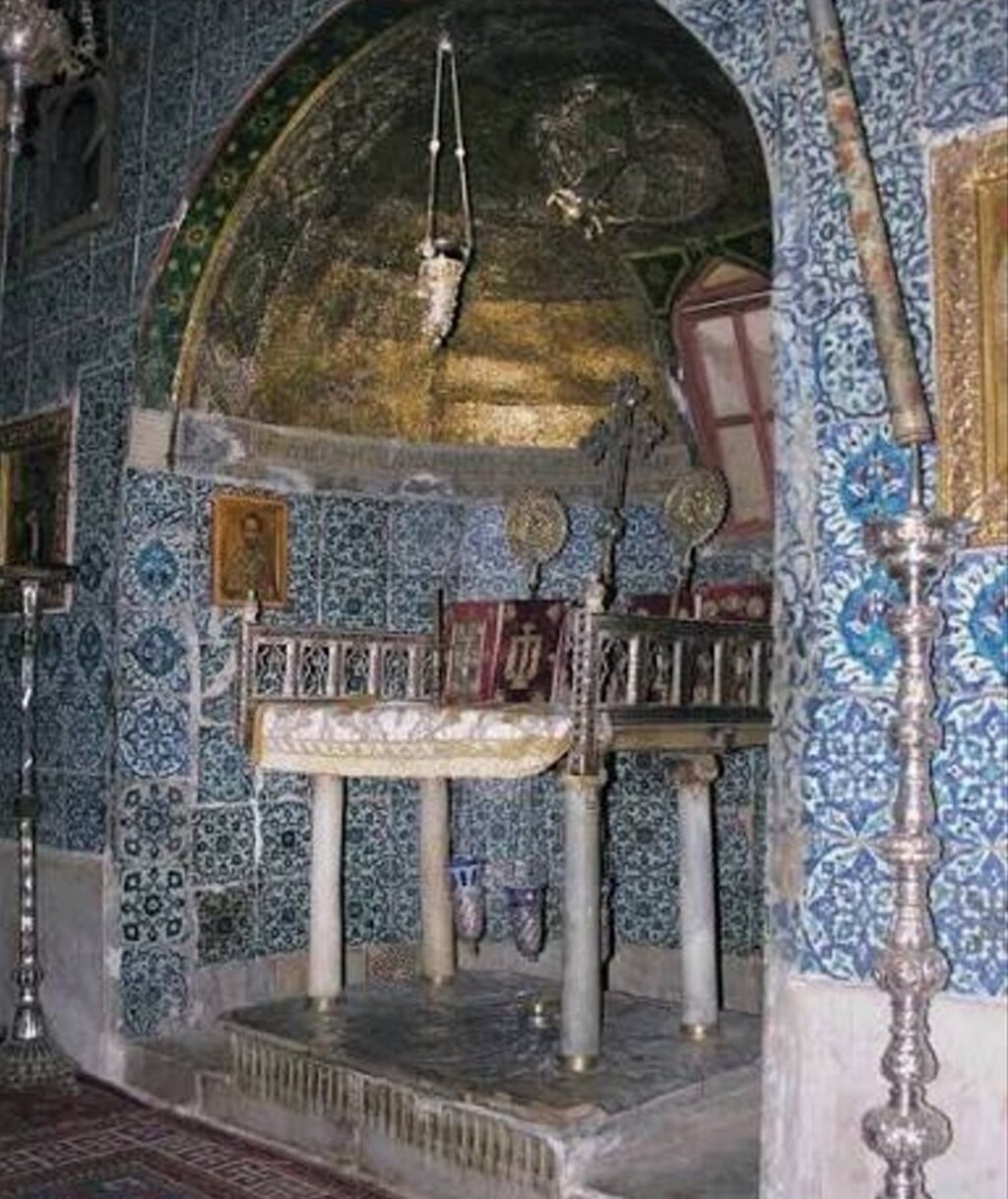
The covering beside the holy altar in the sanctuary was donated by Hieromonk Cosmas of Varna
PHOTO Ivo Ivanov
The work comprises 14 compositions depicting the pilgrimage to Sinai and six scenes from the life of St Catherine. The composition also includes a Sacred Map of the Sinai Peninsula. According to the Bulgarian researcher, the donor’s inscription reads: “This most holy and venerable work was created on the holy Mount Sinai through the expense, effort, care and sighs of me, the lowly and unworthy Hieromonk Cosmas of Varna. Whoever sees it, let them say: ‘May God forgive him.’”
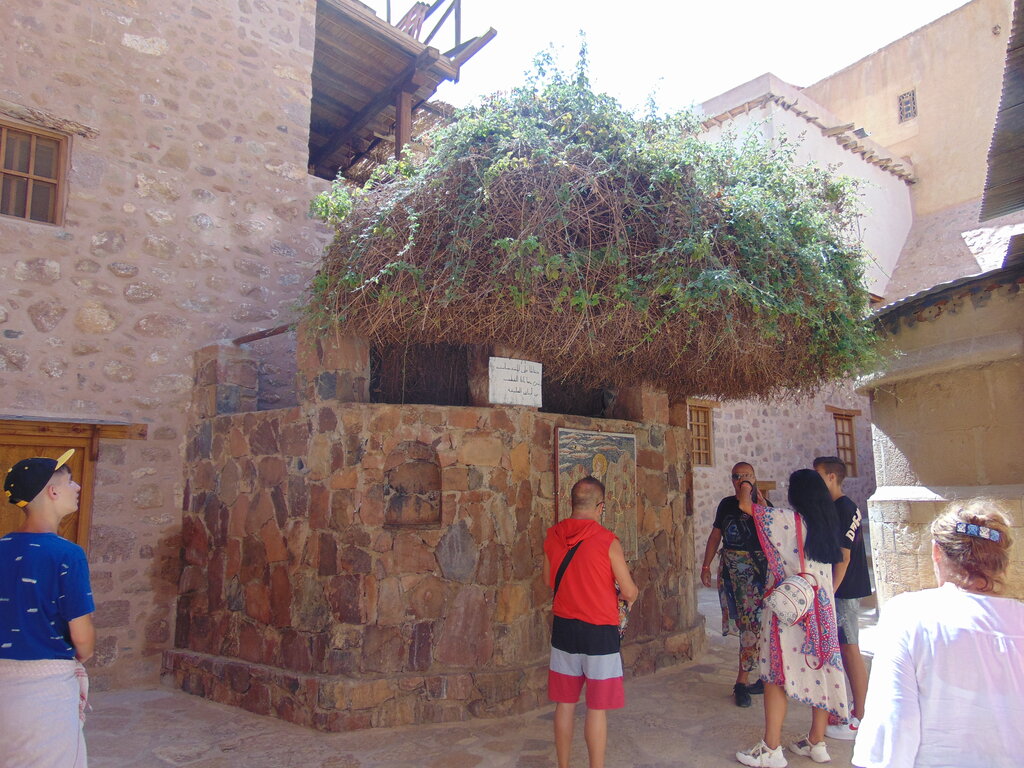
The sacred Burning Bush
PHOTO Ivo Ivanov
Although visits to the monastery are strictly regulated by designated visiting hours, visitors should allow enough time to take a thorough look at the ancient manuscripts and icons on display.
St Catherine’s Monastery in Sinai is considered the second holiest site in Orthodox Christianity after Jerusalem. Despite the austere natural landscape surrounding it, the Bulgarian traces preserved within its walls give pilgrims the feeling that they are not in a foreign place, but at home, where so many worthy Bulgarians devoted to their faith have already left their mark.
Photos: Ivo Ivanov
English editor: R. Petkova
This publication was created by: Rositsa Petkova
- #Saint Catherine’s Monastery Mount Sinai
- #Saint Catherine’s Monastery Egypt
- #oldest Christian monastery
- #monastery Mount Sinai Christianity
- #Bulgarian monks Saint Catherin's Monastery Sinai
- #St Catherine of Alexandria
- #German scholar Constantin von Tischendorf
- #Orthodox Christianity holy sites
- #Glagolitic manuscripts Saint Catherine's Monastery Sinai
- #Polycarp Bulgarian monk