


Albania and the Albanians through the eyes of historian Simeon Radev
Friday 27 November 2026 16:50
Friday, 27 November 2026, 16:50
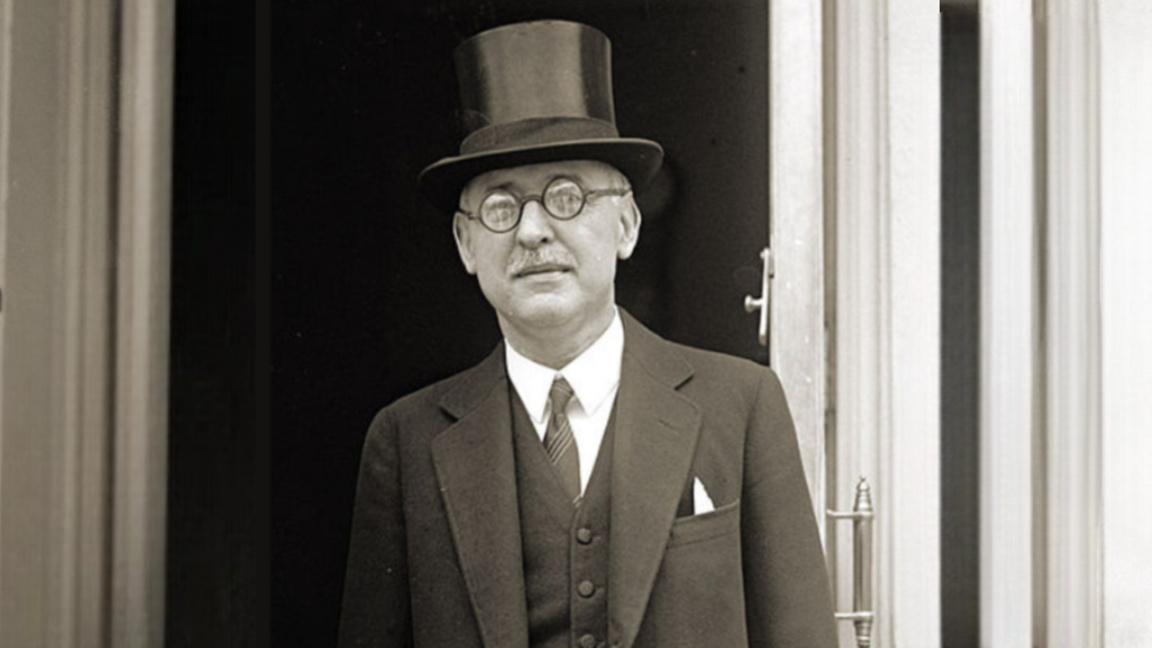
Simeon Radev (1879-1967)
PHOTO wikipedia.org
Font size
Albania celebrates its national holiday, also known as Independence Day, on 28 November. On this day in 1912, the Declaration of Independence of Albania was ratified by the All-Albanian Congress, marking the proclamation of the independent Albanian state. In the city of Vlora, Ismail Qemali (1844–1919), raised the national flag and became Albania's first prime minister, heading the Provisional Government. The holiday is also known as Flag Day because, on 28 November 1443, Albanian national hero Gjergj Kastrioti Skanderbeg (1405–1468) led a rebellion against the Ottoman Empire and raised the flag featuring a black eagle on a red background at Krujë. The flag was the symbol of the Kastrioti family and is now Albania's national flag.
The national holiday of the Balkan country, which is home to a sizeable and officially recognised Bulgarian ethnic community, offers an opportunity to explore Albania and its people through the eyes of Simeon Radev (1879–1967), a prominent Bulgarian writer, diplomat, historian and publicist, who was also known as a friend of Albania and the Albanian people. His interest in Albania was so profound that he devoted entire chapters of his memoirs to Albanian political figures, the country's national revival, the Albanians' struggle against Ottoman rule and the establishment of the Albanian state.
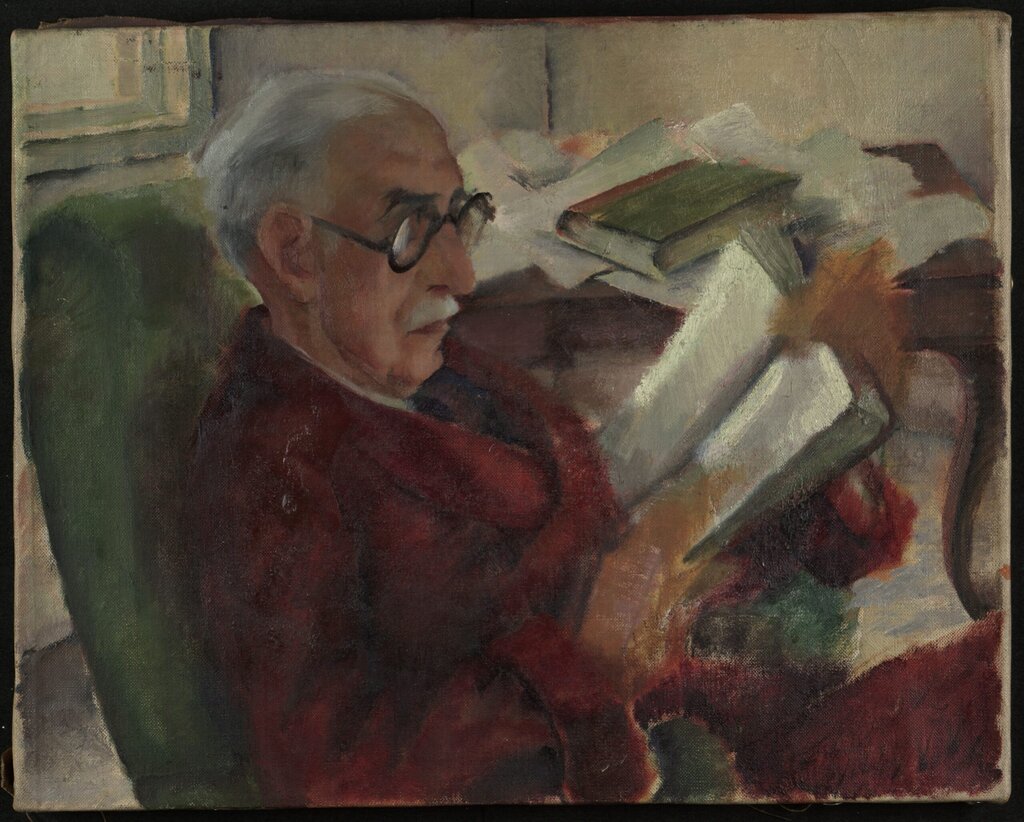
Portrait of Simeon Radev by his wife, Bistra Vinarova
PHOTO pygmalionfoundation.org
Simeon Radev was born on 19 January 1879 in Resen, then part of the Ottoman Empire and today a town in southwestern North Macedonia. As a child, he often heard stories from his grandfather and neighbours about the notorious Albanian bandits, who were feared by everyone. He recounts some of these childhood memories in his book Early Memories (1879–1898), written in 1954 and first published in Sofia in 1967, shortly before the author's death. Radev carried these childhood impressions with him throughout his life. Through his encounters with Albanians and his study of their history, culture and traditions, Radev came to understand that the Albanian people could not be identified with the stories and legends about these bandits.
Simeon Radev first established close ties with Albanians while studying in Geneva around 1901–1902, and continued these contacts during his stay in Paris in 1902–1903. At the time, he was publishing the newspaper Le Mouvement Macédonien, which sought to bring the Macedonian Question and the demands of the Bulgarian population in Macedonia to the attention of French and European audiences.
Upon returning to Bulgaria, Simeon Radev established close ties with the Albanian community in Sofia and its cultural association, Dëshira (“Longing”). Through Vechernа Poshta (1900–1914), where he served first as an editor and later as editor-in-chief, and Volya (1911–1920), the newspaper of the People's Liberal Party, which he founded, Radev played an active role in bringing the Albanian Question to the attention of Bulgarian society
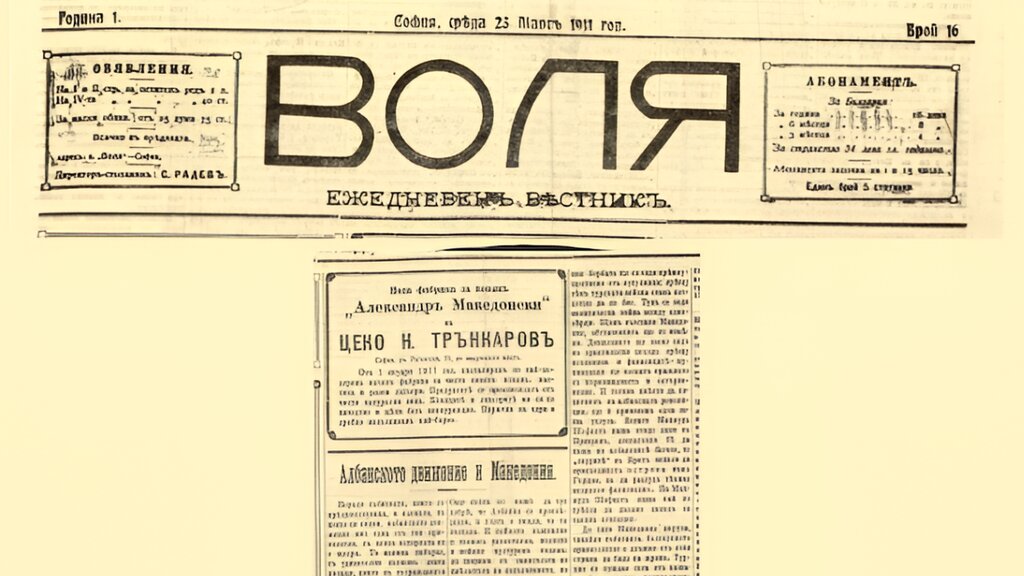
PHOTO strumski.com
During his diplomatic service as Bulgaria's representative in Bucharest, Bern, The Hague, Washington, London and Brussels, Simeon Radev maintained good relations with his Albanian counterparts and worked to foster closer ties between the two countries.
These facts are familiar to researchers of Bulgarian-Albanian relations. Unfortunately, Radev's personal archive, including articles, book manuscripts and memoirs, remained inaccessible, closed to researchers and unexplored for many years. Like many politicians, public figures and intellectuals, Simeon Radev was marginalised, criticised and persecuted following the establishment of the communist regime. Nevertheless, his name continued to be held in high regard.
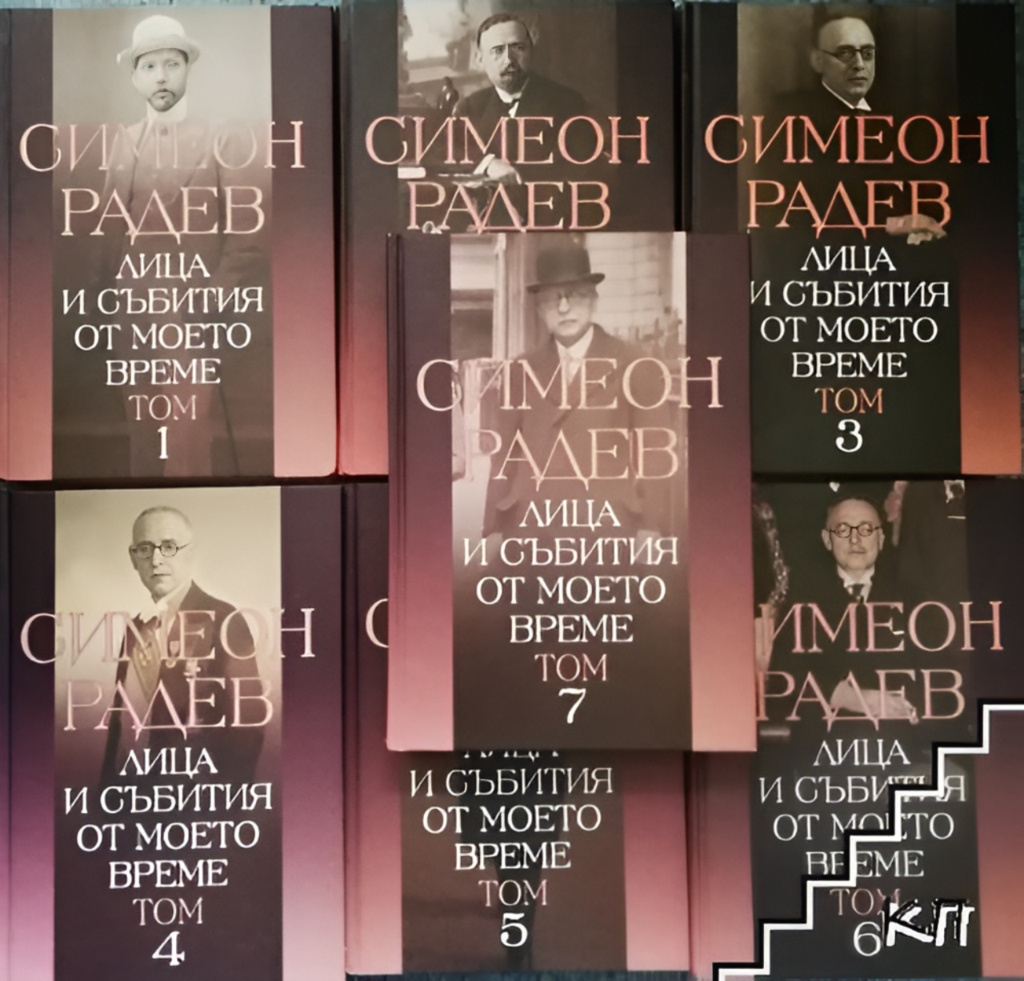
PHOTO knizhen-pazar.net
In his memoir series ''Litsa I Sabitiya Ot Moeto Vreme'', particularly the volumes covering the years around 1908–1912, when Radev was a firsthand observer of political developments in Constantinople and the Balkans, the author offers valuable information, assessments and insights into Bulgarian-Albanian relations.
The volumes mention prominent figures of the Albanian National Awakening and the movement for Albania's independence, including Ismail Qemali, Faik Konitza, Shahin Kolonja, Dervish Hima, Kristo Luarasi, Aladro Kastrioti, a claimant to the Albanian throne, and many others.
“According to Radev, traditional Albanian communities had customs reminiscent of the chivalric code of honour. Women were held in particularly high regard and could move about freely without fear of assault or insult. Radev also recounts a story he had heard as a child about a man who had been taken captive in Albania. Initially, the prisoner was kept under close guard, but over time the women guarding him began to trust him and removed his shackles. He knew of an unwritten rule whereby a fugitive who reached the territory of another Albanian community could seek protection there. He managed to escape to a neighbouring tower, where he was given shelter, protected from his pursuers and eventually escorted to safety.
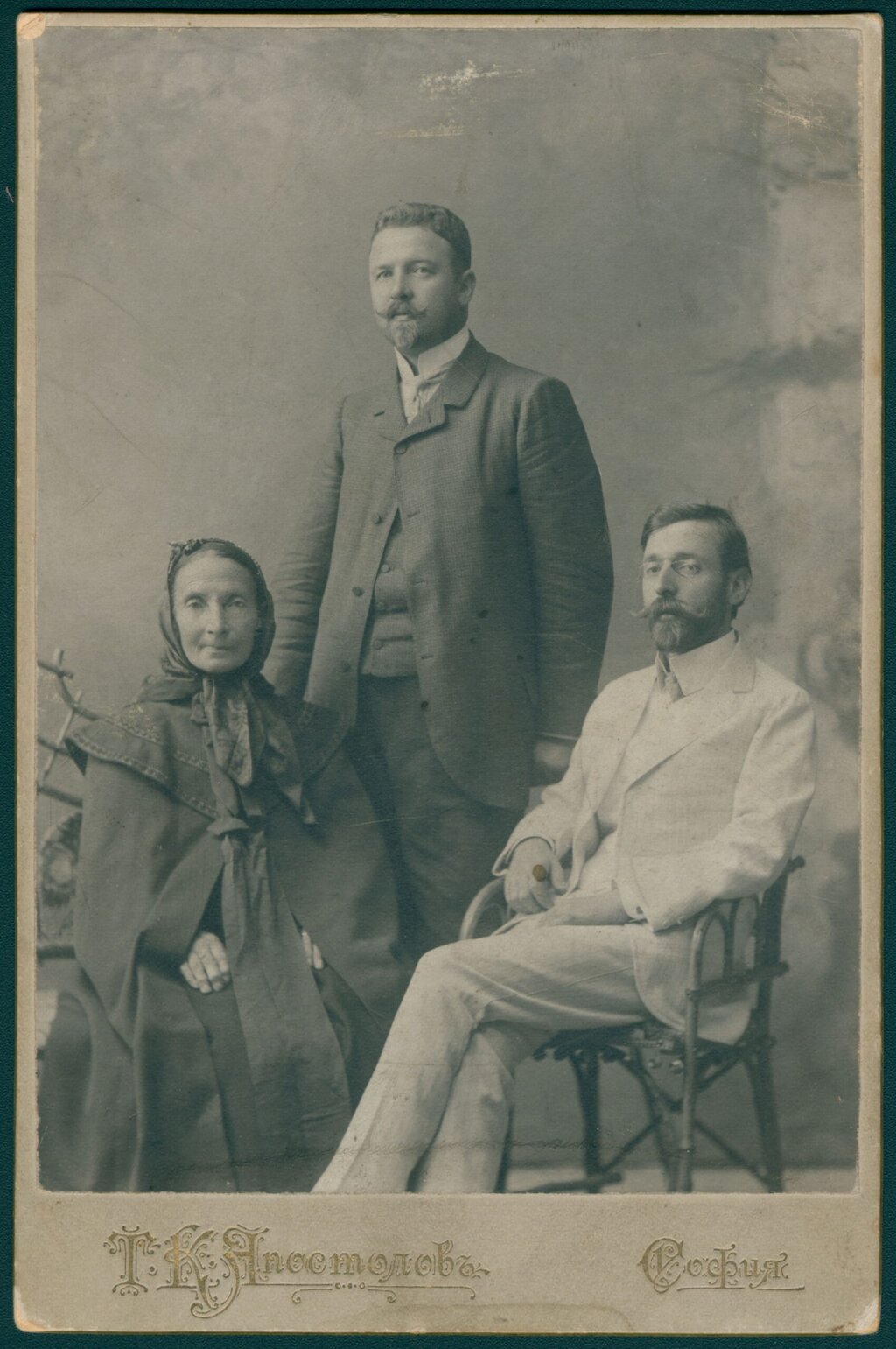
Simeon Radev with his mother, Fania, and his brother, Vladimir
PHOTO pygmalionfoundation.org
Simeon Radev recounts how, following Skanderbeg's defeat, the Ottomans conquered Albania but struggled to establish full control over the country. Thanks to the Albanians' proud spirit and country's rugged mountainous terrain, Albania retained a considerable degree of autonomy. Over the centuries, the country repeatedly rose in revolt against Ottoman rule. According to Radev, the struggle waged by Albanian leaders was not limited to defending their local rights and privileges but was also aimed at achieving national freedom.
Radev speaks highly of the abilities of the Albanians and points to their strong presence in the ruling elite of the Ottoman Empire as evidence. He notes that, according to figures cited in a Turkish almanac, a considerable number of Ottoman grand viziers were of Albanian origin. As an example, he also mentions former Grand Vizier Ferid Pasha, whom he had met in Constantinople and with whom he had discussed the events surrounding the Young Turk Revolution.
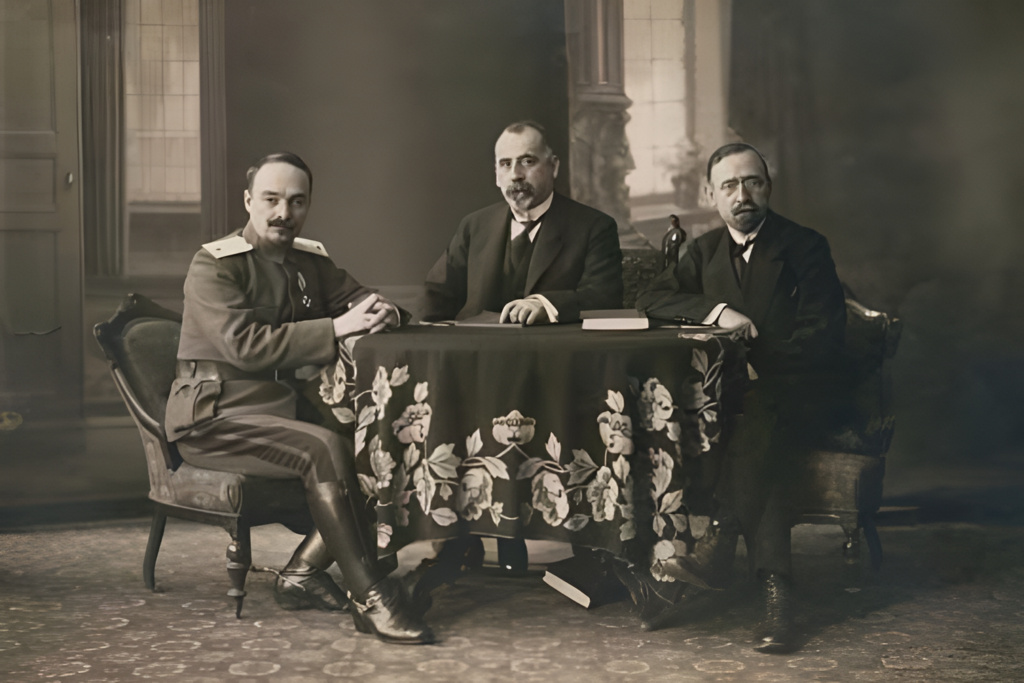
Ivan Lukov, Andrey Lyapchev, and Simeon Radev during the negotiations for the 1918 Armistice of Thessaloniki
PHOTO wikipedia.org
The Bulgarian journalist and diplomat points out that many Albanians were among the early supporters of Giuseppe Garibaldi in Italy. He cites the prominent Italian statesman and Prime Minister Francesco Crispi as an example, describing him as being of Albanian descent and a close friend of the Bulgarian people.
Simeon Radev also highlights the widespread participation of Albanians in the Greek national liberation movement of 1821.
The author also emphasises the high level of education among Albanians and their love of learning. He recalls that many of his classmates at the Imperial Lyceum in Constantinople were hardworking and exceptionally gifted.
Simeon Radev also highlights the attitude of Albanians towards Bulgarians. He notes that Albanian political figures were well-disposed towards the Bulgarians. According to Radev, they viewed the resolution of the Bulgarian national question, whether through autonomy for Macedonia or its incorporation into Bulgaria, as a step that would also facilitate the resolution of the Albanian Question by detaching these territories from the Ottoman Empire.
In his memoirs, Simeon Radev also focuses on the Young Turk Revolution and its main centre of activity, Salonica, where numerous Albanian activists gathered.
Simeon Radev can therefore be regarded not only as a Bulgarian journalist, diplomat and historian, but also as one of the Bulgarian intellectuals with the deepest knowledge of Albania and the Albanians in the first half of the 20th century.
Read also:
Edited by Vesela Mancheva
Translated by Kostadin Atanasov
This publication was created by: Kostadin Atanasov