Author
Vesela Krasteva
News
A Lesson on Bulgaria... with the students of Hristo Botev School in Bratislava
How did Bulgaria show Slovak children its ancient history?
Sunday 15 February 2026 15:45
Sunday, 15 February 2026, 15:45
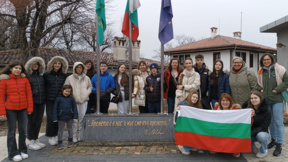
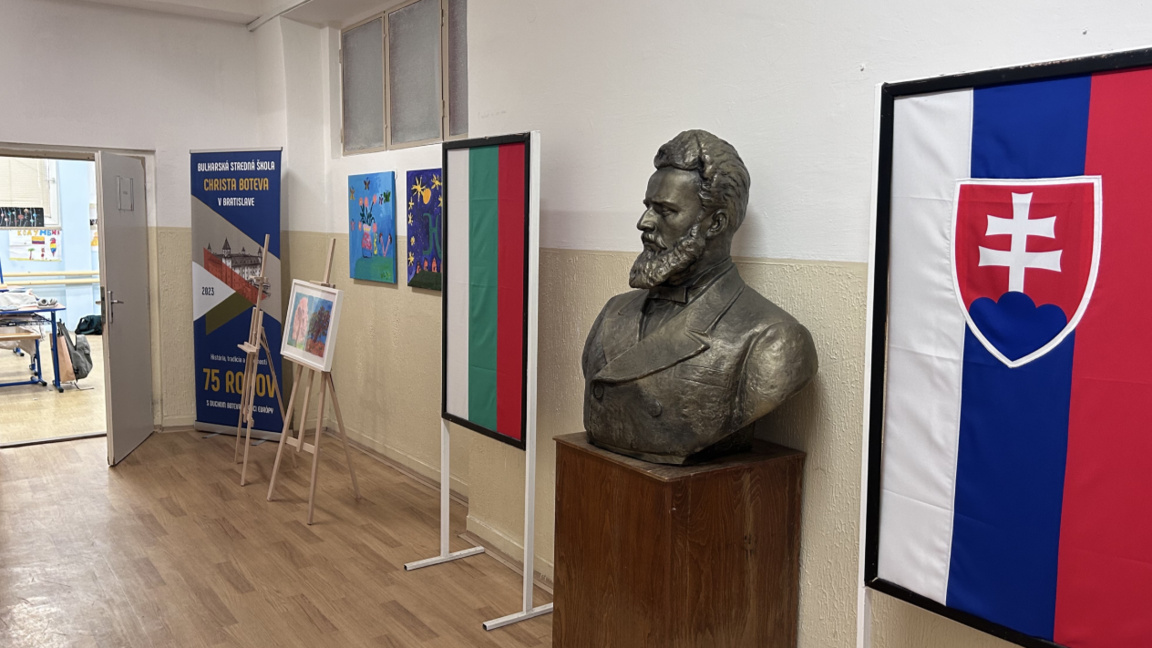
PHOTO "Hristo Botev" Bulgarian Secondary School in Bratislava, Slovakia
Font size
Many people know that in 1835, in the Bulgarian town of Gabrovo, National Revival leader and philanthropist Vasil Aprilov founded the first modern Bulgarian secular school, appointing Neofit Rilski as its teacher. But how many of us know that in 1948, nearly 1,000 kilometers away from Bulgaria, patriotic Bulgarians - wishing their children to know and cherish the Bulgarian language, culture, and traditions - established two Bulgarian state schools that continue to operate to this day?
These are the Bulgarian Secondary School “Dr. Petar Beron” in Prague, the Czech Republic, and the Bulgarian School “Hristo Botev” in Bratislava, Slovakia. Today, they are the only Bulgarian state secondary schools abroad.
The “Hristo Botev” School is also the only Bulgarian school in Slovakia, where approximately 1,400 Bulgarians live. Until 1995, it covered only the primary stage of Bulgaria’s education system (up to 7th grade). It later transformed into a secondary school and adopted Slovak curricula as well, allowing students today to graduate with so-called dual diplomas.
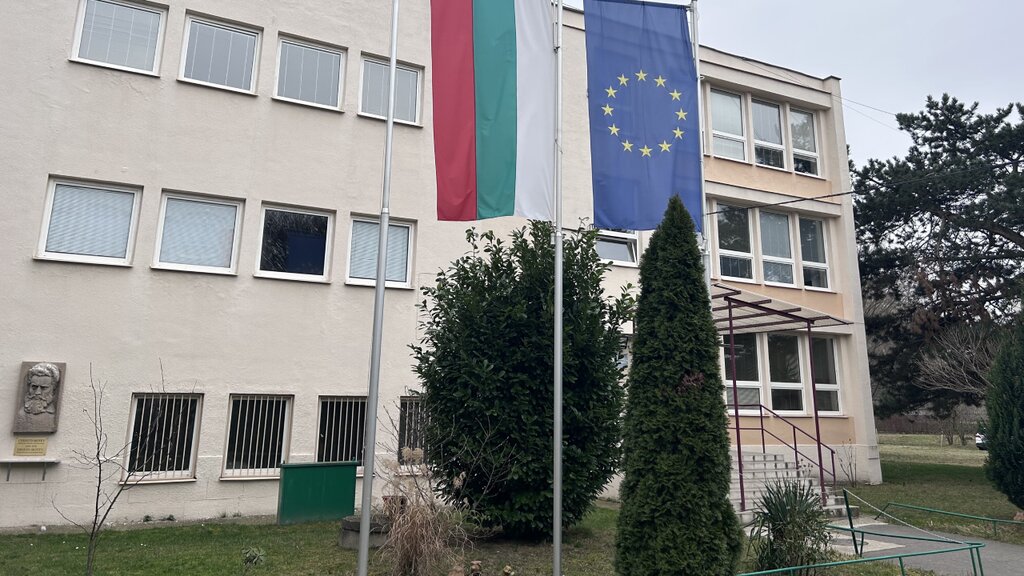
PHOTO "Hristo Botev" Bulgarian Secondary School in Bratislava, Slovakia
Nearly 90 students are enrolled this academic year, Director Nikolay Yordanov told Radio Bulgaria. A significant number of them are “pure” Slovaks. “We have children of Ukrainian and Russian origin, children with Bulgarian grandparents. We even have a student whose mother I taught 13 years ago when I first arrived here,” the school principal explains. The conclusion is clear - there is genuine interest among locals in Bulgaria.
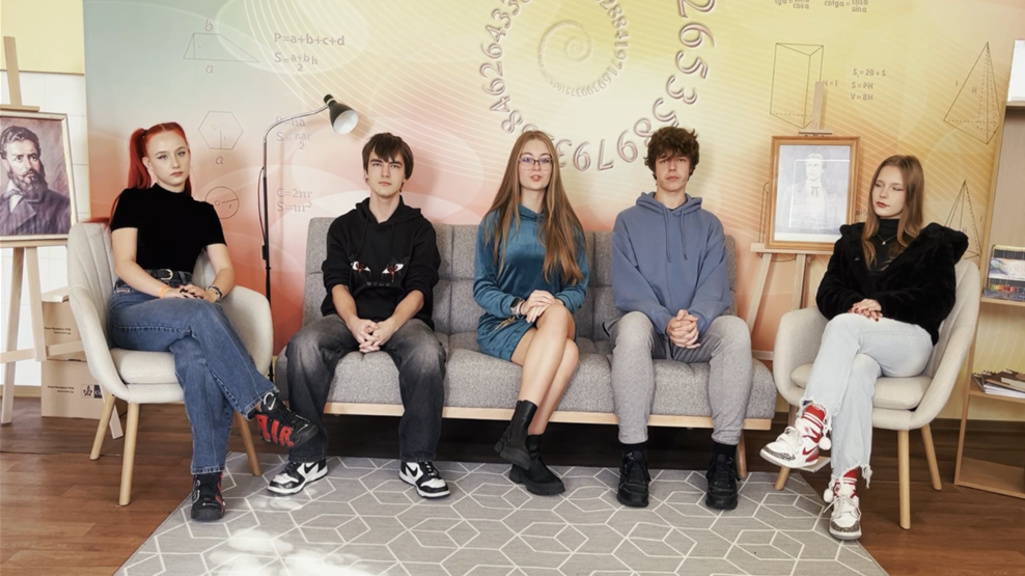
PHOTO "Hristo Botev" Bulgarian Secondary School in Bratislava, Slovakia
“It was a true joy for me to visit Bulgaria,” says student Hristian Shinski, who traveled to the country last year under the Ministry of Education’s National Program “Bulgaria - Educational Routes”. “One of the places that impressed me most was the Botanical Garden in Balchik. From the very entrance you feel a special atmosphere - the scent of the sea, fresh air, and an incredible variety of plants. Every path leads to new discoveries - cacti, rare flowers, terraces, waterfalls, and trees from different continents. I was especially impressed that the garden is connected to history, to the Palace of the Romanian Queen Maria, located there. Everything is combined in a magical way - architecture, nature, and sea. This walk showed me how beautiful and rich Bulgaria is. The Botanical Garden in Balchik will remain in my heart as a symbol of beauty and the Bulgarian spirit.”
The students from Bratislava joined Radio Bulgaria’s initiative “A Lesson on Bulgaria” and shared their experiences from Bulgaria’s Northern Black Sea coast in the summer of 2025. Their photos and impressions have been compiled into a video:
“You know, Bulgaria is deeply intertwined in the history of Slovakia,” says school principal Nikolay Yordanov. “Let’s begin with the Moravian mission of Cyril and Methodius. Later, Bulgarians came here after World War I - they are well known as the first Bulgarian gardeners. Slovaks have very warm feelings toward Bulgarians and toward Bulgaria - not just because of summer holidays spent on the Black Sea in recent decades, but in general. They see us as good neighbours, very good people, and the relations between Bulgarians and Slovaks are truly benevolent. Most Slovaks who enroll their children in our school are also interested in our traditions, because the school here is a temple of Bulgarian customs and traditions. Like any Bulgarian school abroad, this is a main goal for us. And since we are in Slovakia, we also make comparisons between Bulgarian and Slovak traditional holidays and customs.”
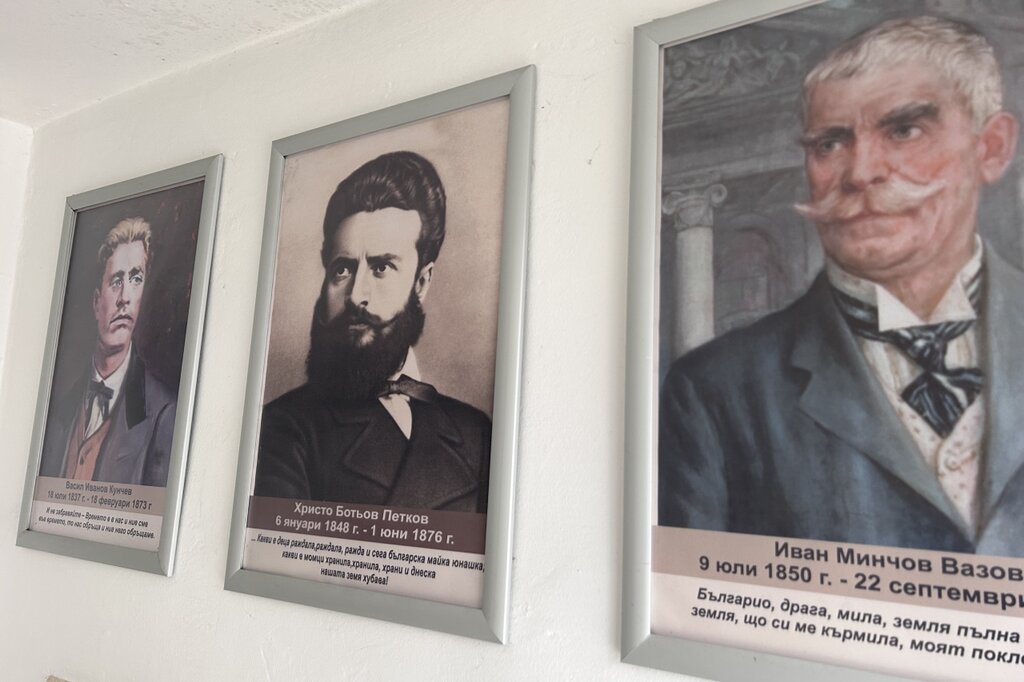
PHOTO "Hristo Botev" Bulgarian Secondary School in Bratislava, Slovakia
According to Yordanov, the “Hristo Botev” School in Bratislava is today a supporter of the Bulgarian spirit within the traditions of the 21st century. As for the similarities between the two countries - “How could it be otherwise? We are Slavic peoples,” he says. He also mentions that the same architects designed Bulgaria’s largest theater - the Ivan Vazov National Theatre in Sofia - and the Slovak National Theatre in Bratislava. The differences, he adds with a smile, often amuse Bulgarians, and he gives an interesting lesson in semantics related to the complex Slovak language with its seven grammatical cases and 48 letters.
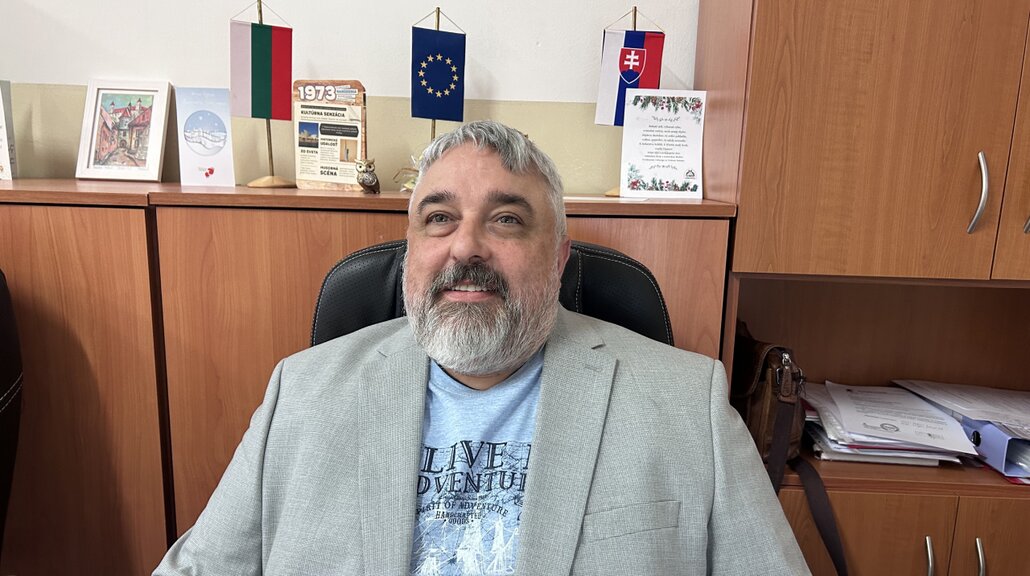
Nikolay Yordanov
PHOTO Embassy of Bulgaria in Bratislava, Slovakia
“There are many words that also exist in Bulgarian, including some archaic ones we no longer use. However, many of them have different meanings in Slovak. For example, ‘pozor,’ which in Bulgarian means ‘shame,’ means ‘attention’ in Slovak. The same goes for ‘divatsi’ - in Slovak it means ‘audience,’ while in Bulgarian it has a completely different meaning. The word ‘stolitsa’ (capital city in Bulgarian) in Slovak is linked to a medical term. For ‘capital city,’ they use ‘Hlavné mesto’- main city.”
Nikolay Yordanov arrived in Slovakia’s capital in 2013 as a teacher seconded by Bulgaria’s Ministry of Education, teaching mathematics, physics, and IT at the “Hristo Botev” Secondary School. After completing his four-year term, he was appointed as a local teacher on the Slovak side, and since August 2023 he has been the school’s principal. Today, the team numbers 23 people, 18 of whom are teachers.
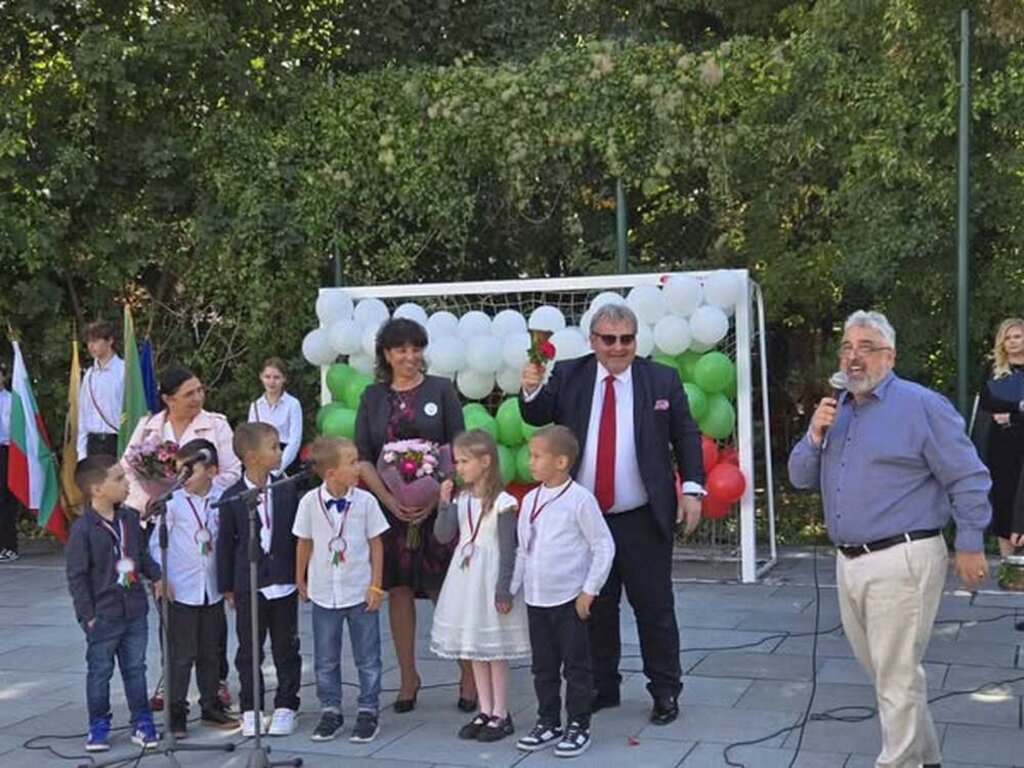
PHOTO Embassy of Bulgaria in Bratislava, Slovakia
Last year, students from the Bulgarian school traveled to Bulgaria for the first time with financial support from the National Program “Educational Routes.” The initiative was led by two teachers at the school - Petya Mihaylova Gocheva and Snezhana Kostova.
Petya Gocheva, a history and geography teacher, says she initially feared teaching Bulgarian history to children without Bulgarian roots, but today she is convinced: “They get fired up too, and I love that. We are unity in diversity!” Her decision to work abroad was inspired by an emotional encounter with Bessarabian Bulgarian children.
“The moment I walked in the classroom and started speaking, the children burst into tears. They came up to me, touched my hands, looked into my eyes, and wanted me to keep telling them more and more - at that moment, I knew I wanted to work within a Bulgarian community abroad.”
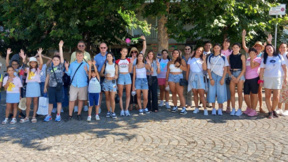
Last June, she and Snezhana Kostova brought a group of 20 students from grades 2 to 11 to Bulgaria’s Northern Black Sea coast. The children visited the Palace and Botanical Garden in Balchik, Durankulak and Lake Durankulak, and the Ovech Fortress near Provadia. They stayed at the Albena resort.
PHOTO Embassy of Bulgaria in Bratislava, Slovakia
“Everything looked like a painting,”
recalls Viktoria Hrushkova. “The sun was shining brightly, the sea sparkled
like a mirror, and the air smelled of salt and summer. Each sunset looked
different - sometimes pink, sometimes golden. I felt free there. This trip will
stay forever in my heart.”
David Pavlik was impressed by the Hamangia culture in Durankulak: “You imagine people who lived there more than 6,000 years ago. Besides its ancient history, the place is incredibly beautiful. I saw herons, cormorants, and even pelicans. As a Slovak, it was unforgettable to see how rich Bulgarian culture is from ancient times.”
“It wasn’t an excursion, but practical education,” says Petya Gocheva. “For Slovaks, the sea is a dream - they don’t have one. But these places are also connected to history and geography.Ovech Fortress in the area of Provadia is something that we have in abundance in Slovakia - fortresses and castles - but we have spent hours discussing why there are not so many fortresses and castles in Bulgaria. It is precisely this feudal fragmentation that existed in Western Europe which was absent in Bulgaria due to centralization. Lake Durankulak, which is home to many birds and various biological species, was important for our colleague in biology and chemistry, who was also delighted by what she saw. These were attractive spots for the children.”
Petya Gocheva excitedly recounts the very beginning of this educational journey:
PHOTO Embassy of Bulgaria in Bratislava, Slovakia
“At Danube Bridge near Ruse we waited for about an hour, and the moment we crossed the border and they saw the sign ‘Bulgaria,’ they started singing ‘Edna balgarska roza.’ Such joy overcame them, such enthusiasm at crossing the border into the country they constantly read about, write about, study, and live through - through the Bulgarian language and Bulgarian culture. There was nothing that did not impress them - from the sand and the sand figures they made as competitions along the beach, to their wide-open eyes every time they heard about six millennia of culture, to the beauty of ‘The Palace’ in Balchik, which they had imagined differently, and the stone building that they said seemed as if it were singing to them…”
“When I first saw Ovech Fortress, it seemed like a fairy-tale castle to me. The path upward was steep, and every step brought me closer to the past,” Ema Dobyasheva tells us. “From the top, the view was incredible - the town looked small, and the sky enormous. I felt free, inspired, as if time had stopped for a moment and I was part of history. This journey made me feel closer to Bulgaria and its inspiring culture.”
PHOTO Embassy of Bulgaria in Bratislava, Slovakia
The group from Bratislava celebrated the birthday of one of the children precisely at Ovech Fortress, and some of his relatives even arrived from Burgas to see him. Sharing the experience with friends is something that will remain part of the students’ memories.
“Learning through experience - that is what these ‘Educational Routes’ achieve. And I would by no means say that this was just a trip to the seaside. No, there was the moment with the sea, of course, but everything else the children saw was truly important for them,” the teacher says.
“When we were in Bulgaria, what impressed me most was the home of Queen Mariа in Balchik. The house was not large or overly luxurious, but rather quiet and authentic. It felt as if everything inside preserved memories. I was most impressed by her bathroom - it had a stone bathtub and a small window facing the sea. I imagined how she once stood there, looking at the same sea, having time simply to breathe. I don’t know why, but this place made me feel very calm - not like history from a textbook, but like something you truly feel.”
The history that helps us feel ourselves awaits the students of the Bulgarian school Bulgarian School "Hristo Botev" again in 2026. Once more in the month of June, but this time they will see the beauty of Bulgaria’s Southern Black Sea coast.