


News
Radio Bulgaria draws a true map of Bulgaria on the world map
Through BNR’s multilingual program, Bulgaria can invest in its future, says the Director General of the public radio, Milen Mitev
Monday 16 February 2026 13:49
Monday, 16 February 2026, 13:49
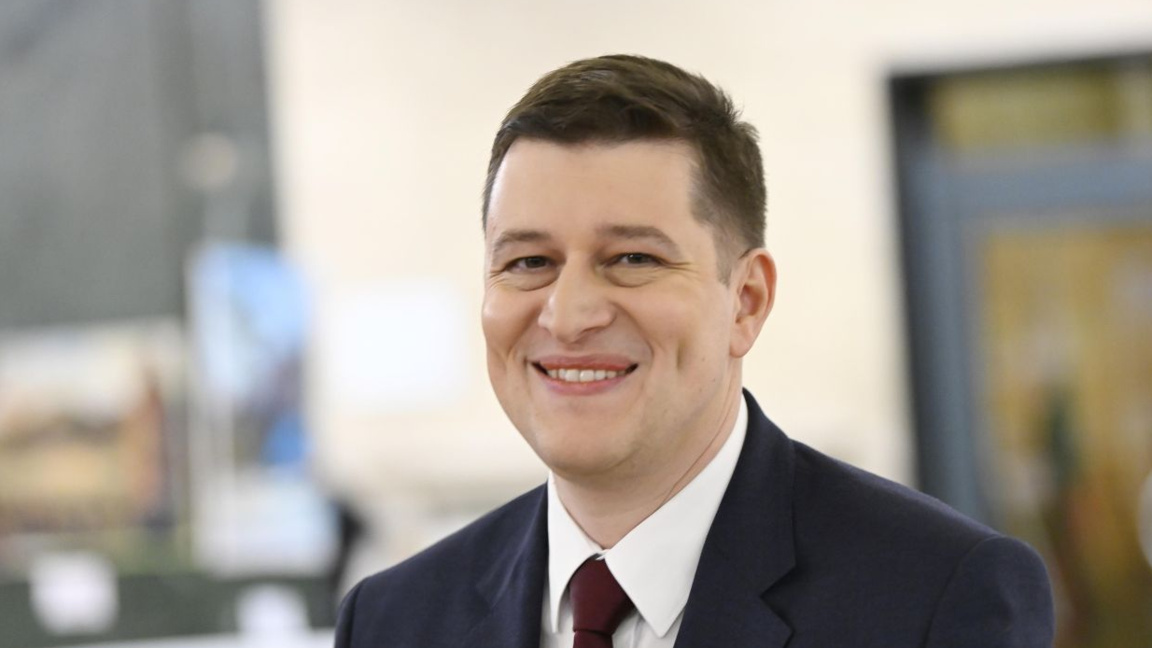
BNR Director General Milen Mitev
PHOTO BGNES
Font size
Radio Bulgaria has been part of the 91-year history of the Bulgarian National Radio for nine decades. On the occasion of the 90th anniversary of the public radio’s multilingual program, which creates online content in 11 languages - for Bulgarians around the world and for foreigners interested in our homeland - we turn our gaze to the future of linguistic diversity in public media. “All public media, to a greater or lesser extent, carry out such activities and have foreign-language broadcasts,” says BNR Director General Milen Mitev.
The fact that the Bulgarian National Radio’s multilingual program has withstood all kinds of changes - political, technical, administrative - is remarkable… But what is Radio Bulgaria to Milen Mitev – not so much as a manager, but as a consumer of media content?
“Happy holiday to all colleagues at Radio Bulgaria, as well as to all listeners, readers and friends of Radio Bulgaria, because it now uses all possible channels to reach its audience. It is symbolic that very soon after the establishment of the Bulgarian National Radio as an institution, foreign-language broadcasts began, and the history of Radio Bulgaria is almost as long as the history of the entire National Radio. This shows that even in those early years, the people who led the Radio and set the tone for its development - what today we would call strategy - realized how important it was for the Bulgarian National Radio to speak in foreign languages and to reach the whole world.”
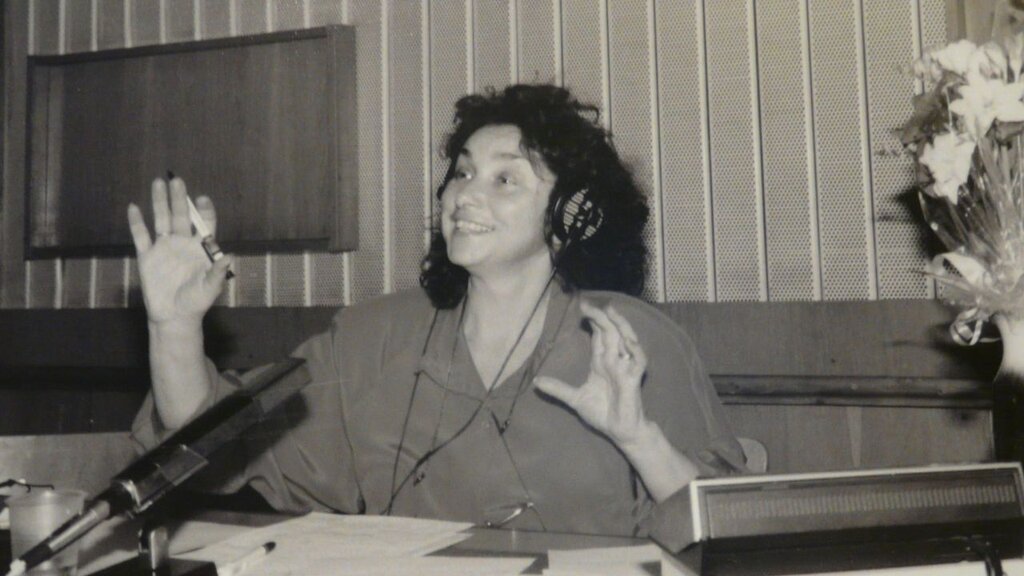
Bozhana Dimitrova
PHOTO Museum of the History of Radio in Bulgaria “Prof. Dr. Veselin Dimitrov”
Milen Mitev shares a story that is particularly moving for him: a few years ago, Bozhana Dimitrova, an emblematic voice of the Radio, gave him a radio receiver said to be her contemporary. “On its dial were Radio Sofia, Radio Stara Zagora, and Radio Varna. Even before the outbreak of the Second World War, Bulgaria, through its National Radio, was clearly placed on the map of Europe with three radio programs. This shows there was strategic thinking that we needed to present ourselves to the world and speak to the world. Today, Radio Bulgaria is something much more. We live in a time when people move freely: they work and live in different places; borders are far fewer now than when Radio Bulgaria started. In a sense, Radio Bulgaria draws on the world map another, true map of Bulgaria-– not limited by geographical or political borders, but Bulgaria wherever people who feel Bulgarian are located.”
Milen Mitev is very actively involved in the work of the European Broadcasting Union (EBU). In December 2023, he was elected a member of the EBU Executive Board - the first Bulgarian representative in the Union’s highest governing body - and since March last year he has been Chair of its Legal Committee. These positions certainly provide insight into the role of foreign-language programs in European public media: how they are developing, what functions they perform, what is their place?
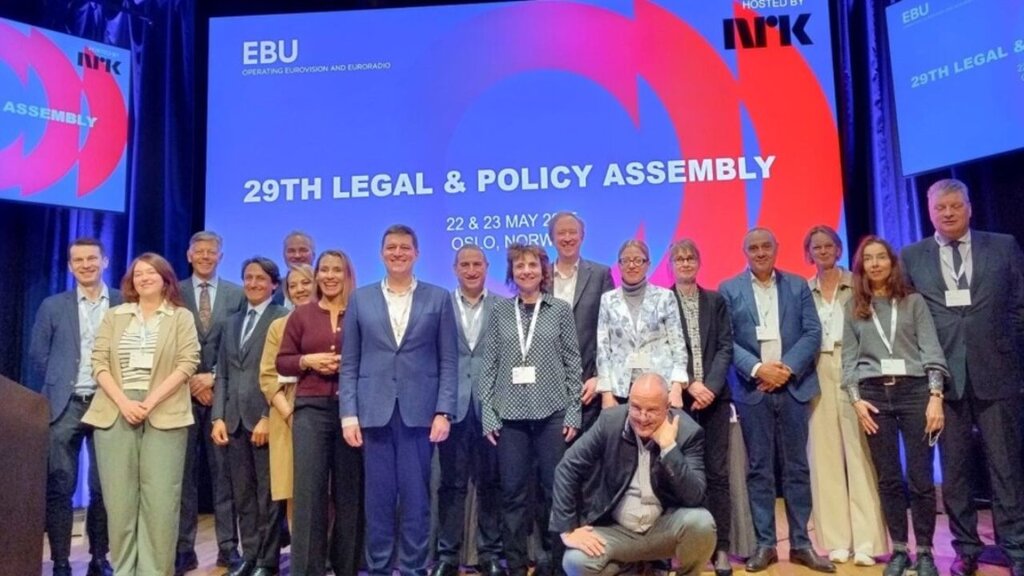
The Legal Committee of the European Broadcasting Union for the 2025–2027 term
PHOTO EBU
“Europe has incredible cultural diversity, and precisely at this time, when borders increasingly exist only in our minds and are very easy to cross, this cultural diversity is shifting in a way that can create new horizons and new achievements - in science, in culture, and in the overall development of European societies. It is very important that public media be able to speak to a wider audience. I think all our colleagues in Europe understand this, especially since some of them have significantly greater resources than we do. We know that in many parts of the world people rely heavily, for example, on the BBC World Service - a program created for the whole world, for people outside the United Kingdom. In fact, the function of foreign-language missions can be seen in two directions: on the one hand, to maintain a close connection among all people who belong to a given community, regardless of where they are in the world; and on the other, to tell the whole world about the country. That is what Radio Bulgaria does in 10 foreign languages, in addition to Bulgarian, and in this way we can reach both our compatriots and anyone interested in learning more about our country.”
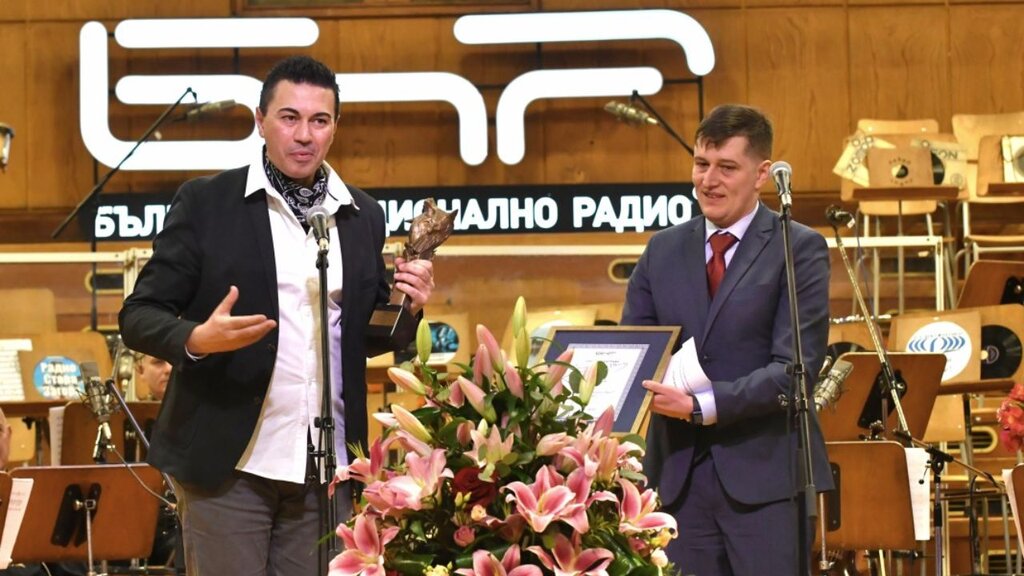
Milen Mitev, Director General of Bulgarian National Radio, presents an award to Krasimir Martinov, Editor-in-Chief of Radio Bulgaria
PHOTO Evgeni Dimitrov
Does this mean that foreign-language programs across Europe are an undisputed value?
“Of course!” Milen Mitev exclaims. “And I even think they will become an ever greater value, because Europe has an attraction for many people from different parts of the world. Without going into details about migration, where there are plenty of disputes about whether Europe should have opened up to migrants to such an extent, the facts are that Europe’s ethnic composition is becoming increasingly diverse. It depends on us - Europeans - whether this will turn into a disadvantage or an advantage. Public media must try to help the societies we serve to turn this diversity into an advantage.”
Radio Bulgaria is undoubtedly an important link between the homeland and our compatriots around the world, as well as with many foreigners. There are known cases in which people have even decided to visit Bulgaria thanks to information they learned from Radio Bulgaria. In what direction does the BNR Director General see the potential for the program’s development?
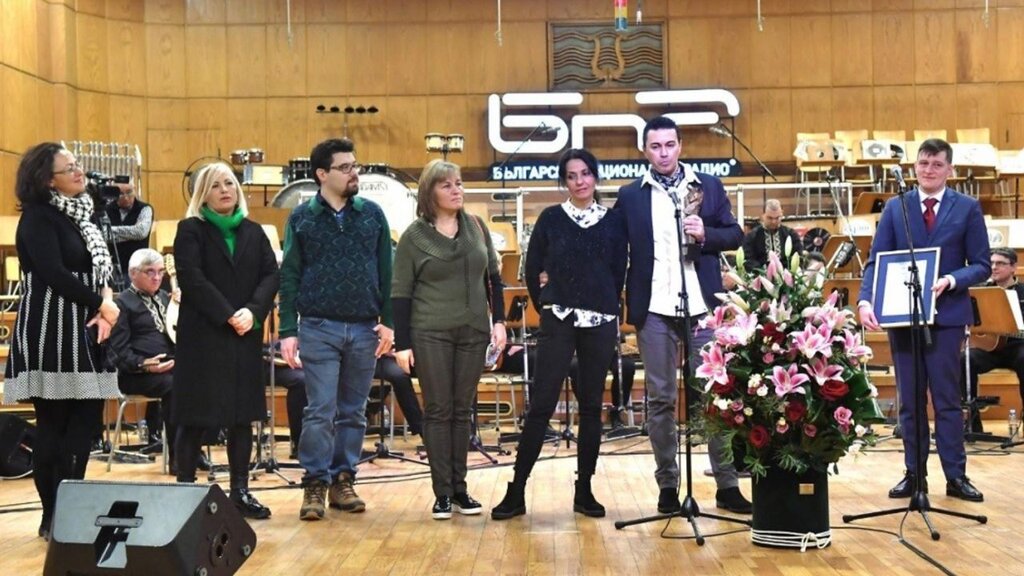
PHOTO BNR
“The potential of Radio Bulgaria is enormous. As head of the Radio, it pains me somewhat that we often speak of potential that is not always realized, usually due to insufficient resources. Unfortunately, like many of our colleagues in public media, we are forced to work under conditions of underfunding and limited resources… We prioritize some things over others, which often delays our development plans and many good ideas coming from colleagues. There is no doubt that we can do more for Bulgarians abroad.”
Milen Mitev mentions recently held negotiations to create a regional program for broadcasting BNR news and programs aimed at Bulgarians in the Moldovan region of Taraclia: “This is one of the places where a very compact Bulgarian population lives - in the Bessarabian region, in the territory of Moldova and Ukraine. I would very much like these people to have the opportunity to listen to news and programs in Bulgarian, because at the moment they are provided with content in Russian, Ukrainian, and Romanian, but not in Bulgarian. In this way, on the one hand, we will be able to maintain a closer and more vibrant connection with Bulgaria for them, and on the other, we will ensure that they receive verified information and quality news bearing the brand of the Bulgarian National Radio, which is, of course, also in the interest of the Moldovan side.
That is why we received support from the Moldovan authorities. Together with Deputy Minister of Culture Ashot Kazaryan, we visited Chisinau, where we met with the Moldovan Minister of Culture, members of parliament, and the Director of Moldovan Radio and Television, who expressed support for the idea of applying for a frequency that would include Bulgarian-language radio broadcasting in the Taraclia region. The good thing is that this region is not very large and is relatively flat, which means that with a single transmitter we can largely cover the Bulgarian-speaking population living there.
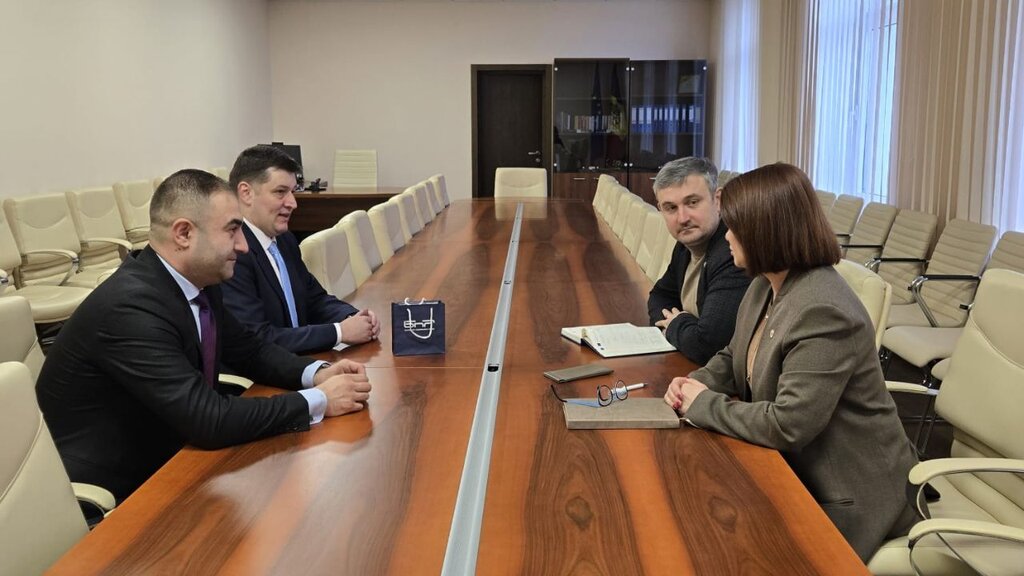
Ashot Kazaryan and Milen Mitev, Director General of Bulgarian National Radio, with MP Natalia Davidovich and Vlad Țurcanu, Director General of Teleradio Moldova.
PHOTO Ministry of Culture
Certainly, if we succeed in securing such a frequency, we will need to fill it with content. We will seek partnership with local journalists from Moldova, but the main part of the content, especially at the beginning, will have to come prepared from our side. And here, of course, Radio Bulgaria will play an important role, because you already create content focused on topics that concern our compatriots abroad, which I believe will be very interesting for them. I very much hope we can bring this project to a successful conclusion, because I believe it will benefit BNR, the Bulgarian state, and above all the Bulgarians living in Moldova and parts of Ukraine. In fact, the distance between Taraclia and Bolhrad, which is in Ukraine and also has over 80 percent Bulgarian population, is under 50 kilometers.”
The BNR Director General is positive about the idea of restoring Radio Bulgaria’s ability to be a “radio with a voice.” It is known that the program’s terrestrial broadcasting was discontinued in 2012, and today only the Turkish-language team broadcasts on air, mainly on the waves of BNR Kardzhali.
“Radio Bulgaria will certainly be a radio with a voice. We are already moving in that direction with the revival of podcasts, which are voice and allow people to listen to Radio Bulgaria, not only to read materials online. All of this, of course, also depends on budgetary resources, because the major problem at the moment is that many of the language departments have very small teams. That is why Romanian currently does not have regular podcasts – we simply do not have sufficient human resources to sustain them, and there should be more audio broadcasts. Whether they are on air or online, there must certainly be sound, because above all we are radio, and this is a very valuable way of directly reaching the audience.”
Milen Mitev explains that this is also why BNR’s management is considering on-air broadcasting in Moldova:
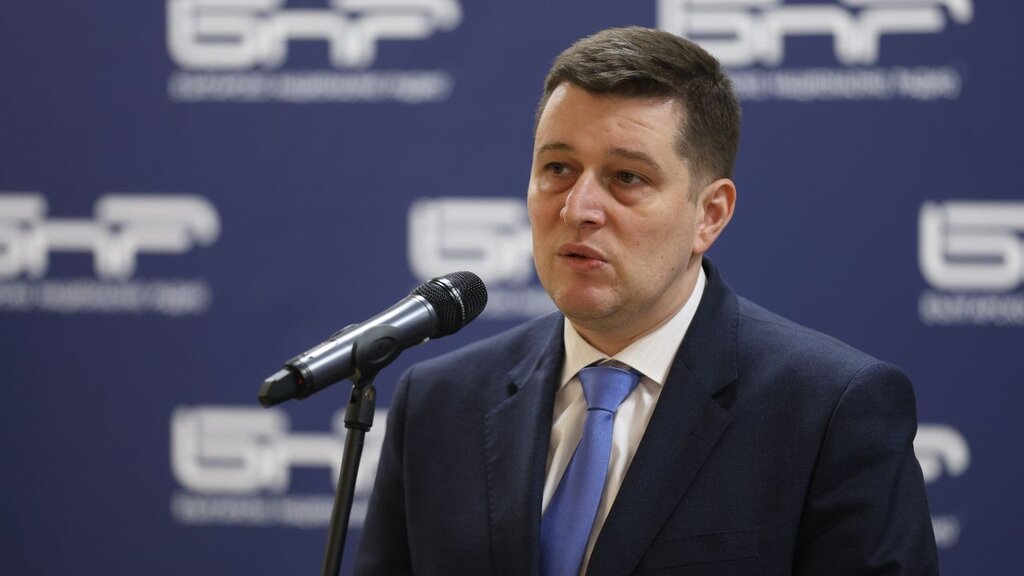
PHOTO BTA
“The added value of terrestrial broadcasting is that you do not have to make any effort to reach it - it reaches you. You just have to press the button on the radio receiver. We do not underestimate online information, which has another convenience – people can find it whenever they wish, at a time convenient for them. But we must also provide the opportunity for Radio Bulgaria to reach its audience through voice. I believe this will continue to develop, but naturally we depend to a large extent on the funding model. I would not even say so much on the amount, because the issue is not how much money the Radio receives, but what it receives it for. For several years now there has been talk of amendments to the Radio and Television Act and to the funding model. Unfortunately, political instability has hindered us greatly. It is important for the Radio to have a clearly defined mission and to receive funding to fulfill that mission. And once Radio Bulgaria becomes part of that mission and this is properly anchored in the law, then we will be able to receive adequate funding to develop audio programs and to think about how to reach our compatriots abroad not only in the Bessarabian region but also in many other places where compact Bulgarian communities live. Because this is an investment - through Radio Bulgaria and through the Bulgarian National Radio, the Bulgarian state could invest in its future, in its connection with Bulgarians around the world.”
At the end, the BNR Director General addresses a special wish to the team of Radio Bulgaria on our 90th anniversary:
“Above all, I want to wish all colleagues to continue putting their heart into their work. Because when they do, I believe the audience feels it. That is why this audience continues to trust us and seek us out. I realize that times are not easy. Unfortunately, this is the situation across almost all of Europe at the moment. All public media are under strong pressure to optimize. It seems that the societies we serve realize that we are valuable, but believe we can continue doing the same work with half the resources - which, unfortunately, is not possible. It is important not to allow the voice of public media to be weakened. That voice is a very, very important pillar of any democratic society. We currently face many challenges of various kinds. To guarantee the future of public media, a mechanism is needed to allow adequate funding so that we can continue to attract quality people. Wonderful professionals work at the Radio. I am not sure how long this will continue if the situation with insufficient resources persists for too long, because sooner or later the level will decline – and that must not be allowed.”
Read also:
English: R. Petkova
This publication was created by: Rositsa Petkova