


Author
Yoan Kolev
News
Anti-corruption set to dominate Bulgarian politics, analyst says
Bulgarians abroad favour new protest-driven parties
Wednesday 22 April 2026 16:01
Wednesday, 22 April 2026, 16:01

Parvan Simeonov
PHOTO Stefan Kunchev
Font size
“Progressive Bulgaria”, the clear winner of the parliamentary election, surprised pollsters with its strong showing on April 19.
While not on the scale seen in Hungary, the vote produced a noticeable surge, enabling the party built around former president Rumen Radev to secure enough support at home and abroad to win a parliamentary majority and form a government on its own — a trend opinion polls had failed to capture during the campaign.
Analysts view this outcome as an extension of the protest movement and a broader push for change. Voting patterns among Bulgarians abroad largely mirrored those at home.
“The main feature of voting abroad is support for new, protest-driven parties. That pattern held,” said political scientist Parvan Simeonov of polling agency Myara, a partner of Bulgarian National Radio during the election, in an interview with Radio Bulgaria.
Expectations of Radev are high, with questions over whether his team and policies will meet public demands for integrity in politics, economic growth and a clear pro-European foreign policy.
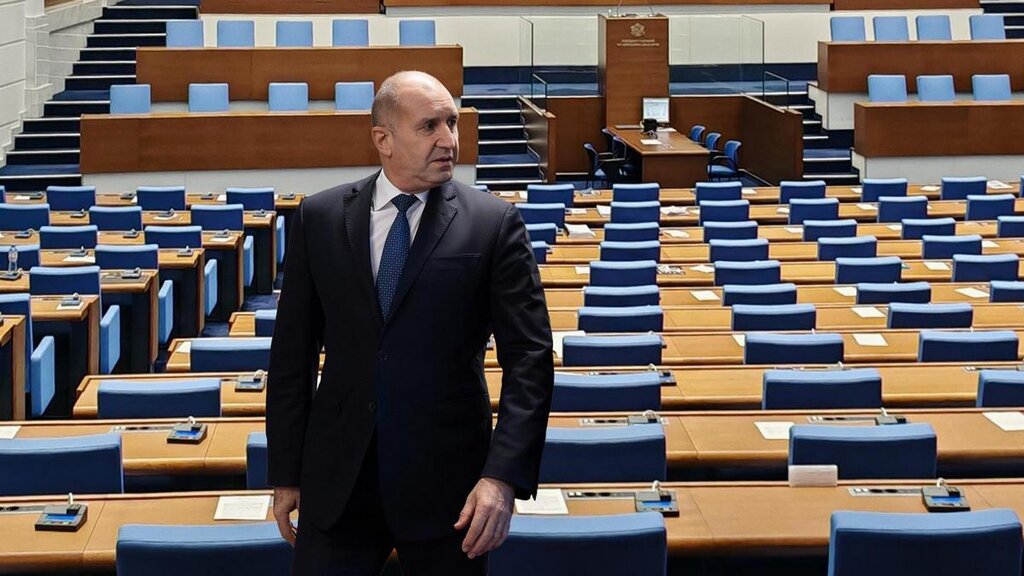
PHOTO BGNES
Radev left the presidency as Bulgaria’s most popular politician, with approval ratings above 50%. Analysts say that part of his electoral success reflects this personal support. There is also a broader trend of voters supporting figures seen as potential 'saviours', although Simeonov is reluctant to apply that label to Radev.
“In this case, he does not really look like a saviour, but rather the outcome of a long-anticipated process — the delayed effect of protest waves in 2020 and 2025, which benefited both Radev and the We Continue the Change–Democratic Bulgaria (PP-DB) coalition. That is why there is little euphoria — he was widely seen as the likely winner,” he said.
Radev has so far struck a measured tone, though one remark stood out: his call for all current caretaker ministers to resign despite his praise for the interior ministry's efforts to curb vote-buying.
“This cabinet is a good example of what might have happened if Radev had to govern with PP-DB — something that now seems unlikely given his majority. But it may also offer a blueprint for how he envisages future governance — aiming for a much broader spectrum,' said Simeonov.

Parvan Simeonov
PHOTO BGNES
He added that a future government led by Radev is unlikely to take a strongly pro-Russian stance, but will instead remain aligned with NATO and the European Union, while maintaining its own positions on issues such as support for Ukraine.
“At the same time, his governing style may resemble that of Simeon Saxe-Coburg-Gotha, who returned from abroad 25 years ago — a more consensus-driven approach, similar to the tone of Radev’s campaign at the start,” he said.
“In the final 10 days, however, the tone shifted — a Russian flag appeared, and paradoxically that worked for both camps. It mobilised PP-DB supporters but also drew votes to Radev that might otherwise have gone to Vazrazhdane or the Socialists. Such an image does not appear by chance — it is a deliberate effect, amplified by PP-DB, who now sound much more restrained towards Radev.”
“That suggests anti-corruption may become the dominant theme in Bulgarian politics, replacing the traditional pro- versus anti-Russian divide that has shaped the country for decades,” Simeonov said.
How Radev will act as a party leader remains to be seen.
Read more:
- Bulgarians abroad look to Radev for security and predictability
- Trust in parties with more nationalistic profile is shifting to new formations
Editing by E. Karkalanova
This publication was created by: Elizabeth Radkova