


Author
Ivo Ivanov
The arsenal of freedom in the April Uprising – part one
How cherry trunks overcame steel
Sunday 26 April 2026 10:09
Sunday, 26 April 2026, 10:09
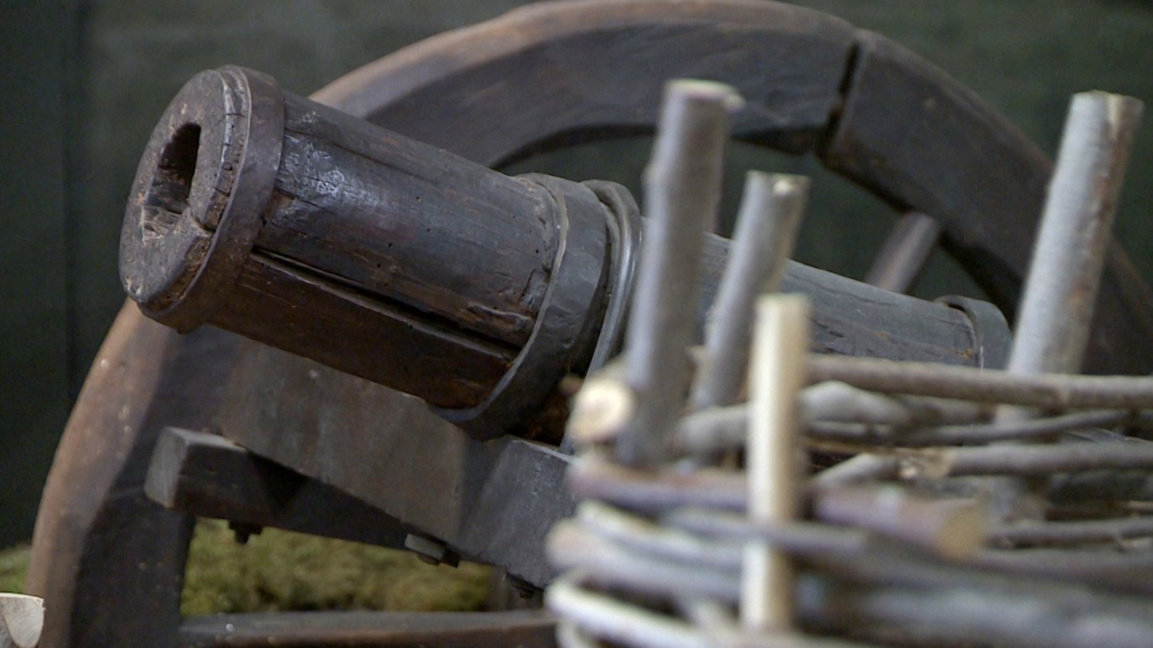
PHOTO Ivo Ivanov
Font size
In 1876, after three months of preparation, the revolutionaries of
the Giurgiu Committee started an uprising against the five-century
Ottoman rule in the Bulgarian lands. The rebellion was bloodily
suppressed in less than a month. But in the international crisis
caused by the so-called Eastern Question, the uprising also raised
the question of the freedom of the Bulgarians. The events led to the
Russo-Turkish War of 1877-78 and the creation of the Principality of
Bulgaria, along with the autonomous region of Eastern Rumelia south
of the Balkan Mountain. In the absence of weapons in their drive for
freedom in 1876, the Bulgarians were so motivated that they created
wooden cannons to confront the regular and modernly armed Ottoman
army.
The April Uprising – a peak in the liberation struggles of the Bulgarians
The idea of developing Bulgarian artillery in the April
Uprising was born in Kotel and came from Ivan Kishelski. As a senior
officer in the Russian army, he wrote "Guide to a Successful
Battle with the Turks", published in 1876. There he developed
the idea that the rebellious Bulgarians should create all three types
of land forces - infantry, cavalry and artillery, says Assoc. Prof.
Dr. Atanas Shopov, director of the Historical Museum in the town of
Panagyurishte, where the center of the Fourth Revolutionary District
in the uprising was located.
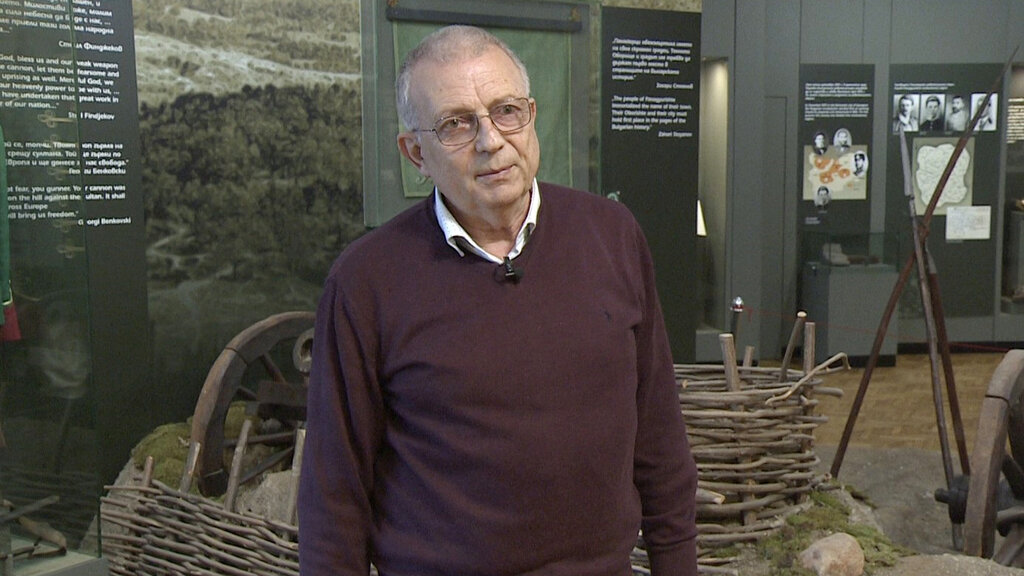
Assoc. Prof. Dr. Atanas Shopov
PHOTO Ivo Ivanov
"When Stoil Findzhikov began the preparation, he very poetically had a prayer for Bulgaria, which found a place in our exhibition: Oh, God, sanctify our weak cannon, which will thunder and give us strength and be heard in Europe. And indeed, the prayer and prophetic words of Stoil Findzhikov that the cannon would be strong and would be heard in Europe came true.
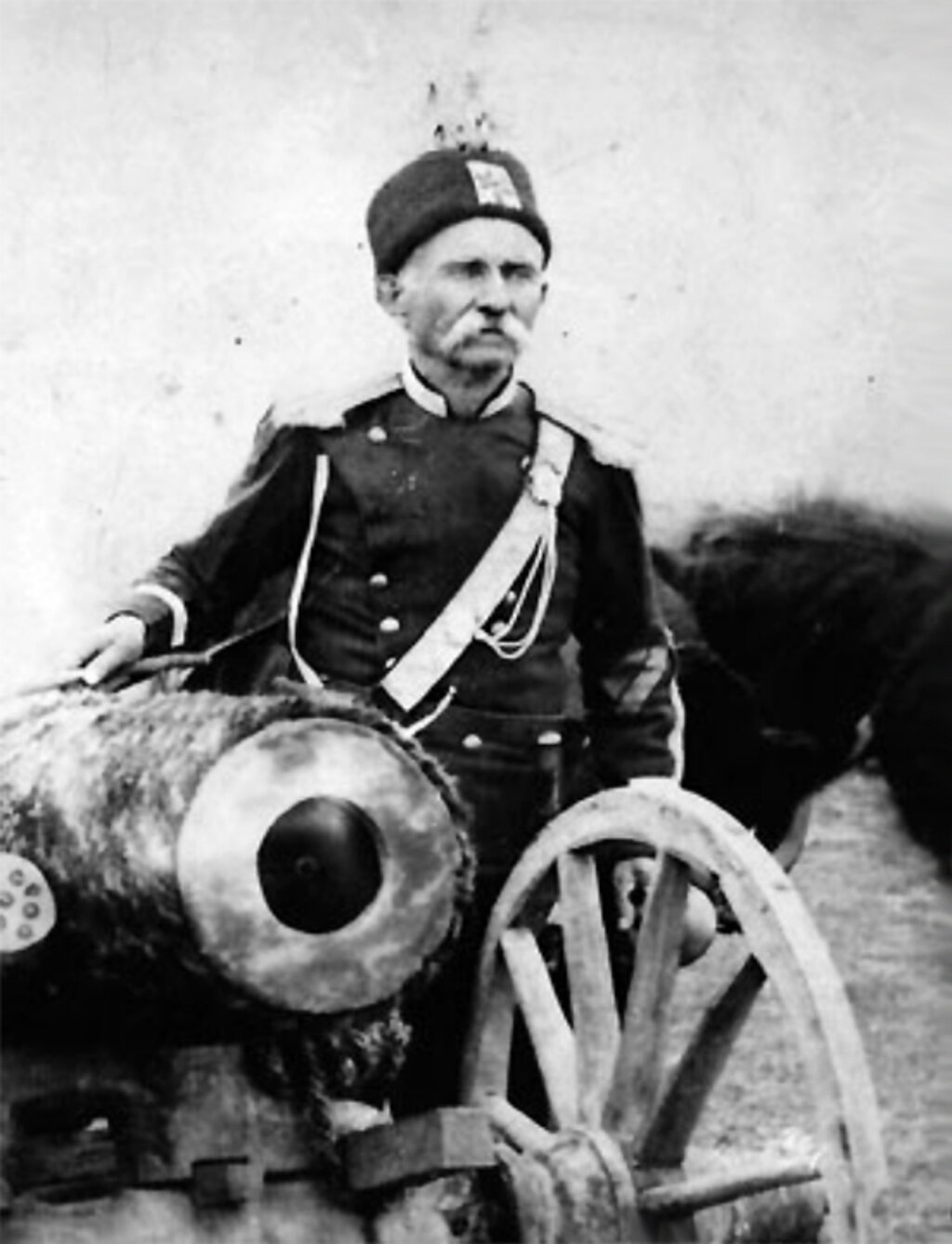
Stoil Findzhikov
PHOTO Historical Museum – Panagyurishte
Indeed, the cherry cannon is a symbol of the idea of statehood, a complement to the building of regular Bulgarian army. And if we look at the cherry cannons made in the beginning, during the tests they scattered. But gradually, under the leadership of Findzhikov and the other masters, they tightened them very well with special metal clamps, coated them and in this way they understood that the cannons could make more than 1, 2, 3 or 4 shots."
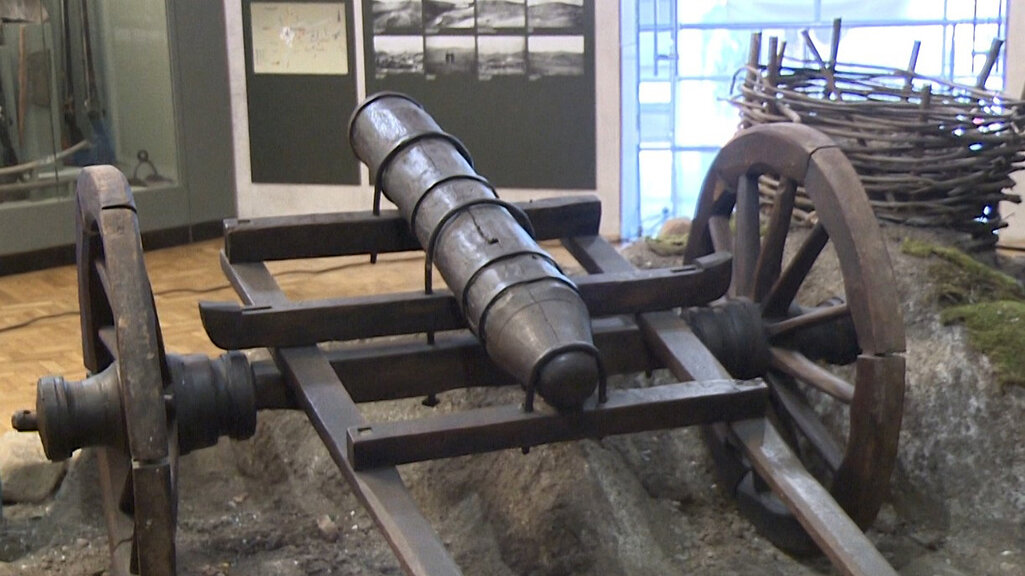
PHOTO Ivo Ivanov
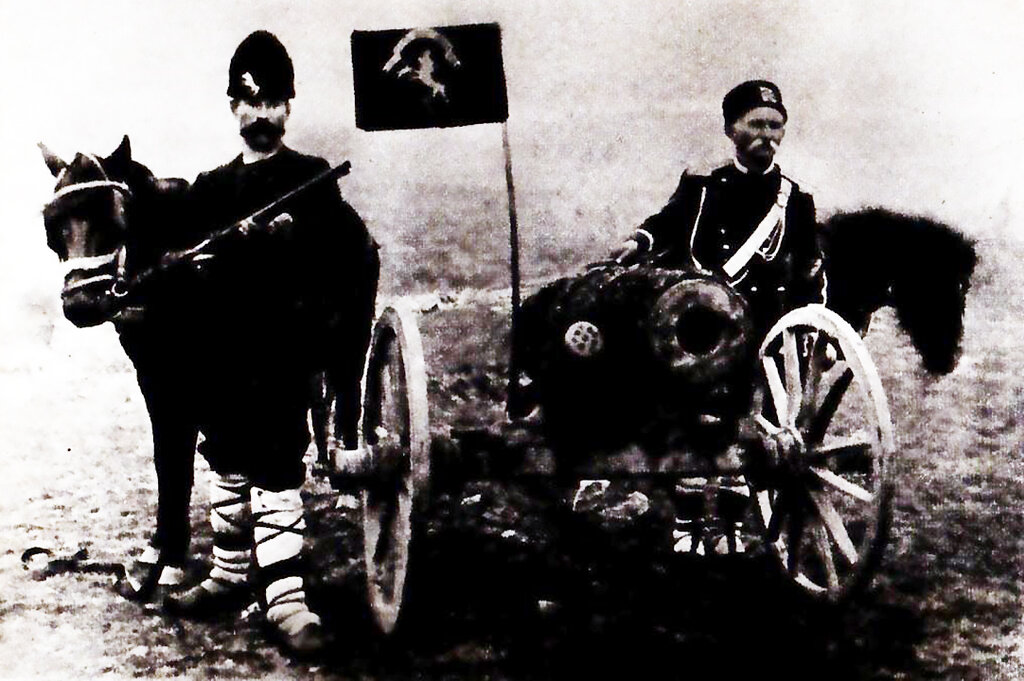
Among the masters of cherry artillery were the ironworkers, gunsmiths and cartwrights in Panagyurishte. Some of them, such as Stoil Findzhikov, Nikola Bimbashov, Atanas Uzunov, had experience working in the Ottoman arsenals in Istanbul. There are data for about 48 cherry cannons. In the modern era, when they had steel "Krupp" artillery guns at their disposal, the Ottomans were amazed when they saw that the Bulgarians dared to fire wooden cannons against them.
Atanas Uzunov and Stoil Findzhikov
PHOTO Historical Museum – Panagyurishte
The
Turks captured over 10 wooden cannons. Several were taken to Edirne
and Constantinople.
"If
we look at the photo taken with the captured cherry cannon in Edirne
- there are 4 people shown there, which is an artillery unit. We have
a standard bearer, a person who commands the process of loading the
weapon, and two who must carry it out," the researcher comments.
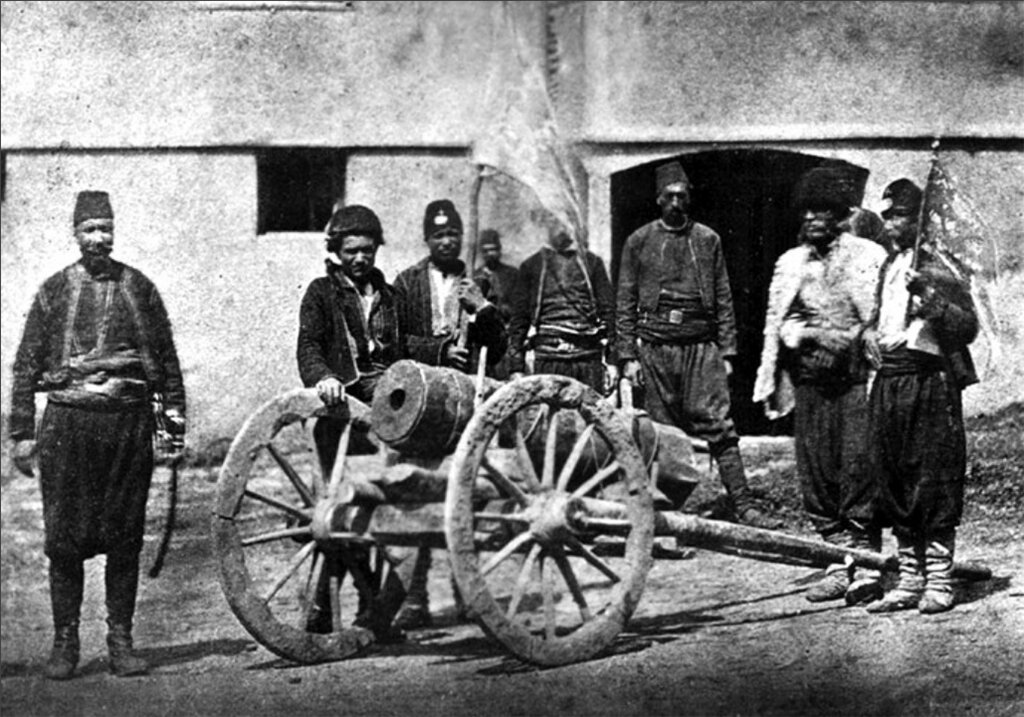
PHOTO Historical Museum – Panagyurishte
According to some authors, the wooden artillery was intended more for a psychological rather than a direct striking effect. It was supposed to inspire courage in the rebels and instill fear in the enemy that the Bulgarians also had artillery.
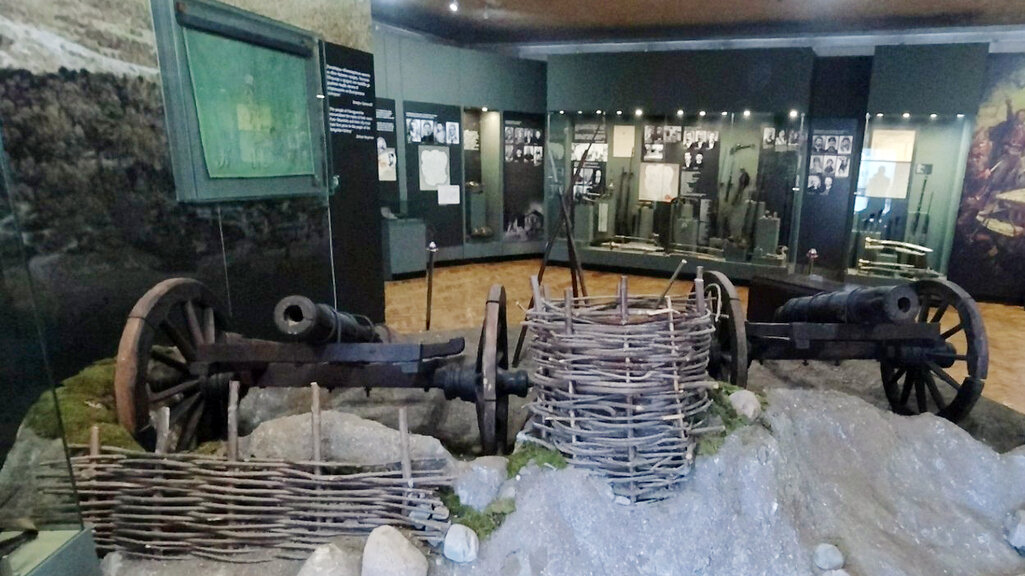
PHOTO Ivo Ivanov
"There is a very interesting question about the cherry artillery - a question with an answer,“ Assoc. Prof. Shopov says. „The professor of literature at the Military Medical School (in present-day Istanbul) told Dr. Hristo Stambolski that any sane person, seeing these cherry cannon, raised against the empire, could assess what the situation of these Bulgarians within the borders of the Ottoman Empire was. And when everyone was crowding to look at the cherry cannon in the Tophane (artillery arsenal), a Turkish woman said that this cannon would bring after it steel cannons, which would destroy the state. And indeed, this is exactly what happened in the Ottoman Empire. The prophetic words of this woman came true."
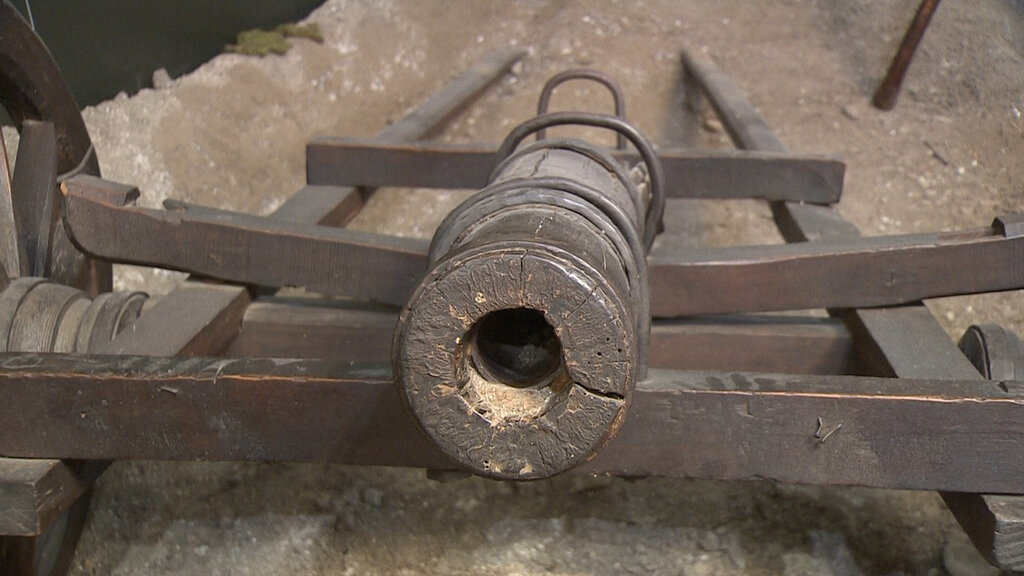
PHOTO Ivo Ivanov
The cherry cannon became an immortal symbol of the April Uprising, because the idea of self-sacrifice in the name of freedom turned wood into a stronger factor than iron. The Bulgarian drive of the National Revival turned the irrationality of Ottoman times and customs into fighting spirit that was decisive for any victory - moral and material. But this was not the end of the Bulgarian wooden revolutionary artillery. During the Ilinden-Preobrazhenie Uprising in 1903 against the Turkish rule in Macedonia and Thrace, once again to the amazement of the Turks and of the foreigners in the Balkans, the Internal Macedonian-Adrianople Revolutionary Organization renewed the shots of the cherry cannons.
The
topic of the arsenal of the Bulgarian freedom fighters during the
April Uprising will be continued. Expect the second part entitled
"Sell
your fields, buy a rifle!", the call of the Bulgarians from
1876.“
See
also:
"The Bloody Letter" heralds the beginning of the April Uprising
This publication was created by: Alexander Markov