


Author
Ivo Ivanov
News
Pencho Slaveykov - one of the first poets of modern Bulgaria
He was born in Tryavna on April 27, 160 years ago
Monday 27 April 2026 11:45
Monday, 27 April 2026, 11:45
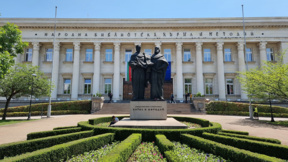
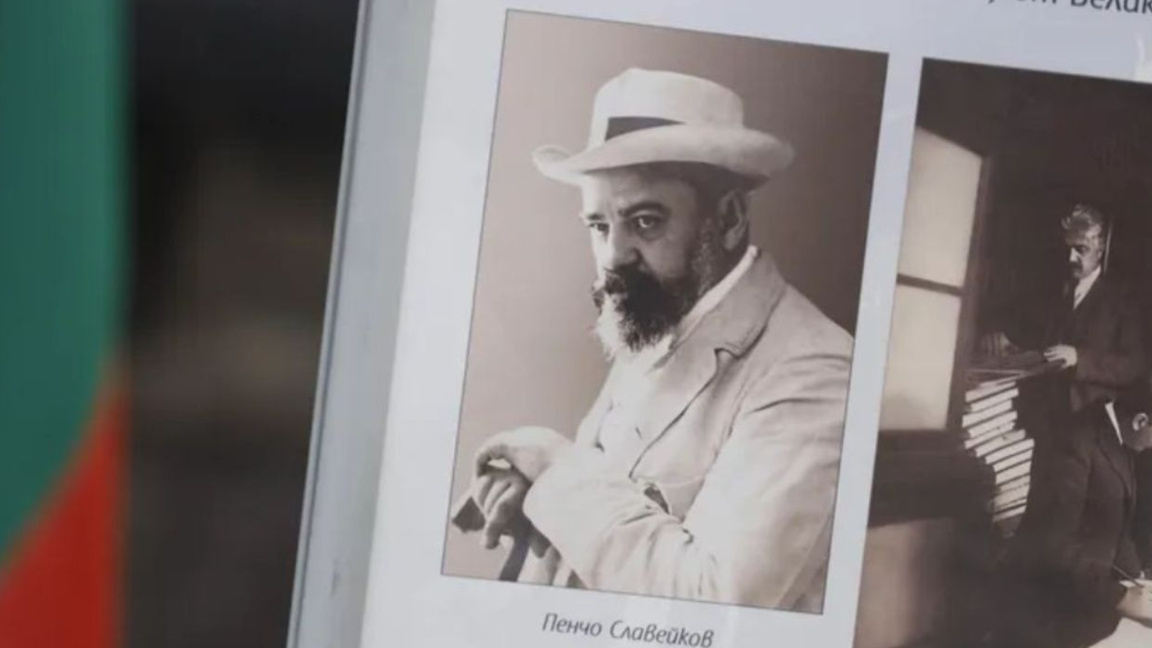
PHOTO BGNES
Font size
“The life of every person is a necklace of joyful and sorrowful days. Such a necklace is worn by every poet as well. And if he wishes to be a sincere interpreter of life, he cannot sing only of sunshine and spring”…With these words, Pencho Slaveykov outlines his vision of the poet’s mission. In 2026, 160 years are marked since the birth of one of the brightest figures in Bulgarian literature.
Pencho Slaveykov was born on April 27, 1866, in the town of Tryavna as the youngest son of Petko Rachov Slaveykov (1827–1895) and Irina Slaveykova, the daughter of a wealthy resident of Tryavna. His family was large, with seven children; among his brothers were the politicians Ivan Slaveykov and Hristo Slaveykov, as well as the publicist Racho Slaveykov.
From an early age, Pencho witnessed the social and political struggles in which his father participated - both against the phanariotes before Bulgaria’s Liberation and later in the debates surrounding the drafting of the fundamental law of newly liberated Bulgaria, the Tarnovo Constitution (1879), according to the documents stores at the archival fund of the Bulgarian National Radio.
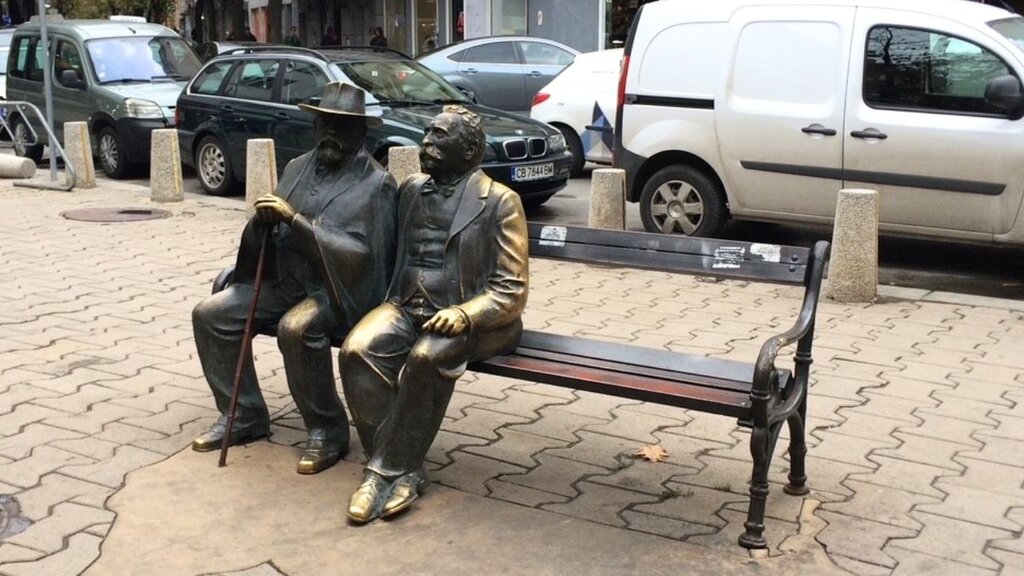
The monument to Petko and Pencho Slaveykov at Slaveykov Square in Sofia
PHOTO Marta Ros
Slaveykov’s school years passed in Tryavna and Stara Zagora and were marked by memories of the liberation struggle. After the Liberation, he continued his education in Sliven, Veliko Tarnovo, Sofia, and Plovdiv.
It was in Plovdiv that severe frostbite suffered while skating on the frozen Maritsa River caused him a prolonged and painful illness that led to nerve paralysis. Treatment in Plovdiv, Sofia, Vienna, Paris, Leipzig, and Berlin remained unsuccessful. This disability left a deep mark on his entire life. The young Slaveykov had to relearn how to speak, write, and walk. Yet this ordeal sharpened his sensitivity and powers of observation, turning suffering into a kind of spiritual teacher that elevated him.
In 1892, he left for Leipzig, where he studied philosophy and attended lectures in other humanities disciplines. After returning to Bulgaria in early 1898, Pencho Slaveykov was elected a full member of the Bulgarian Literary Society (today the Bulgarian Academy of Sciences). He worked as a teacher and deputy director of the National Library. For a short period, from 1908 to 1909, he also headed the National Theatre, where poet Peyo Yavorov served as artistic secretary at the same time.
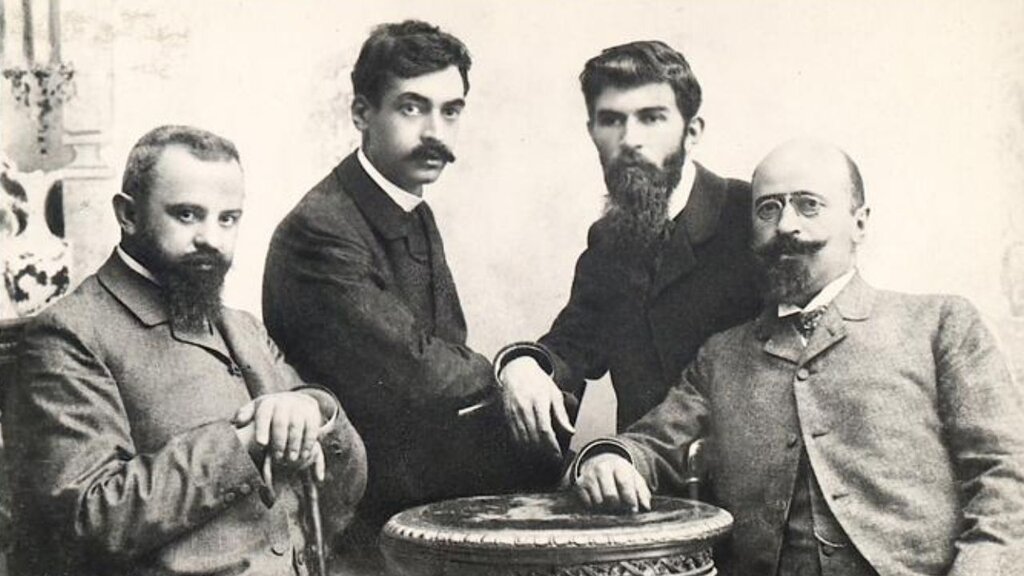
The literary circle “Misal” (“Thought”) included Pencho Slaveykov, Peyo Yavorov, Petko Todorov, Krastyo Krastev
PHOTO nationalgeographic.bg
Pencho Slaveykov was among the leading figures of the Misal (“Thought”) literary circle until its dissolution in 1910, together with Peyo Yavorov, Petko Todorov, and Dr. Krastyo Krastev - names that stand at the foundation of modern Bulgarian literature. In the magazine of the same name, he actively attracted young authors, encouraged them, and supported their creative development.
In 1909, together with Prof. Vasil Zlatarski, he was sent to Russia to transfer the remains and donated personal library of Prof. Marin Drinov and to participate in the celebrations of the 100th anniversary of the birth of Nikolai Gogol.
On June 20, 1910, he delivered a bold speech against convening the Slavic Congress in Sofia. The new Minister of Public Education, Stefan Bobchev - organizer of the Congress - recalled him and dismissed him from his directorial post at the National Library, appointing his own brother in his place. Slaveykov received the humiliating offer to take the position of curator of the school museum at the Ministry of Public Education. He was disabled and the office was located on the fourth floor of a building without an elevator. Offended, the poet refused the position and left Bulgaria, condemning himself to voluntary exile.
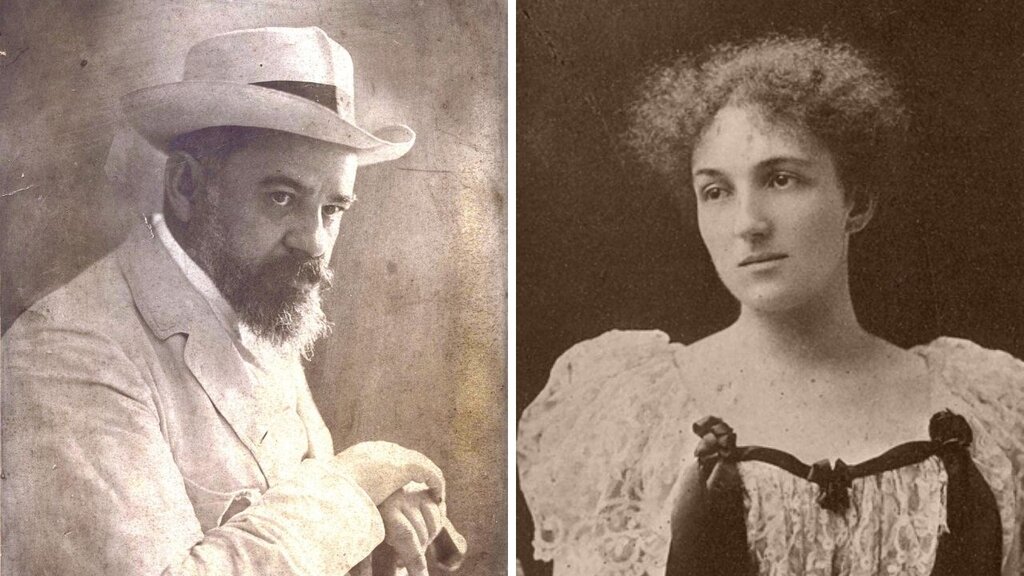
Pencho Slaveykov and Mara Belcheva
PHOTO Archives State Agency
Until the end of his life, Slaveykov maintained a close relationship with the poetess Mara Belcheva, widow of Hristo Belchev, Minister of Finance in the cabinet of Stefan Stambolov.
After leaving Bulgaria, the poet traveled to Switzerland and later settled in Rome. The circumstances surrounding his departure seriously worsened his fragile health. On May 23, 1912, Mara Belcheva and Pencho Slaveykov arrived in the small resort town of Brunate, situated between Lake Como and the town of Como. Exhausted by years of intense work, embittered and tormented by uncertainty about his future, Slaveykov died in exile on May 28, 1912, in Hotel “Bella Vista.” He was buried in a corner grave from which the Alps and Mont Blanc can be seen.
Italian town of Brunate to celebrate Bulgaria's Independence and the Slaveykov family
Plaque to Bulgarian poetess Mara Belcheva unveiled in the Italian town of Brunate
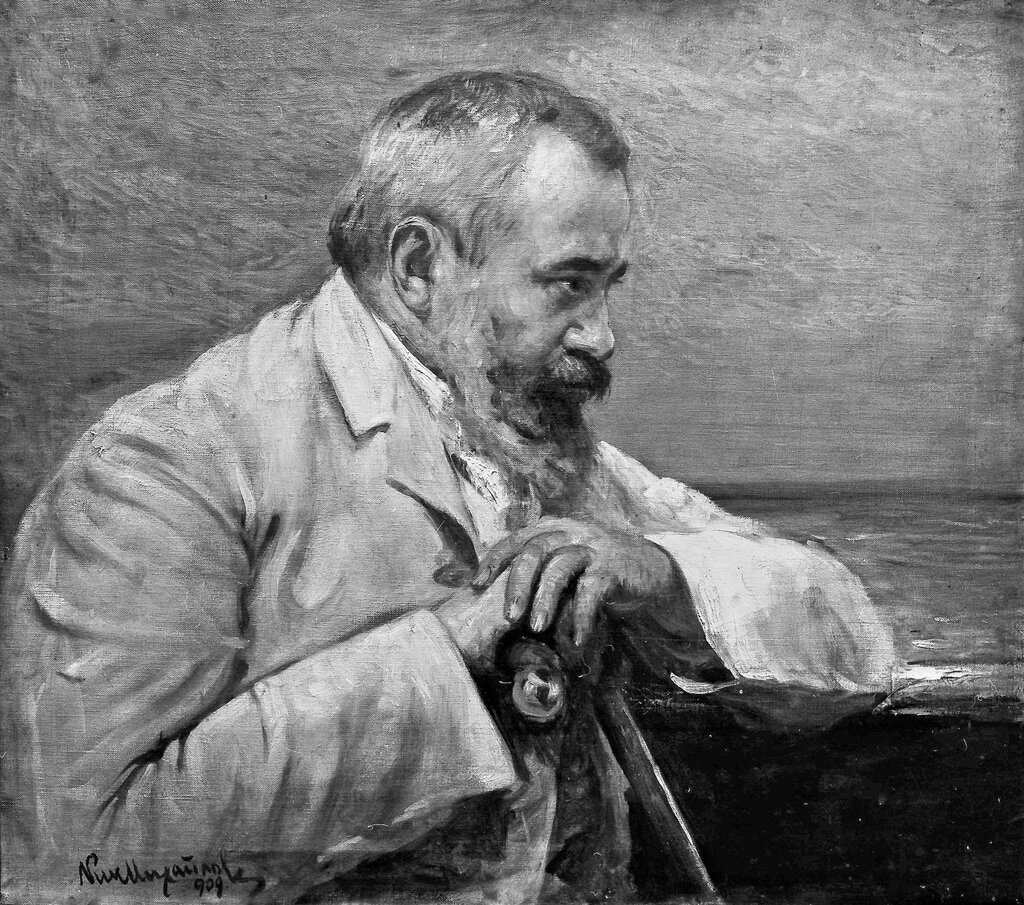
Portrait of Pencho Slaveykov - artist Nikola Mihaylov
PHOTO BTA
In January 1912, the Swedish writer Alfred Jensen, a member of the Nobel Institute, nominated Pencho Slaveykov for the Nobel Prize in Literature for his poem Bloody Song, but due to the poet’s death, the nomination was not considered by the Nobel Committee.
Slaveykov’s mortal remains were transferred to Sofia in 1921, where, in a solemn ceremony, together with the remains of Petko Todorov, they were reburied on native soil. The funeral oration was delivered by literary historian Boyan Penev.
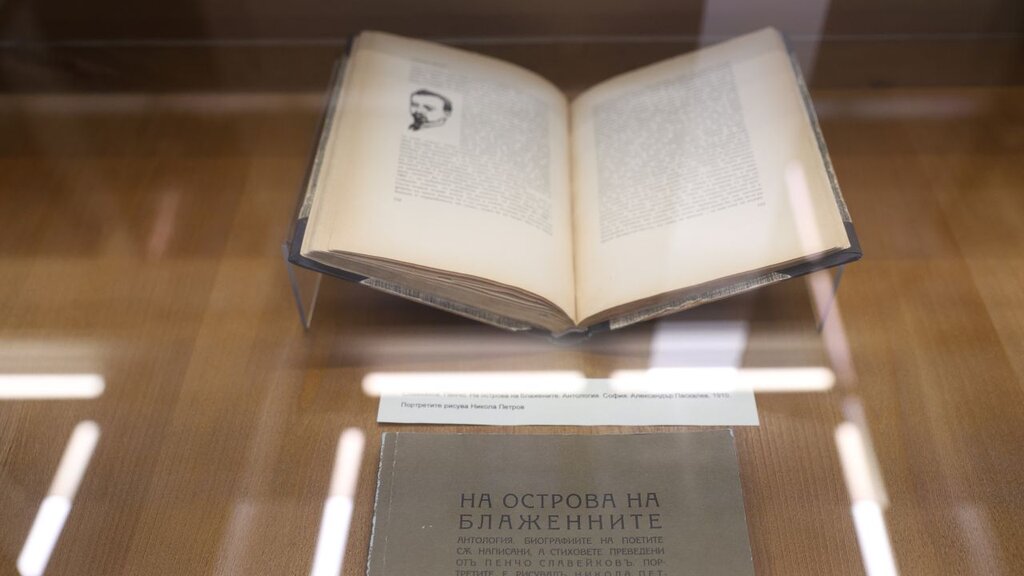
PHOTO BTA
Undisputed masterpieces of Pencho Slaveykov in Bulgarian lyric poetry are the poetry collection Dream of Happiness (1906) and the original book On the Island of the Blessed (Na ostrova na blazhennite) (1910), written in the form of an anthology with works by 19 fictional poets invented by Slaveykov.
Slaveykov is also the author of literary studies and essays, the folklore collection Book of Songs (1917), and other works. He translated works by German poets (published as a book in 1911), translated Antigone of Sophocles (1893), as well as the philosophical poem Thus Spoke Zarathustra by Friedrich Nietzsche (together with poetess Mara Belcheva), and the poem Demon by Mikhail Lermontov (together with Aleko Konstantinov). The letters left by Slaveykov are models of artistic prose and valuable documentation of the poet’s creative and inner world and rich culture.
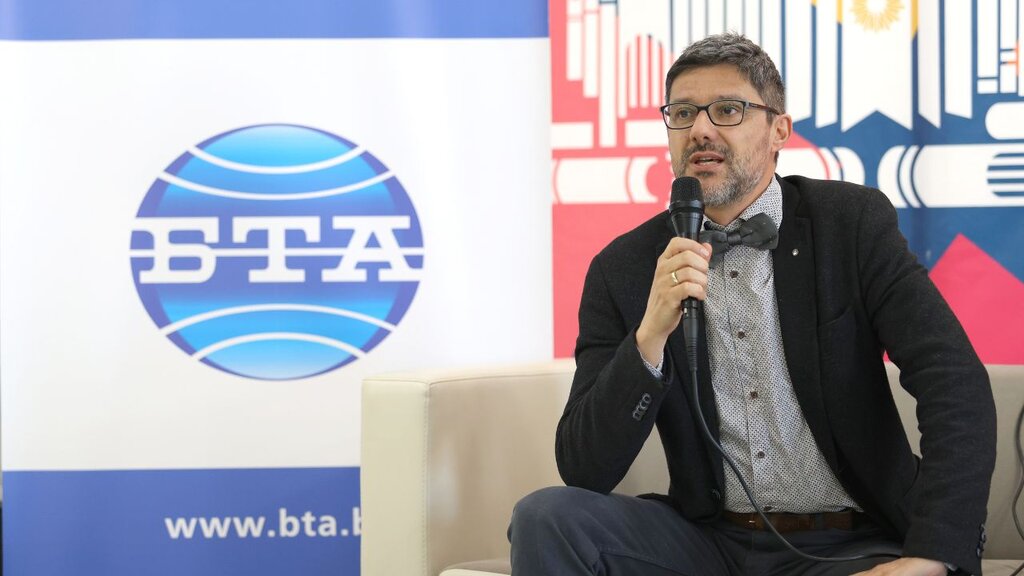
Assoc. Prof. Yordan Eftimov
PHOTO BTA
The Bulgarian News Agency (BTA) is launching a series of discussions in its press clubs across the country dedicated to Pencho Slaveykov and Bulgarian modernism. The literary meetings begin on April 27. The first event of the initiative “Pencho Slaveykov Today” will take place in the poet’s birthplace, the town of Tryavna, in the Slaveykov House, announced BTA Director General Kiril Valchev. The moderator of the meetings will be the poet, literary scholar, and critic Yordan Eftimov.
The December issue of the magazine LIK this year will reflect the campaign. In addition to reports from the meetings, the issue will include 160 specially written words from 160 people to mark the 160th anniversary since Pencho Slaveykov’s birth, similar to a campaign honoring Bulgarian writer Aleko Konstantinov.
Read also:
Pencho Slaveykov and his impact on Bulgarian culture
Intense Literature 4: Petko and Pencho Slaveykov - like father, like son
Edited by Elena Karkalanova
English: R. Petkova
This publication was created by: Rositsa Petkova