


News
Bulgaria’s oldest kilims go on display in Veliko Tarnovo
Rare flat-weave carpets spanning more than three centuries feature in the exhibition
Wednesday 20 May 2026 06:20
Wednesday, 20 May 2026, 06:20
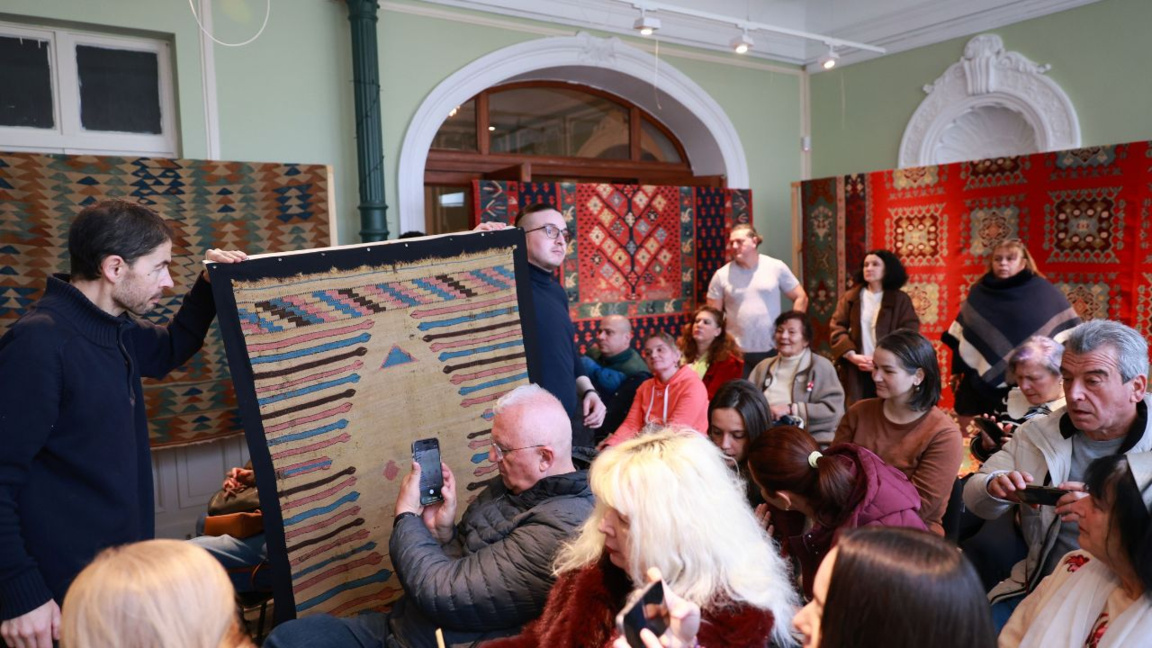
PHOTO BTA
Font size
An exhibition celebrating Bulgaria’s rich tradition of flat-weave kilim carpets opens, May 20, at the Revival and Constituent Assembly Museum in Veliko Tarnovo, the Bulgarian Kilim Foundation announced. Organised by the Regional Museum of History in Veliko Tarnovo in partnership with the Bulgarian Kilim Foundation, the exhibition will run until May 31, 2026.
For the first time, visitors will have the opportunity to see nine rare masterpieces from the collection of Dutch collector Jacob van Beelen and the Bulgarian Kilim Foundation. Dating from the 17th to the 19th century, the pieces are among the earliest known examples of Bulgarian kilim art.

Jacob van Beelen
PHOTO BTA
Van Beelen owns one of the richest private collections of authentic century-old Bulgarian kilims, numbering more than 1,000 pieces from different regions of the country. For years, he has worked to preserve and promote Bulgaria’s tradition of flat-weave carpet-making. In an interview with BTA, he described the kilims as “a feast for the eye” that should be shared with others.
In 2025, Van Beelen established the Bulgarian Kilim Foundation, dedicated to preserving and promoting Bulgaria’s weaving heritage. The foundation aims to build, document and maintain a national collection of Bulgarian kilims while researching the full scope of the country’s weaving traditions.
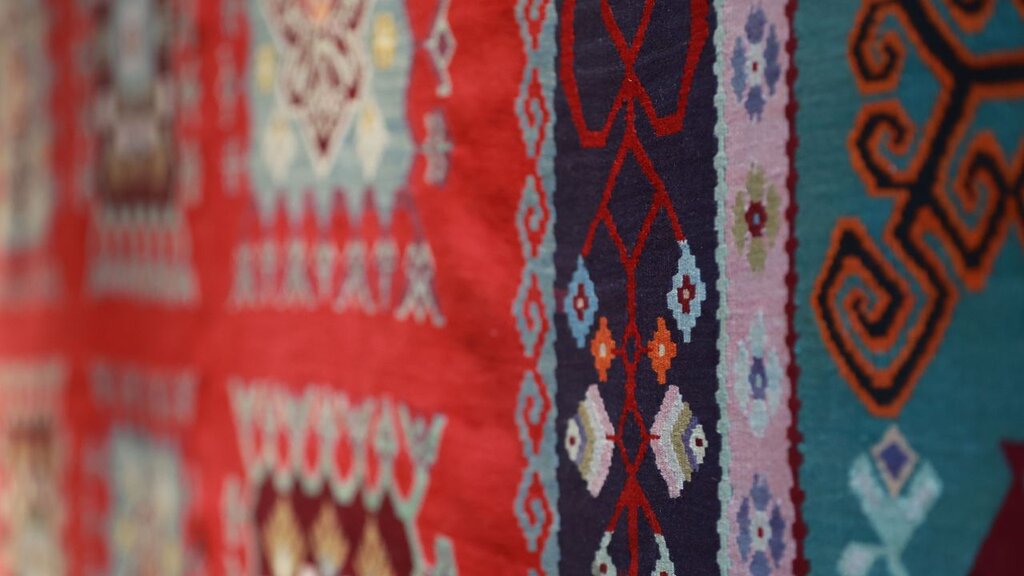
PHOTO BTA
Four of the exhibits in the Veliko Tarnovo exhibition have already been officially recognised as national treasures by the Institute of Ethnology and Folklore Studies with the Ethnographic Museum at the Bulgarian Academy of Sciences. These include the oldest known Bulgarian carpet, dated from before 1688, a Bakamski (Garibalda) kilim from 1730–1770, the “Survaknitsi” kilim from Kotel dated 1869, and the “Curly Stars” kilim from Sliven from the late 19th century.
As part of the exhibition, visitors will also be able to see the “Trees with Fruits” kilim from Bulgaria’s National Assembly building in Sofia, dating from the period between 1950 and 1975.
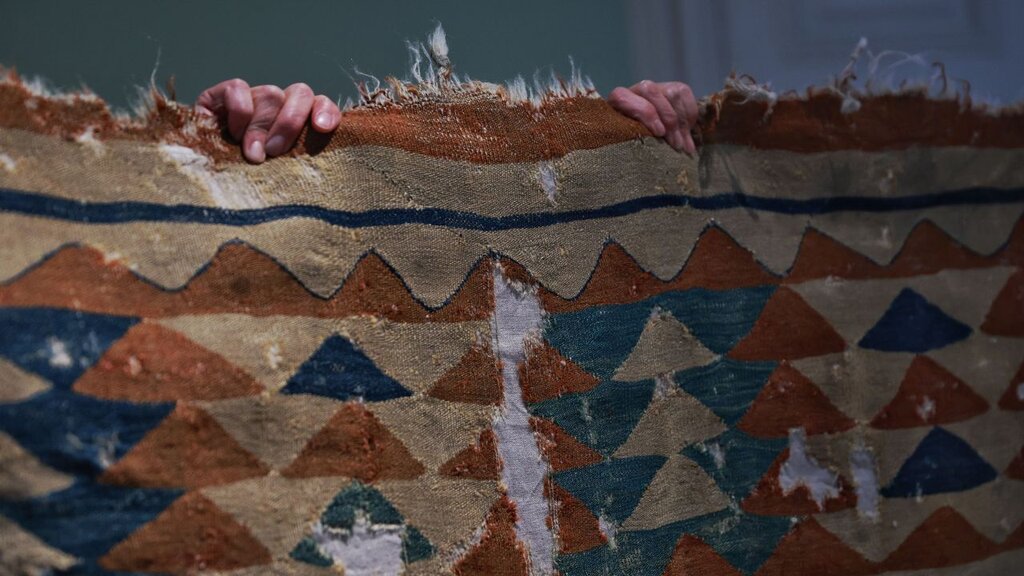
PHOTO BTA
The exhibition invites visitors to discover the stories woven into Bulgaria’s oldest carpets — works of art preserving the craftsmanship, symbolism and cultural memory of generations. Earlier this year, the Institute of Ethnology and Folklore Studies and the Bulgarian Kilim Foundation signed a partnership agreement under which 81 kilims from the foundation’s collection will be studied and identified.
Editor: Miglena Ivanova
Edited and posted in English by E. Radkova
This publication was created by: Elizabeth Radkova