Author
Elena Karkalanova
News
Demographic realities outline a polycentric development path for Bulgaria
Tuesday 9 June 2026 11:27
Tuesday, 9 June 2026, 11:27
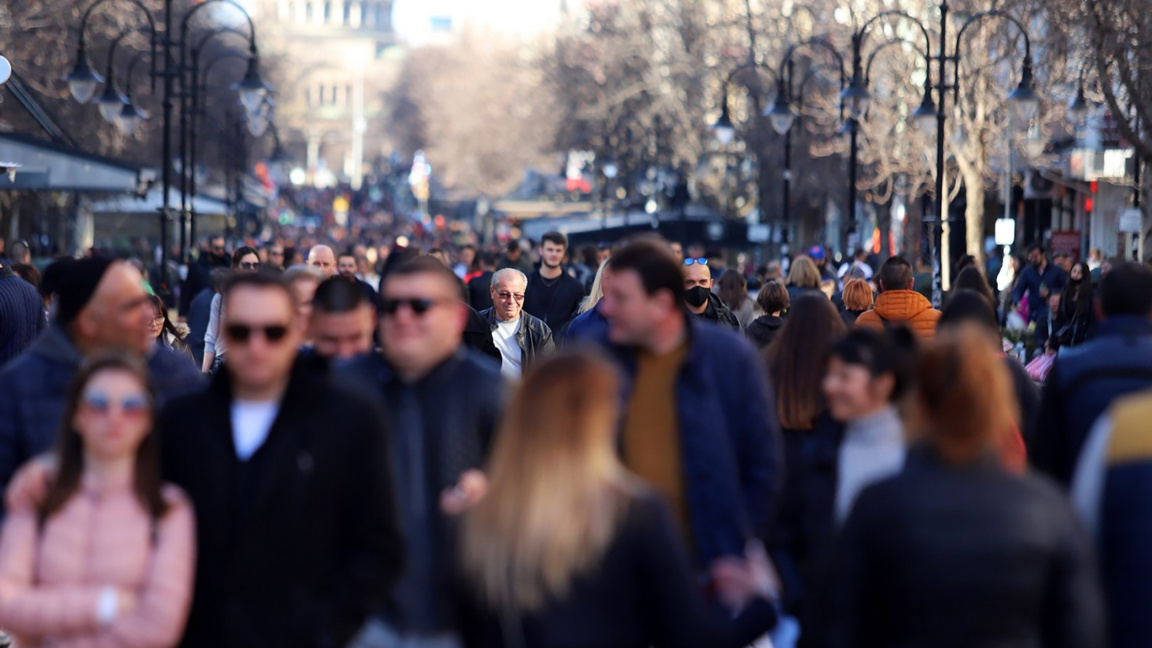
PHOTO BGNES
Font size
At the end of 2025, Bulgaria’s population stood at approximately 6.4 million people. This represents a decline of over 14,000 compared to 2024, or nearly 0.22% of the population. Migration has been steadily decreasing - only 4,532 people left the country, while 17,369 moved to Bulgaria, many of them foreign nationals.
Whether this will become a lasting trend remains an open question, according to Prof. Dr. Spas Tashev from the Institute for Population and Human Studies at the Bulgarian Academy of Sciences.
Nearly 100,000 Bulgarians died in a year; over 50,000 babies were born
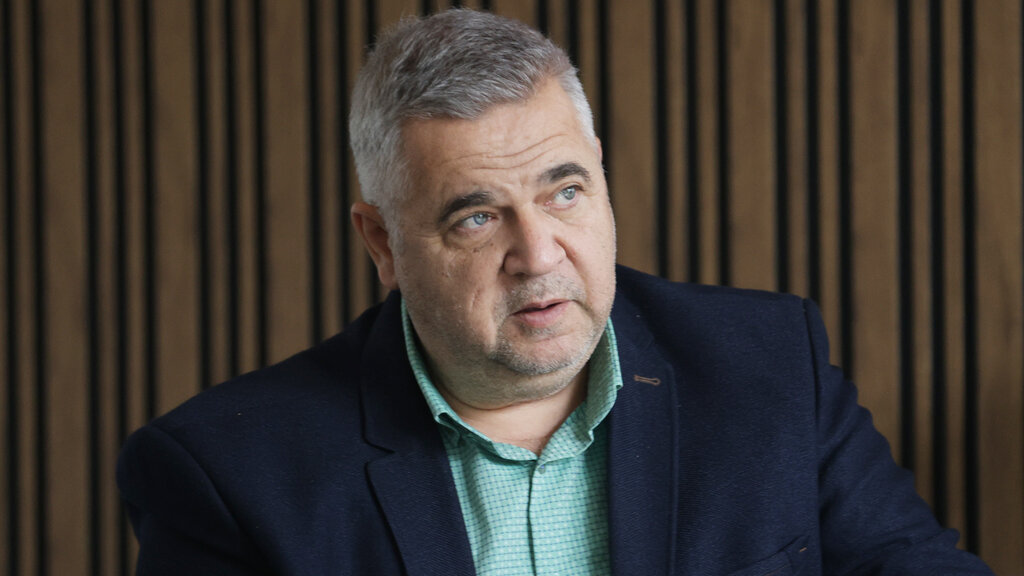
Prof. Spas Tashev
PHOTO BTA
“2023 turned out to be a turning point. In the sense that it was the year with the best demographic indicators over the past decade, and based on that improvement we assumed that some stabilization was taking place in Bulgaria,” Tashev explains.
“In that year, we reached a total fertility rate - the average number of children per woman of reproductive age — of 1.81. This was the highest value recorded in the entire EU. At the same time, the EU average was 1.63, while in Southern Europe - Portugal, Spain, Italy, Greece - the indicator was around 1.3. Of course, this level of fertility is not sufficient for simple population replacement, which requires 2.1, but it still brought us closer to that threshold. Unfortunately, in 2024 the indicator fell to 1.76, and for 2025 it stands at 1.65,” the scientist notes.
He identifies as a worrying demographic factor the fact that the average age of childbirth among Bulgarian women has already reached 28, which results in fewer women opting for a second child at a later age. At the same time, he emphasizes that since the COVID-19 crisis Bulgaria has been recording a sustained positive migration balance. Emigration has stabilized, he says, adding that whereas in previous years the country lost between 50,000 and 70,000 people annually to emigration, it is now importing labour instead.

PHOTO BGNES
“At present, we are bringing in workers from Pakistan, Tajikistan, Nepal, Bangladesh, and Azerbaijan. I have examined the data for them. It turns out that only about 40% of those who receive work visas in Bulgaria actually stay and work here. For the rest, Bulgaria serves as a stepping stone, an entry point into the EU. Once they arrive here, they quickly move on to Western Europe. This shows that something in our system is not functioning properly in terms of recruiting such workers. The key question is why we are not using the resource of the Bulgarian diaspora, especially in neighbouring countries - for example, Bulgarians in the Western Outlands, who live just 40-50 km from Sofia,” the scientist notes.
Bulgarians abroad are a strategic asset, says demographer Spas Tashev
Prof. Tashev also shares that he has spoken with residents of Kriva Palanka - an economically underdeveloped, agrarian border region in North Macedonia - who expressed readiness to work in Bulgaria, including seasonal employment, but that such initiatives are not being encouraged.
According to a National Concept for Regional Spatial Development proposed for discussion in April by the relevant ministry, one third of Bulgaria’s 5,250 settlements have fewer than 100 residents. The document identifies only 50 cities and towns, grouped into four categories of significance, as having the potential to shape the country’s future.
Bulgaria without Bulgarians - is the country's demographic collapse irreversible?
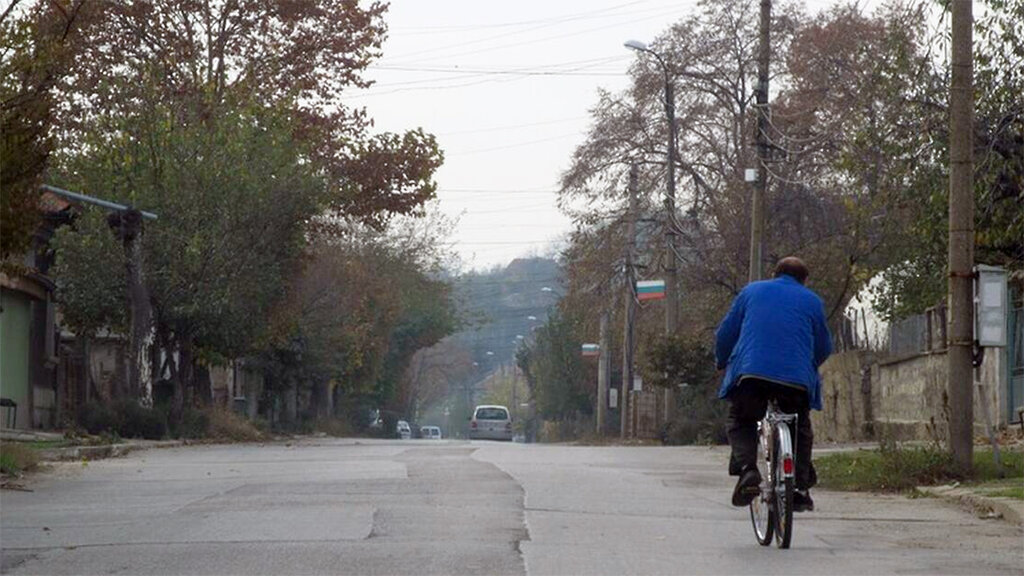
PHOTO BGNES
“Our major problem is uneven economic development across the country. The data show that the capital and another five major urban centres attract population. Everywhere else the country is facing a serious demographic crisis.
We already have 200 villages that still appear on the map but have no inhabitants. Demography tells us that settlements with 100 or fewer residents no longer have reproductive potential. No children are born there; social life is in decline. However, not all settlements in Bulgaria are in this situation. If we look at the settlements around these five or six major cities with economic development, we see population growth,” the demographer explains.
NSI: 41.4% of Bulgarians live in eight provinces
According to the scientist, the Ministry’s concept acknowledges that Bulgaria is currently unable to ensure demographic sustainability across its entire territory. For this reason, a policy of polycentric development is being adopted. In order to meet EU requirements regarding population thresholds, it is proposed that Bulgaria’s planning regions be reduced from six to four.
Tashev notes that while Sofia and the Southern region have natural centres such as the capital and Plovdiv, the Eastern and Northern regions contain competing urban centres. The concept proposes that these be integrated into urban corridors linking larger settlements.
It also suggests that in peripheral regions with very small numbers of pupils, distance learning could be introduced = a solution with which the professor does not fully agree.
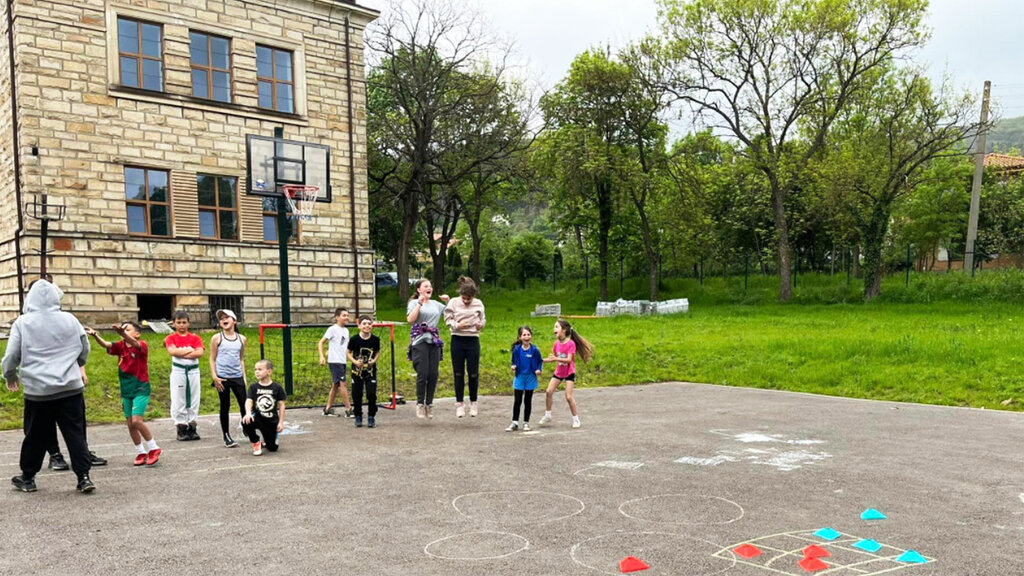
PHOTO Archive BNR
“The school is not only about education; it shapes character, it is a social environment. From this perspective, purely remote education, especially for young children who lack social experience, is very risky. I see an opportunity in a dual model of education. In small settlements where it is not possible to form a sufficient number of pupils for a class, we can have mixed-age classrooms, but still within the school environment, with each student following the curriculum appropriate for their grade. This would preserve the social and educational environment while avoiding school closures due to low enrolment.
Serbia can serve as an example. I have visited underdeveloped border regions where schools operate with as few as three children, and although by our standards such schools would be closed, in Serbia they are maintained even with two pupils, with the idea that closing a school means the gradual disappearance of the settlement itself,” Tashev illustrates.
PHOTO BGNES
Prof. Spas Tashev expresses hope that new telemedicine technologies will improve access to healthcare in Bulgaria’s low-population regions as well.
Read also:
Population decline in Bulgaria close to zero for the first time since 1985
The country is becoming a demographic desert, Kostadin Kostadinov says
Accelerated economic growth is the only factor that can save Bulgaria from demographic catastrophe
This publication was created by: Rositsa Petkova