


Author
Tsvetana Toncheva
News
Opera star Nadja Stefanoff: “The most beautiful voices come from Bulgaria!”
For the daughter of Bulgarian tenor Stefan Stefanoff, her homeland is synonymous with summer, Varna, the Black Sea, delicious fruit and enchanting aromas
Sunday 23 August 2026 10:19
Sunday, 23 August 2026, 10:19
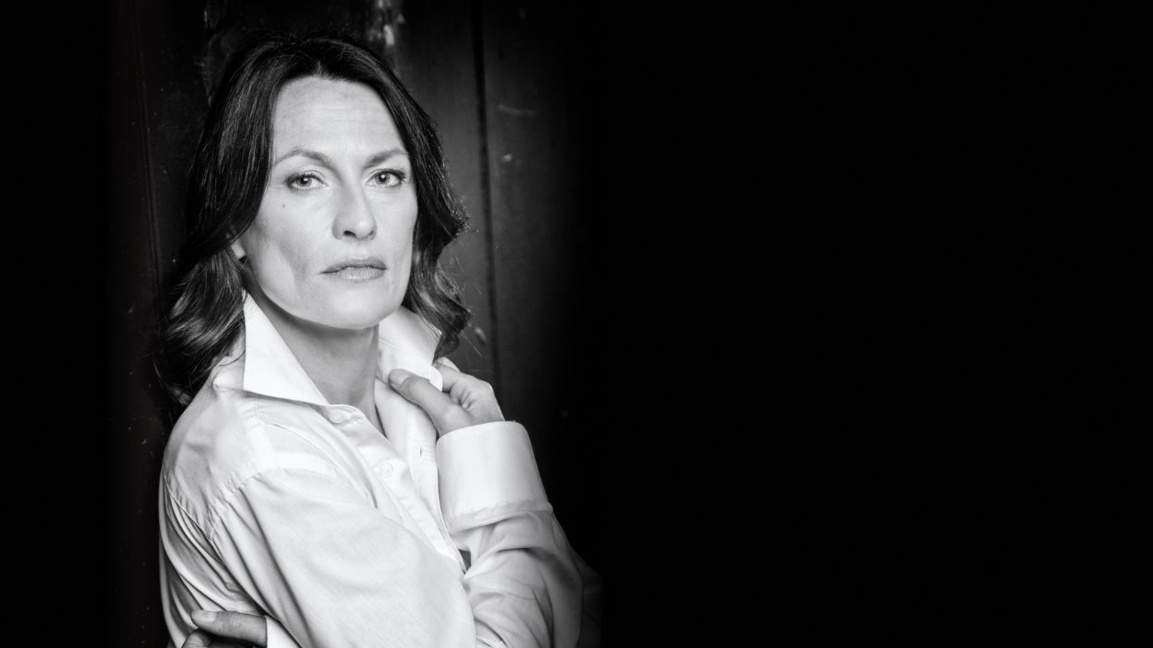
PHOTO operavarna.com
Font size
At the beginning of July, German opera singer Nadja Stefanoff was in Bulgaria’s coastal city Varna to perform the role of Sieglinde in the premiere of Wagner Gala, a production by the Varna Opera featuring excerpts from Die Walküre, directed by Vera Nemirova and featuring an elite cast of European soloists conducted by Svetoslav Borisov.
Nadja Stefanoff was born in the 1970s in Karl-Marx-Stadt (today Chemnitz, Saxony), to a German teacher and Bulgarian tenor Stefan Stefanoff, who enjoyed a distinguished career on the opera stages of Germany. Her first vocal teacher was her father. She went on to study at the Dresden Opera Chorus Studio (Dresdner Opernchorstudio), where she was trained by Bulgarian singer and pedagogue Nelly (Nedyalka) Ailakova (12 July 1935 - 8 August 2026), a talented artist who performed at the Berlin State Opera, the Dresden Semperoper and the Graz Opera. Stefanoff graduated from the Dresden University of Music.
A prizewinner at competitions in Berlin and Zurich, she went on to become a soloist at opera houses in Erfurt, Pforzheim, Bremen and Mainz. She has appeared as a guest artist in Duisburg, Stuttgart, Berlin and Bonn, and has made recordings in Dresden. Her performances in Graz and Frankfurt were highly praised by critics, who noted the brilliance and flexibility of her voice, which remains assured even at the softest dynamic levels.
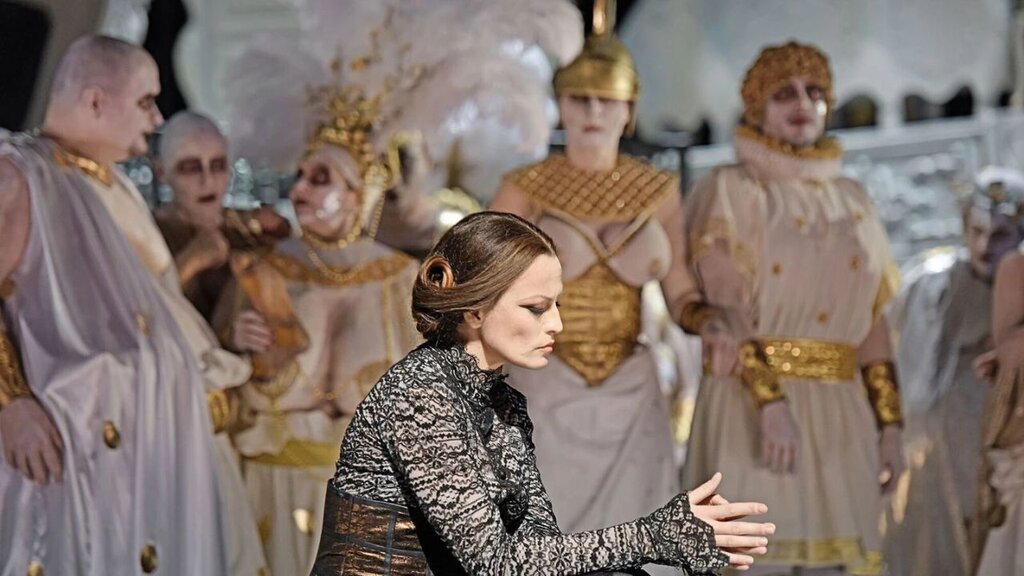
PHOTO nadja-stefanoff.com
In a short excerpt from Wagner Gala in Varna, posted on social media by the Varna Opera team, Nadja Stefanoff’s Sieglinde is impressive. Her voice is beautiful and powerful, but even more remarkable are the extraordinary precision of her vocal production and the crystalline purity of her intonation. Days after the performance, the singer told Radio Bulgaria:
“The premiere went very well, and I’m very happy that the audience was so pleased. It’s not easy to perform Wagner in Bulgaria, and Die Walküre was being staged in Varna for the first time. People partly associate Wagner’s music with the German mentality and are not so open to it. But I think we managed to get them enthusiastic about this premiere, and that’s very nice... Given the time and the circumstances we had, I’m very satisfied.”
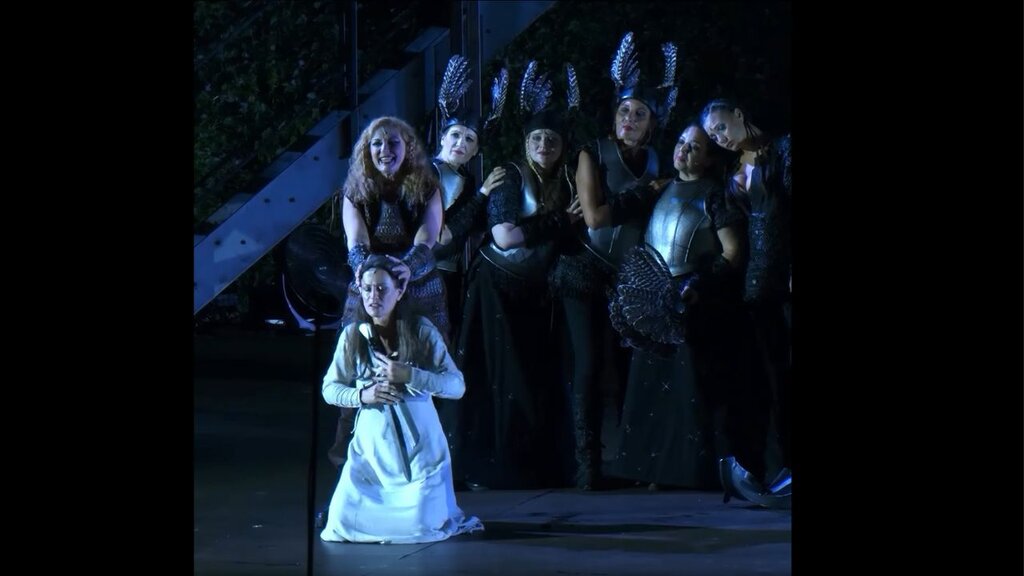
PHOTO Facebook / Varna State Opera
Her love for Varna goes back to childhood:
“As a child, I spent almost every summer there during the holidays because my father, Stefan Stefanoff, is from Varna. We spent a lot of time in the house where he was born. For me, my memories of Varna are all happy ones. I was a child and the summers were wonderful. I was back in Varna in 2005, but after that I didn’t come again. So this was my first return in 21 years. When I was little, we often went to the Summer Theatre, and my father always used to say that one day he wanted me to sing there. And I wanted that too! Now it has become a reality...”
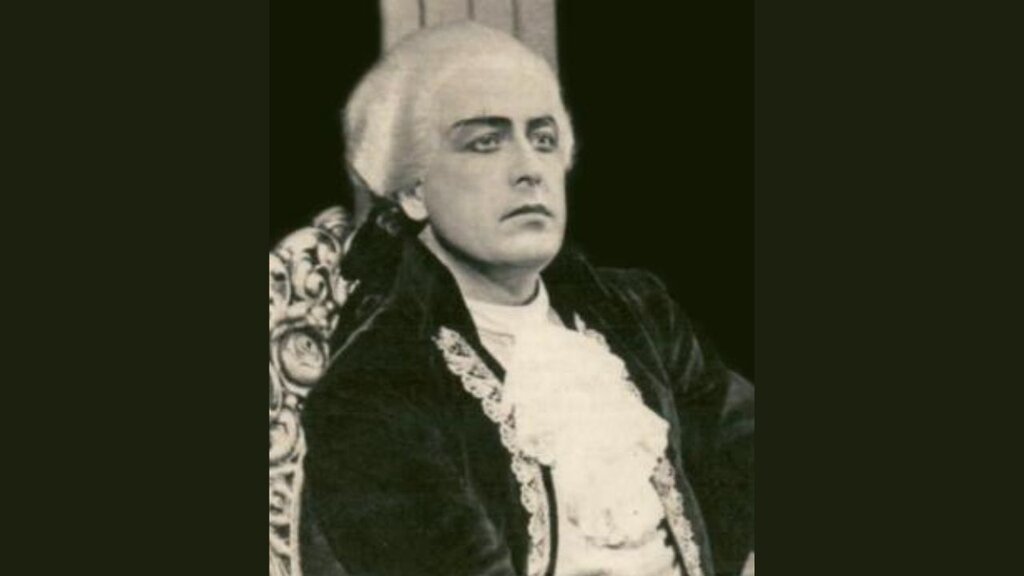
Tenor Stefan Stefanoff possessed a rare voice classified in Germany as a Heldentenor (German for “heroic tenor”, a powerful tenor voice with a dark, rich, metallic timbre, considerable volume and stamina, particularly suited to the demanding roles of Wagner, ed.). Today, he is almost unknown in his homeland. In 2024, the centenary of his birth was marked.
He began his musical journey as a double bassist, but earned a degree from the Higher Institute of Physical Culture in Sofia. At the same time, he took private singing lessons. In 1957, he made his stage debut at the State Musical Theatre in Sofia. After an audition before the music director of the Erfurt Opera, he was engaged by the company, marking the beginning of his career in Germany.
In 1964, he moved to Chemnitz, then known as Karl-Marx-Stadt, and in 1967 he relocated to Bonn, the capital of West Germany. To be closer to his family, who remained in Chemnitz, he returned to East Germany and continued singing at numerous opera houses there until the early 1980s.
Among his successful roles were Edgardo in Lucia di Lammermoor, Florestan in Fidelio, Lohengrin and Tannhäuser in the eponymous operas, Walther von Stolzing in Die Meistersinger von Nürnberg, Radamès in Aida, Manrico in Il trovatore, and Cavaradossi in Tosca.
In 1968 and 1969, Stefan Stefanoff made several guest appearances at the Sofia Opera. These performances were recorded by a Bulgarian National Radio team and have been preserved in our archives. However, his daughter Nadja Stefanoff does not know whether he performed in Bulgaria after that.
During the 1970s and 1980s, he returned to Bulgaria with his family every summer and experienced no problems with the authorities under the regime of the time.
Stefan Stefanoff
PHOTO onlinemerker.com
Her repertoire is extensive and diverse, ranging from Monteverdi to Ligeti, and from Mozart and Wagner to the operettas of Johann Strauss. She is currently preparing the role of Elsa in Lohengrin for a premiere in Mainz in October. She is particularly fond of Manon Lescaut, her favorite Puccini role. Her repertoire also includes Tosca, which she performed with Vera Nemirova in Bremen. The singer and director are friends:
“We have known each other since the beginning of our careers. When I was studying in Dresden, I worked with her on her first production. That was about 30 years ago. After that, we didn’t see each other for a long time, and then we met again in Bremen for Tosca. We stayed in touch, and now that relationship is developing further.”
Vera Nemirova: My ambition is to put Bulgaria on the pedestal it deserves
Nadja Stefanoff would like to perform again on a Bulgarian stage, first and foremost German music by Mozart or Weber:
“I know that the most beautiful voices come from Bulgaria. Someone told me that a long time ago, and it’s true. The voices are very beautiful. And of course, they love singing the Italian repertoire, so there’s no need for someone to come from elsewhere to do that... It’s very nice of Vera that she is trying to bring German music to Varna. It’s a mission! As I heard, next year they may stage the entire Die Walküre. That would be wonderful, because now people already know it...”
For Nadja Stefanoff, Bulgaria means summer, Varna, the Black Sea, delicious fruit and wonderful aromas... After more than 20 years away, she was surprised by how much Varna had changed:
“It’s very nice. Life isn’t as stressful as it feels in the western part of Europe... But sometimes Bulgarians are too negative. When they have an opinion of their own, it’s very difficult to change it. Maybe sometimes they are too lazy about certain things, for example when you see some of the streets or roads... But that’s the mentality. I’ve known that for a long time from my father, and there were a lot of conflicts between him and my mother, who was German. But the combination of a Bulgarian and a German is very good!”
At the end, Nadja Stefanoff gladly wished our audience “All the best!” in Bulgarian.
English version: R. Petkova
This publication was created by: Rositsa Petkova