


Saturday 3 October 2026 12:04
Saturday, 3 October 2026, 12:04
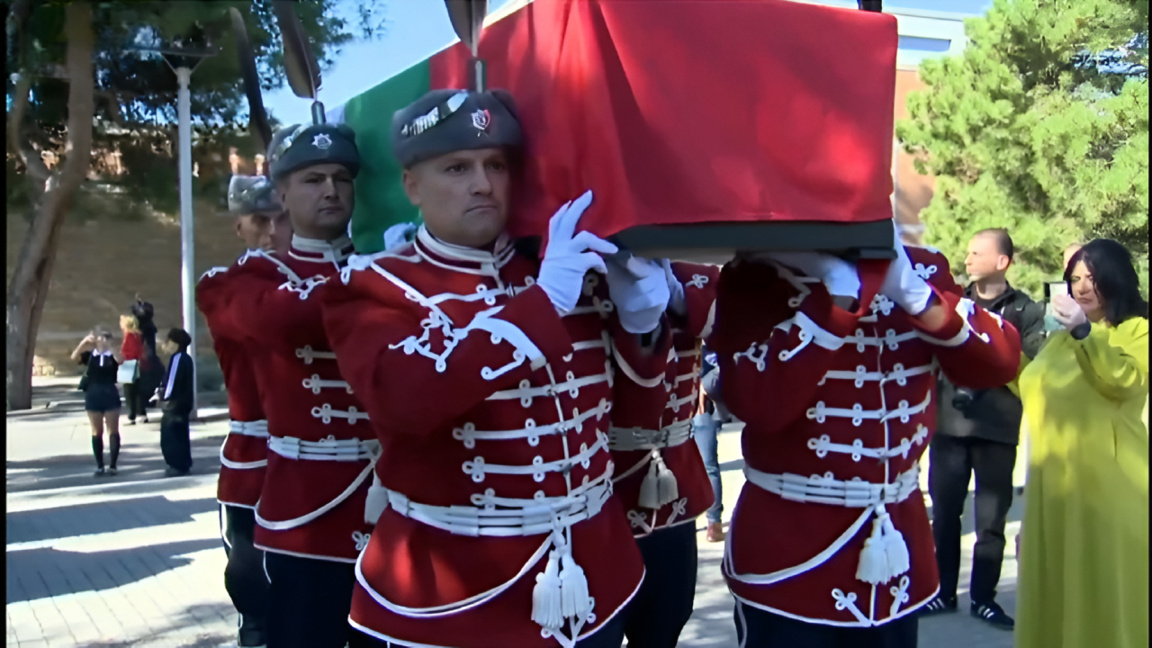
PHOTO BTA
Font size
Bulgaria is receiving the remains of one of the country's most renowned medieval rulers — Tsar Samuil. More than a thousand years after his death in Prespa (997–1014), his remains were handed over to the Bulgarian state at an official ceremony held at the Museum of Byzantine Culture in Thessaloniki, hosted by Greek Prime Minister Kyriakos Mitsotakis and attended by Bulgarian Prime Minister Rumen Radev.
Along with the remains of Tsar Samuil, remains discovered in two other sarcophagi at the basilica on the island of St. Achillius were also handed over. They are believed to belong to Tsar Gavril Radomir and other members of the royal family.
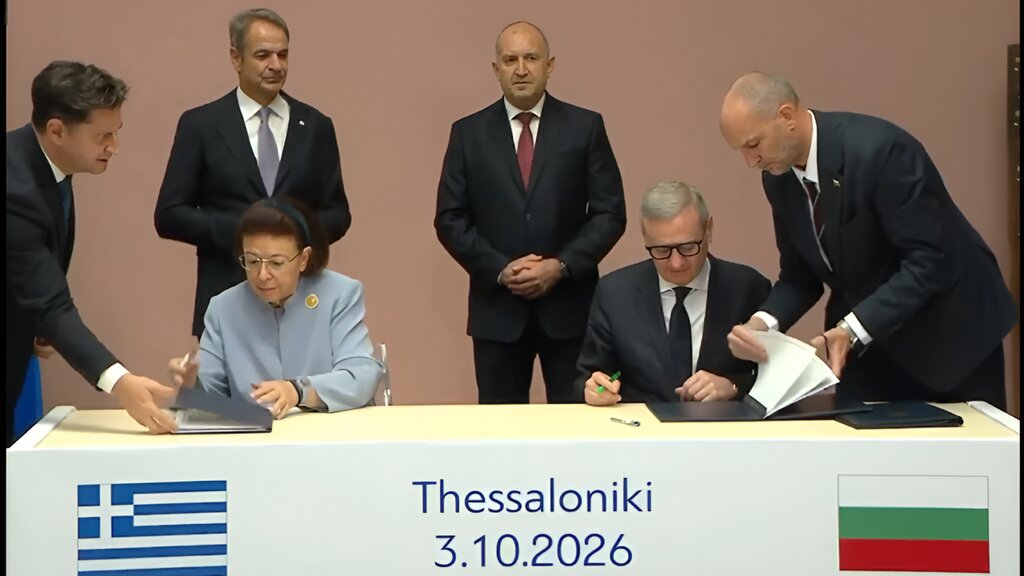
PHOTO BTA
The handover documents for the remains were signed by Bulgarian Minister of Culture Evtim Miloshev and his Greek counterpart, Lina Mendoni, in the presence of the prime ministers of Bulgaria and Greece.
The historic agreement to return Tsar Samuil’s remains to his homeland was made possible following intensive negotiations between Bulgaria and Greece. In return, Bulgaria is handing over 48 church relics to Greece.
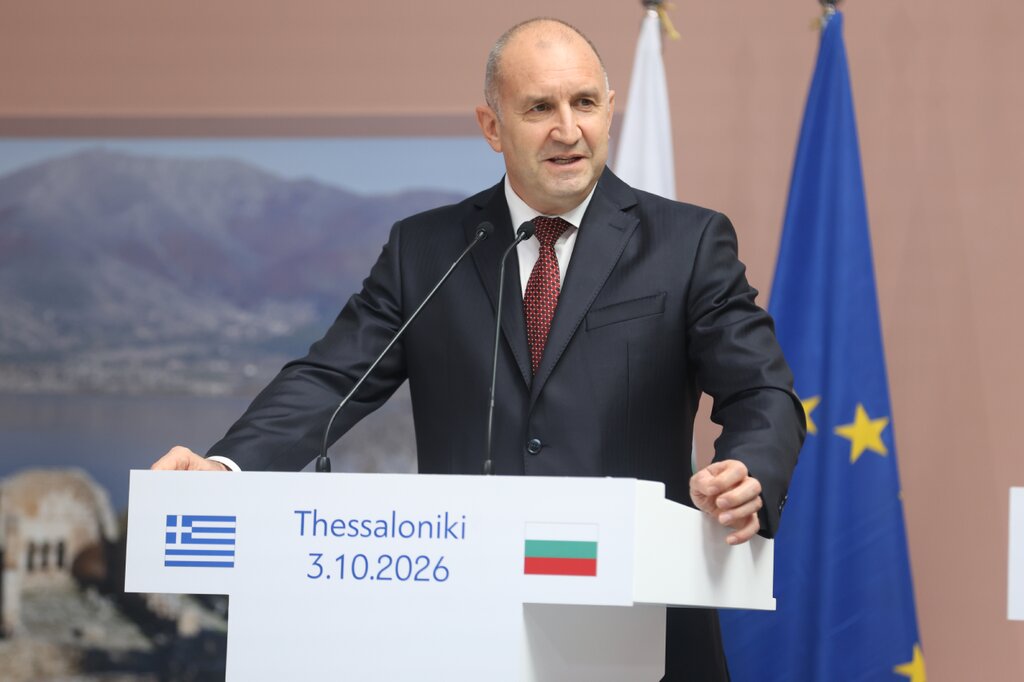
Bulgaria's Premier Rumen Radev
PHOTO BTA
“Bulgaria’s efforts to have the remains returned date back to the 1960s, when Professor Moutsopoulos discovered them in the basilica on the island of St. Achillius. Over the past six decades, the Bulgarian state has never ceased its efforts to have these remains returned to Bulgaria. I am pleased that today we are fulfilling the moral legacy of Professor Moutsopoulos — that the remains be returned to the Bulgarian people. I would like to thank you for the political leadership, wisdom, and courage that have enabled us to reach this historic agreement between our two countries”, Prime Minister Radev told Mitsotakis at the ceremony.
Ruman Radev also thanked the Ministers of Culture of both countries and the diplomatic teams involved in arranging the reciprocal exchange of historical and cultural artifacts.
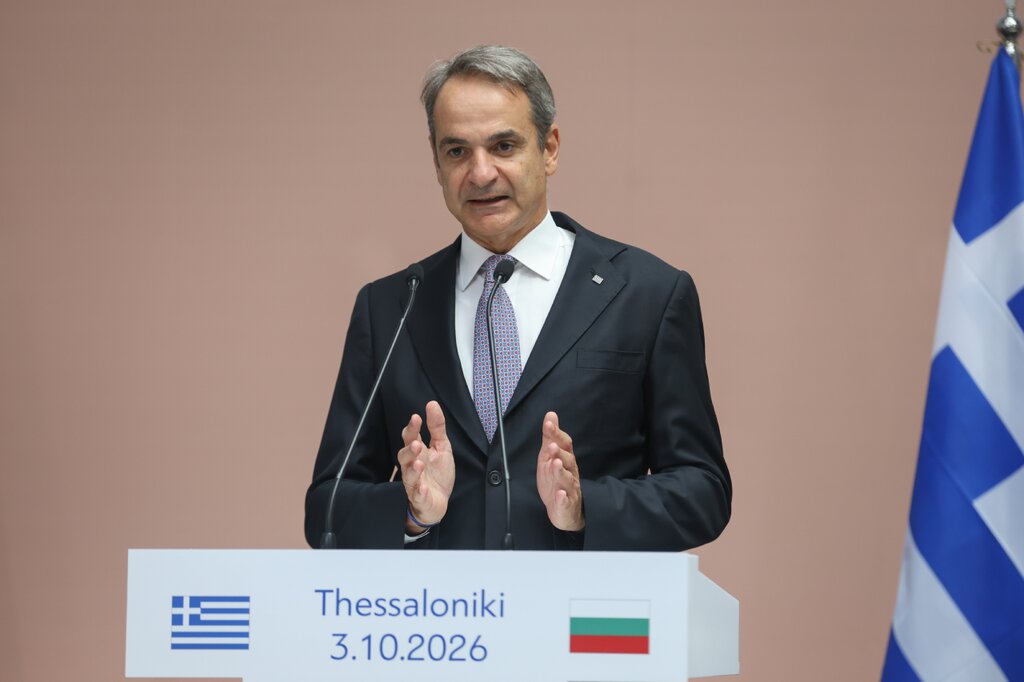
Kyriakos Mitsotakis
PHOTO BTA
“Today, we are establishing a very deep connection with Bulgaria, and not merely a cultural one. The return of important church items turns difficult moments in history into new opportunities for communication. At the same time, it demonstrates the strength that two neighboring peoples can show on the path toward mutual respect and trust. In this way, 48 relics of great significance to our spiritual and emotional life are returning to our country — icons, crosses, church items, and even a bishop’s throne”, Kyriakos Mitsotakis said, adding:
“Our cooperation is only beginning. This is the first stage, and I hope it will lead to even greater cooperation, so that other relics from Greece can also be returned to Bulgaria. What is happening today could not have been achieved in previous decades. Cultural diplomacy shows that it works quietly, yet very effectively.”
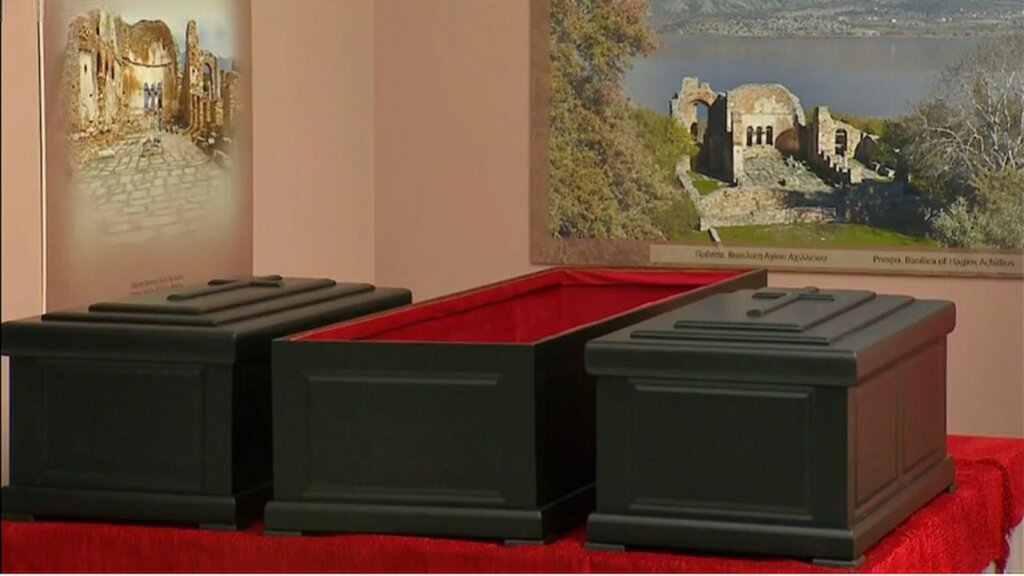
PHOTO BTA
This morning, Prof. Lyudmil Vagalinski and Bulgaria’s Consul General in Thessaloniki, Anton Markov, brought Tsar Samuil’s remains from the storage facility to the hall of the Museum of Byzantine Culture, where the official ceremony took place.
Speaking to the Bulgarian National Television, Prof. Vagalinski said that Tsar Samuil’s remains had been carefully preserved over the decades, with Greek archaeologist Nikolaos Moutsopoulos deserving particular credit for this. In the 1960s, Moutsopoulos discovered the remains of the Bulgarian ruler. He personally kept Samuil’s and his family’s remains in his home for a long time, concerned that they might be damaged because of the political situation in Greece.
The remains were later handed over to the University of Thessaloniki, where they were also carefully preserved, and were subsequently transferred to the Museum of Byzantine Culture in Thessaloniki.
Edited by Miglena Ivanova
Translated by Kostadin Atanasov