Author
Tsvetana Toncheva
Article
Highlights of Bulgarian Musical Culture
The unique vision of young Dimitar Nenov in Four Sketches for Large Orchestra
Friday 9 October 2026 20:00
Friday, 9 October 2026, 20:00
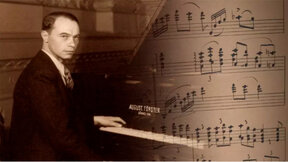
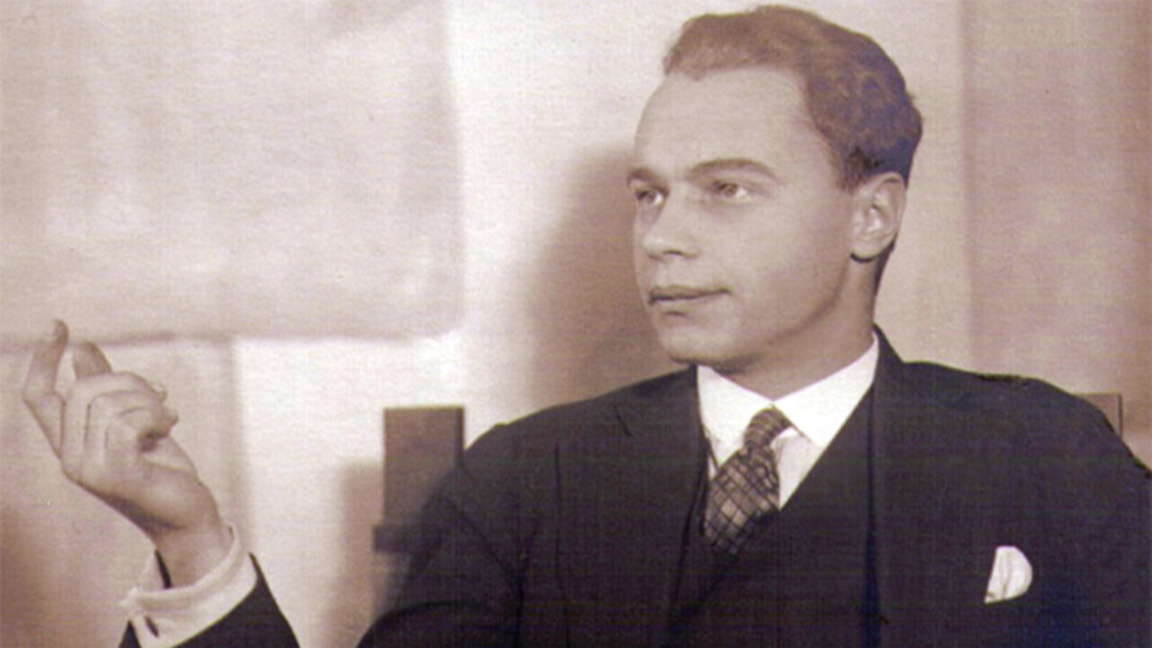
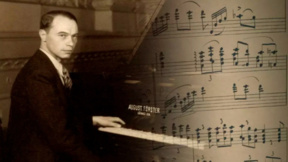
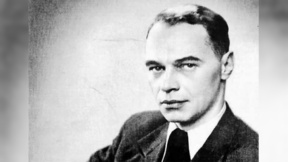
Dimitar Nenov (1901 – 1953)
PHOTO archives.bnr.bg
Font size
An undisputed intellectual and spiritual aristocrat among Bulgarian musicians, Dimitar Nenov was one of the key figures in the emergence of Bulgaria’s professional school of composition. Music exerted a powerful fascination on him from his earliest childhood, yet as an adolescent his intellectual interests were remarkably broad, encompassing literature, art, philosophy, mathematics and physics. His life was marked by hardship and adversity. Still very young, he found himself at odds with his parents, who insisted that he abandon music and pursue what they regarded as a “serious” profession.
At the age of 19, Nenov left for Dresden to study architecture. His choice of city was far from accidental: Dresden offered him the opportunity to study piano and composition at the Conservatory alongside his architectural training, despite his family’s disapproval. At the time, Germany exerted a powerful attraction on many Bulgarians, including musicians, artists and writers, who encountered the avant-garde currents of European culture there and subsequently helped introduce new and modernist tendencies into Bulgarian cultural life.
For Dimitar Nenov, his student years were exceptionally arduous. He arrived without a scholarship, with barely enough financial support to sustain himself, and without even knowing German. In order to pay his university fees and afford accommodation, he worked seven hours a day as a cinema pianist and as an accompanist at a ballet school.
He repeatedly postponed his university exams because he had to earn his living and was overwhelmed by work. At the same time, however, the young architect was establishing himself as a sought-after concert pianist, giving numerous recitals and appearances in cities across Germany, Denmark and Czechoslovakia. It was during this period that he produced his earliest compositions: piano pieces, songs, his First Symphony, Poem, Ballad, Cinema Suite, a violin conata, two piano sonatas, and Four Sketches for Large Orchestra.
The perfection of poetic expression in Dimitar Nenov's Miniatures for Piano
Although written when he was only 24, Dimitar Nenov’s Four Sketches for Large Orchestra is distinguished by its formidable craftsmanship and considerable artistic stature. Information about the genesis of the score can be found in a 1938 letter Nenov addressed to the eminent Bulgarian violinist, musicologist and public figure Konstantin Zidarov:
“Several fine films gave me the idea of writing characteristic music for individual scenes. I made about ten sketches. And a fine Grotesque... Later, in 1926-27, I orchestrated three of them for large orchestra, together with the Grotesque. Thus my Four Sketches for Large Orchestra (1924-25) took shape: Aspiration, Yearning, Grotesque, Dance.”
The affinity between the first two sketches, Aspiration and Yearning, is unmistakable. Their very titles are synonyms, and not coincidentally so. These two pieces have prompted scholars to seek semantic and associative parallels between Nenov’s music and the work of the great Russian composer Alexander Scriabin, particularly his celebrated Poem of Ecstasy, which incorporates, in Scriabin’s own terminology, a “theme of dreams and longings” and a “theme of flight”.
In striking contrast to the Scriabin-inspired first sketches Aspiration and Yearning stands Nenov’s third sketch, Grotesque, a vivid counterweight to their dreamlike atmosphere, marked instead by a dynamic and theatrical character.
The final movement of Four Sketches for Large Orchestra, Dance, impresses with its melodic and rhythmic diversity and its richly coloured orchestration, evoking the music of another celebrated Russian composer, Nikolai Rimsky-Korsakov. The associations with the whirlwind-like “Festival at Baghdad” from the immensely popular symphonic suite Scheherazade are particularly striking.
According to the distinguished Bulgarian composer and conductor Konstantin Iliev, Dimitar Nenov’s Four Sketches for Large Orchestra, each distinguished by its own distinctive musical imagery, nevertheless form a stylistically coherent cycle in which “Grotesque refracts the Yearnings into Dance”.
This youthful score stands as one of the earliest compelling manifestations of Dimitar Nenov’s extraordinary talent: a highly intellectual and aristocratic artist of profound sensitivity, whose great personal drama lay in being compelled to devote himself to architecture while his reason, his heart and his entire being were irresistibly drawn towards music.
Read also:
Dimitar Nenov’s Christmas: The first major Bulgarian work dedicated to Christmas
You can find all installments in Radio Bulgaria's series "Highlights of Bulgarian Musical Culture" in HERE.
English version: R. Petkova