


Author
Vesela Krasteva
An election marked by disillusionment sends a warning to Bulgaria's government
Monday 26 October 2026 14:26
Monday, 26 October 2026, 14:26

PHOTO BGNES
Font size
The first round of Bulgaria's presidential election saw record-low voter turnout, both at home and among Bulgarians abroad, surprising even pollsters. Neither of the leading presidential tickets secured an outright victory, setting up a run-off between Iliana Iotova/Kiril Valchev and Andrey Gyurov/Georgi Kandev on Sunday, 1 November. To win in the first round, a candidate must receive more than half of the valid votes, with turnout exceeding 50%.
With 99.95% of polling station returns counted, Iotova and Valchev had won 34.76% of the vote, against 31.95% for Gyurov and Kandev – a gap of less than three percentage points. But behind these closely matched results lie two very different groups of voters. Iotova and Valchev drew stronger support from older voters, people with lower levels of education and residents of smaller towns and villages. Gyurov and Kandev appealed more strongly to younger, university-educated voters, people living in major cities and Bulgarians abroad.
"Yes, there has been an overall decline in interest and willingness to vote, but that decline has not been evenly spread among supporters of the different political parties," Boryana Dimitrova of Alpha Research told Radio Bulgaria. Alpha Research is one of the two polling agencies working with Bulgarian National Radio on its election coverage.
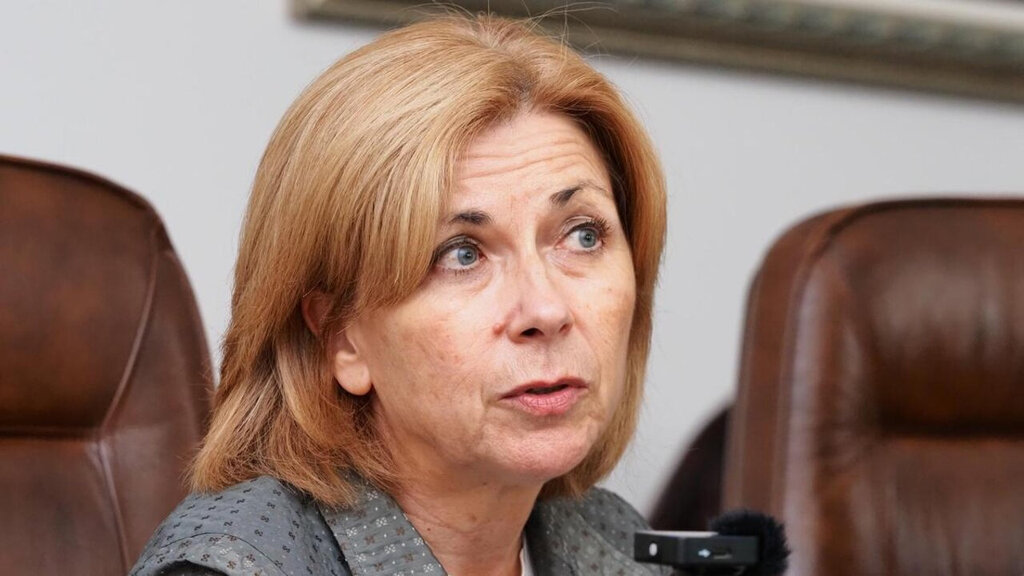
Boryana Dimitrova
PHOTO BGNES
"After the parliamentary elections in April this year, when we saw strong mobilisation and high turnout, people are now staying away from the polls. And we need to make one thing absolutely clear: the biggest drop in participation has been among voters who supported Progressive Bulgaria," Dimitrova said, referring to the party that won the spring parliamentary elections. "Progressive Bulgaria's candidate, Ms Iotova, received nearly 900,000 fewer votes than the party won in April's parliamentary elections. That is an exceptionally serious drop."
Some analysts see the result as a personal setback for incumbent President Iliana Iotova. Dimitrova, however, sees it as a warning to those in power.
"A great deal of disappointment has built up over recent months – over finances, the economy, national security and people's personal safety. There have been many developments that have left Bulgarians feeling increasingly insecure, while the expectations raised by Progressive Bulgaria's election victory have not been met."
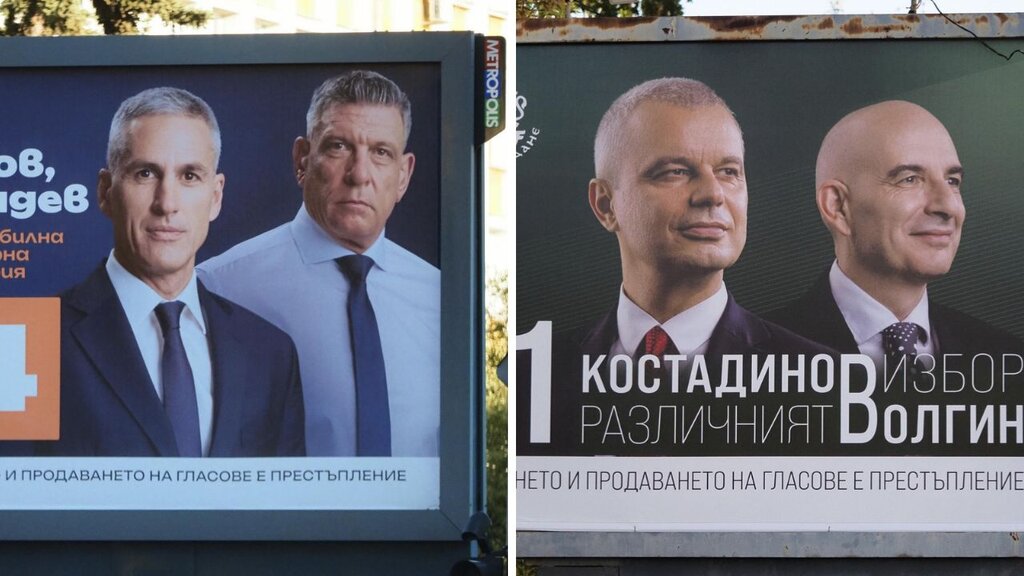
PHOTO BGNES
"We could see this process unfolding, but its scale turned out to be much greater than expected. Of course, we still have to see what happens in the second round, when different social groups may be mobilised to vote. But whatever happens, the first-round result is a very strong warning to the government that there are serious shortcomings it needs to address."
Bulgarians living abroad could vote at 613 polling stations in 60 countries, but interest was subdued there too.
"About 88,000 votes were cast abroad in the presidential election, down from around 189,000 in April. Even so, turnout abroad was slightly higher than in Bulgaria, where it was disastrously low," Dimitrova said.
"Two things stand out. There was stronger mobilisation in Western Europe and the United States. But this election was different from previous ones, when we often talked about high turnout in Türkiye. This time, only about 7,000 votes were cast there, compared with 27,000–28,000 in previous elections, and sometimes as many as 50,000."

PHOTO BGNES
"In other words, voting patterns in Türkiye mirror what we saw in Bulgaria: the Movement for Rights and Freedoms has effectively boycotted the election. Its voters simply did not turn out.
"It will be extremely interesting to see what happens in the second round. We already know that Gyurov and Kandev won a decisive victory among Bulgarians abroad, taking around 45% of the vote, compared with 22% for Iotova and Valchev – roughly twice as many votes. Kostadinov and Volgin came third, as they did in Bulgaria.
"So, to sum it up in three points: turnout fell, although it remained higher than in Bulgaria; Gyurov and Kandev won a clear victory abroad; and voting among Bulgarians in Türkiye was exceptionally low."
Historical voting patterns suggest that between a third and half of those who backed candidates eliminated in the first round do not return to the polls. That makes it difficult to predict whether turnout will rise in the run-off.
Dimitrova believes a public debate between the two remaining candidates could influence voters' decisions.
"A debate would give people a chance to see what positions the two presidential tickets stand for, what kind of Bulgaria they envisage and what future they are offering the country.
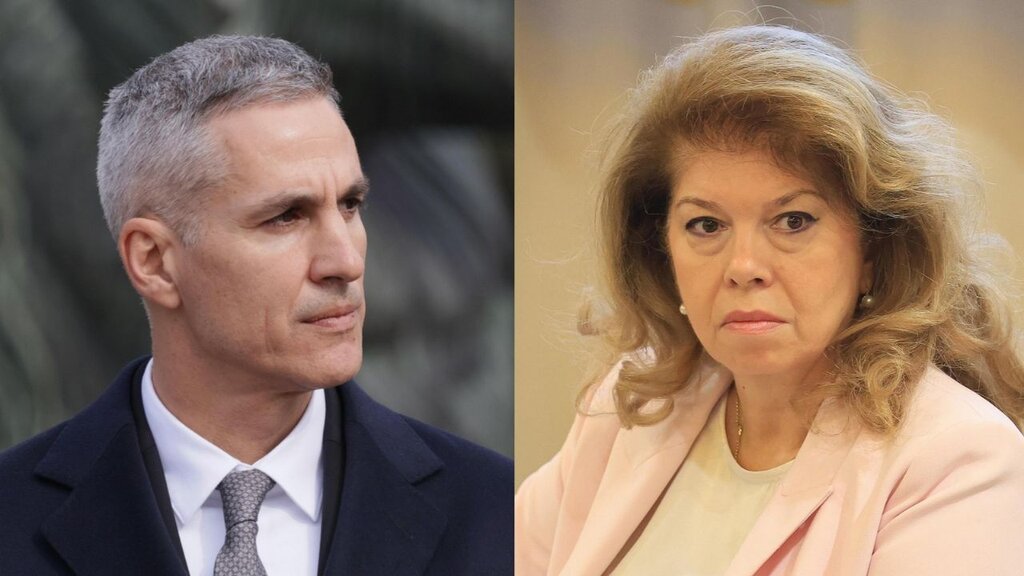
Iliana Iotova and Andrey Gyurov.
PHOTO BGNES
"Despite the low turnout, both tickets have substantial support. They are almost neck and neck. Both have their own views and arguments to put forward, and it's up to voters to decide," Dimitrova said.
"And we should not forget that these are elections about individual candidates, but they are also political elections. A great deal will depend on whether GERB and the Movement for Rights and Freedoms change their positions, because both parties have substantial, disciplined electorates.
"The difference between the two leading candidates is around 37,000 to 40,000 votes. We will see what the final figures show, but that is a very narrow margin. Mobilising voters behind either ticket could increase turnout and, more importantly, determine the final result."
Editor: Elena Karkalanova
This publication was created by: Elizabeth Radkova