


Author
Irina Nedeva
Article
2026 Daphne Caruana Galizia Prize
"Strasbourg Calling" The secrets of the Italy-Albania migration deal
Giacomo Zandonini and Maite Vermeulen reveal the costs of detaining migrants and the obstacles to public scrutiny of the centres in Albania
Monday 26 October 2026 16:51
Monday, 26 October 2026, 16:51

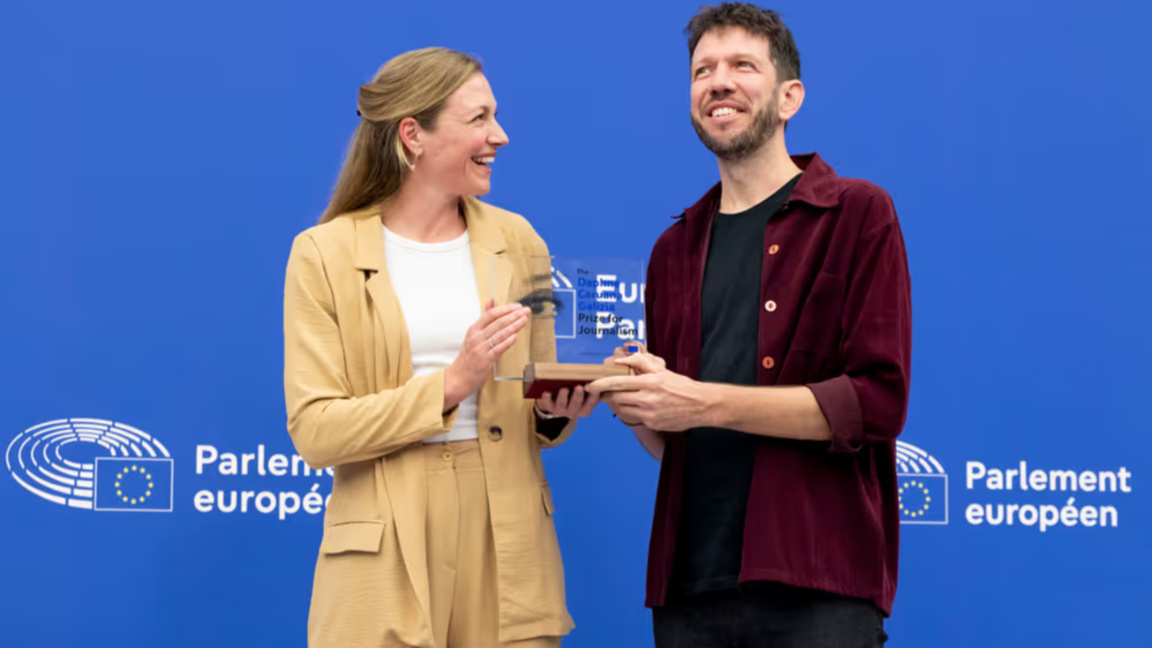
Giacomo Zandonini and Maite Vermeulen
PHOTO European Parliament Multimedia Centre
Font size
The 2026 Daphne Caruana Galizia Prize for Journalism was awarded to an investigation by the Dutch platform De Correspondent into the agreement between Italy and Albania, which provides for the detention of migrants and the processing of their asylum applications on Albanian territory.
The investigation was conducted by Italian journalist Giacomo Zandonini and Dutch journalist Maite Vermeulen. Over 18 months, they tracked how the agreement operates, as several EU member states consider it a possible model for future European migration policy.
The journalists uncovered serious obstacles to public scrutiny of the system. They were denied access to the centres operated by Italy in Albania, while key information, including the number of people detained, is not made publicly available.
To investigate how the centres operate and how public funds are spent, the authors submitted more than 30 freedom of information requests in six European countries, as well as to the European Commission, the Council of the EU and the European Border and Coast Guard Agency, Frontex. They also interviewed detained migrants, lawyers, government officials, members of parliament and local residents in Albania.
The investigation also examines possible violations of human rights and the rule of law. According to the authors, the costs of the centres are covered through emergency procedures that bypass the usual public procurement rules, while staff are required to sign confidentiality agreements.
The award was presented at a ceremony in the European Parliament in Strasbourg by a representative of the independent jury, which includes journalists from all 27 EU member states. European Parliament President Roberta Metsola and Vice-President Pina Picierno, who is responsible for the prize, attended the event.
“Nine years after the brutal murder of Daphne Caruana Galizia, our determination to see justice done remains unwavering,” Roberta Metsola said. She stressed that the courage and commitment to the truth demonstrated by the Maltese journalist continue to inspire others, and that the European Parliament will continue to support journalists and defend press freedom.
A total of 344 entries were submitted for the 2026 competition. The jury selected ten finalists, from whom the winner was chosen. The prize also carries a monetary award of €20,000.
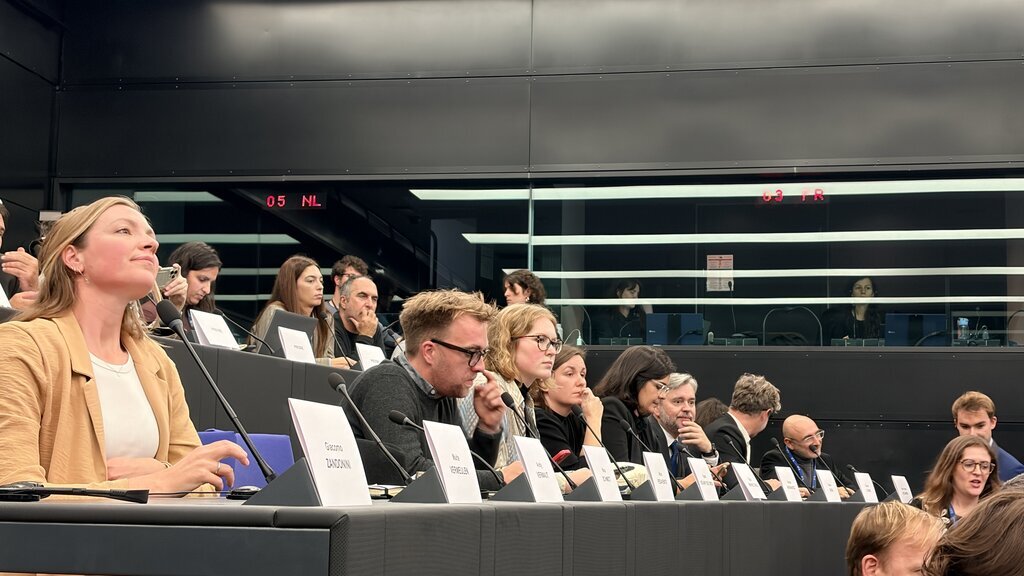
Finalists for the 2026 European Parliament Prize for Journalism await the announcement of the winner
PHOTO Irina Nedeva
About the Daphne Caruana Galizia Prize
The prize is awarded annually with the support of the European Parliament in memory of Maltese investigative journalist Daphne Caruana Galizia, who was killed by a car bomb on 16 October 2017. She was known for her investigations into corruption, money laundering, organised crime and links between political power and business.
The award recognises journalistic investigations that uphold the European Union’s fundamental values: human dignity, freedom, democracy, equality, the rule of law and human rights.
Previous recipients have included an investigation into the financial networks behind Russia’s “shadow fleet” in 2025, the disappearance of unaccompanied migrant children in Europe in 2024, and the migrant shipwreck off Pylos in 2023.
Nine years after Caruana Galizia’s murder, five people have been imprisoned for their involvement in the crime. The question of the legal accountability of the person who commissioned the murder remains unresolved.
Who Was Daphne Caruana Galizia?
Daphne Caruana Galizia was a Maltese journalist, blogger and anti-corruption activist who produced in-depth investigations into corruption, money laundering, organised crime, the sale of citizenship and links between the Maltese government and the so-called Panama Papers.
After facing harassment and threats, she was killed in a car bomb explosion on 16 October 2017. Public outrage over the authorities’ handling of the murder investigation led to the resignation of Prime Minister Joseph Muscat.
Members of the European Parliament criticised shortcomings in the investigation and, in December 2019, called on the European Commission to take active measures. They have continued to revisit the case, including through a resolution adopted in 2023 that condemned the limited progress in bringing those responsible to justice.
To date, five people have been imprisoned for carrying out the murder. However, the person who masterminded the killing has yet to be convicted.
Read also:
“Strasbourg Calling” Daphne Caruana Galizia’s son calls for a retrial