


Author
Ivo Ivanov
Article
The birth of the Central Revolutionary Committee and Bulgaria’s Liberation
Saturday 31 October 2026 14:05
Saturday, 31 October 2026, 14:05

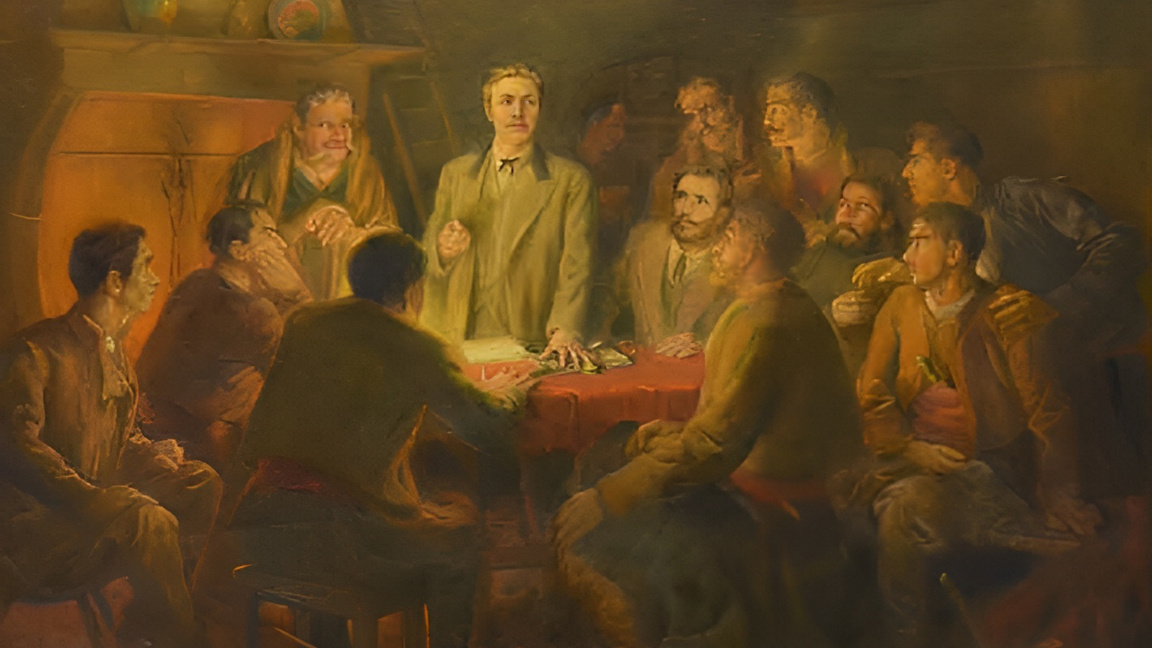
Vasil Levski founding a secret revolutionary committee, painting by Vasil Stoilov
PHOTO militarymuseum.bg
Font size
Following the Battle of Varna in 1444 and the fall of Constantinople in 1453, the medieval Bulgarian lands finally came under the rule of the Ottoman sultans. Yet the Bulgarian people proved impossible to assimilate and, until the 19th century, never ceased seeking a path towards the restoration of their statehood and independence.
Throughout the centuries of foreign rule, Bulgarians drew strength from three main sources: the relative autonomy of their local communities within the Ottoman administrative system; their Christian faith; and the absence of a superior social, economic and cultural model within the Sultan’s empire that might have displaced their own. Resistance to imperial oppression took the form of the "haiduk" rebel movement and periodic uprisings.
Major uprisings were invariably associated with wars and military defeats suffered by the Ottoman Empire, as well as the arrival of foreign armies, which Bulgarians regarded and supported as allies in their struggle. In the wake of the French Revolution and the Napoleonic Wars in the early 19th century, Bulgarian revolutionary activists increasingly embraced the principle of relying on their own strength. As historian Yono Mitov puts it, their guiding idea became: “We ourselves” - a notion reminiscent of the name of the Irish independence movement, Sinn Féin, meaning “ourselves”.
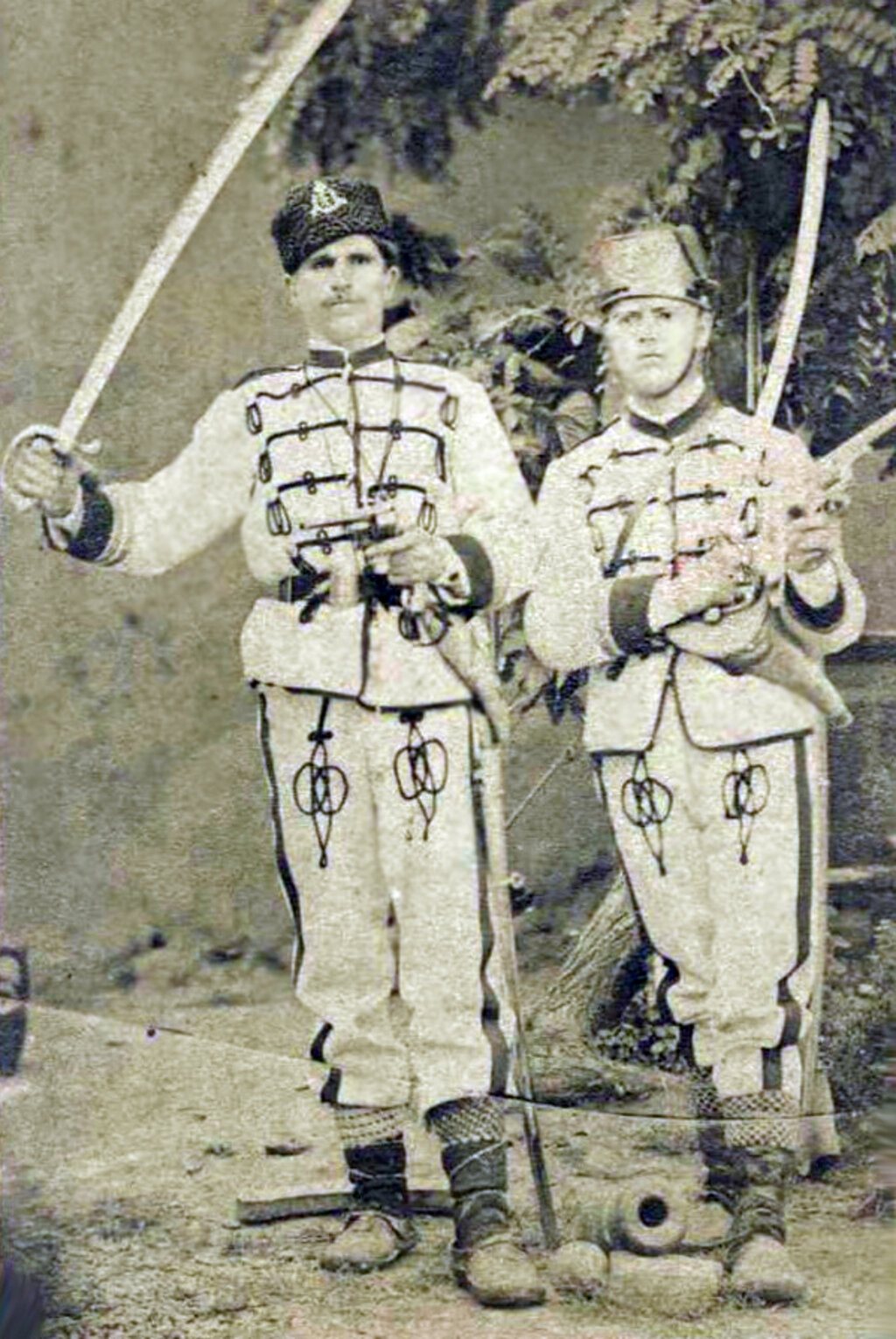
Rebels from the First Bulgarian Legion in Kladovo
PHOTO Bulgarian Historical Archive
Following the revolutions of 1848, which shook Europe, the more politically conscious Bulgarians also began to assert themselves. In 1862, when tensions between Serbia and the Ottoman Empire erupted into armed conflict in Belgrade, an armed formation of around 600 Bulgarian volunteers was assembled under the leadership of Georgi S. Rakovski. Many of those who joined the First Bulgarian Legion would go on to become leading figures in the national liberation movement over the following quarter-century.
The plan was for the legion to advance into Bulgarian lands and, following the example of Garibaldi’s Expedition of the Thousand, spark a nationwide uprising. Political circumstances prevented this from happening, and the legion took part only in the fighting surrounding the capture of Belgrade Fortress.
At the time, Ivan Kasabov was one of Georgi Rakovski’s closest associates. In 1862, while in Belgrade, the lawyer Kasabov drafted a document entitled Statutes of a Provisional Bulgarian Committee, also known as the Provisional Bulgarian Command. It was the first time that the word “committee” appeared in the organisational vocabulary of the Bulgarian national liberation movement.
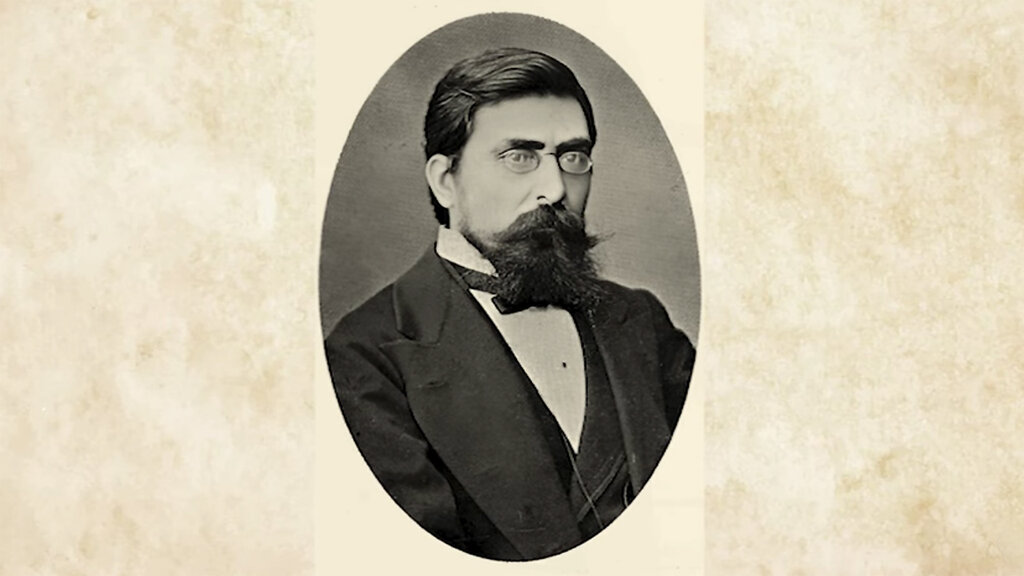
Ivan Kasabov (1837 – 1911)
PHOTO Kosta Razmov
After the First Bulgarian Legion was disbanded, Ivan Kasabov established the Secret Central Bulgarian Committee in Bucharest. He also published the propaganda newspapers Narodnost and Tupan. Internal divisions within the Bulgarian émigré community, fuelled by pro-Russian and pro-Serbian leanings, eventually led Kasabov to withdraw from the committee, and its activities gradually came to a halt.
Nevertheless, it was Kasabov and his circle, known as “Young Bulgaria”, who helped Vasil Levski undertake his second tour of the Bulgarian lands, during which he set about establishing local revolutionary committees. These committees would eventually be linked through the network of the Internal Revolutionary Organisation (IRO), which, following the events of 1875, would play a decisive role in the liberation of much of Bulgaria. Kasabov also drafted and printed a Proclamation in the Name of the Provisional Bulgarian Government in the Balkan Mountains, which Levski and the local committees distributed throughout the Bulgarian lands.
Thus, on 31 October 1869, a new organisation, the Bulgarian Revolutionary Central Committee, was established in Bucharest, with Lyuben Karavelov at its head. Historians continue to debate the relationship between the Bucharest-based Central Committee and the Bulgarian Revolutionary Committee established by Vasil Levski as the central body of the Internal Revolutionary Organisation, headquartered in Lovech. Most researchers, however, agree that the two committees pursued the same organisational objective, with the Bucharest committee serving as the Internal Revolutionary Committee’s external representation.
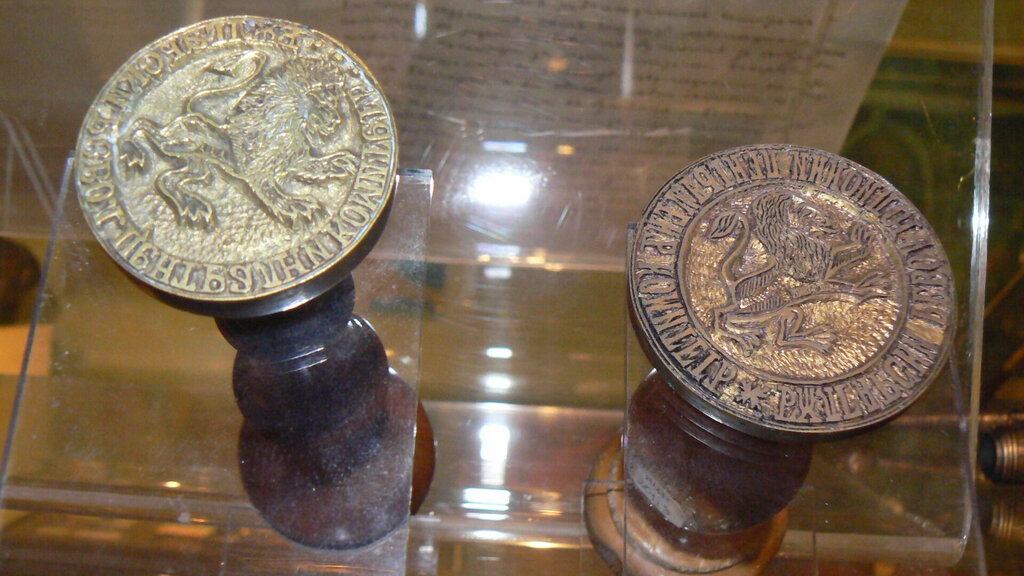
Stamps of the Bulgarian Revolutionary Central Committee, 1870s
PHOTO bg.wikipedia.org
Bulgarian national hero Vasil Levski wrote and edited the principal founding document of the Bulgarian Revolutionary Central Commitee, Statutes of the Workers for the Liberation of the Bulgarian People (Narеda na rabotnitsite za osvobozhdenieto na balgarskiya narod).
The opening section of the document, also referred to as the Statutes, sets out its motivation and purpose:
“Motivation: The tyranny, inhumanity and very system of government of the Turkish administration on the Balkan Peninsula.
Aim: Through a general revolution, to bring about a fundamental transformation of the present despotic and tyrannical system of government and replace it with a democratic republic (government by the people). On this very land, which our forefathers won through the force of arms and with their sacred blood, where Turkish tax collectors and Janissaries now rage inhumanely and the law of the strong prevails, a temple of Truth and genuine Freedom shall be raised.”
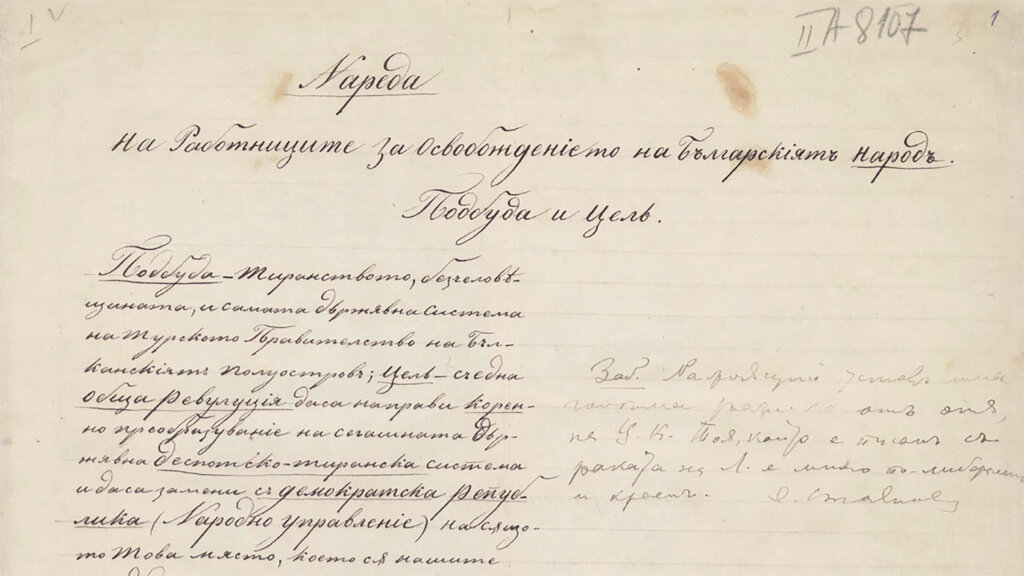
Statutes of the Workers for the Liberation of the Bulgarian People (Narеda na rabotnitsite za osvobozhdenieto na balgarskiya narod)
PHOTO vasil-levski.bg
The death of the Bulgarian apostle of freedom Vasil Levski in 1873 and the failure of the Stara Zagora Uprising in 1875 led to the disintegration of the Bulgarian Revolutionary Central Commitee. Yet the revolutionary leaders who gathered in Giurgiu in 1876 succeeded in reviving the Internal Revolutionary Organisation in just four months. They organised the April Uprising, setting in motion the chain of events that would lead to Bulgaria’s Liberation in 1878 and the establishment of the Principality of Bulgaria.
Learn more about Bulgarian history:
The April Uprising – a peak in the liberation struggles of the Bulgarians
"The Bloody Letter" heralds the beginning of the April Uprising
Vasil Levski - unsurpassed in courage, defied an empire
This publication was created by: Rositsa Petkova