Author
Krasimir Martinov
Thursday 13 August 2026 16:39
Thursday, 13 August 2026, 16:39

PHOTO BNT
Font size
When a country is given the right to host Eurovision for the first time, the logic usually seems straightforward: the contest goes to the capital. That is where the largest infrastructure, international connections, hotels, media, and institutions are located.
Bulgaria, however, has chosen a different path.
On August 13, 2026, the European Broadcasting Union (EBU) and the Bulgarian National Television (BNT) announced that Burgas will host Eurovision 2027. The seaside city won the domestic competition against the capital, Sofia, and will welcome artists, delegations, journalists, and thousands of fans next May.
Bulgaria's coastal city Burgas will host Eurovision 2027
The semi-finals will take place on May 11 and 13, with the grand final on May 15.
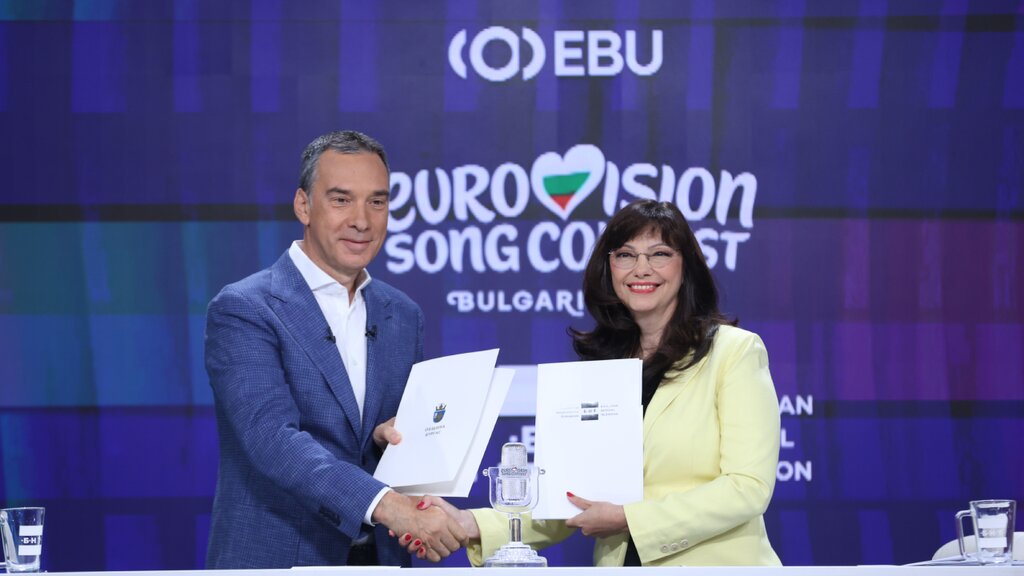
BNT director general Milena Milotinova and Burgas Mayor Dimitar Nikolov
PHOTO BTA
The decision undoubtedly has significance beyond a single music event. It places Burgas at the center of international attention and demonstrates that Bulgaria is ready to present to the world not only its capital, but also other cities.
A brief look at Eurovision’s history shows that the contest has repeatedly “left” European capitals over the years. The Netherlands chose Rotterdam to host the competition following the COVID-19 pandemic, while in 2022 Italy selected Turin rather than Rome. The United Kingdom gave hosting duties to Liverpool in 2023, Sweden chose Malmö in 2024, and Basel hosted the contest in 2025 instead of the capital, Bern.
In other words, Burgas’s selection as host of Eurovision 2027 can be seen as part of a broader European trend - or perhaps a concept - in which major international events are not necessarily concentrated in countries’ administrative centers.
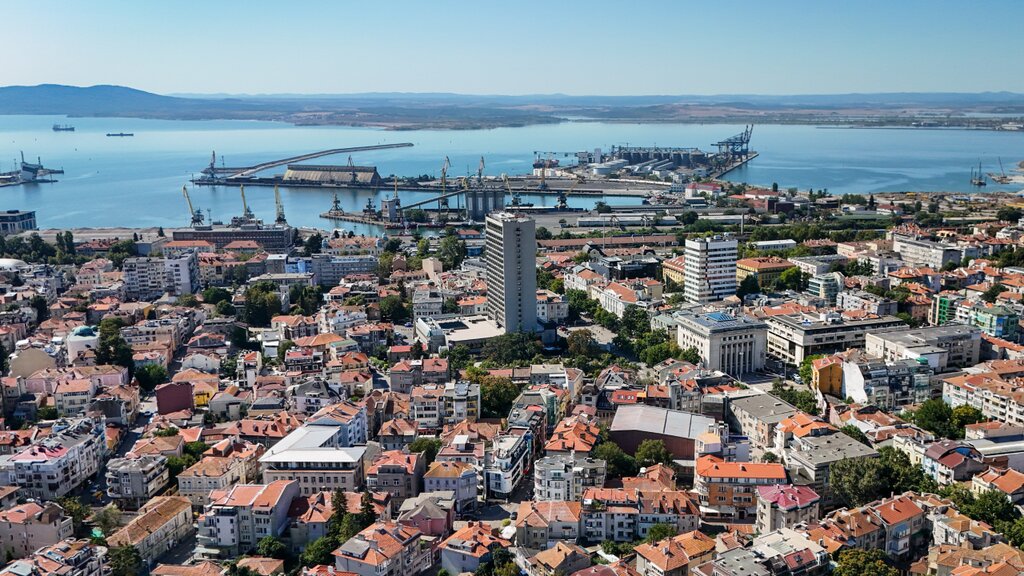
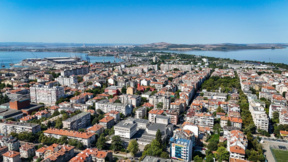
Aerial view of Burgas
PHOTO BTA
Burgas’s strongest asset is undoubtedly the sea. When millions of viewers around the world hear “Burgas! Bulgaria!”, images of the sea, the Sea Garden, and the beach will inevitably come to mind, along with the cultural events and atmosphere of the Bulgarian Black Sea coast. This represents enormous tourism potential. The official Eurovision website already presents Burgas as a Black Sea city, highlighting its history, culture, and role as the host city in 2027.
For Bulgaria, this is arguably the best advertising campaign possible - not funded solely through the national tourism budget, but also driven by the interest of the huge European television market and thousands of Eurovision fans, many of whom may see the Bulgarian coast for the first time through the world’s biggest music competition.
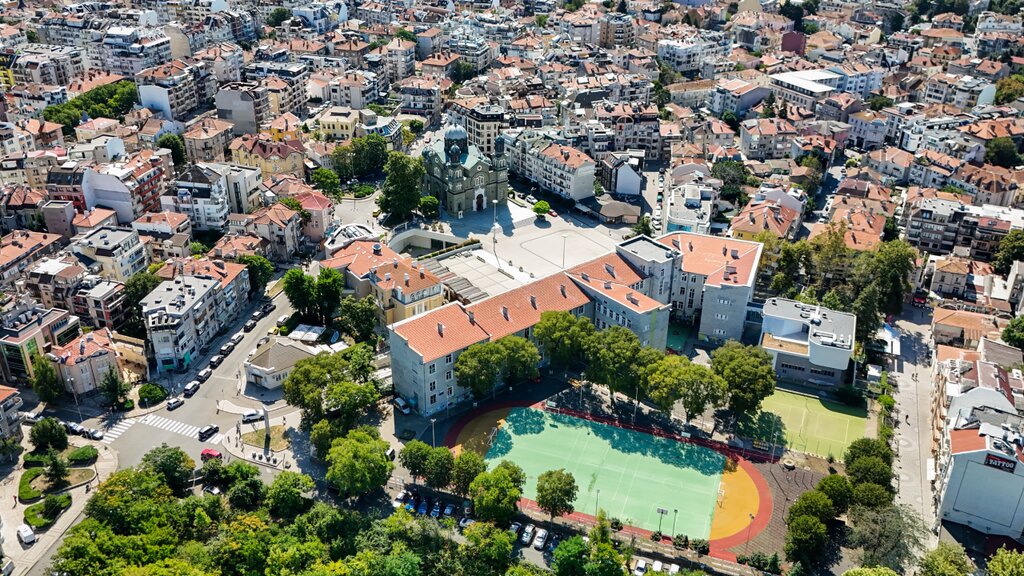
PHOTO BTA
But after every wave of enthusiasm comes an important “but”. It is crucial how Bulgaria, and Burgas’s administration in particular, handles the challenge. Eurovision brings not only publicity but also enormous responsibility. The city will need to provide transportation, accommodation, security, logistics, and services for a huge number of people over a short period.
If all of this is managed successfully, the long-term benefits for both the city and the country could be enormous. Burgas’s success will not be measured solely by beautiful television images of the Sea Garden and beaches.
This is where the enormous potential for Burgas lies: transforming itself from a summer tourist destination into a modern and sought-after city for international events throughout the year.
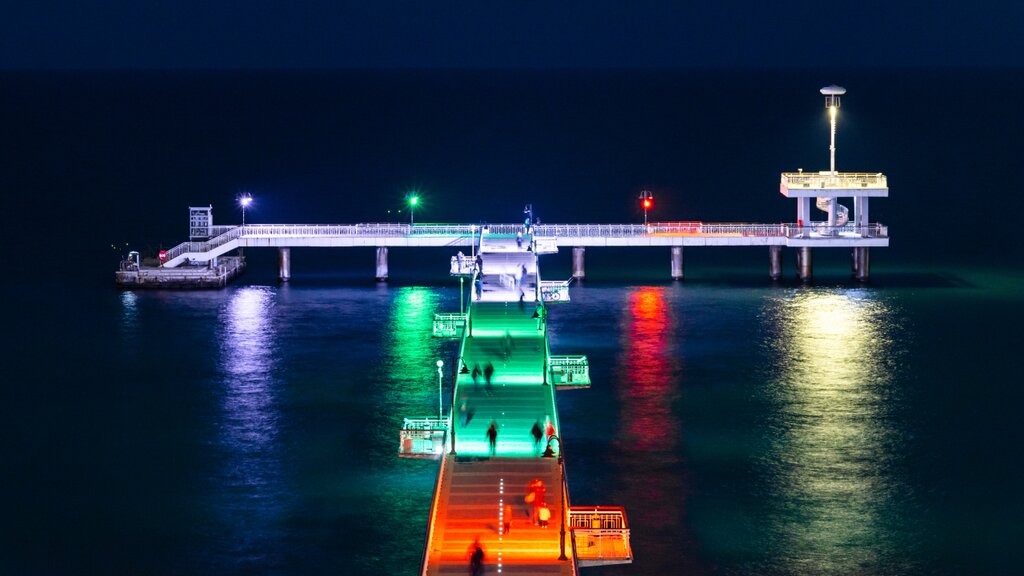
PHOTO BTA
The choice of Burgas as host of Eurovision 2027 is also a logical continuation of the city’s development. In recent years, it has become increasingly difficult to describe Burgas simply as a summer tourism center. The sea and traditional summer season remain part of its identity, but behind them a new image is gradually emerging - a city that invests in infrastructure, attracts industrial companies, educational institutions, and healthcare professionals, develops sustainable transport, and seeks to make culture a year-round driver of urban life.
Burgas already has a rich calendar of festivals, concerts, cinema, art, and outdoor events. These include the International Film Festival, “Jazz in Burgas”, “With a Book on the Beach,” music festivals, and various initiatives in the Sea Garden and other cultural spaces.
In May 2026, Burgas was one of the Bulgarian cities to host the prestigious Giro d’Italia cycling race. Just days ago, on August 7 and 8, Burgas’s Sea Station once again became the stage for Bulgaria’s largest event dedicated to music from the 1990s to the present - the SPICE Music Festival 2026. Performers included Thomas Anders of Modern Talking, Jenny Berggren of Ace of Base, and Ruslana from Ukraine.
The city’s summer program also features concerts by Bulgaria’s biggest pop stars, as well as a rich calendar of theatre productions, opera performances, and classical concerts.
So the conditions and foundations are already in place.
The test for Burgas - and for Bulgaria - is about to begin.
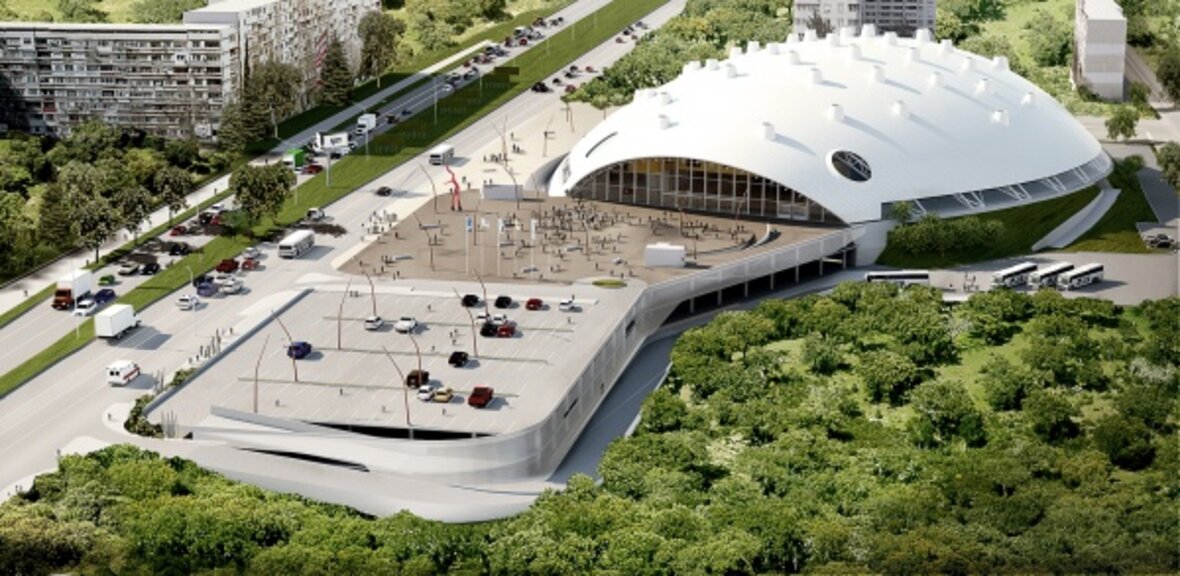
PHOTO Arena Burgas hall
The article partially uses artificial intelligence.
English: R. Petkova
This publication was created by: Rositsa Petkova