Author
Tsvetana Toncheva
Article
Highlights of Bulgarian musical culture
"Gugutka guka v usoi” - a melancholy bridal song of legendary Gyurga Pindzhurova
Friday 6 November 2026 20:00
Friday, 6 November 2026, 20:00
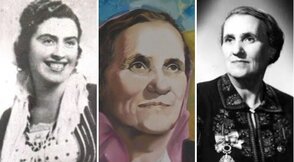
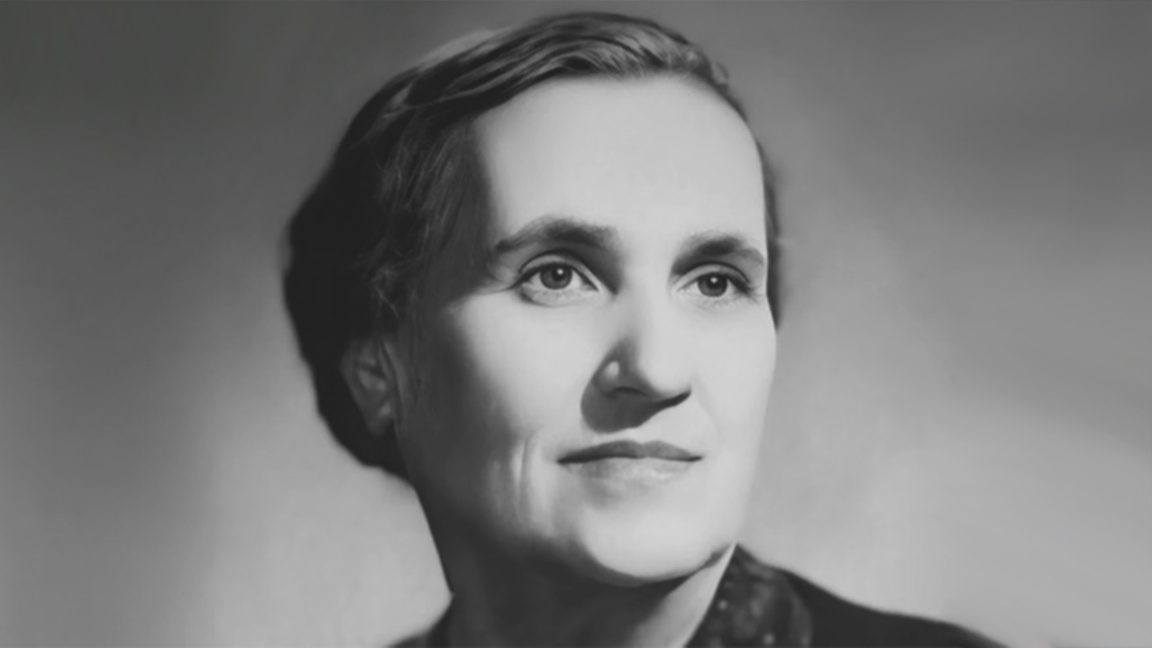
PHOTO Archive
Font size
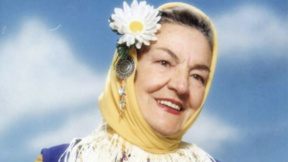
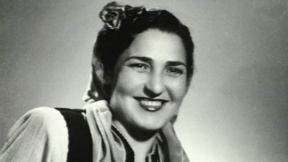
The voice of Gyurga Pindzhurova, one of Bulgaria’s best-loved folk singers, lives on as a cherished memory in the hearts of generations, with its warm, rich and deeply expressive sound. Affectionately known as Guga, she turned the folklore of her native Tran region into a true treasure, leaving a lasting mark on the history of Bulgarian culture.
Music was part of her home from her earliest childhood. Her mother sang and her father played the gadulka, a traditional Bulgarian bowed string instrument. Decades later, Gyurga would recall that although her family might not have been wealthy, they possessed another kind of riches: the folk song. After her father’s early death, her mother was forced to work as a domestic servant in other people’s homes and as a harvest worker in the fields. Little Gyurga accompanied her and quite literally absorbed the beautiful melodies of her native region.
Her talent did not go unnoticed. A fateful encounter with the great opera diva Hristina Morfova proved decisive. Impressed by the girl’s talent, Morfova insisted that she receive formal musical training at the State School of Music in Sofia. Later, with Morfova’s help, Gyurga went to Prague, where she graduated in opera singing from the Conservatory. Despite the opportunities for an international opera career, she chose to return to her hometown of Tran.
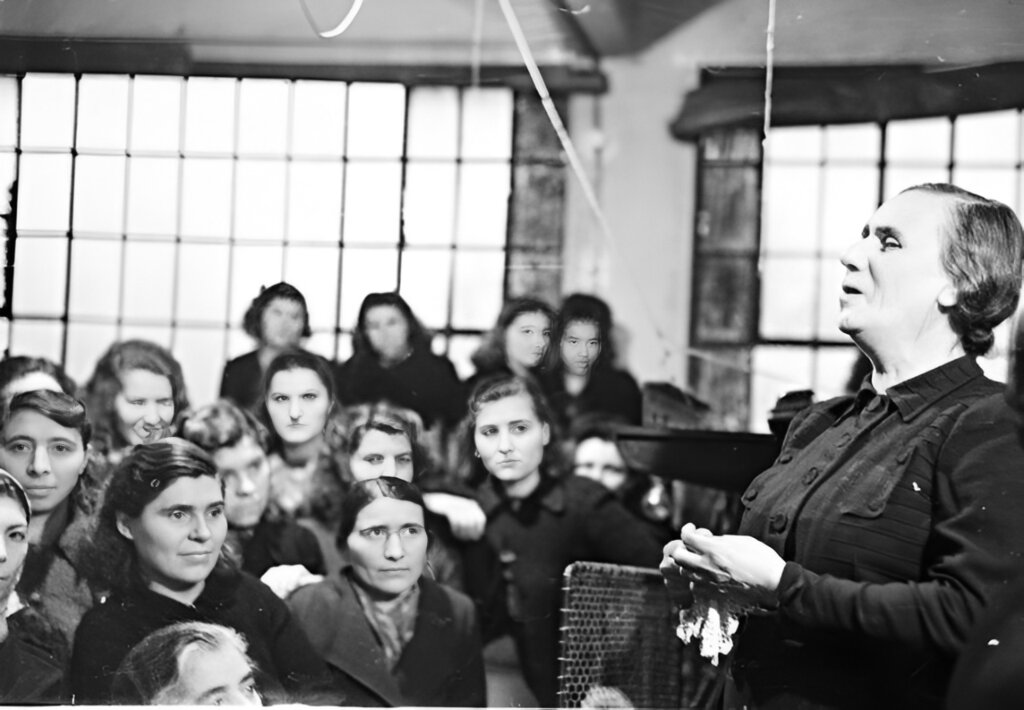
PHOTO Todor Slavchev's photo archive
In January 1921, she gave her first concert in Bulgaria, performing arias and arrangements of folk songs. She became a singing teacher in a remote village, married and had two children, but never stopped singing. Then another encounter would prove decisive in her life. Sirak Skitnik, director of Radio Sofia, was visiting Tran when he happened to hear Pindzhurova sing. He subsequently invited her to join the radio station as a soloist. At the time, songs were performed live on air.
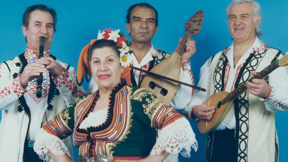
In 1935, the singer and her family moved to Sofia, and Gyurga became a regular contributor to the radio programme. She performed mainly songs from the Tran region, specially arranged for her and accompanied by the folk ensemble Trakiyska Troyka (Thracian Threesome). Her performances every Sunday on the Children's Hour programme on the radio became emblematic.
Her first gramophone records appeared in 1939. Her distinctive voice and unique interpretations soon won her immense popularity. “Omile mi, Yagodo” is perhaps her best-known song. Other much-loved performances include “Popey mi, Yanke le, nevesto”, “Chicha reche da me zheni”, “Strahil Voyvoda”, “Pushka pukna”, “Slantse zayde”, “Kaval li sviri” and “Zakukala kukuvitsa”.
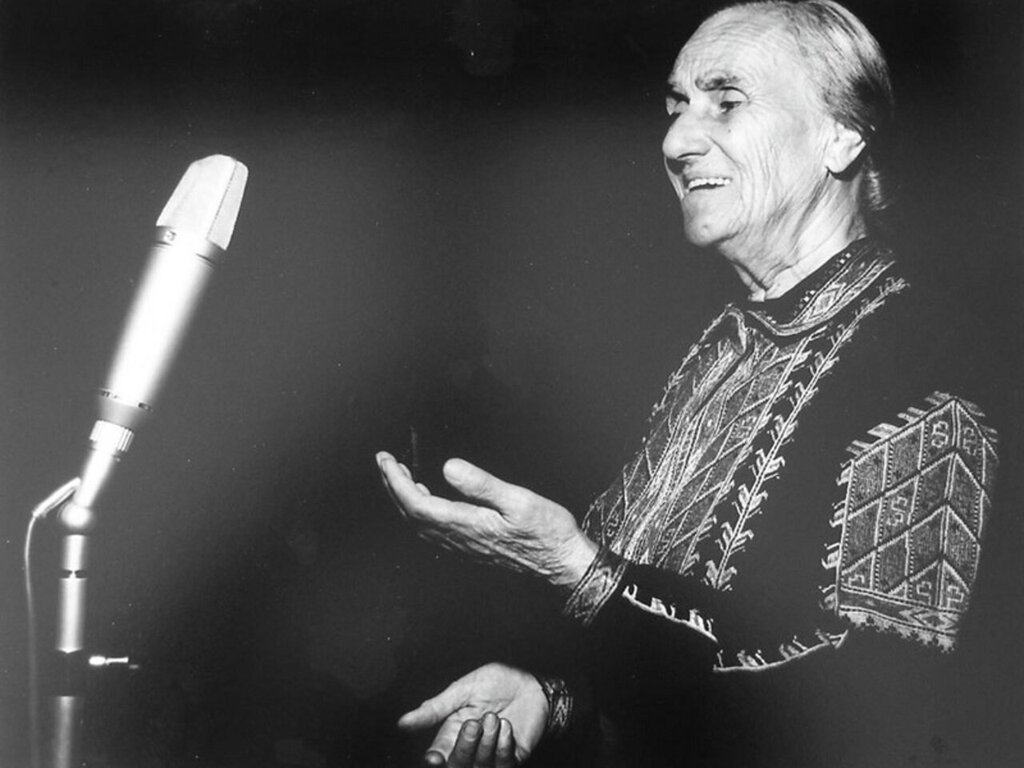
PHOTO BNR
Gyurga Pindzhurova left behind a rich musical legacy, with more than 80 of her recordings preserved in the archives of the Bulgarian National Radio alone. Her repertoire extended beyond the folk traditions of her native Tran region to include songs from other ethnographic regions of Bulgaria, as well as National Revival and hajduk songs. In 1955, she began touring Bulgaria and abroad. Everywhere she went, people remembered her as a lively, cheerful, warm-hearted and sunny woman who could always find common ground with others and was ready to help anyone in need.
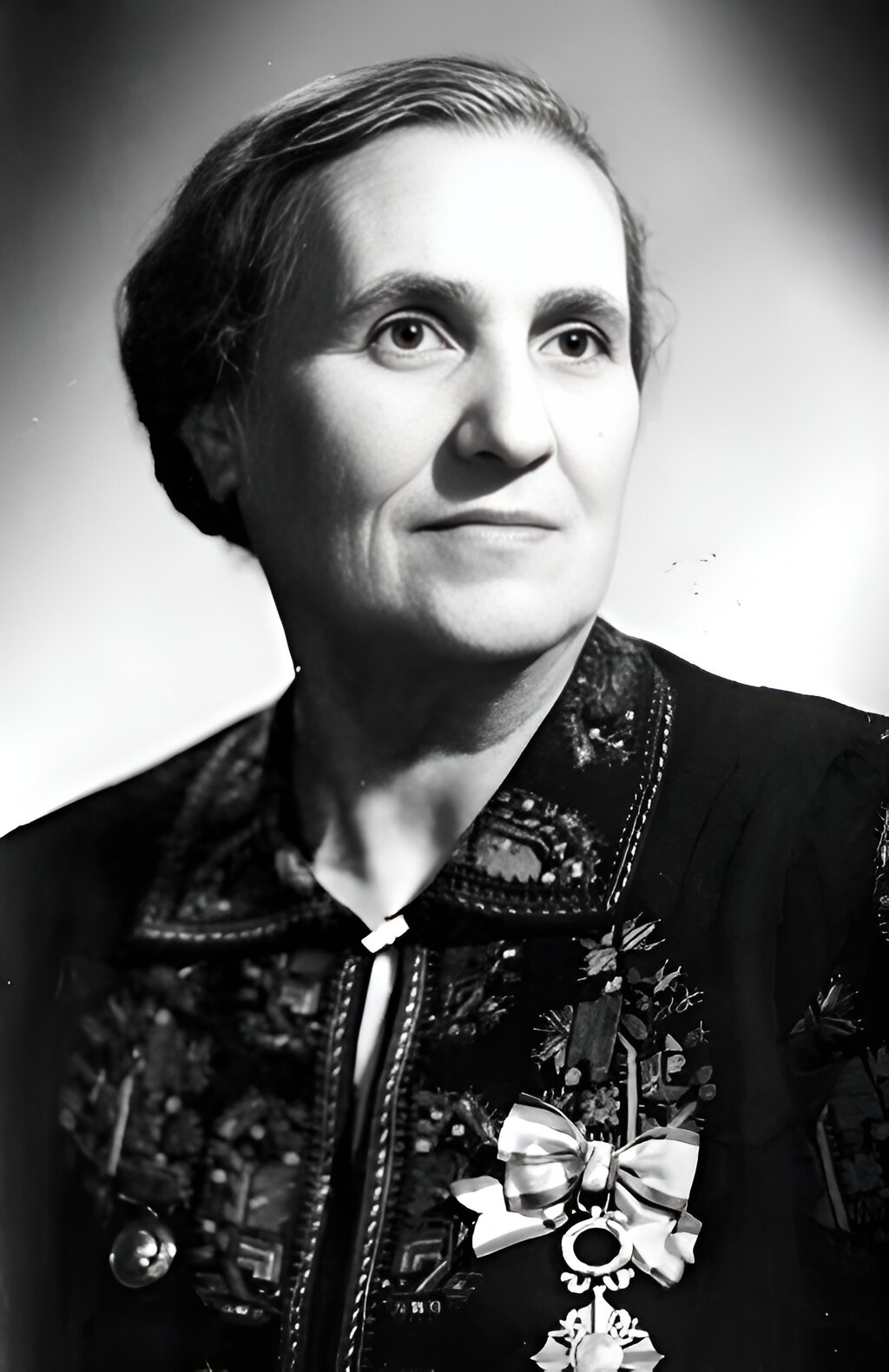
PHOTO Archive
“Her presence commanded respect. Everyone wanted to be like her, to imitate her. And I wanted that too,” the renowned Strandzha folk singer Magda Pushkarova recalled.
“There was no village or town where she did not bring people to tears. She was a true master of the stage. She was like a mother to us. She was so warm and kind-hearted that we all called her ‘Mama Guga’,” added the celebrated Macedonian musician Kostadin Gugov.
In recognition of the love of her audiences and her contribution to Bulgarian folk music, Gyurga Pindzhurova received the country’s highest state awards and honours. Her songs continue to live on to this day. Competitions are held in her honour in her hometown, and the local community cultural centre bears her name.
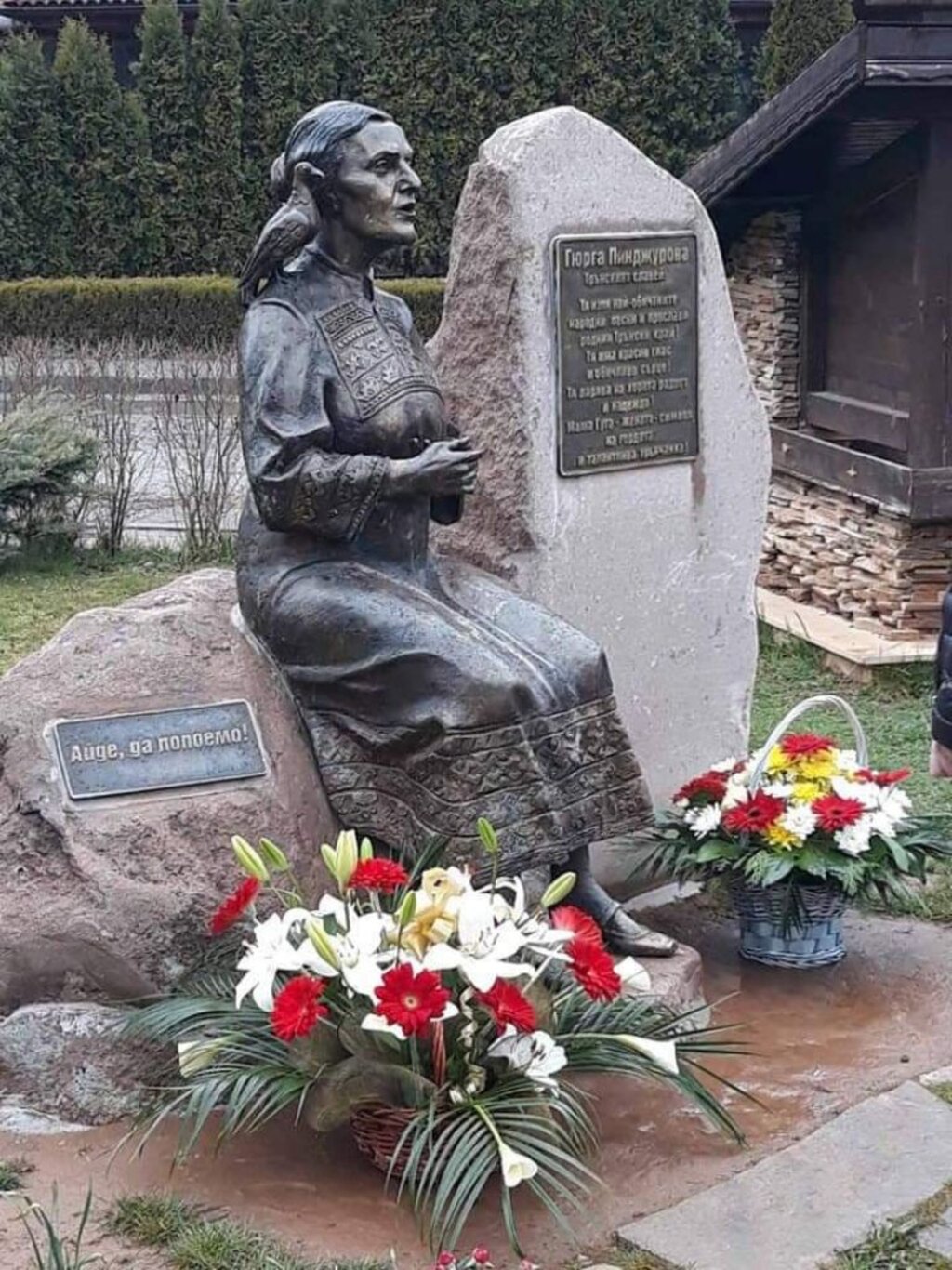
Monument to Gyurga Pindzhurova in Tran
PHOTO BTA
Among Gyurga Pindzhurova’s unforgettable performances, the song "Gugutka guka v usoi" (“A Dove Cooing in the Woods”) holds a special place. This bridal lament is a deeply moving expression of sadness and nostalgia for childhood. In Bulgarian folk customs and songs, the dove is a symbol of tenderness and love. Here, it ceases to be merely part of the landscape and becomes a confidante to whom the young bride pours out her sorrow.
The bird awakens memories of the time when the woman was a little girl, tenderly loved and cared for by her parents. Her wedding and the beginning of a new family mark the transition from maidenhood to adulthood, yet her heart continues to cherish the warmth of her mother’s caress and her father’s protection. The repeated exclamation “lele” lends the song its characteristic folk emotional intensity, deepening the sense of a memory that is at once warm and painful.
The song also has a Serbian version, “Gugutka guка vo osoje”, which is popular in southern Serbia. A version of the lyrics recorded in the Bosilegrad Kraište region bears striking similarities to the Bulgarian text, illustrating the close ties between the folk traditions on both sides of the Bulgarian-Serbian border.
In Gyurga Pindzhurova’s rendition, the song takes on a particular tenderness and sincerity. Her voice does not seek unnecessary drama; instead, it tells the story and conveys its emotions with subtlety and naturalness. Pindzhurova transforms this intimate confession about childhood, a mother’s love and the inevitable separation from one’s family home into a universal message: wherever life may take us, we all carry in our hearts the place where we were once children and to which we will always long to return.
Read also:
Gyurga Pindzhurova: Magician of Bulgaria’s folk music
You can find more installments in Radio Bulgaria's series "Highlights of Bulgarian Musical Culture" HERE.
Edited by E. Karkalanova
English: R. Petkova
This publication was created by: Rositsa Petkova