


Author
Vesela Krasteva
News
A lesson on Bulgaria: self-discovery at Rodolubie school in Naples
Tuesday 31 March 2026 07:25
Tuesday, 31 March 2026, 07:25
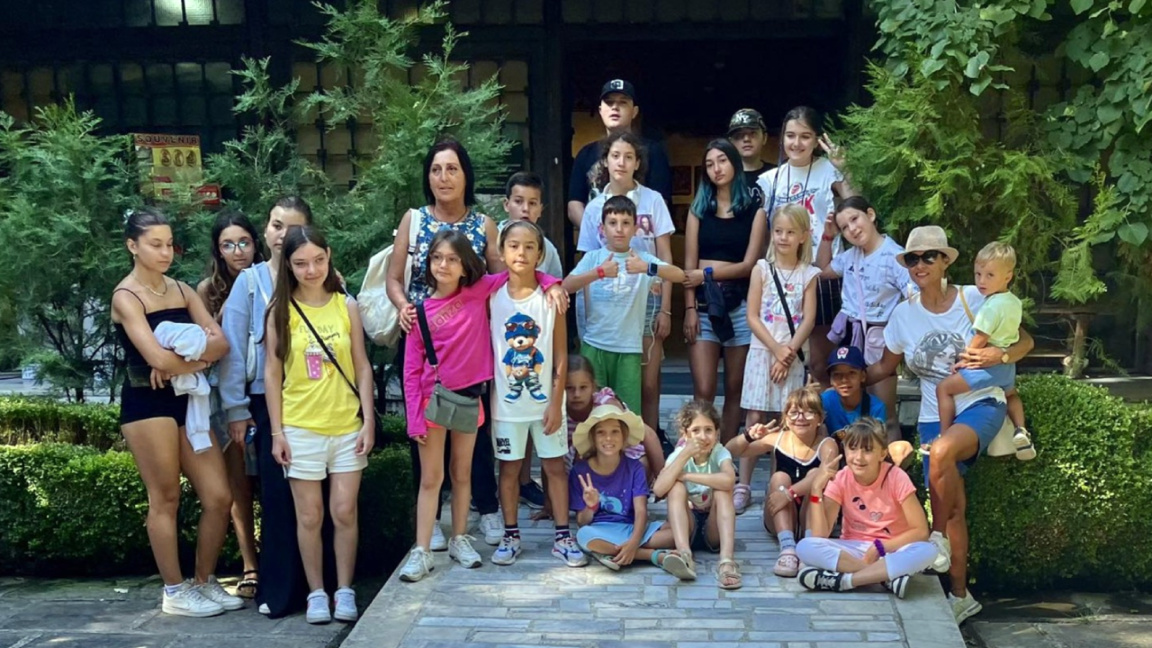
PHOTO Rodolubie school in Naples
Font size
One of the centres of Bulgarian cultural life in southern Italy is the Bulgarian Sunday School “Rodolubie” in Naples, founded in 2017. It started out with just ten Bulgarian children and a handful of people, said Valentina Nikolova, the school’s headteacher, in an interview with Radio Bulgaria.
“Our first steps were very modest, in the cosy halls of a Russian church in Naples, where we arranged the first letters of our alphabet. Today, however, Rodolubie has grown and flourished. Our classrooms are filled with light and space, and since 2020, we have been officially recognised by the Ministry of Education and Science.”
In 2023, the school opened a branch in the picturesque town of Sant’Antonio Abate. In the current academic year, it is teaching a total of 90 pupils, aged between six and eighteen and grouped into nine mixed-age classes.
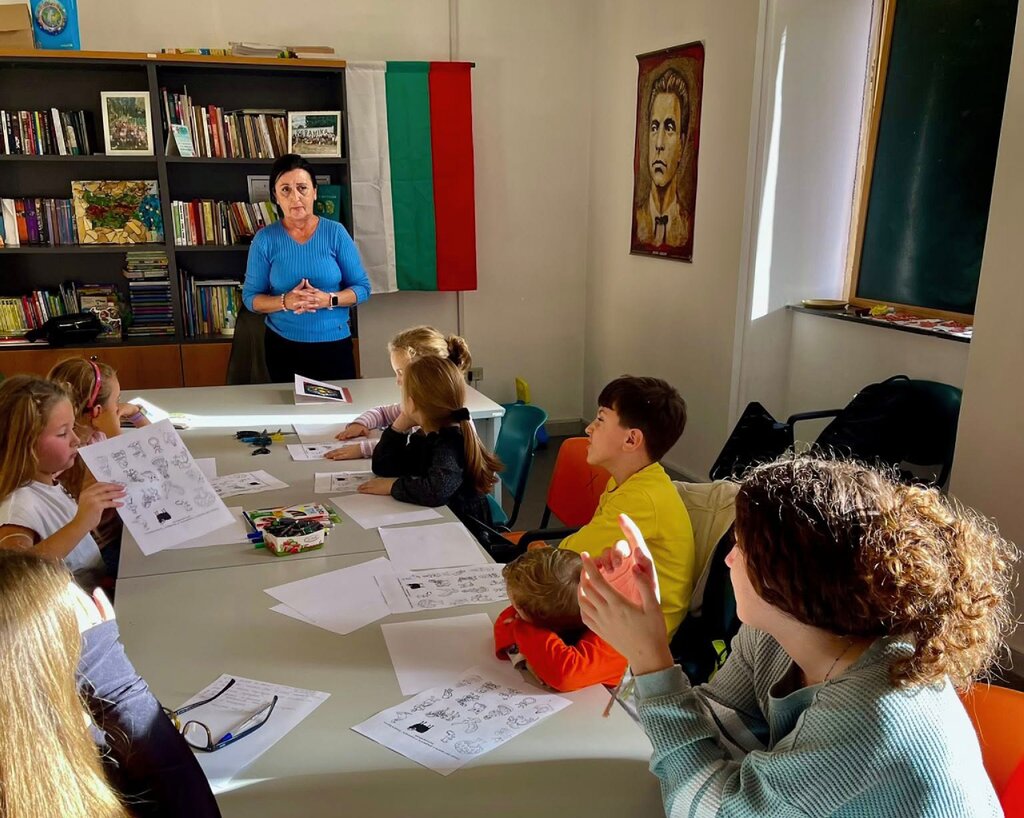
PHOTO Rodolubie school in Naples
The exact size of the Bulgarian community in Italy is unclear. According to data from the National Statistical Institute in 2024, just over 48,600 Bulgarians are officially registered in Italy. However, unofficial estimates suggest that the true figure is closer to 120,000, most of whom reside in central and northern Italy, particularly in cities such as Milan, Bologna, and Florence. Nikolova states that there are around 4,000 Bulgarians in Naples and the surrounding area, and adds that she 'sees' the community through the children.
“They are a reflection of their parents. Many Bulgarians here want their children to integrate into Italian society, yet they also have a strong spiritual desire to preserve their Bulgarian identity.”
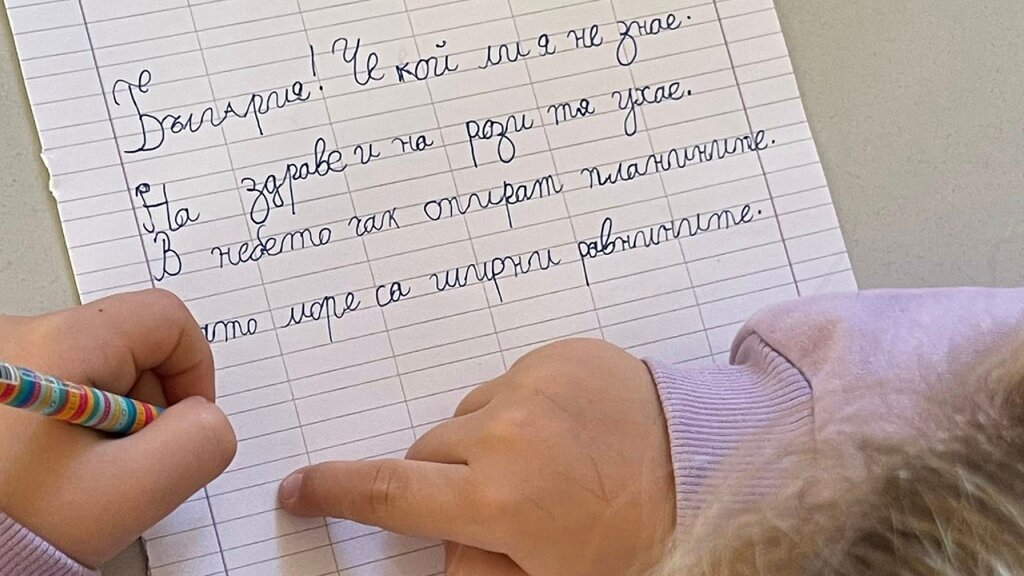
PHOTO Rodolubie school in Naples
This sense of belonging extends to the classrooms of 'Rodolubie'. Having lived in Italy for more than 19 years, Nikolova says she has learned one thing above all: Bulgaria is loved more deeply from afar.
“I miss everything about Bulgaria: the beauty of the country, my home, my family and friends. No matter how much time passes.”
This sense of longing, born of love, is not always easy to pass on to children born and raised abroad – children for whom Bulgarian is not always a first language.
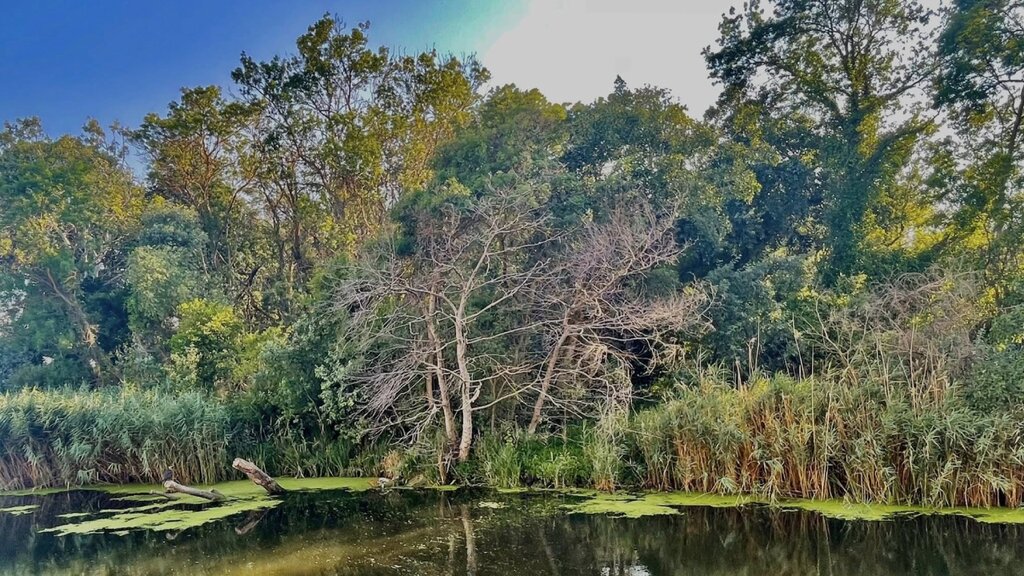
PHOTO Rodolubie school in Naples
“In our school, Bulgarian is taught as a heritage language, and I would argue that teaching in a foreign-language environment poses significant challenges. It’s not just about grammar; it’s also about fostering a lasting sense of national identity. For me, this mission requires great patience, as well as a deep love for the children, our language, and our homeland.
From a professional point of view, working in a Sunday school requires requires the dedication of the Bulgarian National Revival figures. We are competing for the attention of children in their free time, so we must be highly creative. Learning must become an experience. It is deeply moving to see a child who, until yesterday, spoke only Italian, proudly writing their name in Bulgarian or reciting poetry by Ivan Vazov today. For me, that is the greatest victory."
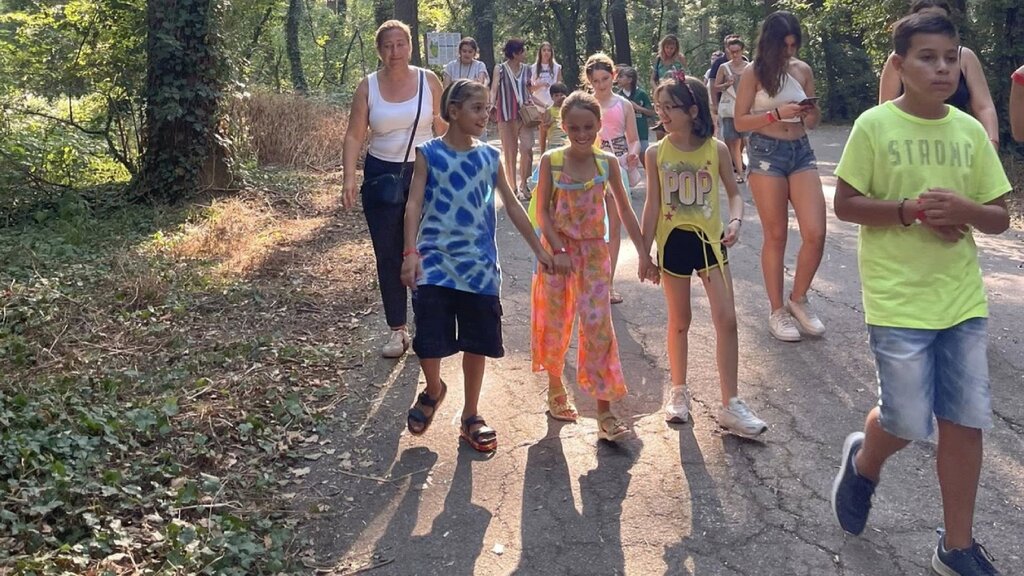
PHOTO Rodolubie school in Naples
In recent years, the Education Ministry’s national programme, “Bulgaria – Educational Routes”, has been helping Bulgarian teachers abroad. Last year, Rodolubie applied for the first time with a project titled Northern Black Sea Coast: Nature, History and Culture. The project was approved, and their “Bulgaria adventure” took place between August 11 and 14. Notably, 14 parents joined the group of 20 pupils at their own expense.
The group also took part in Radio Bulgaria’s 'A Lesson on Bulgaria' initiative, sharing their experience in a video.
Schoolgirl Adriana recalls the trip with excitement:
"For me, the most interesting place was the Baltata nature reserve, where everything was green and there were lots of protected birds, mammals, fish and plants. Jumping across the Batova River from one bank to the other was great fun. My favourite moment was when we went to the beach in Albena – there were big waves, and we all tried to jump over them together.”
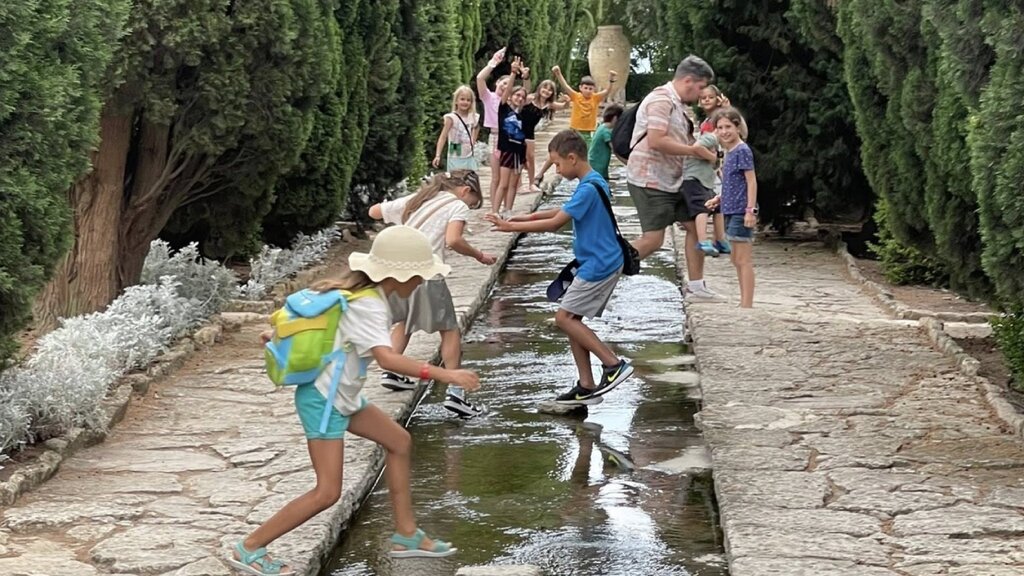
PHOTO Rodolubie school in Naples
The group visited several iconic sites, including the botanical garden and palace of Queen Marie of Romania in Balchik, Cape Kaliakra, the Aladzha rock monastery, the Teketo area, and a traditional pottery workshop.
Adriana's classmate Ralitsa was impressed by the royal gardens in Balchik:
“The most interesting place for me was the beautiful green gardens in Balchik. I learned that Bulgaria is full of beautiful places. My favourite moment was when we were running along the seaside together.”
Ms. Nikolova says that the experiences left a lasting impression, especially the pottery workshop.
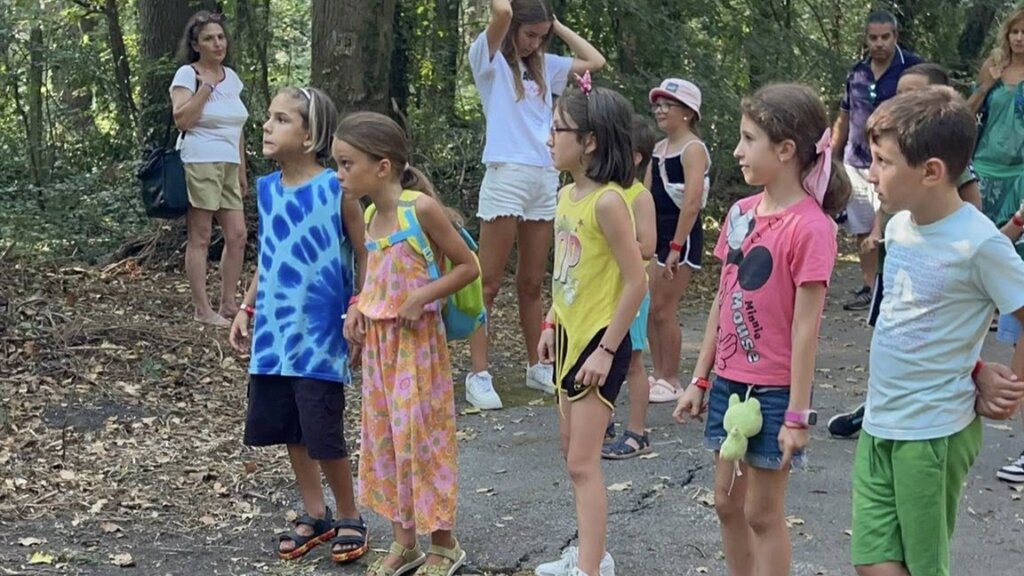
PHOTO Rodolubie school in Naples
“All the places we visited were impressive, but one of the most memorable experiences was the authentic pottery workshop in Balchik. The children didn’t just watch; they connected with the earth itself. They saw how shapeless clay comes to life in the craftsman's hands and learned that making pottery takes patience, persistence and skill. They learned that clay must be soft and elastic, that a plate is the easiest to make, and a jug or amphora the hardest. They were also deeply impressed by the Aladzha monastery – it was the first rock monastery they had seen. They gained an understanding of what it means to seek solitude and humility. And, of course, the greatest excitement was seeing the Black Sea."
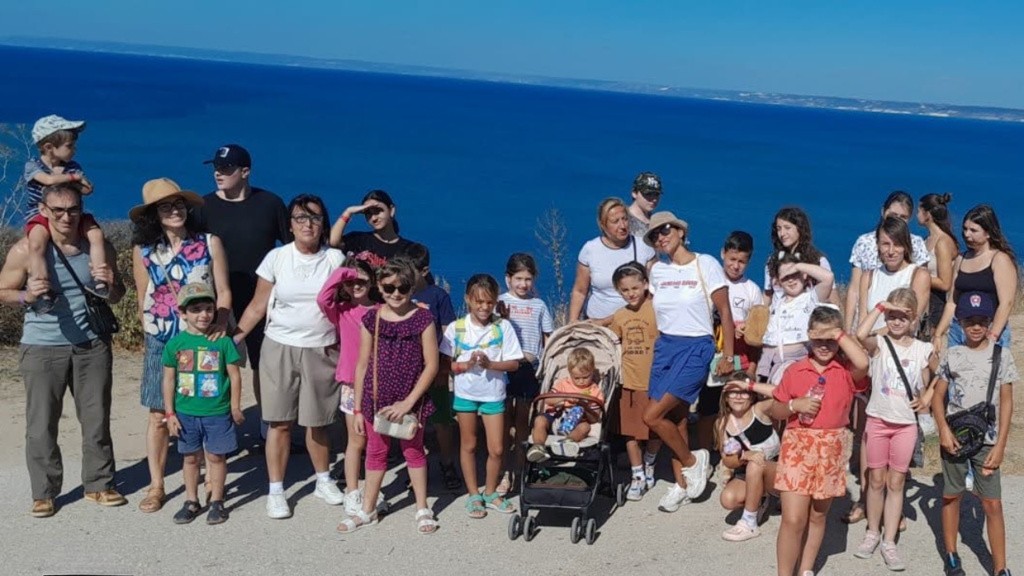
PHOTO Rodolubie school in Naples
She adds that the trip helped her to rediscover Bulgaria through the eyes of the children:
"Seeing how excited they were made me feel as though I had returned to my own childhood. I shed the weight of everyday life and saw our country in its purest form: beautiful and unique. With the children, I rediscovered the authentic smell of the sea, which I had forgotten. Through their eyes, I rediscovered the deep love for Bulgaria that we sometimes take for granted when we are far away. I realised that Bulgaria is not just a place on the map; it's a state of mind.”
According to Andrey, a student:
"The most interesting place for me was the ceramics and plant museum in the botanical garden in Balchik. I learned that Bulgaria is more beautiful than I expected and has many fascinating places. My favourite moment was visiting Cape Kaliakra.”
PHOTO Rodolubie school in Naples
Ms. Nikolova concludes:
"For the children, this was a deeply moving process of self-discovery. Many of them were born or raised in Italy and viewed Bulgaria as something distant, almost like a fairy tale. But when they stepped on Bulgarian soil, it was a personal encounter with their roots. They did not see Bulgaria through statistics or problems, but through their senses. For them, it is a place of freedom and shared summers – a beautiful, welcoming place. In Italy, they identify as Italian, but as soon as we arrived in Bulgaria, they started saying ‘we’, ‘our Black Sea’ and ‘we – the children of Bulgaria’. This personal encounter truly changes their perception."
Further reading:
- A Lesson on Bulgaria: Bulgarian children from Larnaca go to the Rhodopes and BNR
- Knowledge becomes shield for Bulgarian children in Skopje
- A Lesson on Bulgaria... with the students of Hristo Botev School in Bratislava
- A Lesson on Bulgaria… with the Abagar Bulgarian school in Rome, Italy
- A Lesson on Bulgaria… with Rayna Knyaginya Bulgarian School in Burgos, Spain
Editor: Elena Karkalanova
This publication was created by: Elizabeth Radkova