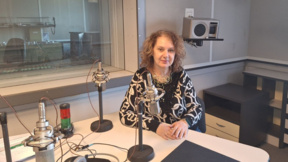
Author
Gergana Hrischeva
Interview
September 21 - World Alzheimer’s Day
Acad. Traykov: Alzheimer’s disease can be diagnosed before symptoms appear
The leading Bulgarian neurologist from Alexandrovska Hospital is a guest on the BNR specialized healthcare podcast "At the Centre of the System"
Monday 21 September 2026 11:25
Monday, 21 September 2026, 11:25


Academician Lazhezar Traykov
PHOTO Ani Petrova, BNR
Font size
Years can pass between the earliest changes in the brain and noticeable memory loss. Today, medicine has biomarkers, neuroimaging techniques and therapies targeting the underlying disease pathology. Why is early diagnosis becoming increasingly important, and what can we do to protect our brain health?
On September 21, World Alzheimer’s Day, the BNR health-related podcast "At the center of the system" explores why the focus is increasingly shifting from the question, “What should we do when a person starts to forget?” to a much earlier one: “How can we recognise and diagnose the disease process before it has caused significant neuronal loss?”
According to leading Bulgarian neurologist Acad. Lachezar Traykov, head of the Department for the Diagnosis and Treatment of Degenerative and Vascular Dementias at the Clinic of Neurology of Alexandrovska University Hospital, one of the major breakthroughs in modern neurology is precisely the possibility of moving diagnosis to an earlier stage.
Bulgaria has no fully comprehensive and official national statistics on the exact number of people living with Alzheimer’s disease, but according to estimates by the Alzheimer Bulgaria Civic Association and international studies, the number of people affected by dementia and Alzheimer’s disease in Bulgaria is estimated at between 70,000 and 100,000. According to the data of the World Health Organization, 18 million people are affected by the disease on a global scale.
Modern medicine increasingly views Alzheimer’s disease as a biological process that begins before the onset of clinical symptoms. According to updated Alzheimer’s Association criteria, pathological changes may begin while a person still has no noticeable cognitive impairment. Memory is among the functions most commonly associated with Alzheimer’s disease, but the clinical picture is more complex.
Cognitive abilities include attention, concentration, memory, language, orientation, planning and decision-making. Consequently, early changes do not necessarily manifest themselves as the classic “forgetfulness”.
“Memory is one of the first symptoms,” Acad. Traikov told BNR, but he also points to another domain that may be affected earlier, namely the "executive" functions.
These are the abilities that allow us to respond appropriately in unfamiliar situations, plan, weigh alternatives and make decisions. As an example, he describes the usual route to work. When the route is familiar, a person follows it almost automatically. But if a street is suddenly closed, they must quickly orient themselves, devise an alternative route and adjust their plans to the circumstances. Such situations can become more difficult in the early stages of cognitive impairment.
“This process of making a decision quickly, in an unfamiliar situation, and arriving at the right decision has proved to be the most vulnerable and one of the earliest indicators to emerge,” Acad. Traykov explains.
Of course, such difficulties alone do not establish the presence of Alzheimer’s disease. They may be associated with anxiety, depression, stress, other neurological conditions or individual characteristics. This is why specialists use a more detailed neuropsychological assessment.
From brief screening to a neuropsychological profile
Brief cognitive tests can be used for screening in clinical practice. They should not, however, be regarded as equivalent to a diagnosis.
“We do not settle for the one-minute screening test performed by GPs. It is only a screening tool. Our psychologists conduct a 40-minute assessment,” Acad. Traykov explains.
The aim is to establish a cognitive profile, identifying which abilities remain intact and which are impaired. This helps distinguish normal ageing from pathological cognitive decline and determine what additional investigations may be required.
Modern diagnostic guidelines also stress that biomarkers should be interpreted in the context of a comprehensive clinical assessment rather than treated as a standalone laboratory verdict.
What happens in the brain years before symptoms appear?
Alzheimer’s disease is associated with the accumulation of pathological proteins, including amyloid-beta and abnormally modified tau protein.
One of the key structures affected in the early stages is the hippocampus, a region that plays a crucial role in the formation and storage of new memories. As the pathological process progresses, neuronal loss and structural changes in the brain occur. These may be detected on magnetic resonance imaging (MRI) as atrophy.
“Patients with Alzheimer’s begin to develop atrophic changes. Some areas of the brain responsible for particular functions lose cells, and on scans this appears as a shrinkage of the tissue,” Acad. Traykov added.
MRI, however, is not in itself a specific test for Alzheimer’s disease. It is important for assessing brain structure, identifying atrophy and investigating other possible causes of cognitive impairment. Current diagnostic criteria include MRI among the tools used to assess neurodegeneration and cerebrovascular injury.
“The bad proteins” can now be tracked
One of the most significant developments in recent years has been the advancement of biomarker-based diagnosis. Analysis of cerebrospinal fluid (CSF) obtained through a lumbar puncture can measure biomarkers associated with amyloid-beta and tau pathology.
Another important method is amyloid PET imaging. It uses a radiotracer that binds to amyloid deposits in the brain, making them visible on imaging.
Current criteria identify amyloid PET and certain combinations of CSF biomarkers as core diagnostic biomarkers. A positive result obtained with an appropriately validated test can establish the presence of the biological pathology of Alzheimer’s disease.
The blood test: a major breakthrough, but not a diagnosis “from the laboratory”
Blood-based biomarkers have generated even greater interest. Various forms of phosphorylated tau can be measured in plasma, particularly p-tau217, as well as combinations of other biomarkers. Research in recent years indicates that some of these tests can achieve diagnostic accuracy comparable to that of established CSF tests.
This does not mean, however, that every positive commercial blood test automatically indicates clinical Alzheimer’s disease. On the contrary, scientific criteria emphasise substantial differences between individual tests. Not all blood-based assays currently available have the required accuracy, and their results must be interpreted in light of the clinical picture and the likelihood that the patient actually has Alzheimer’s pathology.
Acad. Traъkov warns of the danger of people without cognitive symptoms ordering such tests themselves and then assuming, following a positive result, that they are already ill. This is particularly important because the presence of biological pathology is not synonymous with the presence of dementia.
Current scientific criteria make precisely this distinction: a person without cognitive impairment who has a positive biomarker is at increased risk of developing symptoms, but this does not mean that they already have a clinical syndrome of dementia.
Amyloid is not the whole story
One of the important conclusions is that the disease cannot be reduced simply to the presence of amyloid. At least two major protein systems are involved in the pathological process, amyloid-beta and tau. Current criteria regard them as reflecting different biological stages of the disease.
Amyloid biomarkers and early phosphorylated tau biomarkers are part of the so-called Core 1 biomarkers, while certain tau biomarkers that emerge later and tau PET are used for further staging of the biological process.
This is also important for treatment: the presence and extent of pathological amyloid and tau changes may be relevant to determining the stage of the disease and whether a particular patient may be eligible for a given therapy.
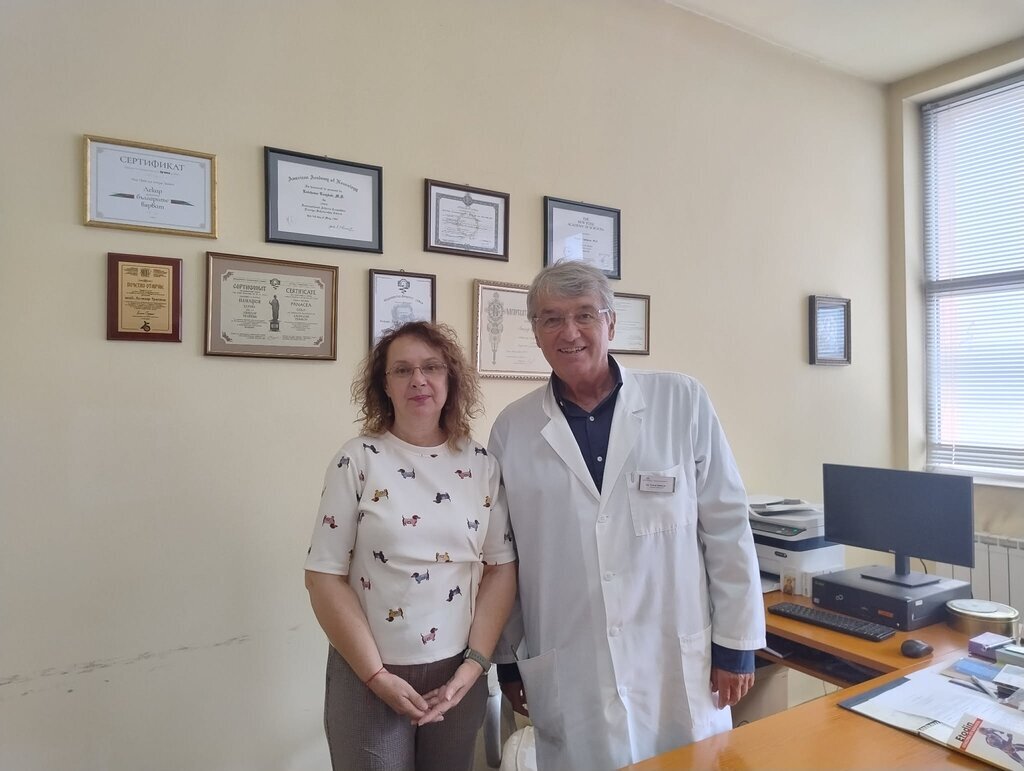
Academician Lachezar Traykov and Gergana Hrischeva, author of the BNR podcast "In the Center of the System"
PHOTO Private archive
New treatment: from treating symptoms to targeting the underlying pathology
For decades, Alzheimer’s medications primarily addressed symptoms. They can temporarily improve or stabilise certain cognitive functions, but they do not eliminate the underlying cause of pathological protein accumulation.
In recent years, however, this situation has begun to change. Monoclonal antibodies target amyloid-beta and are intended for patients in the early stages of the disease.
In 2023, the US Food and Drug Administration (FDA) granted traditional approval to lecanemab after a confirmatory trial demonstrated clinical benefit. In July 2024, the FDA approved donanemab for the treatment of Alzheimer’s disease. The therapy is intended for patients with mild cognitive impairment or mild dementia, the population in which the drug was studied.
In the European Union, one of the two drugs received marketing authorisation in April 2025 for a specific group of patients with early Alzheimer’s disease, confirmed amyloid pathology and a particular APOE ε4 status.These therapies are not “anti-forgetfulness drugs” in the traditional sense. They are disease-modifying therapies targeting a pathological mechanism of the disease, and their effect is associated with slowing clinical decline rather than curing the disease.
Treatment also carries risks
The new therapies are not suitable for every patient. They therefore require an accurate diagnosis, confirmed amyloid pathology, careful patient selection and specialised monitoring.
The most important word remains “early”. Both drugs have been studied and are intended for the early clinical stages of the disease. This changes the logic of the entire system: the earlier the disease process is identified in an appropriate patient, the sooner the possibility of disease-modifying treatment can be considered.
“We have to emphasise that this medication works only in the very earliest stages,” Acad. Traikov stressed. This is where biomarkers become particularly important: they can confirm that Alzheimer’s pathology is indeed underlying the clinical picture.
Can we reduce the risk of Alzheimer’s disease, and what role does prevention play?
Not all cases of Alzheimer’s disease can be prevented. Age and genetic factors are among the principal risk factors that cannot be modified. There is, however, a substantial group of modifiable risk factors associated with the risk of dementia. These include controlling blood pressure, diabetes and lipid levels; maintaining a healthy body weight; engaging in physical activity; avoiding smoking; limiting excessive alcohol consumption; maintaining social engagement; and sustaining cognitive activity.
It is important, however, to distinguish between reducing risk at the population level and guaranteeing prevention of the disease in an individual. There is no way to promise that a particular lifestyle will definitely protect someone from Alzheimer’s disease. For this reason, the modern approach is better understood as a strategy for healthy ageing of both the brain and the cardiovascular system.
Exercise, nutrition and intellectual activity
Acad. Lachezar Traykov places particular emphasis on physical activity and the control of vascular risk factors. This is logical because the brain does not exist in isolation from the rest of the body. Hypertension, diabetes, high cholesterol, obesity and physical inactivity are associated with cerebrovascular damage and may interact with neurodegenerative processes. A Mediterranean-style diet, regular physical activity and maintaining normal blood pressure are among the broadly accepted strategies for reducing the risk of cognitive decline.
According to Acad. Traykov, however, prevention goes beyond diet and exercise. He highlights the particularly beneficial role of cognitive stimulation:
“Read, listen to music, interact with others more.”
And he warns:
“Online scrolling is an insult to the brain.”
Behind this striking formulation lies the idea that passive consumption of information is not equivalent to active cognitive engagement. Reading, music, learning, creative pursuits, social interaction and solving novel problems engage different neural networks.
And what do we know about “positive emotions”?
Acad. Traykov also emphasised quality of life, including social interaction, positive emotions, love, an interest in the arts and a sense of meaning. Here, however, the scientific discussion needs to be somewhat more cautious. There is no evidence that a person can prevent Alzheimer’s disease simply by “thinking positively”, or that a particular emotion in itself prevents the disease. There are, however, strong grounds for considering social activity, physical activity, cognitive engagement and psychological well-being as components of the broader model of healthy ageing.
“Let us enjoy the small things, the beautiful things, and learn to look for them.”
Alzheimer’s disease remains a progressive and currently incurable condition. But medicine is no longer in the same position it was several decades ago.
“We have more precise diagnostic criteria, increasingly effective biomarkers and the first therapies targeting a fundamental pathological feature of the disease. Early recognition matters. Diagnosis should be comprehensive, biomarkers should be used judiciously, new therapies are intended for carefully selected patients, and brain health should be maintained long before the first symptoms appear. I say this as a scientist. I have read extensively on the subject, and I am very pleased that scientific evidence is showing us the path by which the human brain will survive,” says leading Bulgarian neurologist Acad. Lachezar Traykov.
*Acad. Lachezar Traykov is a leading Bulgarian neurologist, recipient of national and international distinctions in medicine and science. He served as Rector of the Medical University of Sofia from 2020 to 2024 and has been a prominent advocate for the advancement of Bulgaria’s healthcare system. He was Executive Director of Alexandrovska University Hospital from 2009 to 2013 and currently heads the Department for the Diagnosis and Treatment of Degenerative and Vascular Dementias at the Clinic of Neurology of Alexandrovska University Hospital.

PHOTO pixabay.com
Read also:
Bulgaria ranks second in the Balkan region in robotic urological surgeries
English version: R. Petkova
This publication was created by: Rositsa Petkova