


Article
Media literacy and values: key to defending democracy in the age of AI
Sofia hosted the international Democracy & Information Festival, dedicated to disinformation, artificial intelligence, digital well-being and the future of democratic society
Wednesday 4 November 2026 14:43
Wednesday, 4 November 2026, 14:43
PHOTO eurispes.eu
Font size
How can we preserve our ability to think critically at a time when artificial intelligence can generate convincing texts, images and videos, while social media are exerting an ever greater influence on how we perceive the world? And how can we protect democratic values when information is becoming a tool for shaping public opinion?
These questions were at the heart of the international Democracy & Information Festival, which brought together experts, university lecturers, representatives of civil society organisations and young people from various European countries at Sofia University St Kliment Ohridski on 3 November.
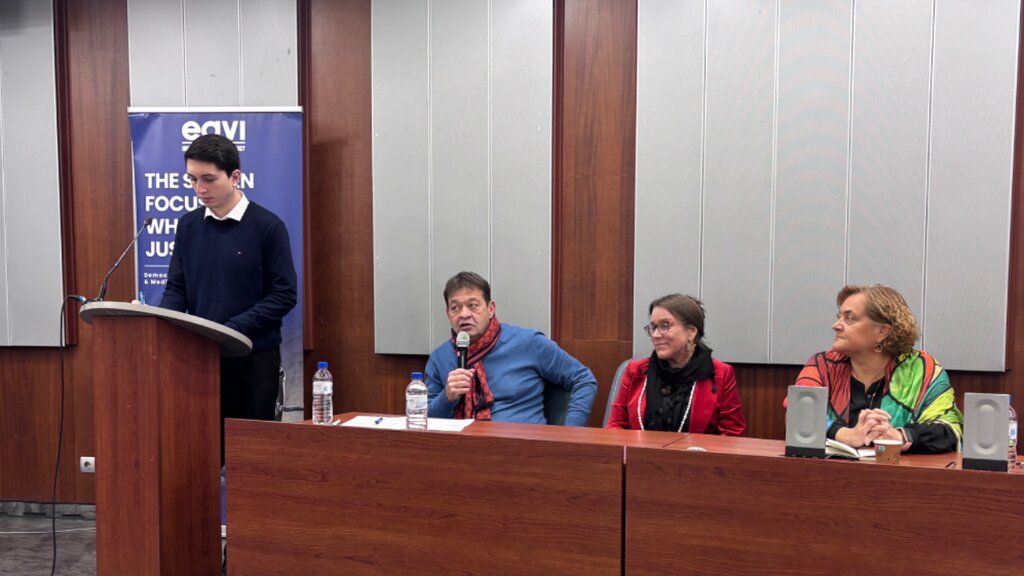
PHOTO Lubomir Kolarov
The festival’s inaugural edition was organised by the European Association for Viewers’ Interests (EAVI), with the support of the European Union. Over the course of the day, participants discussed the links between media literacy and peace, the opportunities and risks posed by artificial intelligence, the influence of major technology companies, and the shared responsibility for creating a healthier digital environment.
One of the key contributions to the discussions came from EAVI founder and Secretary General Paolo Celot. In his view, media literacy can no longer be reduced to the ability to distinguish reliable information from unreliable content. As artificial intelligence develops, it also requires new technical skills, critical thinking and active participation in public life.
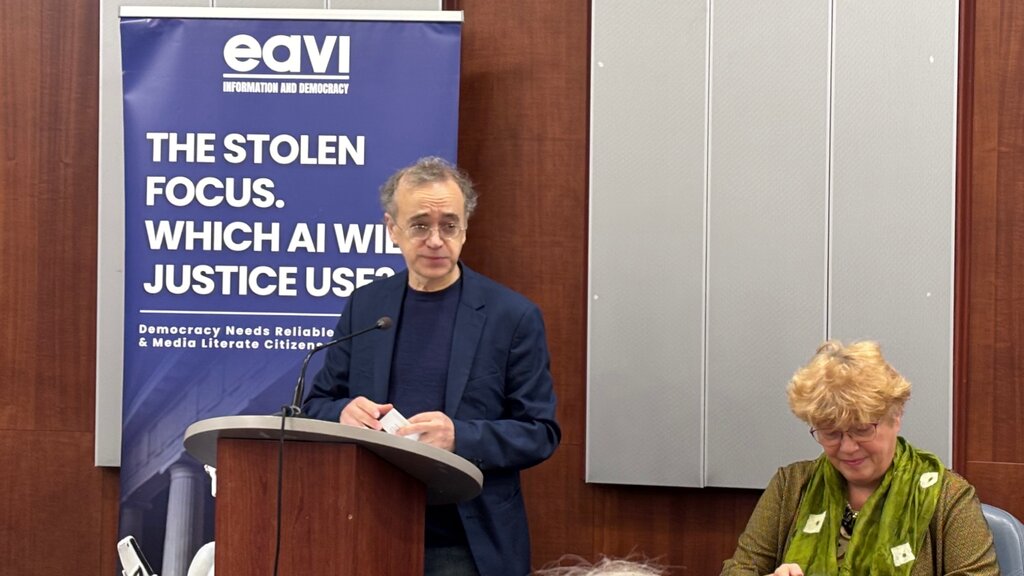
Paolo Celot , Founding Member and Secretary General, EAVI
PHOTO Lubomir Kolarov
“Responsibility should not rest solely on the shoulders of citizens. It is important for people in positions of power, both in government and in business, to be media literate as well.”
Celot also highlighted the role of public service media and independent journalism. In an information environment where private economic interests do not always coincide with the public interest, they are particularly important in ensuring access to verified information and maintaining the link between citizens and their representatives.
“Public service media are certainly an ally of media literacy. [...] Public service media are our friends.”
In his address to the festival, Celot also raised the issue of the concentration of influence in the hands of a small number of major technology companies. In his view, the problem lies not in the technology itself, but in the way digital platforms are designed to attract and retain users’ attention and exploit their vulnerabilities. He also drew attention to the power of public narratives: disinformation spreads not only through false facts, but often through compelling stories that shape people’s fears and expectations.
The need to strengthen critical thinking was also emphasised by Bulgarian participants. Prof. Madleine Danova, PhD, Vice-Rector of Sofia University, believes that the education system still has considerable work to do when it comes to media literacy. In her view, education in this field needs to be more clearly regulated and made a compulsory part of the training provided to school pupils and university students.
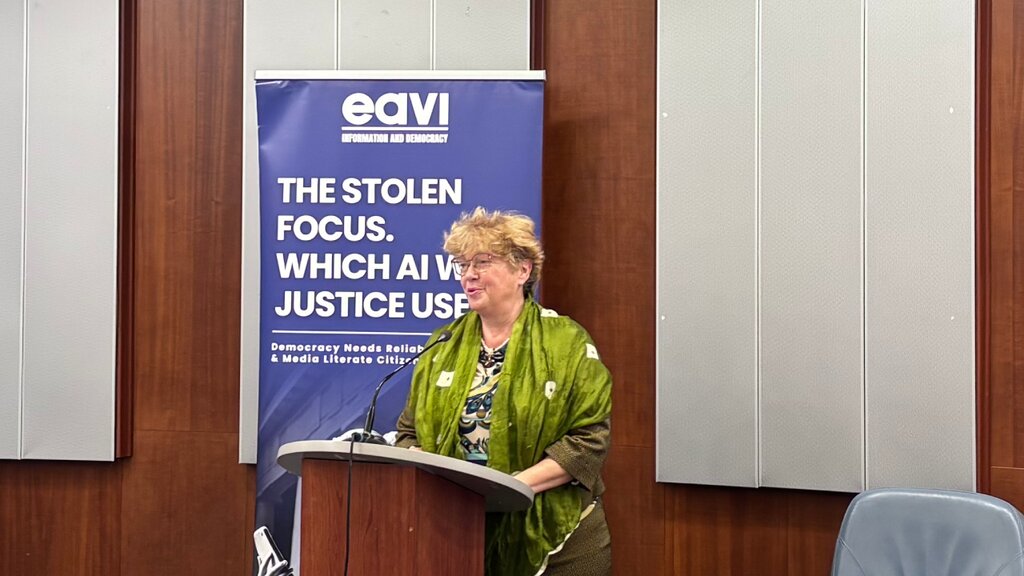
Prof. Madleine Danova, PhD
PHOTO Lubomir Kolarov
“Much work still needs to be done. [...] Steps must be taken, including the formalisation of this training, in order to advance understanding of disinformation, fake news and everything else that pollutes our media environment.”
Prof. Danova also stressed the need for dialogue, arguing that only through open discussion of society’s fears and problems can consensus be sought on its future. In this context, the relationship between peace and media literacy takes on a broader dimension, rooted in shared values.
Prof. Danail Danov, DSc, a lecturer in media education, offered a more sceptical assessment of Bulgarian society’s readiness to deal with disinformation. According to him, the vast amount of information available to us does not automatically mean that we are better informed. The problem lies in how we engage with content:
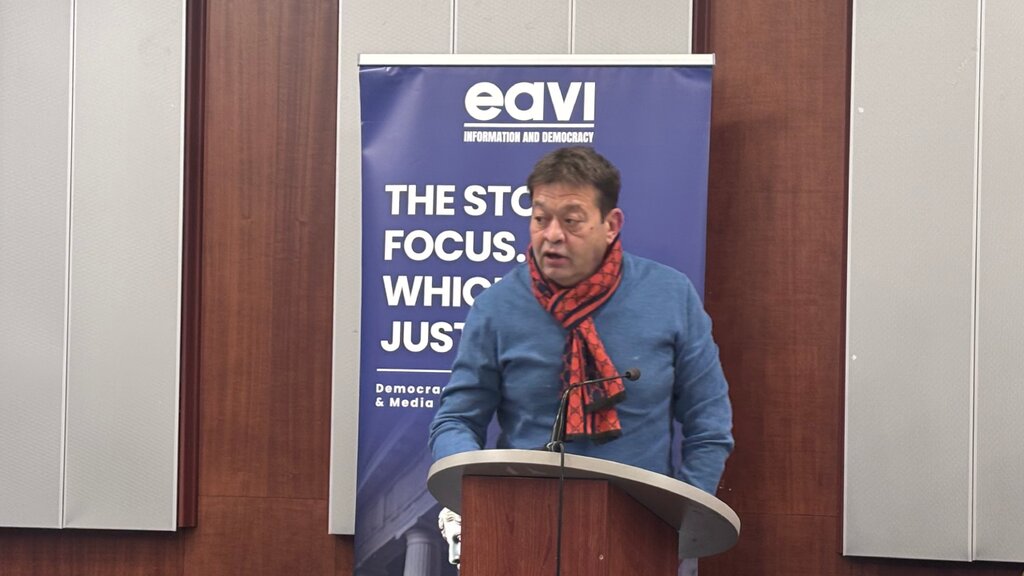
Prof. Danail Danov
PHOTO Lubomir Kolarov
“A large part of this information is disinformation [...] and a very large proportion of users simply accept everything they hear, see and read as part of the information flow.”
Prof. Danail Danov advocates an approach in which critical thinking is not confined to a single school subject, but developed across all areas of education, starting as early as kindergarten. He cited the Finnish education model as an example, where analytical skills, curiosity and problem-solving are incorporated into different subjects.
The European perspective on this issue was presented by Prof. Marco Ricceri, President of EAVI. In an interview with Radio Bulgaria, he stressed the need for consistent institutional support and highlighted the importance of the European regulatory framework. However, these measures alone are not enough to foster a more responsible information environment and a positive public culture.
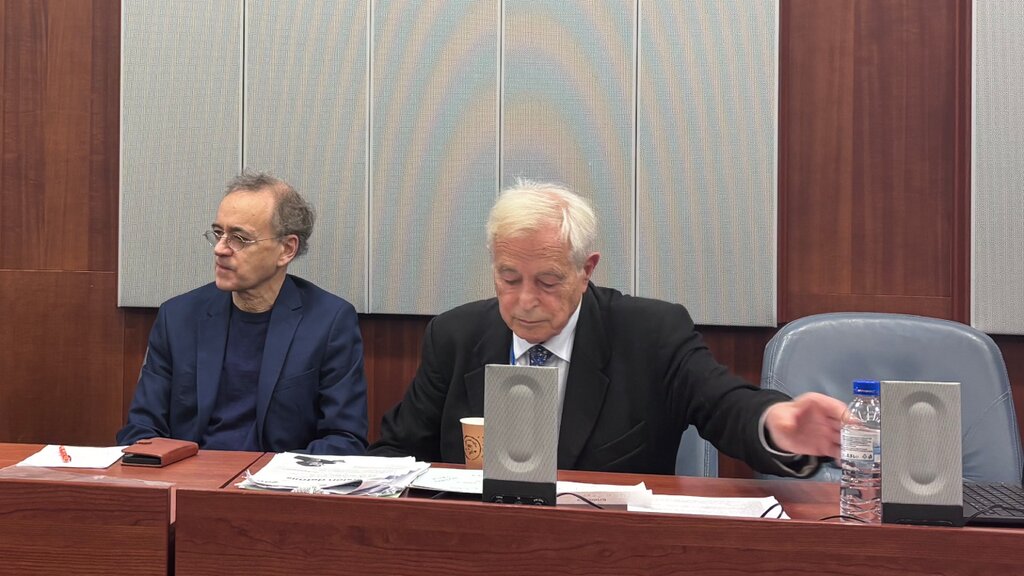
Prof. Marco Ricceri, President of EAVI
PHOTO Lubomir Kolarov
“The regulatory system is very effective and important. But stronger support and closer cooperation between European institutions, universities and civil society organisations are needed to build a positive culture among people.”
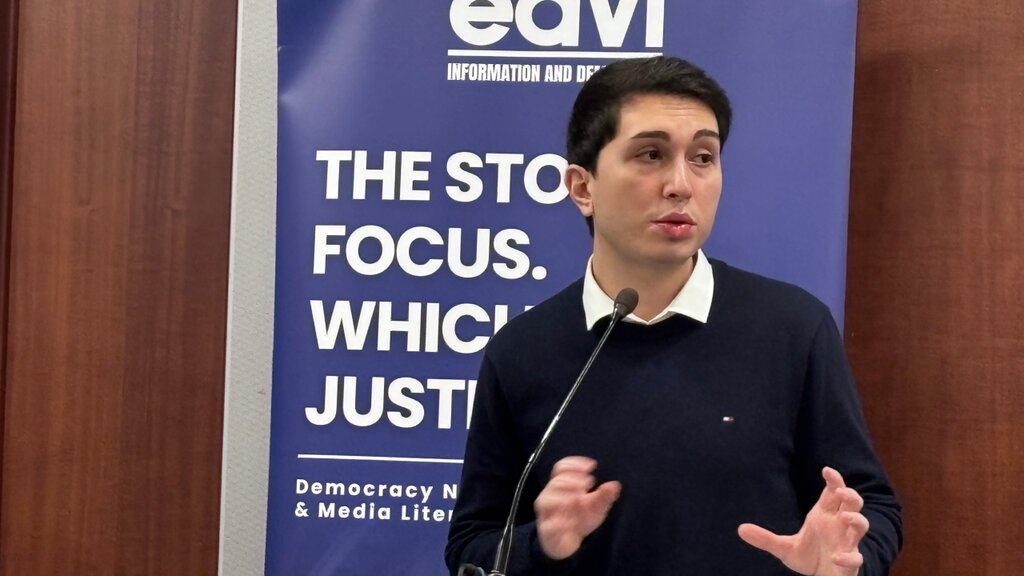
Semih Solmaz, EAVI’s Head of Projects, Development and Communications
PHOTO Lubomir Kolarov
During the discussion on the influence of technology platforms, Semih Solmaz, EAVI’s Head of Projects, Development and Communications, drew attention to the relationship between the way social media operate, users’ emotions and their digital well-being. According to him, platforms are designed primarily to protect their own interests, which may conflict with the public interest.
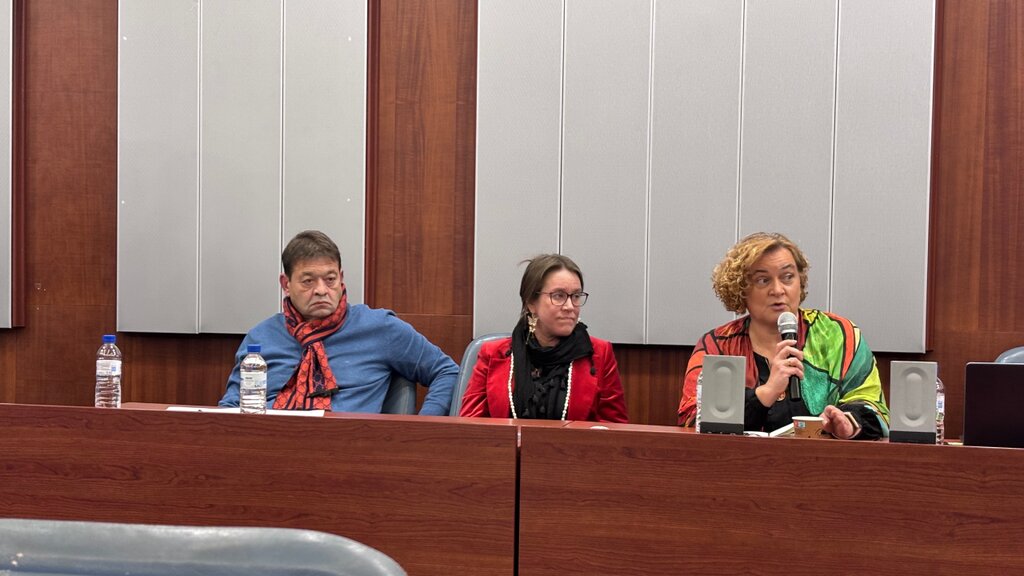
Lidija Kralj (right)
PHOTO Lubomir Kolarov
The practical aspects of media literacy were also addressed by Lidija Kralj, an analyst specialising in artificial intelligence and data in education. She emphasised the need to teach pupils to verify information, compare different sources and avoid relying exclusively on content found on social media. Artificial intelligence should remain a tool, not a substitute for independent thinking.
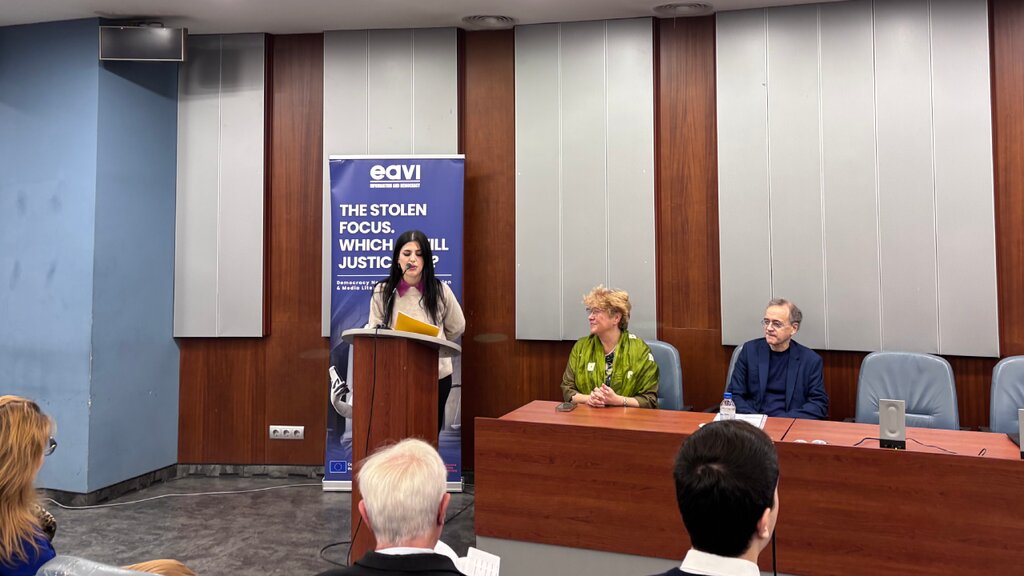
PHOTO Lubomir Kolarov
The festival concluded with a youth hackathon entitled “Getting Real with AI”, where participants had the opportunity to develop ideas for the responsible, inclusive and human-centred use of artificial intelligence.
The overall message of the Sofia gathering was that technological progress alone does not guarantee a better-informed and more democratic society. Achieving this requires education, critical thinking, independent journalism and shared responsibility. At the heart of these efforts lie the values that give democracy its meaning: freedom, respect for others, dialogue and active civic participation.
Read also:
Justin Kings, EBU: The role of pubic service media in times of crisis is crucial
Real-world problem-solving is at the heart of the education of the future
This publication was created by: Rositsa Petkova
- #artificial intelligence
- #fake news
- #disinformation in Bulgaria
- #Democracy & Information Festival
- #media literacy
- #democracy in the age of AI
- #artificial intelligence media
- #EAVI Secretary General Paolo Celot
- #European Association for Viewers’ Interests (EAVI)
- #European Association for Viewers’ Interests
- #Prof. Madleine Danova